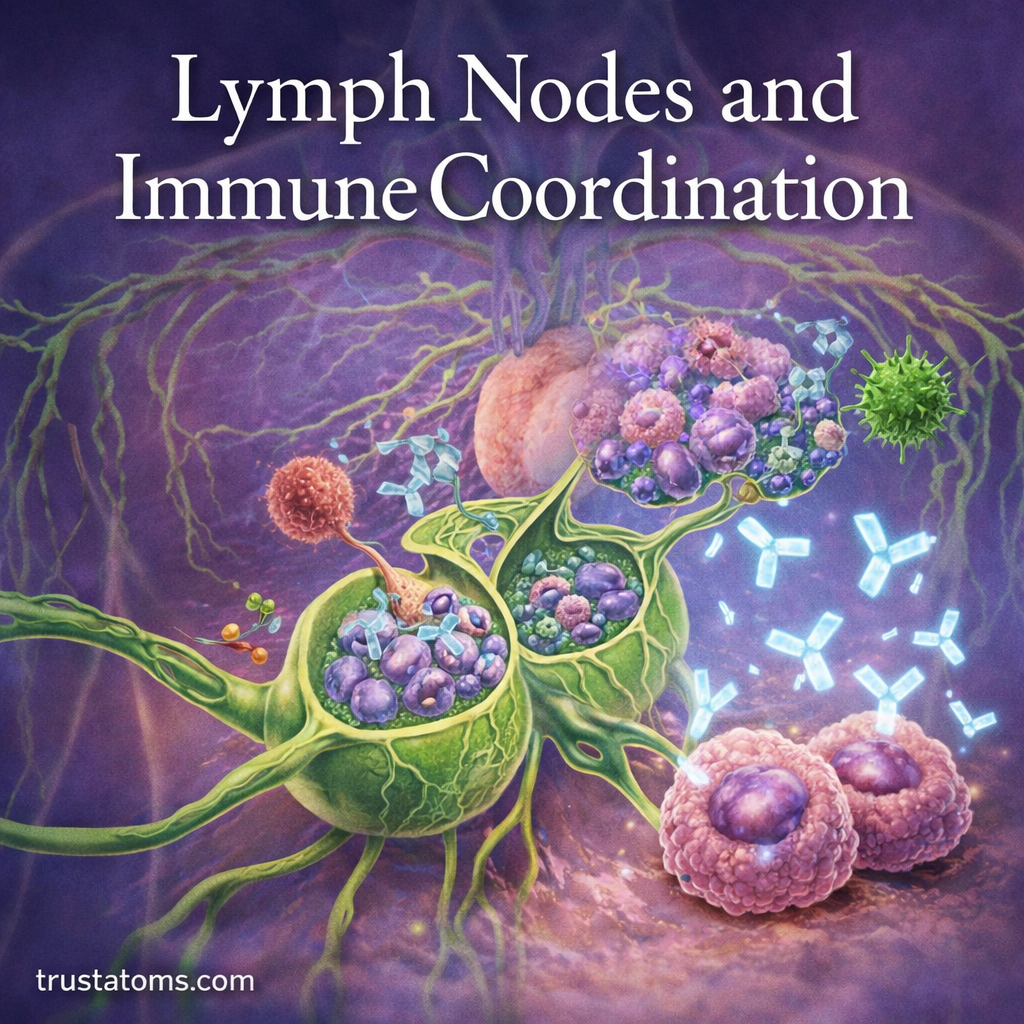
Lymph nodes are small, bean-shaped structures that play a central role in the immune system. Acting as filtration hubs and coordination centers, they help detect harmful substances, activate immune responses, and organize the body’s defense against infection.
Although often overlooked, lymph nodes are essential for connecting different parts of the immune system and ensuring a fast, targeted response to threats.
What Are Lymph Nodes?
Lymph nodes are part of the lymphatic system—a network of vessels, tissues, and organs that transport lymph fluid throughout the body.
They are commonly found in clusters in areas such as:
- Neck
- Armpits
- Groin
- Chest
- Abdomen
Each lymph node contains immune cells that monitor lymph fluid for pathogens like bacteria, viruses, and abnormal cells.
Structure of a Lymph Node
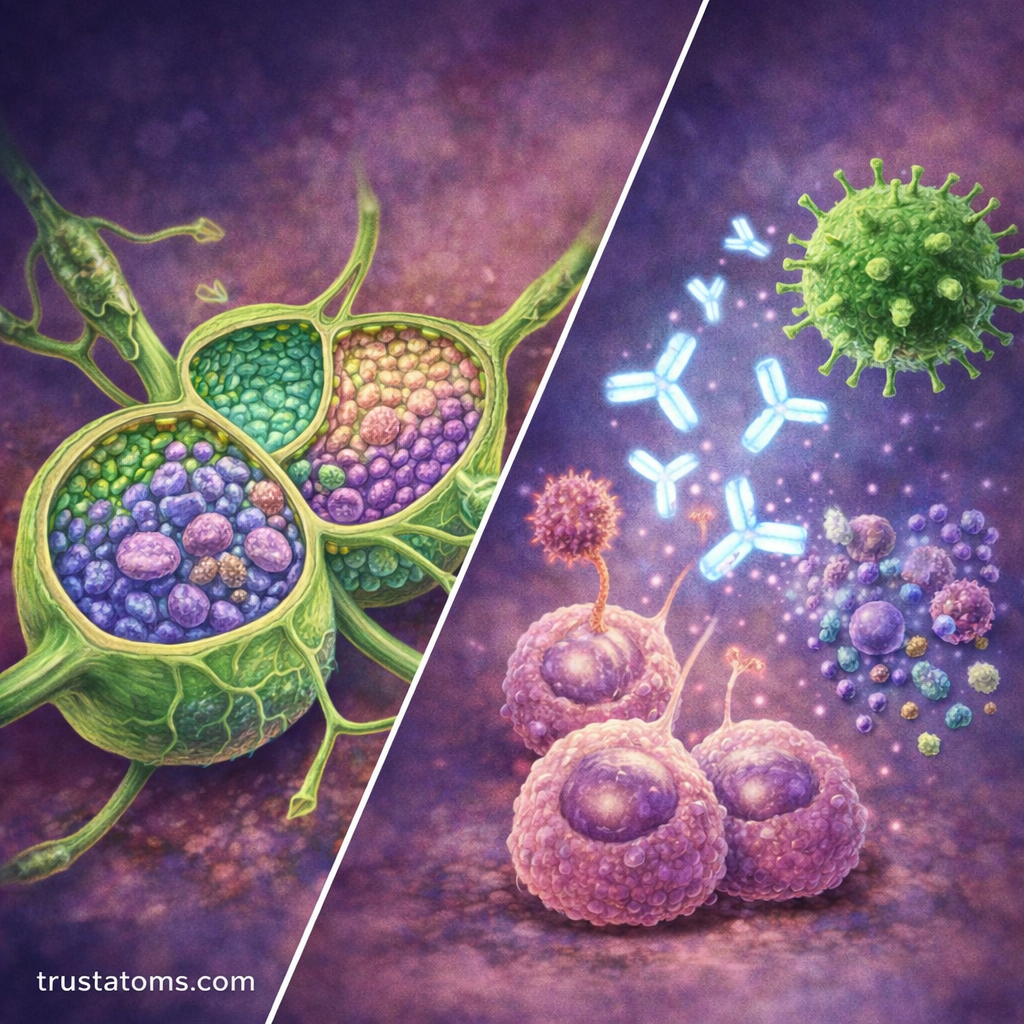
Lymph nodes have a highly organized internal structure that supports immune coordination.
Key Components
- Cortex
- Outer region
- Contains B cells and follicles
- Paracortex
- Middle region
- Rich in T cells
- Medulla
- Inner region
- Contains plasma cells and macrophages
This organization allows different immune cells to interact efficiently.
How Lymph Nodes Filter Lymph
Lymph fluid carries waste products, pathogens, and cellular debris from tissues. As it passes through lymph nodes:
- Lymph enters through afferent vessels
- It flows through specialized channels inside the node
- Immune cells scan for foreign antigens
- Harmful substances are trapped and destroyed
- Cleaned lymph exits through efferent vessels
This filtration process helps prevent infections from spreading throughout the body.
Role of Lymph Nodes in Immune Coordination
Lymph nodes act as meeting points where immune cells communicate and coordinate responses.
Key Functions
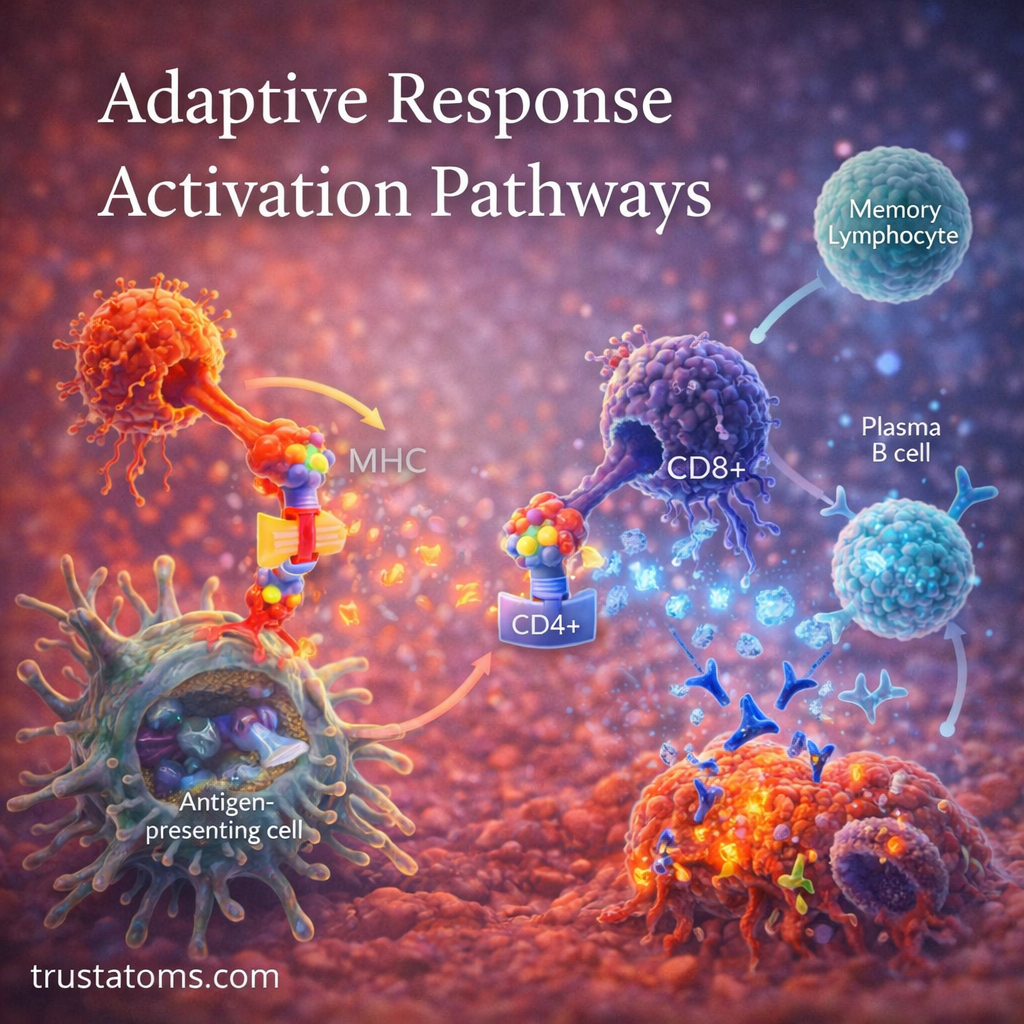
- Facilitate interaction between antigen-presenting cells and lymphocytes
- Activate B cells and T cells
- Support antibody production
- Amplify immune responses when needed
When a pathogen is detected, lymph nodes rapidly mobilize immune cells to respond effectively.
Activation of Immune Responses
When antigens are detected inside a lymph node:
- Dendritic cells present antigens to T cells
- Helper T cells activate B cells
- B cells differentiate into plasma cells
- Plasma cells produce antibodies
This chain reaction ensures a targeted and efficient immune response.
Why Lymph Nodes Swell During Infection
Swollen lymph nodes (lymphadenopathy) are a common sign of infection.
Reasons for Swelling
- Increased production of immune cells
- Accumulation of trapped pathogens
- Inflammation within the node
For example, during a throat infection, lymph nodes in the neck may become tender and enlarged as they actively fight off pathogens.
Lymph Nodes and Cancer Detection
Lymph nodes also play a role in detecting abnormal cells, including cancer.
- They can trap cancer cells traveling through lymph
- Doctors often check lymph nodes to assess cancer spread (metastasis)
- Biopsies of lymph nodes help in diagnosis and staging
This makes lymph nodes important not only for immunity but also for medical evaluation.
Lymph Nodes vs. Other Lymphatic Organs
Lymph nodes are just one part of the lymphatic system.
Comparison with Other Organs
- Spleen
- Filters blood instead of lymph
- Thymus
- Matures T cells
- Bone marrow
- Produces immune cells
Lymph nodes specialize in filtering lymph and coordinating immune responses locally.
Maintaining Healthy Lymphatic Function
Supporting your lymphatic system can help maintain efficient immune responses.
Practical Tips
- Stay hydrated to support lymph flow
- Engage in regular physical activity
- Maintain a balanced diet
- Avoid prolonged inactivity
- Support overall immune health through sleep and stress management
Why Lymph Nodes Are Essential
Lymph nodes are critical for:
- Detecting infections early
- Coordinating immune cell activity
- Preventing the spread of pathogens
- Supporting long-term immune defense
Without lymph nodes, the immune system would lack organization and efficiency.
Final Thoughts
Lymph nodes serve as the control centers of immune coordination, ensuring that immune cells communicate effectively and respond quickly to threats. Their ability to filter lymph, activate immune responses, and organize defense mechanisms makes them indispensable to overall health.
Understanding how lymph nodes function provides valuable insight into how the body protects itself from disease and maintains internal balance.