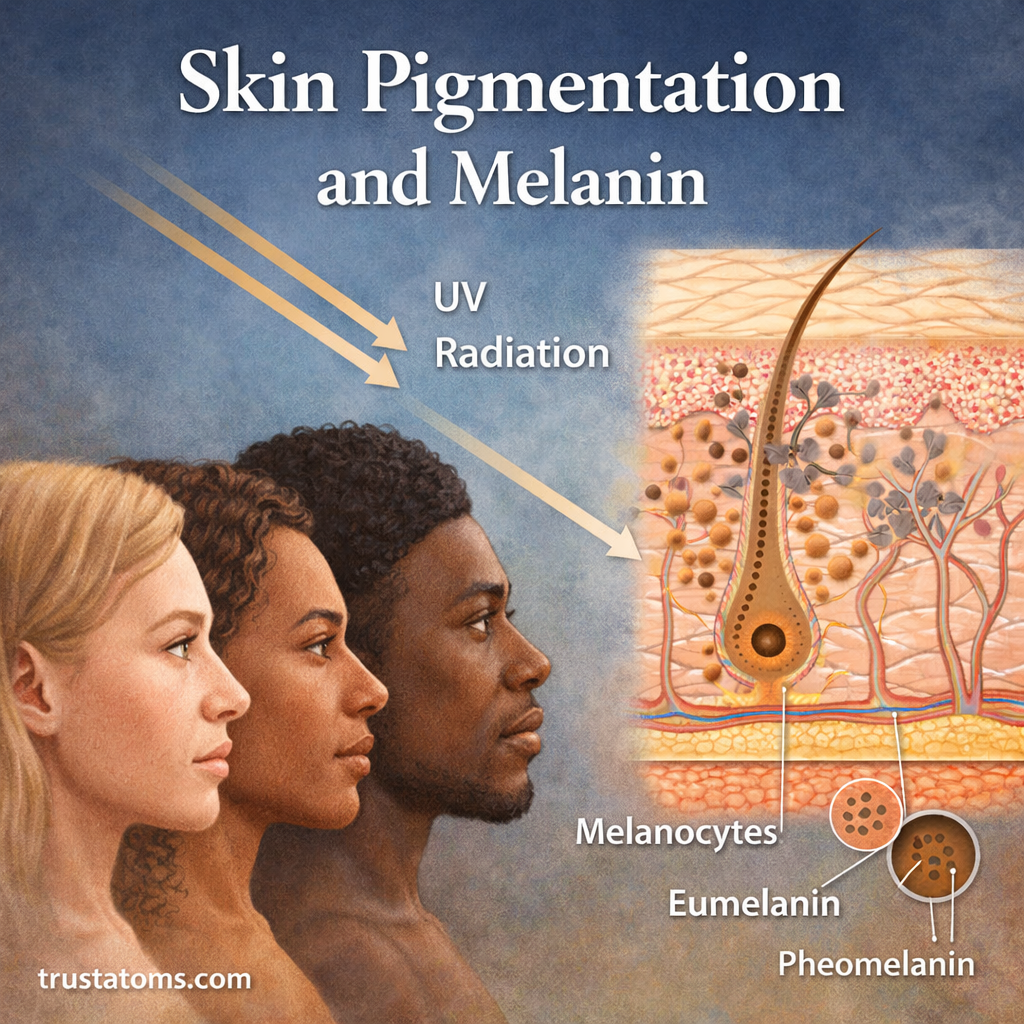
Skin pigmentation is the coloring of the skin, determined mainly by the amount, type, and distribution of a pigment called melanin. Melanin is produced by specialized cells called melanocytes and contributes to skin, hair, and eye color while helping protect skin cells from ultraviolet radiation.
Human skin tones vary because of inherited differences in pigment production and how melanin is packaged within skin cells. Studying these processes connects visible differences in appearance with human anatomy, genetics, and the skin’s response to sunlight.
What Is Skin Pigmentation?
Skin pigmentation refers to the natural coloration of skin. Melanin is its primary determinant, although blood flow, carotenoid pigments, and other factors also influence visible color.
Melanocytes are located mainly in the basal layer of the epidermis. The organization of this layer is described in Skin Structure: Epidermis and Dermis.
The skin belongs to the Integumentary System, which includes hair, nails, and associated glands. Melanin also contributes to hair pigmentation, although hair color depends on pigment deposited during hair formation. Hair Structure and Growth Cycle explains how hair develops and renews.
Skin color is primarily influenced by melanin rather than the oil produced by sebaceous glands. Sebaceous Glands and Skin Oils explains how sebum lubricates skin and hair.
What Is Melanin?
Melanin is a group of biological pigments synthesized from the amino acid tyrosine. Its production occurs inside specialized structures called melanosomes within melanocytes.
Most people have broadly similar numbers of melanocytes in comparable skin regions. Differences in pigmentation largely reflect how actively these cells produce melanin and how melanosomes are distributed, maintained, and broken down.
Types of Melanin and Their Colors
Two major types of melanin contribute to human skin and hair pigmentation. A third type occurs primarily in certain regions of the nervous system.
- Eumelanin: Produces brown-to-black pigmentation and provides relatively effective absorption of ultraviolet radiation.
- Pheomelanin: Contributes yellow-to-red pigmentation, particularly in red hair and some lighter pigmentation patterns, and provides less effective UV protection than eumelanin.
- Neuromelanin: Accumulates in certain brain regions, including the substantia nigra, and does not determine ordinary skin color.
The relative amounts of eumelanin and pheomelanin help determine pigmentation characteristics. Their production is influenced by genes regulating melanocyte signaling and pigment synthesis.
How Melanin Is Produced in the Skin
Melanin production is called melanogenesis. It involves several coordinated steps inside melanocytes.
- Pigment synthesis begins: The enzyme tyrosinase helps convert tyrosine into compounds used to form melanin.
- Melanosomes mature: Melanin accumulates inside these specialized pigment-containing organelles.
- Pigment is transferred: Melanosomes move from melanocytes into nearby keratinocytes, the main cells of the epidermis.
- Pigment is distributed: Melanosomes within keratinocytes contribute to visible skin color and help shield cellular structures from ultraviolet exposure.
As keratinocytes move toward the skin surface, their pigment is gradually lost through normal epidermal renewal. This helps explain why some temporary pigmentation changes fade over time.
How Melanin Helps Protect Skin From UV Radiation
Melanin absorbs and disperses some ultraviolet radiation, reducing the amount that reaches sensitive cellular structures. Pigment can also form protective arrangements around the nuclei of epidermal cells.
Higher levels of eumelanin generally provide greater natural protection against UV-induced damage. However, no skin tone is completely protected from sunburn, premature skin aging, or skin cancer.
Melanin is only one component of the skin’s defenses. Skin Barrier Function and Protection explains how the epidermis also limits water loss and the entry of harmful substances.
Sun protection remains important across all skin tones. Clothing, shade, and broad-spectrum sunscreen help reduce UV exposure beyond the protection naturally provided by pigmentation.
Why Human Skin Tones Vary
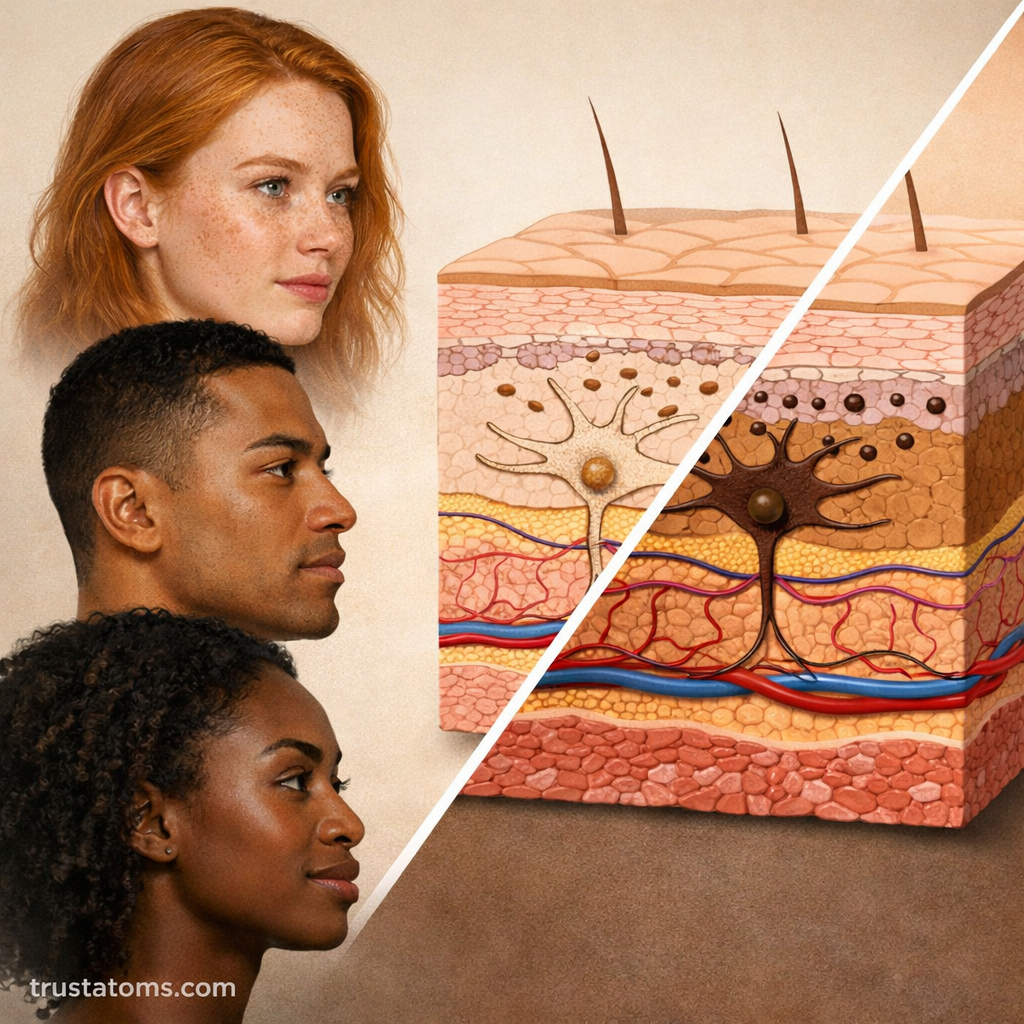
Human pigmentation is influenced by many genes, making skin color a complex inherited trait rather than one controlled by a single gene.
Genetic differences affect pigment synthesis, melanosome size, distribution, and persistence. Environmental factors, especially ultraviolet exposure, can also change pigmentation temporarily.
Scientists explain broad geographic patterns in human skin pigmentation partly through natural selection associated with differing levels of ultraviolet radiation. Higher UV environments generally favored greater protective pigmentation, while lower UV environments could favor pigmentation that permits more efficient vitamin D production.
These are broad population patterns, not fixed rules. Human migration, genetic ancestry, and individual variation mean that skin tone cannot reliably identify a person’s geographic origin or health status.
How Tanning Changes Skin Pigmentation
Tanning occurs when ultraviolet exposure causes the skin to darken through changes in existing pigment and increased melanin production.
For example, someone who spends an afternoon outdoors without adequate sun protection may notice skin darkening afterward or over the following days. This response reflects biological changes triggered by UV exposure, not proof that the skin has become resistant to future damage.
UV radiation can damage cellular DNA even when visible sunburn does not occur. A tan therefore should not be considered a safe alternative to sunscreen or protective clothing.
Common Pigmentation Changes and Conditions
Pigmentation may increase, decrease, or become uneven because of inflammation, inherited conditions, hormones, medications, or other influences.
- Hyperpigmentation: Darkening caused by increased pigment production or accumulation, including sunspots and post-inflammatory dark marks.
- Melasma: Patchy hyperpigmentation often associated with hormonal influences and sun exposure.
- Hypopigmentation: Reduced pigmentation in an area of skin, which may follow inflammation or injury.
- Vitiligo: Loss of functional melanocytes in affected areas, producing patches of depigmented skin.
- Albinism: A group of inherited conditions affecting melanin production or related processes, often involving pigmentation and vision.
Not every pigment change indicates disease. However, a new or changing pigmented lesion, particularly one with irregular features, should be evaluated by a qualified health professional.
Other Factors That Influence Skin Color
Melanin is the main determinant of baseline skin tone, but visible color can also change with blood flow, inflammation, and certain pigments deposited in the skin.
Hormonal changes may stimulate melanin production, while aging can alter pigment distribution and contribute to uneven coloration. Injuries and inflammatory skin conditions may leave darker or lighter areas after healing.
Some medications can also affect pigmentation. Because these changes have different causes, their appearance alone may not establish a diagnosis.
Frequently Asked Questions
What determines a person’s natural skin color?
Natural skin color is determined mainly by inherited differences in melanin type, quantity, and distribution. Blood flow and other pigments also contribute to visible coloration.
Does darker skin provide complete protection from the sun?
No. Higher eumelanin levels generally provide more natural UV protection, but ultraviolet radiation can still damage skin cells and contribute to skin cancer in people of every skin tone.
Can skin pigmentation change over time?
Yes. Sun exposure, hormones, aging, inflammation, and certain medical conditions can change melanin production or distribution. Some changes are temporary, while others may persist.
Skin pigmentation reflects the activity of melanocytes and the distribution of melanin within epidermal cells. Genetic differences establish much of a person’s baseline skin tone, while sunlight, hormones, and inflammation can modify pigmentation over time. Melanin provides meaningful UV protection, but maintaining healthy skin still requires appropriate protection from excessive ultraviolet exposure.
This article is for general education and is not medical advice. Talk to a qualified health professional about any medical concern.
Sources: Fitzpatrick’s Dermatology; Bolognia Dermatology; National Institute of Arthritis and Musculoskeletal and Skin Diseases.