The lymphatic system plays a crucial role in maintaining fluid balance, supporting immune defense, and removing waste from tissues. While often overlooked compared to the circulatory system, it acts as a vital partner in keeping the body stable and functioning efficiently.
Without the lymphatic system, excess fluid would accumulate in tissues, leading to swelling and impaired cellular function.
What Is the Lymphatic System?
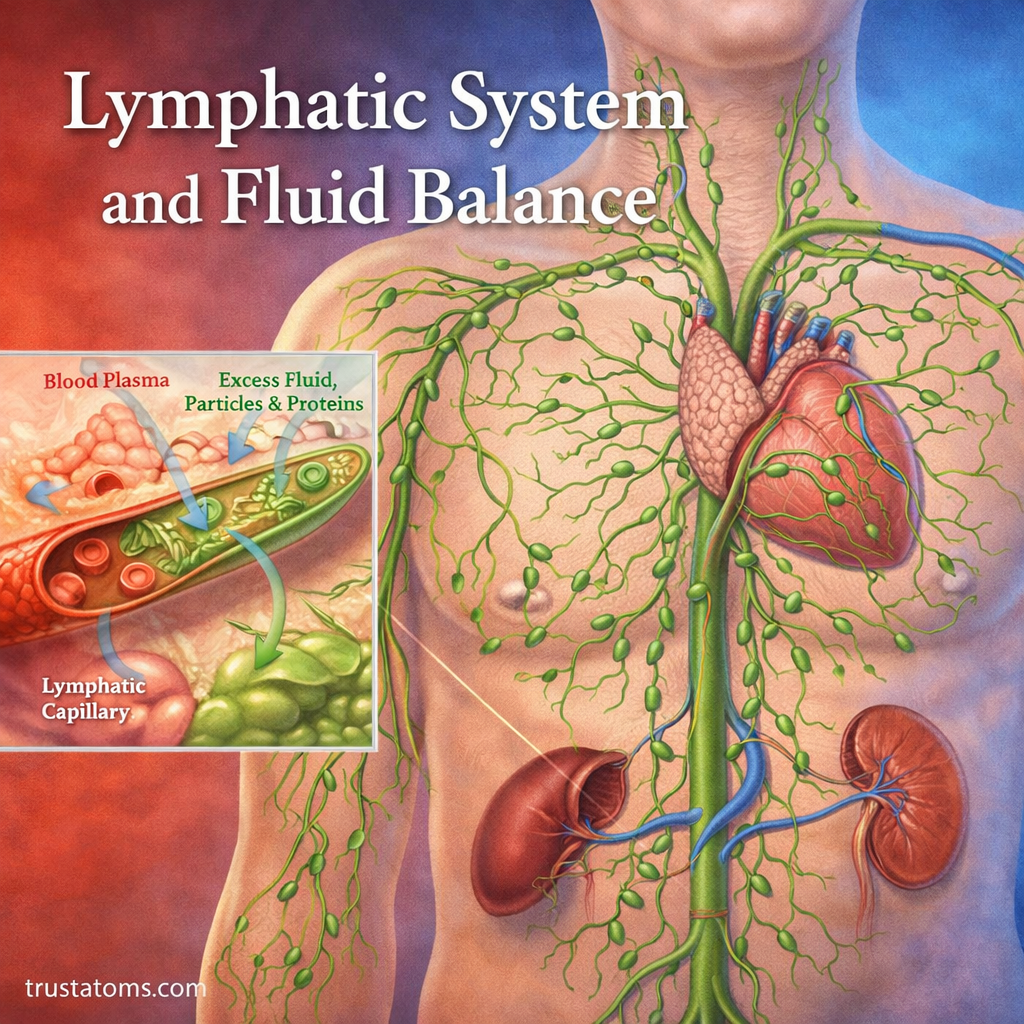
The lymphatic system is a network of vessels, nodes, and organs that transports a clear fluid called lymph throughout the body.
Key components include:
- Lymphatic vessels
- Lymph nodes
- Lymph (fluid containing proteins, waste, and immune cells)
- Organs such as the spleen, thymus, and tonsils
Its primary purpose is to maintain fluid balance and support immune surveillance.
How Fluid Balance Works in the Body
Fluid constantly moves between blood vessels and surrounding tissues.
Capillary Exchange Overview
At the capillary level:
- Fluid exits blood vessels due to hydrostatic pressure
- Some fluid returns via osmotic pressure
- Excess fluid remains in the interstitial (tissue) space
This leftover fluid must be removed to prevent buildup—and that’s where the lymphatic system comes in.
Role of the Lymphatic System in Fluid Balance
The lymphatic system collects excess fluid from tissues and returns it to the bloodstream.
Fluid Collection
Tiny lymphatic capillaries absorb excess interstitial fluid, including:
- Water
- Proteins
- Cellular waste
- Pathogens
These capillaries have one-way openings that allow fluid in but prevent it from leaking back out.
Fluid Transport
Once inside lymphatic vessels, lymph is transported through the body using:
- Muscle movement
- Breathing (thoracic pressure changes)
- One-way valves that prevent backflow
Return to Circulation
Lymph eventually drains into large veins near the heart, restoring fluid to the bloodstream and maintaining balance.
Structure of the Lymphatic System
The lymphatic system is organized to support both fluid regulation and immune protection.
Lymphatic Vessels
These vessels form an extensive network similar to blood vessels but with thinner walls and lower pressure.
They include:
- Lymphatic capillaries (smallest vessels)
- Collecting vessels
- Lymphatic trunks and ducts
Lymph Nodes
Lymph nodes are small, bean-shaped structures that filter lymph.
Their functions include:
- Trapping bacteria and viruses
- Activating immune responses
- Producing lymphocytes (white blood cells)
Common clusters are found in the neck, armpits, and groin.
Lymphatic Organs
Major lymphatic organs include:
- Spleen – filters blood and removes old cells
- Thymus – supports development of T-cells
- Tonsils – help defend against inhaled or ingested pathogens
Importance of Fluid Balance
Maintaining proper fluid balance is essential for overall health.
Preventing Edema
If excess fluid is not removed, it can accumulate in tissues, causing swelling known as edema.
The lymphatic system prevents this by continuously draining excess fluid.
Supporting Cellular Function
Cells rely on a stable environment to function properly. Proper fluid balance ensures:
- Efficient nutrient delivery
- Effective waste removal
- Stable pressure in tissues
Maintaining Blood Volume
By returning fluid to the bloodstream, the lymphatic system helps regulate blood volume and pressure.
Lymphatic System and the Immune Response
Beyond fluid balance, the lymphatic system is a key part of the immune system.
Immune Surveillance
Lymph carries immune cells that monitor for:
- Bacteria
- Viruses
- Abnormal cells
Activation of Immune Cells
When pathogens are detected:
- Lymph nodes activate lymphocytes
- Immune responses are triggered
- Infections are targeted and eliminated
This dual role makes the lymphatic system essential for both defense and stability.
Factors That Affect Lymphatic Flow
Several factors influence how effectively lymph moves through the body.
Positive Influences
- Regular physical activity
- Deep breathing
- Proper hydration
- Healthy circulation
Negative Influences
- Sedentary lifestyle
- Poor circulation
- Dehydration
- Certain medical conditions
Unlike the heart-driven circulatory system, lymph flow depends heavily on body movement.
Disorders of the Lymphatic System
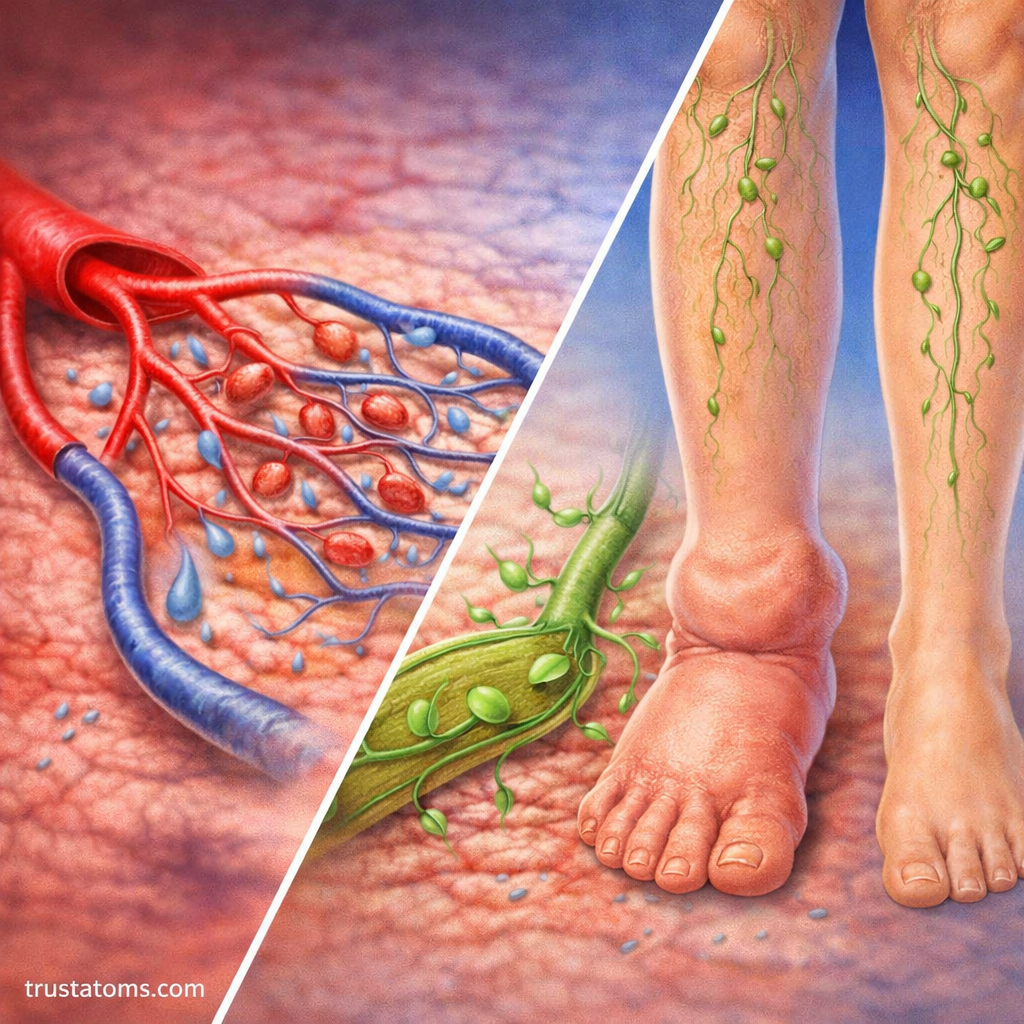
When the lymphatic system is impaired, fluid balance and immune function can be disrupted.
Lymphedema
A condition where lymph fluid builds up in tissues, often causing swelling in the arms or legs.
Common causes:
- Damage to lymph nodes
- Surgery or radiation therapy
- Congenital abnormalities
Infections
Blocked or damaged lymphatic vessels can increase the risk of infections.
Cancer Spread
The lymphatic system can serve as a pathway for cancer cells to spread (metastasis).
How to Support a Healthy Lymphatic System
Maintaining lymphatic health can improve fluid balance and overall well-being.
Practical Tips
- Stay physically active (walking, stretching, exercise)
- Stay hydrated
- Practice deep breathing
- Maintain a balanced diet
- Avoid prolonged inactivity
These habits support natural lymph flow and help prevent fluid buildup.
Final Thoughts
The lymphatic system is essential for maintaining fluid balance and protecting the body from harmful invaders. By continuously collecting excess fluid and returning it to circulation, it prevents swelling and supports cellular health.
Although it works quietly in the background, its role is critical to both daily function and long-term health. Understanding how the lymphatic system operates provides valuable insight into how the body maintains stability and defends itself.