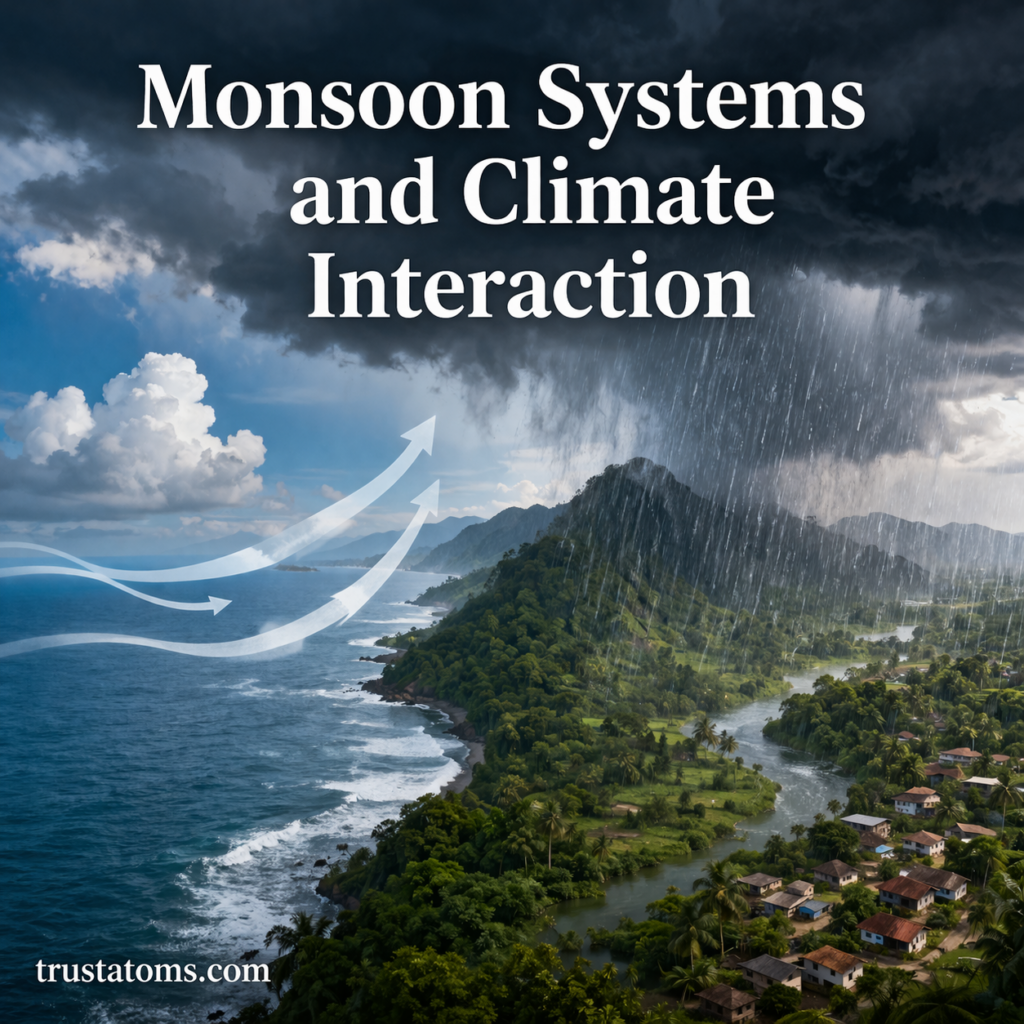
Monsoon systems are among the most powerful and influential climate patterns on Earth. They shape weather, ecosystems, agriculture, and even economies across large regions of the planet.
While often associated with heavy seasonal rains, monsoons are far more complex. They are driven by interactions between land, ocean, and atmospheric circulation—making them a key part of the global climate system.
Understanding how monsoons work and how they interact with climate variability is essential for predicting weather patterns, managing water resources, and preparing for extreme events.
What Is a Monsoon System?
A monsoon is a seasonal shift in wind patterns that leads to distinct wet and dry periods. These systems occur primarily in tropical and subtropical regions.
Key Characteristics of Monsoons
- Seasonal reversal of wind direction
- Strong contrast between wet and dry seasons
- Large-scale atmospheric circulation changes
- Influence over vast geographic areas
The most well-known example is the Asian monsoon, which affects countries like India, China, and Southeast Asia.
How Monsoons Form
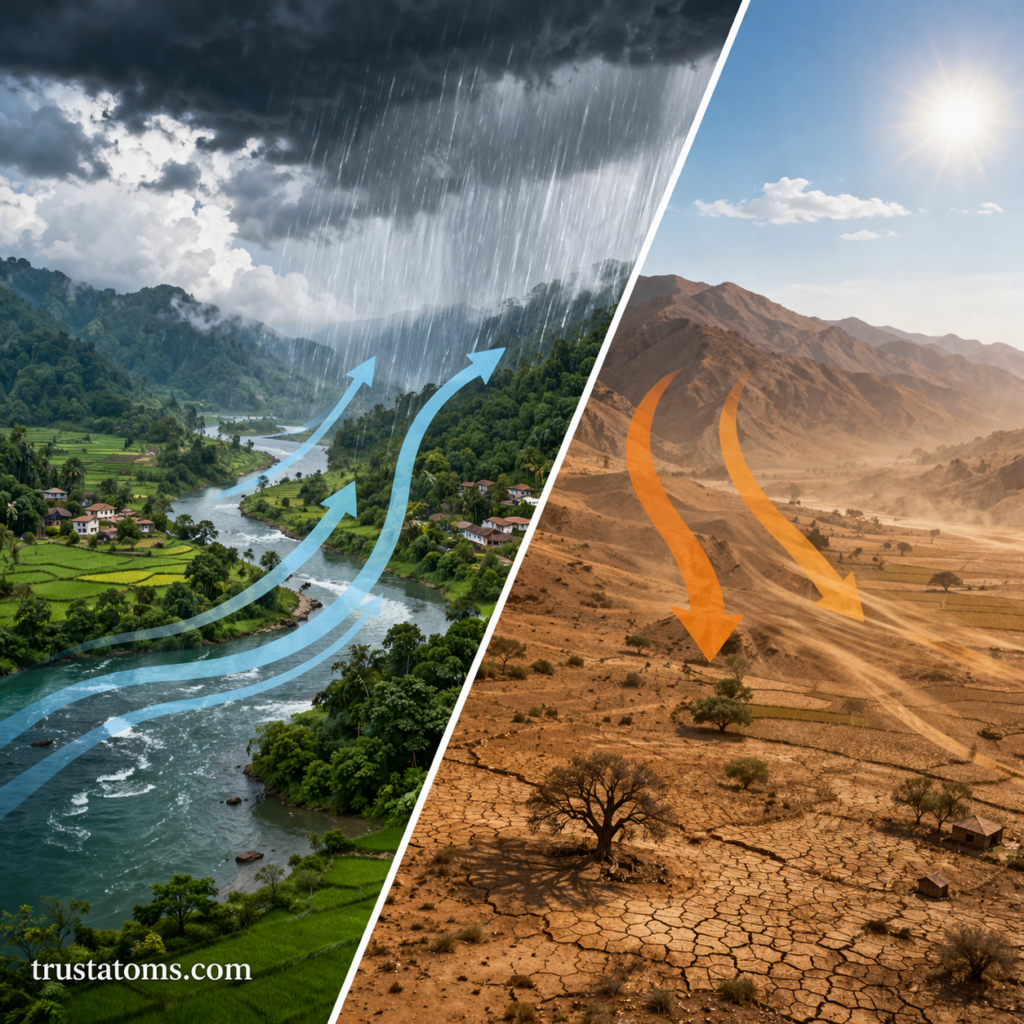
Monsoons are driven by differences in how land and ocean heat up and cool down.
Step-by-Step Formation Process
- During summer, land heats up faster than the ocean
- Warm air over land rises, creating a low-pressure area
- Cooler, moist air from the ocean moves inland
- This moist air rises, cools, and condenses into heavy rainfall
In winter, the process reverses:
- Land cools faster than the ocean
- High pressure forms over land
- Dry air flows from land to sea
- Resulting in dry conditions
This seasonal cycle defines monsoon climates.
Major Monsoon Systems Around the World
Monsoons are not limited to one region—they occur globally.
Asian Monsoon
- The largest and most influential system
- Brings vital rainfall to agriculture-dependent regions
- Can also cause flooding and landslides
West African Monsoon
- Drives rainfall across the Sahel region
- Critical for food production and water supply
North American Monsoon
- Affects parts of Mexico and the southwestern United States
- Brings summer thunderstorms and increased humidity
Australian Monsoon
- Occurs during the Southern Hemisphere summer
- Influences northern Australia and nearby oceans
Monsoons and the Global Climate System
Monsoons are deeply connected to global climate processes.
Atmospheric Circulation
Monsoons are part of larger wind systems that distribute heat and moisture around the planet. They interact with:
- Trade winds
- Jet streams
- Tropical convection zones
Ocean-Atmosphere Interaction
Oceans play a major role in shaping monsoons by regulating temperature and moisture.
Warm ocean waters increase evaporation, which fuels monsoon rainfall. Changes in ocean temperature can strengthen or weaken monsoon intensity.
Influence of Climate Phenomena
Large-scale climate patterns can significantly affect monsoons.
El Niño and La Niña
- El Niño often weakens monsoon rainfall in some regions
- La Niña can enhance rainfall and increase flood risks
Indian Ocean Dipole
- Affects sea surface temperatures in the Indian Ocean
- Can intensify or suppress monsoon activity
Madden-Julian Oscillation (MJO)
- A short-term atmospheric pattern
- Influences the timing and intensity of rainfall within a monsoon season
Impacts of Monsoon Systems
Monsoons have both positive and negative effects.
Benefits
- Provide essential water for agriculture
- Recharge rivers, lakes, and groundwater
- Support ecosystems and biodiversity
Challenges
- Flooding and infrastructure damage
- Landslides in mountainous regions
- Crop loss due to irregular rainfall
- Health risks from waterborne diseases
Climate Change and Monsoon Behavior
Climate change is altering how monsoons behave, making them less predictable.
Observed Trends
- Increased variability in rainfall patterns
- More intense rainfall events over shorter periods
- Longer dry spells between rain events
Potential Future Changes
- Shifts in monsoon timing (earlier or delayed onset)
- Expansion or contraction of monsoon regions
- Greater frequency of extreme weather events
These changes can have serious consequences for food security and water management.
Why Monsoons Matter
Monsoon systems affect billions of people worldwide. Their reliability determines agricultural success, water availability, and disaster risk.
Understanding monsoons helps:
- Improve weather forecasting
- Support climate adaptation strategies
- Enhance disaster preparedness
- Guide sustainable water management
Final Thoughts
Monsoon systems are a vital part of Earth’s climate, connecting land, ocean, and atmosphere in a dynamic cycle.
As climate change continues to influence global weather patterns, studying monsoons becomes increasingly important. Their behavior not only affects local regions but also plays a role in the broader climate system.
By improving our understanding of these powerful systems, we can better prepare for the challenges and opportunities they bring.