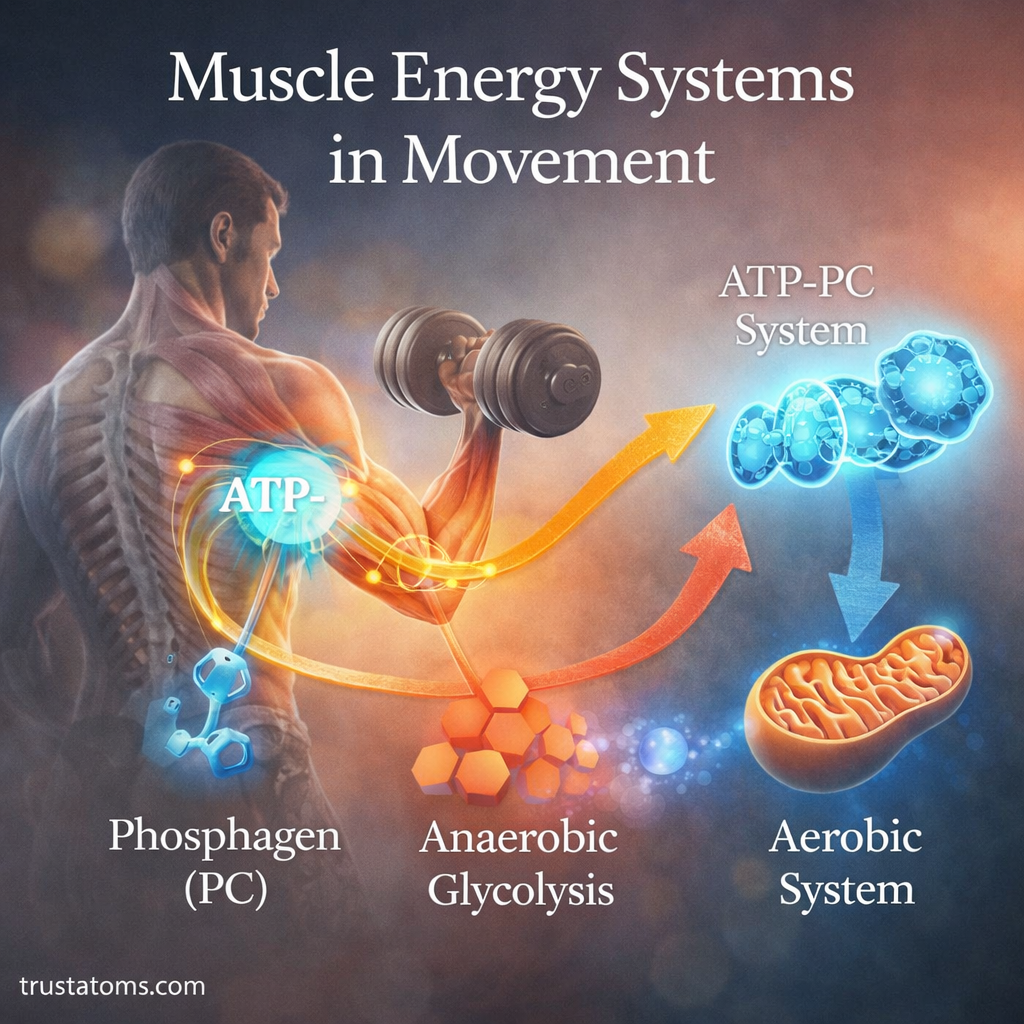
Every movement your body makes—from walking to sprinting—requires energy. This energy comes from specialized muscle energy systems that work together to fuel muscle contractions.
Understanding these systems helps explain how your body performs short bursts of power, sustained activity, and everything in between.
What Are Muscle Energy Systems?
Muscle energy systems are the biological processes that produce ATP (adenosine triphosphate), the primary energy source for muscle contraction.
Without ATP:
- Muscles cannot contract
- Movement cannot occur
- Physical performance stops
Because ATP stores in muscles are limited, the body must constantly regenerate it using different energy systems.
The Three Main Energy Systems
Your body uses three primary energy systems depending on the intensity and duration of activity:
- ATP-PC (Phosphagen) System
- Anaerobic Glycolysis
- Aerobic System
Each system plays a unique role in movement.
1. ATP-PC System (Phosphagen System)
This is the fastest and most powerful energy system.
How It Works
- Uses stored ATP and phosphocreatine (PC) in muscles
- Produces energy instantly
- Does not require oxygen
Duration
- Lasts about 0–10 seconds
Examples
- Sprinting
- Heavy lifting
- Jumping
Key Characteristics
- Very high power output
- Extremely short duration
- Rapid fatigue
2. Anaerobic Glycolysis
This system takes over when activity lasts longer than a few seconds but is still high intensity.
How It Works
- Breaks down glucose (sugar) without oxygen
- Produces ATP quickly
- Generates lactate as a byproduct
Duration
- Lasts about 10 seconds to 2 minutes
Examples
- 400-meter sprint
- High-intensity intervals
- Repeated explosive efforts
Key Characteristics
- Moderate to high power
- Limited duration
- Leads to muscle fatigue (burning sensation)
3. Aerobic System
This system supports long-duration, lower-intensity activity.
How It Works
- Uses oxygen to convert carbohydrates, fats, and sometimes proteins into ATP
- Produces energy more slowly but efficiently
Duration
- Can last for minutes to hours
Examples
- Walking
- Jogging
- Cycling
- Endurance sports
Key Characteristics
- Low to moderate power
- Very high endurance
- Sustainable energy production
How the Energy Systems Work Together
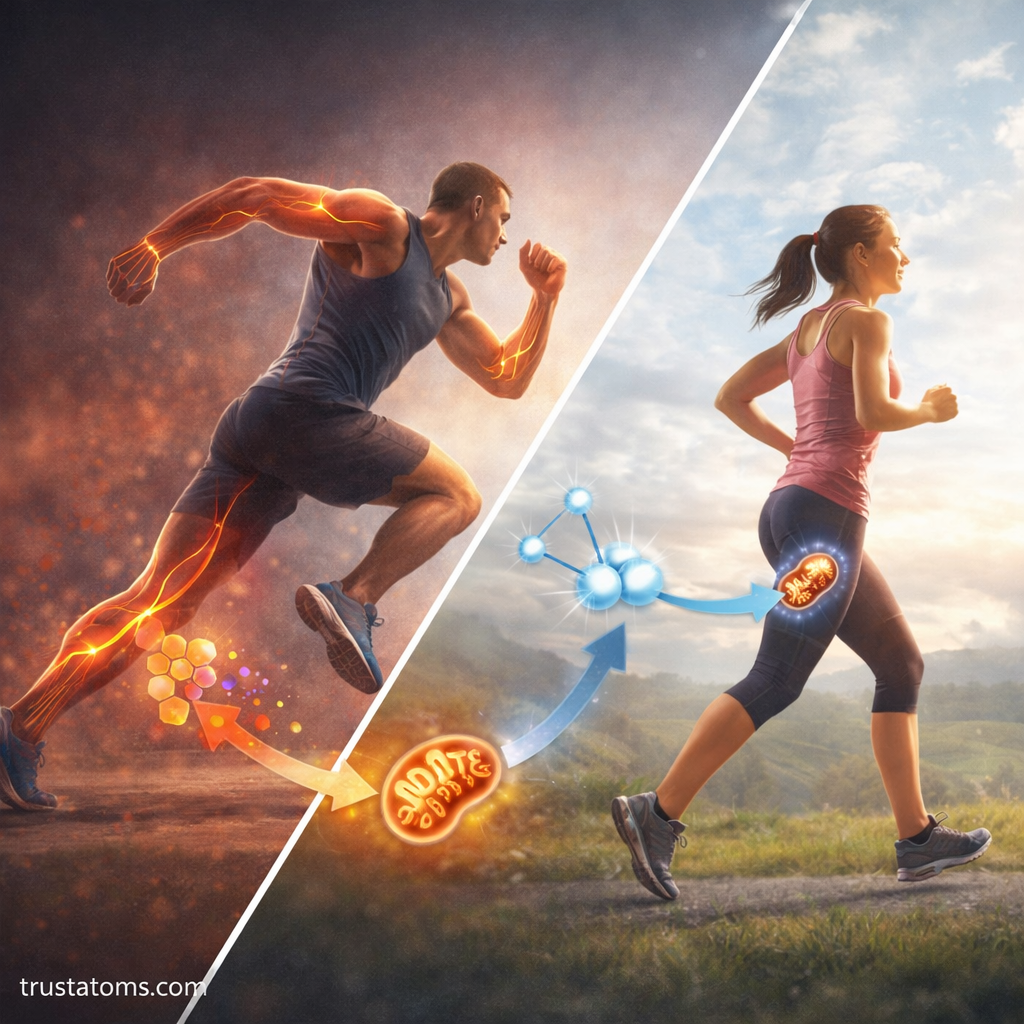
These systems do not work independently. Instead, they operate on a continuum, with one system becoming more dominant depending on the activity.
Example: Running
- Start sprint → ATP-PC system dominates
- Continue running fast → anaerobic glycolysis increases
- Settle into pace → aerobic system takes over
Key Insight
- All three systems are always active
- The body shifts emphasis based on demand
Factors That Influence Energy System Use
Several factors determine which energy system is most active:
1. Exercise Intensity
- High intensity → ATP-PC and anaerobic systems
- Low intensity → aerobic system
2. Duration of Activity
- Short duration → ATP-PC
- Medium duration → anaerobic glycolysis
- Long duration → aerobic
3. Fitness Level
- Trained individuals use energy more efficiently
- Better endurance = stronger aerobic system
4. Nutrition
- Carbohydrates fuel high-intensity efforts
- Fats support long-duration activity
Muscle Fatigue and Energy Systems
Fatigue occurs when energy production cannot meet demand.
Common Causes
- Depletion of phosphocreatine (ATP-PC system)
- Accumulation of lactate (anaerobic system)
- Depletion of glycogen stores (aerobic system)
What It Feels Like
- Burning sensation in muscles
- Reduced strength and speed
- Loss of coordination
Energy Systems in Everyday Movement
Even daily activities rely on these systems:
Examples
- Climbing stairs → ATP-PC + anaerobic
- Carrying groceries → mixed systems
- Walking long distances → aerobic
Your body constantly adjusts energy production based on what you’re doing.
Training and Energy System Development
Different types of training target specific energy systems.
ATP-PC Training
- Heavy weightlifting
- Short sprints
- Plyometrics
Anaerobic Training
- High-intensity interval training (HIIT)
- Circuit training
- Repeated sprint efforts
Aerobic Training
- Steady-state cardio
- Long-distance running
- Cycling or swimming
Why Understanding Energy Systems Matters
Learning how muscle energy systems work helps you:
- Improve athletic performance
- Train more effectively
- Reduce fatigue
- Optimize recovery
- Match workouts to specific goals
Final Thoughts
Muscle energy systems are essential for all movement, from quick bursts of power to sustained endurance. By working together, they ensure your body can adapt to any physical demand.
Whether you’re lifting weights, running, or simply going about your day, these systems are constantly producing the energy needed to keep you moving.