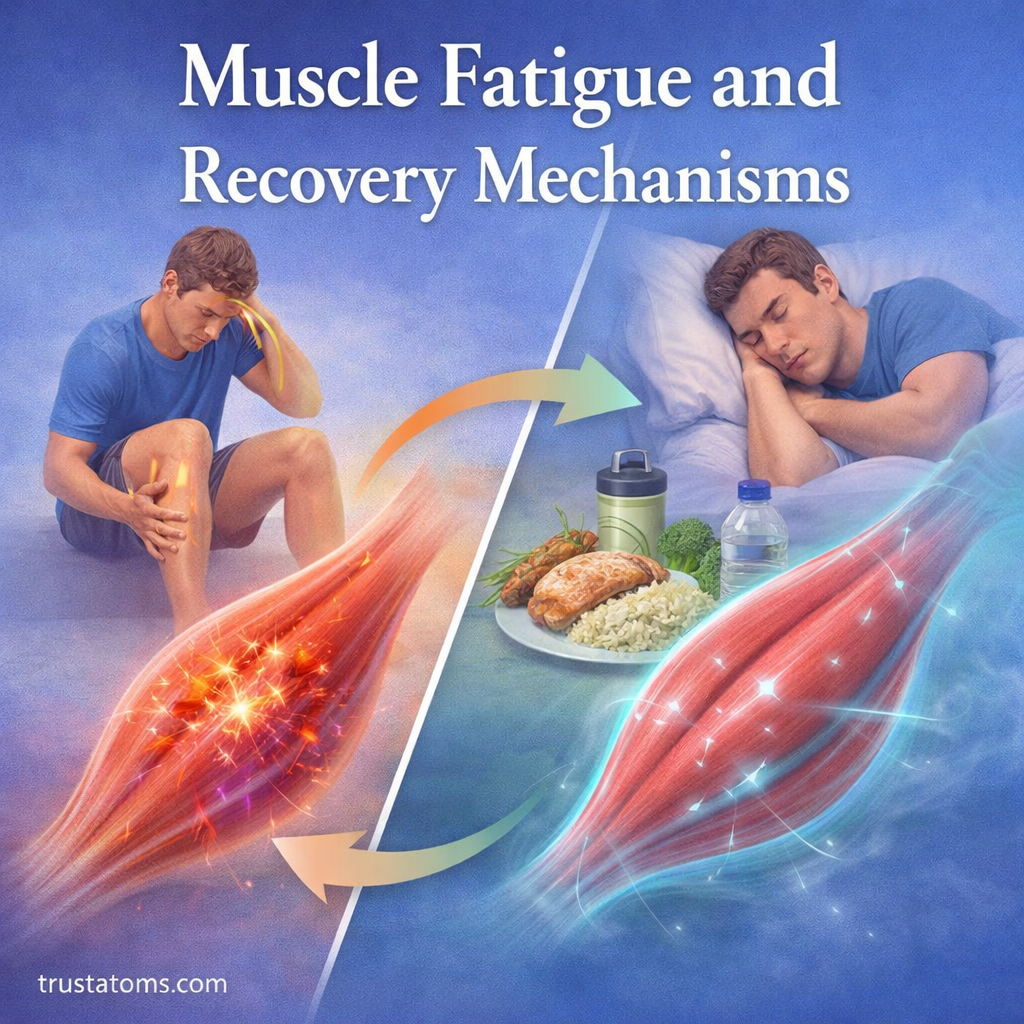
Muscle fatigue is a natural part of physical activity. Whether you’re exercising, working, or performing repetitive tasks, your muscles eventually lose the ability to generate the same level of force. Fortunately, the body has built-in recovery mechanisms that repair and strengthen muscles over time.
Understanding how muscle fatigue and recovery work can help you improve performance, prevent injury, and optimize overall health.
What Is Muscle Fatigue?
Muscle fatigue refers to the decline in a muscle’s ability to produce force during sustained activity. It can happen quickly during intense exercise or gradually during prolonged effort.
Types of Muscle Fatigue
- Acute fatigue
Occurs during or immediately after activity - Chronic fatigue
Develops over time due to overtraining or insufficient recovery
What Causes Muscle Fatigue?
Muscle fatigue is not caused by a single factor. Instead, it results from multiple physiological processes working together.
1. Energy Depletion
Muscles rely on energy sources such as:
- ATP (adenosine triphosphate)
- Glycogen (stored carbohydrates)
As these energy stores decrease, muscle performance declines.
2. Metabolic Byproducts
During exercise, the body produces byproducts such as:
- Hydrogen ions
- Lactate
These can contribute to the sensation of fatigue and reduce muscle efficiency.
3. Nervous System Fatigue
The brain and nervous system also play a role.
- Reduced signal strength from the brain
- Slower communication with muscle fibers
This type of fatigue is often called central fatigue.
4. Oxygen Availability
During intense activity, oxygen delivery may not keep up with demand, leading to:
- Reduced aerobic energy production
- Increased reliance on anaerobic pathways
Signs of Muscle Fatigue
You may notice several physical and performance-related signs:
- Decreased strength
- Slower movement
- Muscle soreness
- Shaking or trembling
- Reduced coordination
These signals indicate that your muscles need rest and recovery.
What Happens During Recovery?
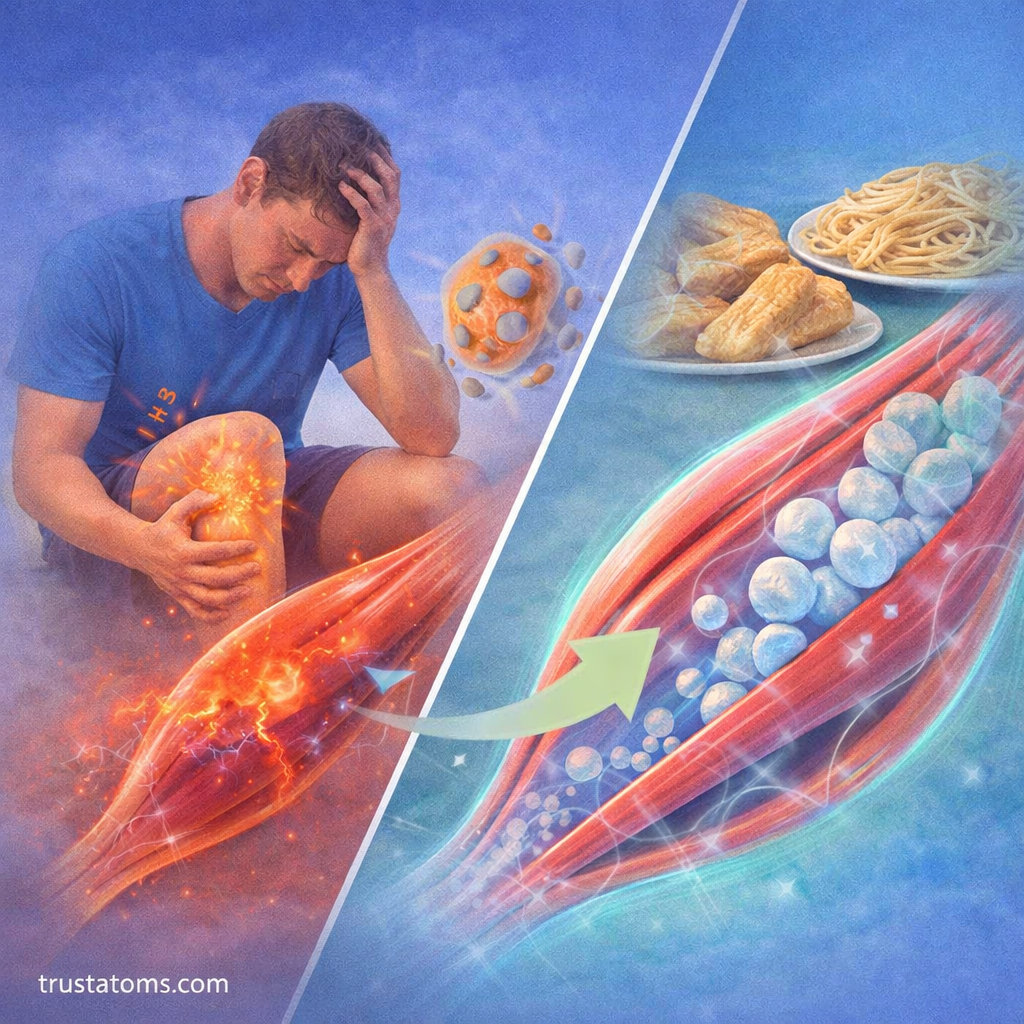
Recovery is the process where the body repairs and adapts after fatigue.
Key Recovery Processes
- Muscle fiber repair
Tiny tears in muscle fibers are repaired and rebuilt - Energy replenishment
ATP and glycogen stores are restored - Waste removal
Metabolic byproducts are cleared - Protein synthesis
New proteins are built to strengthen muscle tissue
The Role of Muscle Adaptation
Recovery doesn’t just restore muscles—it improves them.
Adaptation Benefits
- Increased strength
- Improved endurance
- Better efficiency in movement
- Greater resistance to fatigue
This process is known as progressive adaptation and is essential for fitness improvement.
Factors That Affect Recovery
Recovery speed and effectiveness depend on several factors.
Internal Factors
- Age
- Genetics
- Fitness level
- Hormonal balance
External Factors
- Nutrition
- Sleep quality
- Hydration
- Training intensity
Nutrition and Muscle Recovery
Proper nutrition plays a major role in recovery.
Key Nutrients
- Protein
Supports muscle repair and growth - Carbohydrates
Replenish glycogen stores - Healthy fats
Support overall cellular function - Electrolytes
Help maintain fluid balance and muscle function
Importance of Rest and Sleep
Sleep is one of the most powerful recovery tools.
Benefits of Quality Sleep
- Enhances muscle repair
- Supports hormone regulation (e.g., growth hormone)
- Improves energy restoration
- Reduces inflammation
Lack of sleep can slow recovery and increase fatigue.
Active vs Passive Recovery
Both types of recovery can be beneficial depending on the situation.
Active Recovery
- Light activity (walking, stretching)
- Promotes blood flow
- Helps reduce stiffness
Passive Recovery
- Complete rest
- Allows deeper muscle repair
A combination of both is often most effective.
Common Mistakes to Avoid
Avoid these mistakes to support better recovery:
- Skipping rest days
- Overtraining without adequate recovery
- Poor nutrition habits
- Ignoring signs of fatigue
- Inconsistent sleep patterns
How to Improve Recovery
You can optimize recovery with simple strategies.
Practical Tips
- Stay hydrated throughout the day
- Eat balanced meals with protein and carbs
- Prioritize 7–9 hours of sleep
- Incorporate rest days into your routine
- Use stretching or mobility work regularly
Muscle Fatigue in Everyday Life
Muscle fatigue isn’t limited to exercise. It can also affect:
- Standing for long periods
- Repetitive work tasks
- Carrying heavy objects
- Poor posture over time
Managing fatigue in daily life can improve comfort and reduce strain.
Final Thoughts
Muscle fatigue is a normal and necessary part of physical activity. It signals that your muscles have been challenged, which is essential for growth and improvement. However, recovery is just as important as the activity itself.
By understanding how fatigue occurs and how recovery works, you can support your body more effectively—leading to better performance, fewer injuries, and long-term health benefits.