Human nails may seem simple, but they are highly specialized structures that protect your fingers and toes while supporting everyday tasks. From gripping objects to detecting fine touch, nails play a bigger role in daily life than most people realize.
In this guide, we’ll break down the anatomy of nails, how they grow, and why they matter for both function and health.
What Are Nails?
Nails are hard, protective coverings made primarily of a protein called keratin. They are part of the integumentary system, which also includes skin and hair.
There are two main types:
- Fingernails (on the hands)
- Toenails (on the feet)
Although similar in structure, toenails tend to grow more slowly and are often thicker than fingernails.
Nail Structure Explained
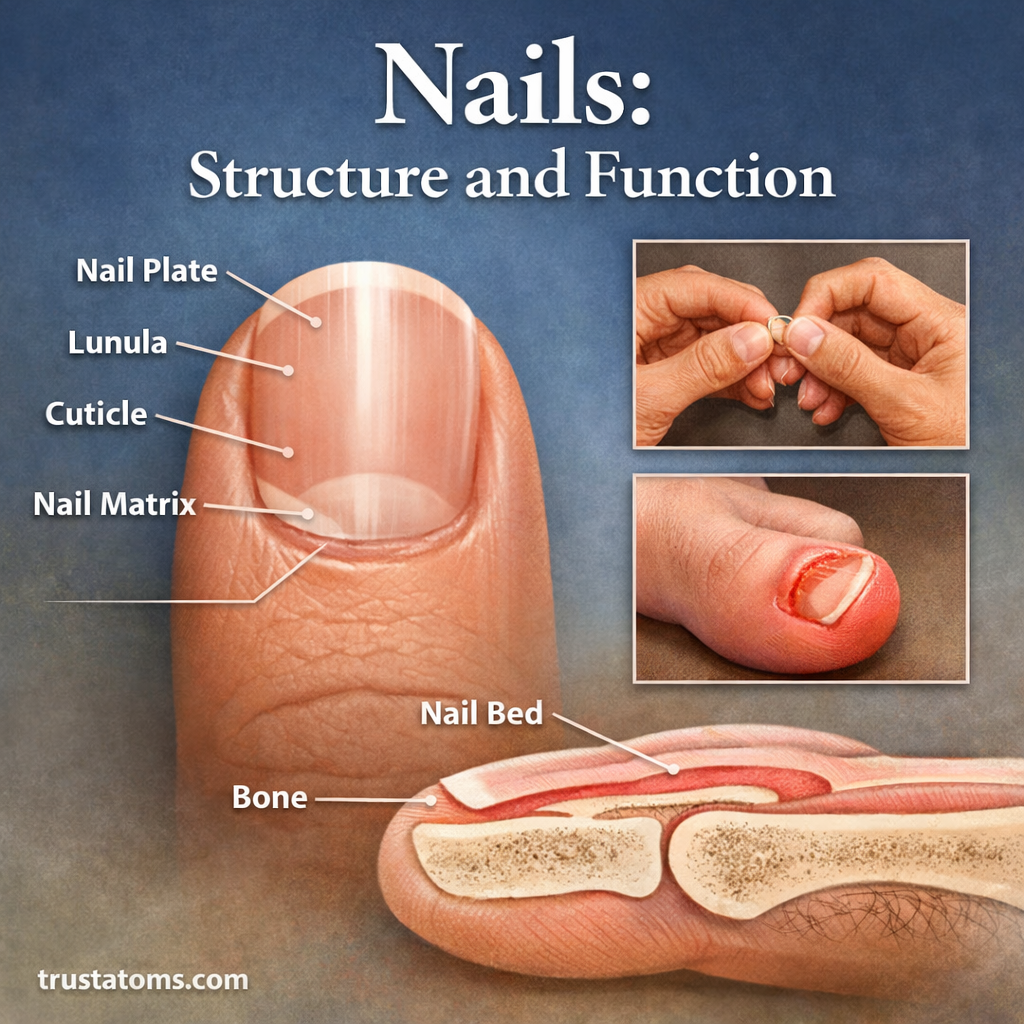
The nail is more than just the visible hard surface. It consists of several key components working together.
Nail Plate
The nail plate is the hard, visible part of the nail.
- Made of densely packed keratin
- Appears translucent
- Protects the sensitive tissue underneath
Nail Bed
The nail bed lies directly beneath the nail plate.
- Rich in blood vessels (gives nails their pink color)
- Supports nail growth and attachment
- Supplies nutrients to the nail
Nail Matrix
The nail matrix is the growth center of the nail, located beneath the skin at the base.
- Produces new nail cells
- Determines nail thickness and shape
- Damage here can permanently affect nail growth
The visible portion of the matrix is called the lunula.
Lunula
The lunula is the pale, crescent-shaped area at the base of the nail.
- Most visible on thumbs
- Indicates active nail growth
- Size varies from person to person
Cuticle (Eponychium)
The cuticle is a thin layer of skin that overlaps the nail plate at the base.
- Acts as a protective barrier
- Prevents bacteria from entering the nail matrix
- Should not be aggressively removed
Nail Folds
Nail folds are the skin surrounding the sides and base of the nail.
- Provide structural support
- Help anchor the nail in place
- Protect developing nail tissue
How Nails Grow
Nail growth is a continuous process driven by cell production in the matrix.
Growth Process
- New cells form in the nail matrix
- Older cells are pushed forward
- Cells flatten, harden, and form the nail plate
Growth Rate
- Fingernails grow about 3 mm per month
- Toenails grow about 1 mm per month
Factors that influence growth include:
- Age
- Nutrition
- Overall health
- Blood circulation
Functions of Nails
Nails serve several important biological and practical functions.
Protection
- Shield fingertips and toes from injury
- Protect sensitive nerve endings
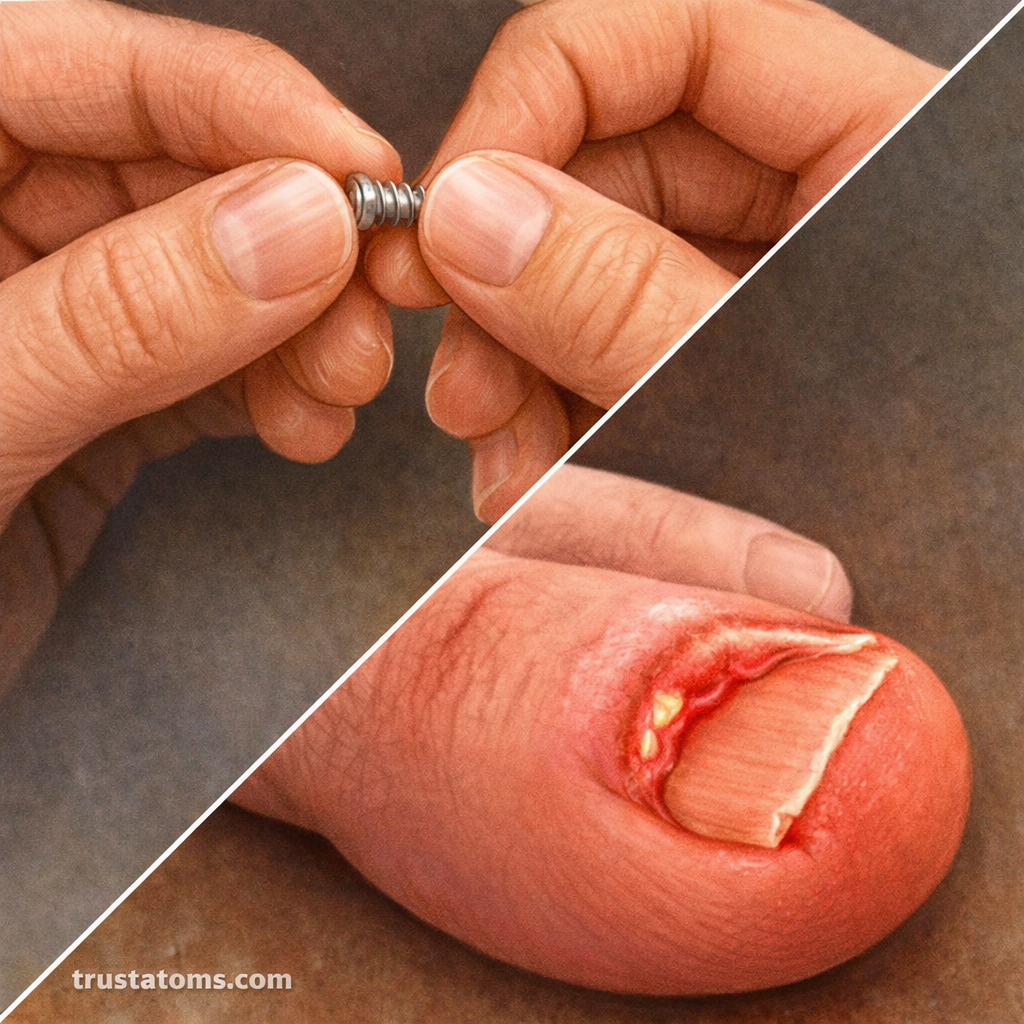
Enhanced Dexterity
- Help with gripping small objects
- Improve precision in tasks like typing or picking up items
Sensory Support
- Provide counterpressure to enhance touch sensitivity
- Help detect fine textures
Defense and Grooming
- Assist in scratching and self-care
- Help remove irritants from the skin
Nail Health and What It Reveals
Nails can offer clues about overall health. Changes in color, texture, or shape may signal underlying conditions.
Common Healthy Nail Traits
- Smooth surface
- Consistent color (light pink)
- Strong but flexible texture
Signs to Watch For
- Yellowing or discoloration
- Thickening or brittleness
- Ridges or dents
- Separation from the nail bed
These changes can be linked to:
- Nutrient deficiencies
- Infections
- Circulatory issues
- Systemic conditions
Common Nail Problems
Understanding common nail issues helps with early detection and care.
Fungal Infections
- Cause thick, discolored nails
- More common in toenails
Ingrown Nails
- Nail grows into surrounding skin
- Can cause pain and inflammation
Brittle Nails
- Often due to dryness or repeated exposure to chemicals
- May also indicate nutritional deficiencies
Nail Trauma
- Injuries can cause discoloration or temporary growth disruption
- Severe damage to the matrix may lead to permanent changes
How to Maintain Healthy Nails
Proper care helps keep nails strong and functional.
Daily Care Tips
- Keep nails clean and dry
- Trim nails regularly
- Avoid biting or picking
- Moisturize cuticles
Lifestyle Tips
- Eat a balanced diet rich in protein, vitamins, and minerals
- Stay hydrated
- Limit exposure to harsh chemicals
- Wear protective footwear when needed
Final Thoughts
Nails are more than cosmetic features—they are essential tools for protection, precision, and sensory interaction. Their structure is carefully designed to support daily activities while offering insight into overall health.
By understanding how nails work and how to care for them, you can maintain both their function and appearance over time.