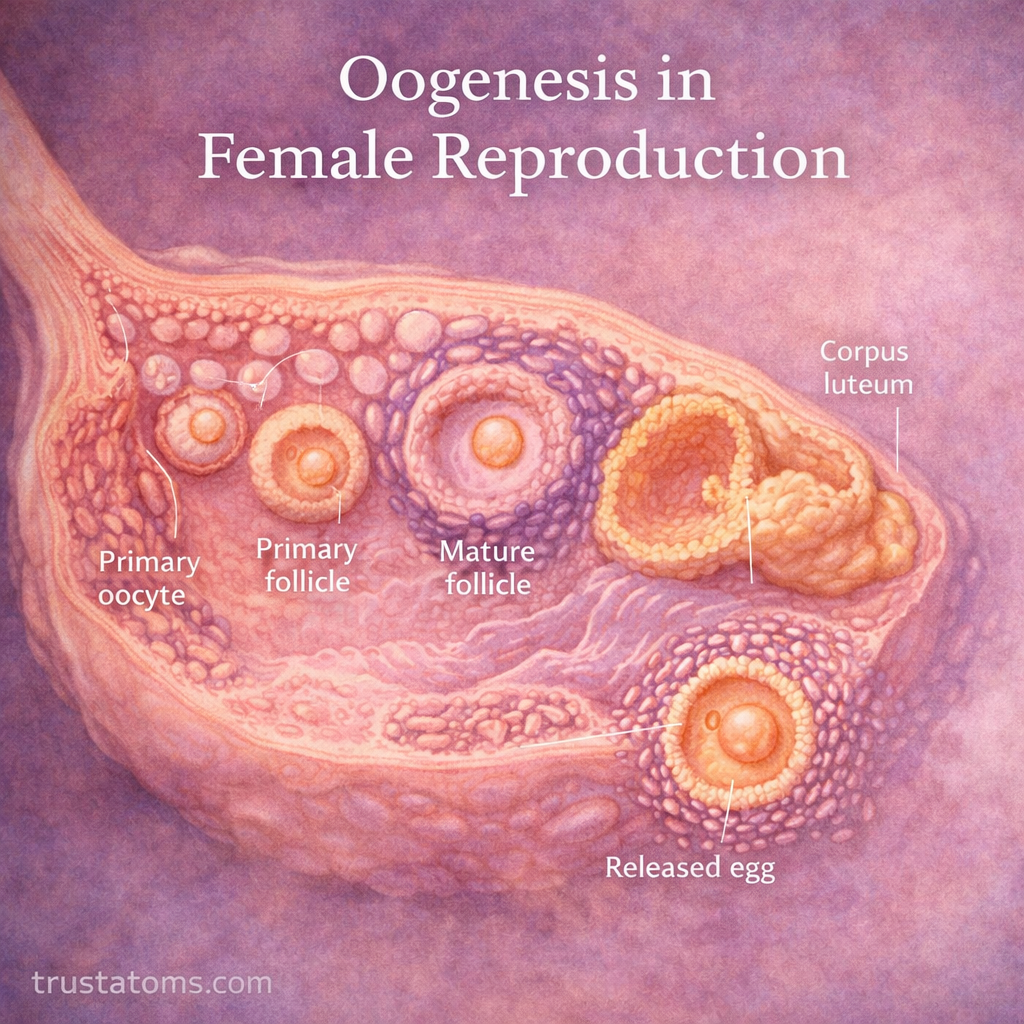
Oogenesis is the biological process through which female reproductive cells, known as eggs (ova), are produced. This process occurs in the ovaries and is essential for human reproduction, as it generates the cells required for fertilization.
Unlike sperm production, oogenesis is a cyclical and finite process that begins before birth and continues until menopause.
What Is Oogenesis?
Oogenesis is a specialized form of cell division that transforms immature germ cells into mature egg cells.
- Occurs in the ovaries
- Produces haploid egg cells with 23 chromosomes
- Involves long pauses in development
- Typically results in one mature egg per menstrual cycle
The goal of oogenesis is to produce a viable egg capable of being fertilized by a sperm cell.
Where Oogenesis Occurs
Ovaries
Oogenesis takes place within structures in the ovaries called follicles.
- Each follicle contains an immature egg (oocyte)
- Follicles support and nourish the developing egg
- Only a small number of follicles mature during reproductive years
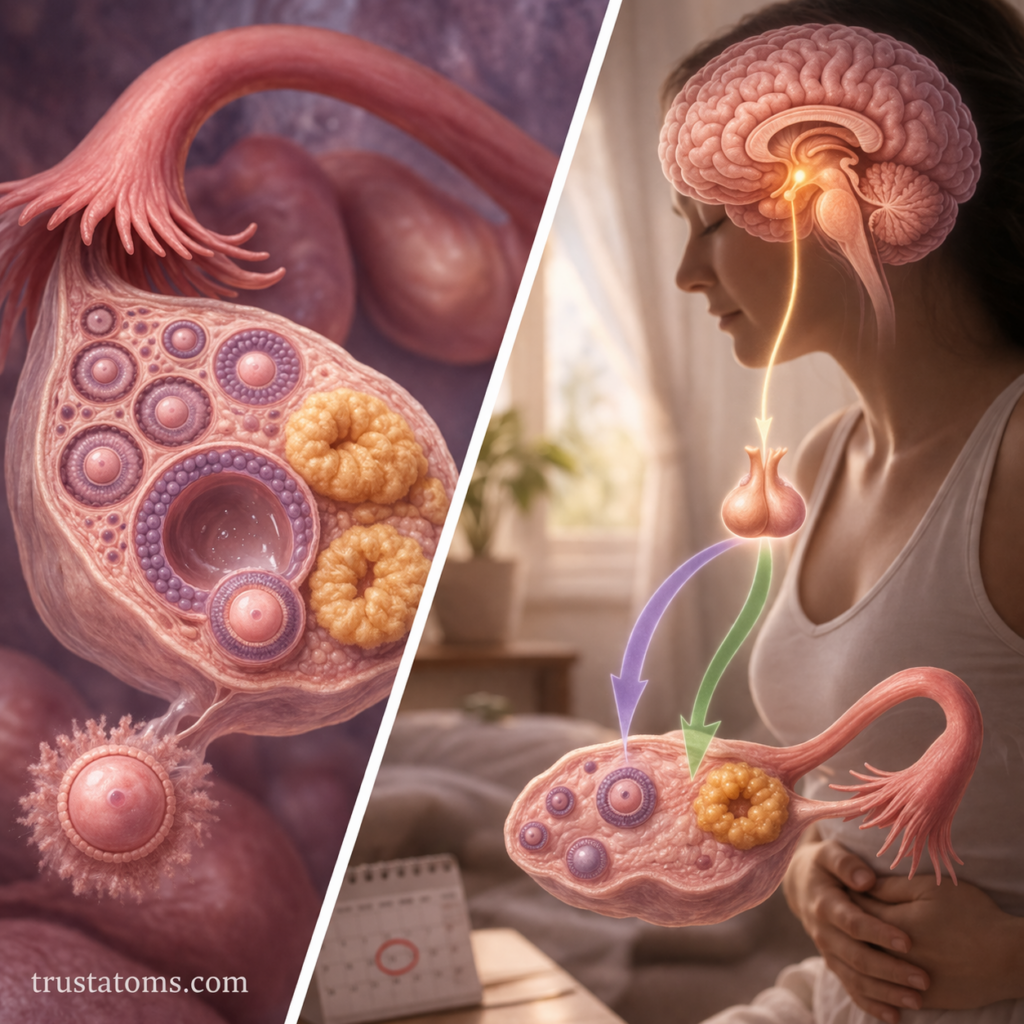
The ovaries also produce key reproductive hormones that regulate the process.
Stages of Oogenesis
Oogenesis is unique because it spans many years and includes periods of inactivity. It occurs in three main stages:
1. Fetal Stage (Before Birth)
- Oogonia (stem cells) multiply through mitosis
- Develop into primary oocytes
- Meiosis begins but pauses early (prophase I)
At birth, females already have all the primary oocytes they will ever have.
2. Puberty and Ovulation Phase
- Hormonal signals restart meiosis in selected oocytes
- Each menstrual cycle, one oocyte continues development
- Meiosis I completes, forming:
- A secondary oocyte
- A polar body (a smaller cell that typically degenerates)
The secondary oocyte begins meiosis II but pauses again.
3. Completion After Fertilization
- Meiosis II only completes if fertilization occurs
- Produces:
- A mature ovum (egg cell)
- Another polar body
If fertilization does not occur, the oocyte breaks down and is shed during menstruation.
Structure of a Mature Egg Cell
The egg cell is one of the largest cells in the human body and is highly specialized.
Key Features
- Nucleus
- Contains 23 chromosomes
- Holds genetic material
- Cytoplasm
- Rich in nutrients and organelles
- Supports early development after fertilization
- Zona Pellucida
- Protective outer layer
- Helps regulate sperm entry
- Corona Radiata
- Layer of surrounding cells
- Provides additional protection and support
These features help ensure successful fertilization and early embryonic development.
Hormonal Regulation of Oogenesis
Oogenesis is tightly controlled by hormones.
Key Hormones
- Follicle-stimulating hormone (FSH)
- Stimulates follicle development in the ovaries
- Luteinizing hormone (LH)
- Triggers ovulation (release of the egg)
- Estrogen
- Supports follicle growth and uterine lining development
- Progesterone
- Prepares the uterus for possible pregnancy
These hormones are regulated by the hypothalamus and pituitary gland in the brain.
Timeline and Characteristics of Oogenesis
Oogenesis differs significantly from spermatogenesis.
- Begins before birth
- Pauses for years before resuming
- Produces one mature egg per cycle
- Ends at menopause
This makes it a slower, more limited process compared to continuous sperm production.
Key Differences Between Oogenesis and Spermatogenesis
Production Rate
- Oogenesis: one egg per cycle
- Spermatogenesis: millions of sperm daily
Timing
- Oogenesis: begins before birth
- Spermatogenesis: begins at puberty
Cell Division Outcome
- Oogenesis: produces one functional egg and polar bodies
- Spermatogenesis: produces four functional sperm
Resource Allocation
- Egg: large, nutrient-rich
- Sperm: small, mobile
Common Issues Related to Oogenesis
Problems with oogenesis can affect fertility and reproductive health.
- Poor egg quality
- Hormonal imbalances
- Premature ovarian insufficiency
- Polycystic ovary syndrome (PCOS)
- Chromosomal abnormalities
These issues can interfere with egg development or ovulation.
Why Oogenesis Matters
Oogenesis is essential for:
- Female fertility and reproduction
- Passing genetic information to offspring
- Supporting early stages of development
It also reflects overall reproductive and hormonal health.
Final Thoughts
Oogenesis is a complex and long-term process that begins before birth and continues throughout a woman’s reproductive life. With its unique pauses and cyclical nature, it differs significantly from sperm production but is equally vital for reproduction.
Understanding oogenesis provides valuable insight into fertility, hormonal regulation, and the biological processes that support human life.