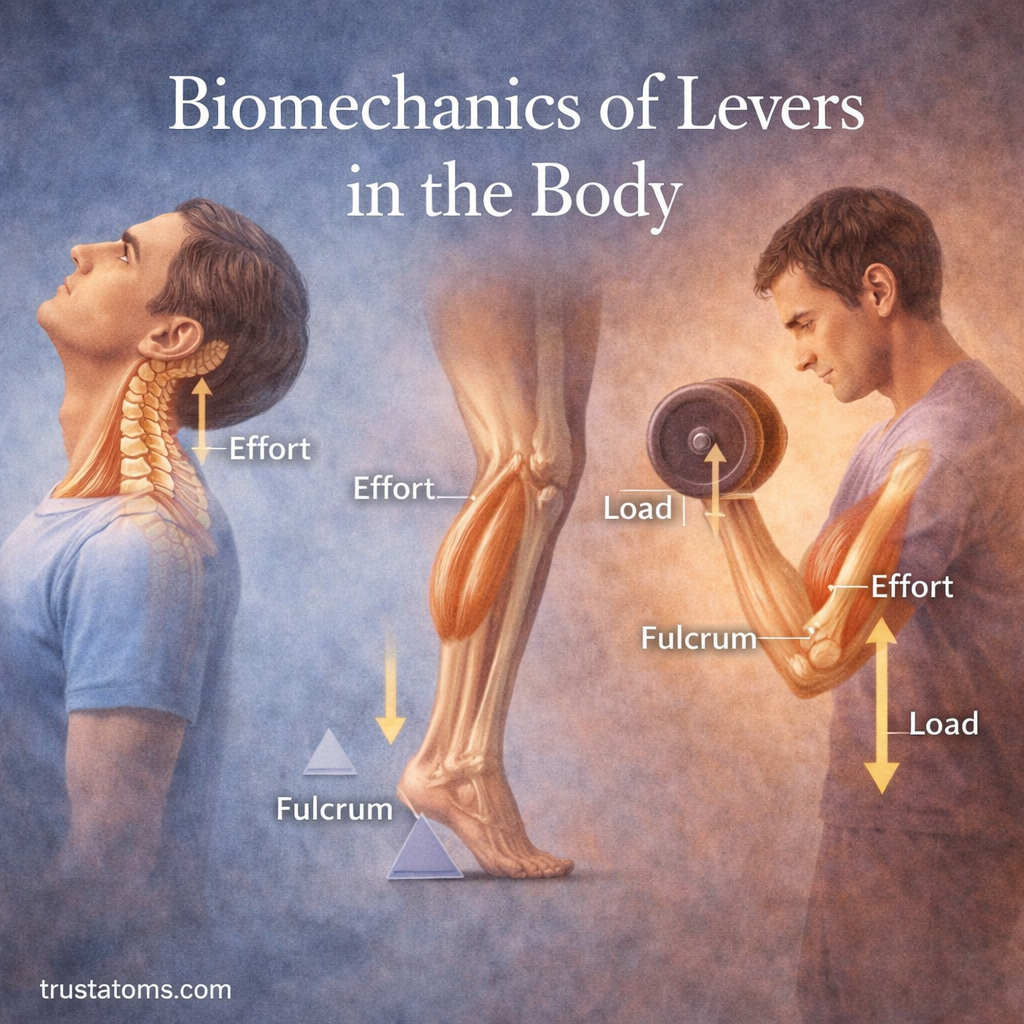
Biomechanics of Levers in the Body

Illustration showing first, second, and third-class levers in the human body including neck movement, tiptoe stance, and bicep curl.
Illustration of lever systems in the human body demonstrating force, fulcrum, and load relationships. trustatoms.com.

The human body is an efficient mechanical system that uses levers to produce movement, generate force, and maintain balance. These levers are formed by bones, joints, and muscles working together to perform everything from lifting objects to running and jumping.

Understanding the biomechanics of levers helps explain how the body moves and why certain movements feel easier or more powerful than others.

Continue reading “Biomechanics of Levers in the Body”
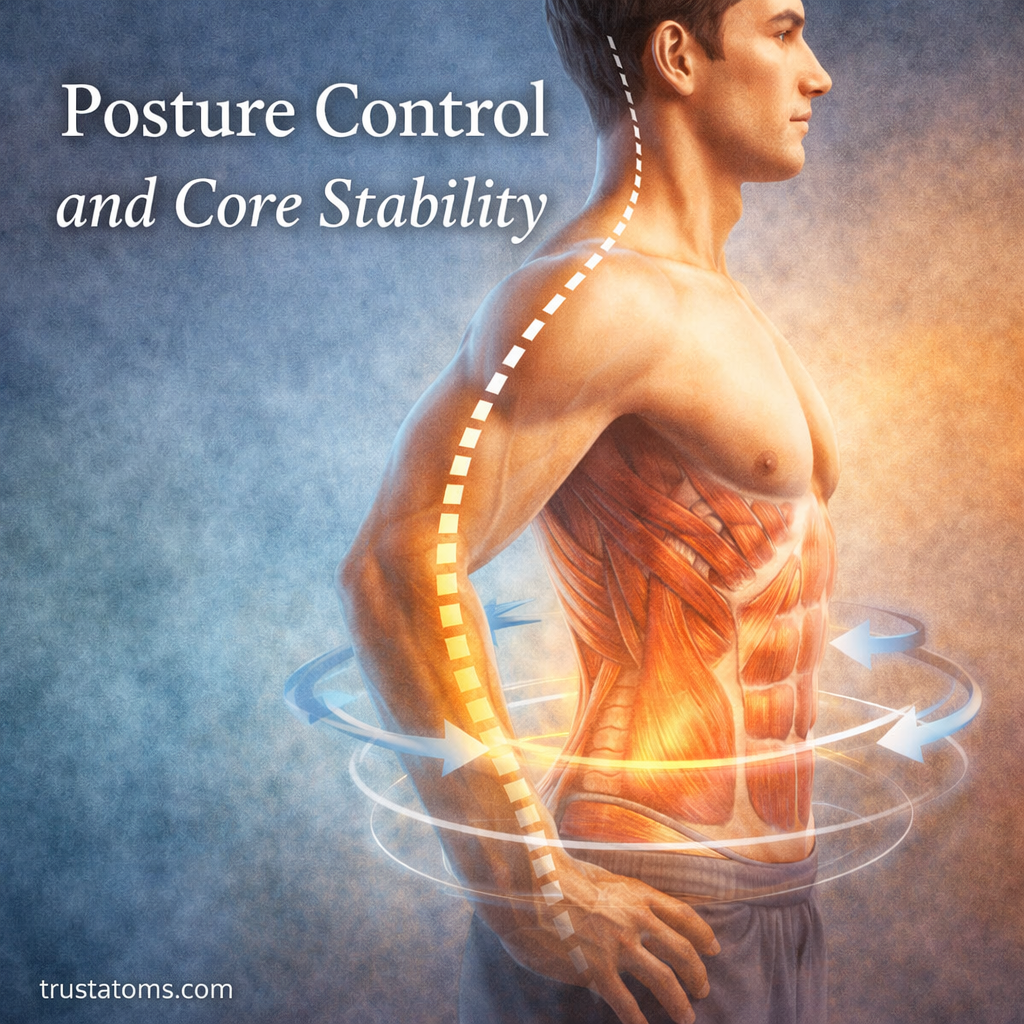
Posture Control and Core Stability

Illustration of human posture alignment and core muscles showing spinal support and stability.
Illustration highlighting posture control and core stability with spinal alignment and core muscle engagement. trustatoms.com.

Posture control and core stability are essential for maintaining balance, preventing injury, and supporting efficient movement. Whether sitting, standing, or exercising, the body relies on a coordinated system of muscles and joints to keep the spine aligned and stable.

Understanding how posture and core stability work together can help improve everyday comfort and long-term musculoskeletal health.

Continue reading “Posture Control and Core Stability”

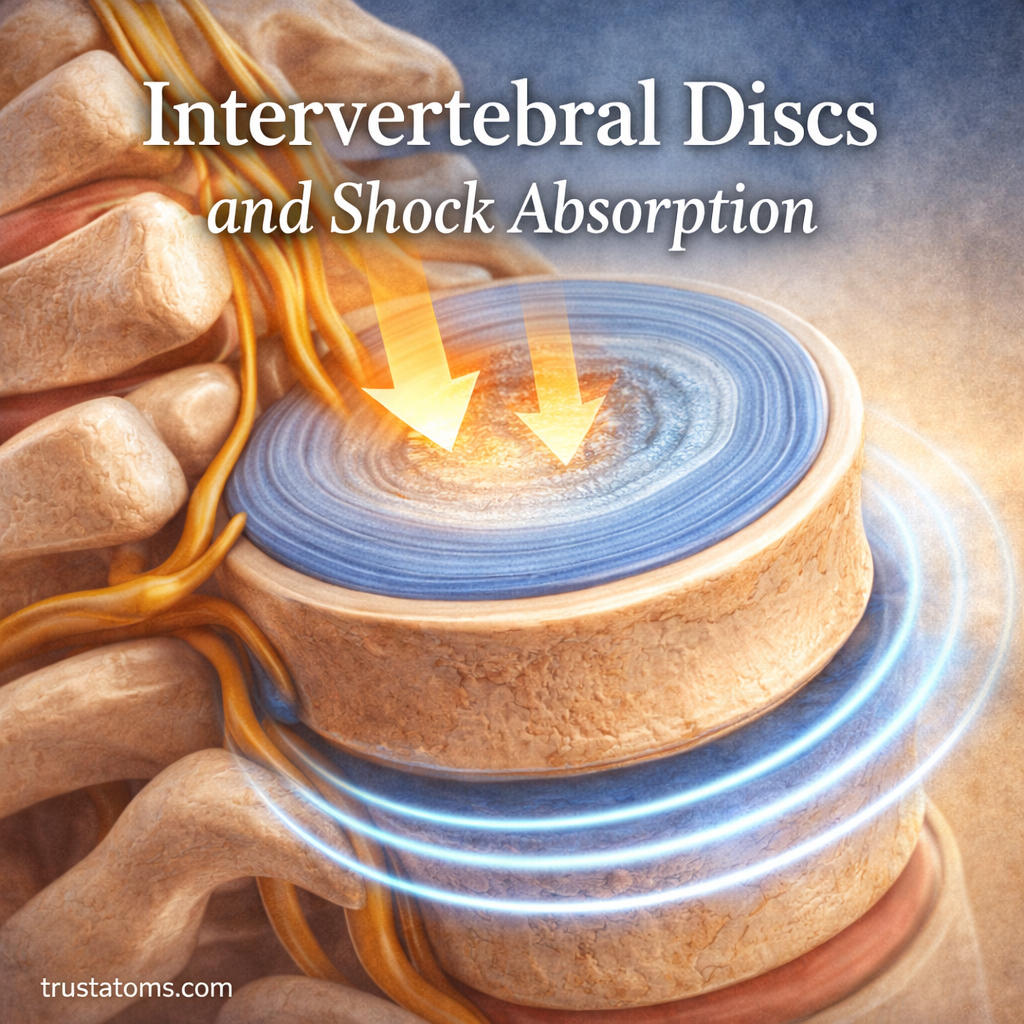
Intervertebral Discs and Shock Absorption

Illustration of intervertebral discs showing nucleus pulposus and annulus fibrosus absorbing pressure between vertebrae.
Close-up illustration of intervertebral discs demonstrating shock absorption between spinal vertebrae. trustatoms.com.

Intervertebral discs are essential structures in the human spine that allow flexibility, stability, and shock absorption. These small but powerful components sit between each vertebra and play a crucial role in protecting the spine from daily stress and impact.

Understanding how intervertebral discs function helps explain posture, movement, and common causes of back pain.

Continue reading “Intervertebral Discs and Shock Absorption”

Spinal Curvatures and Load Distribution

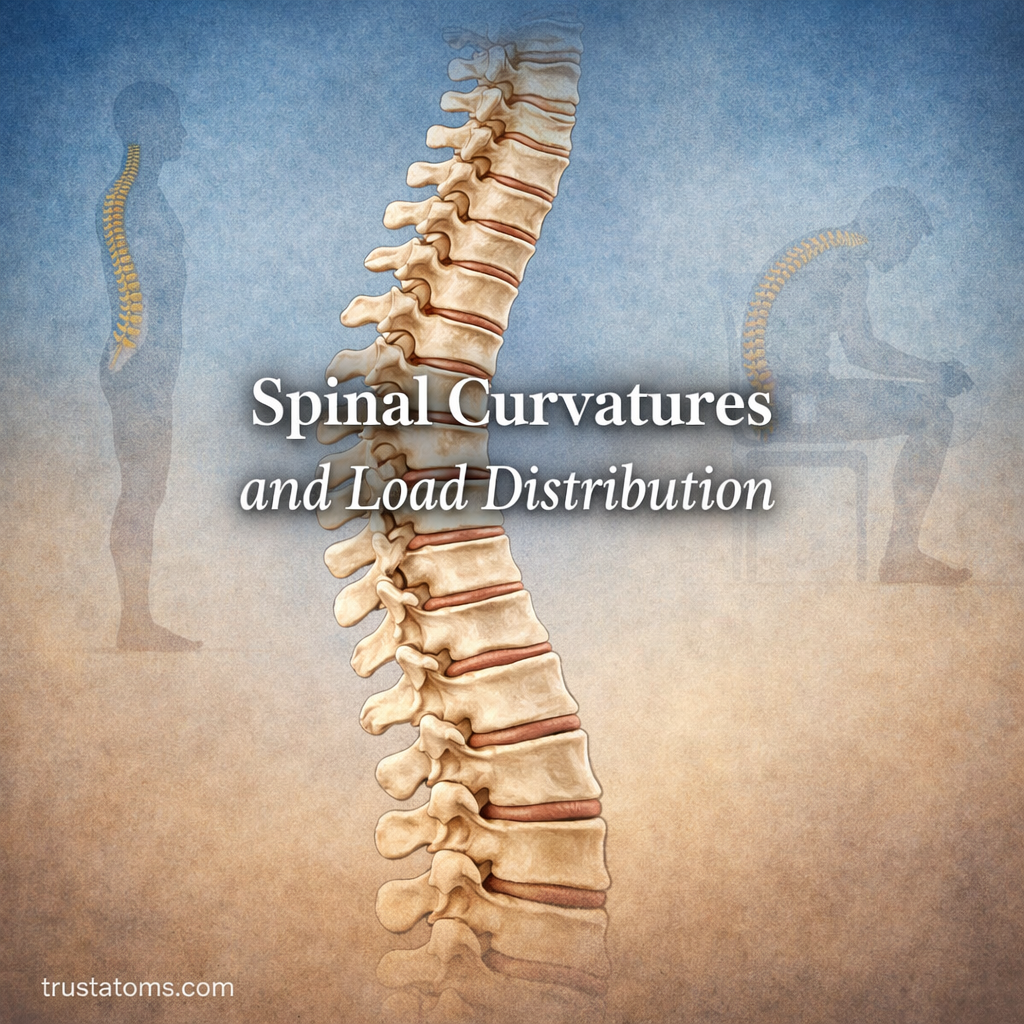
Illustration of the human spine showing natural spinal curvatures and how load is distributed during standing and sitting.
Illustration of spinal curvatures demonstrating load distribution and posture differences. trustatoms.com.

The human spine is not perfectly straight—and that’s by design. Its natural curves play a critical role in supporting body weight, maintaining balance, and absorbing shock during movement.

Understanding spinal curvatures and how they distribute load helps explain posture, back health, and why certain habits can lead to discomfort or injury.

Continue reading “Spinal Curvatures and Load Distribution”

The Appendicular Skeleton: Limbs and Girdles

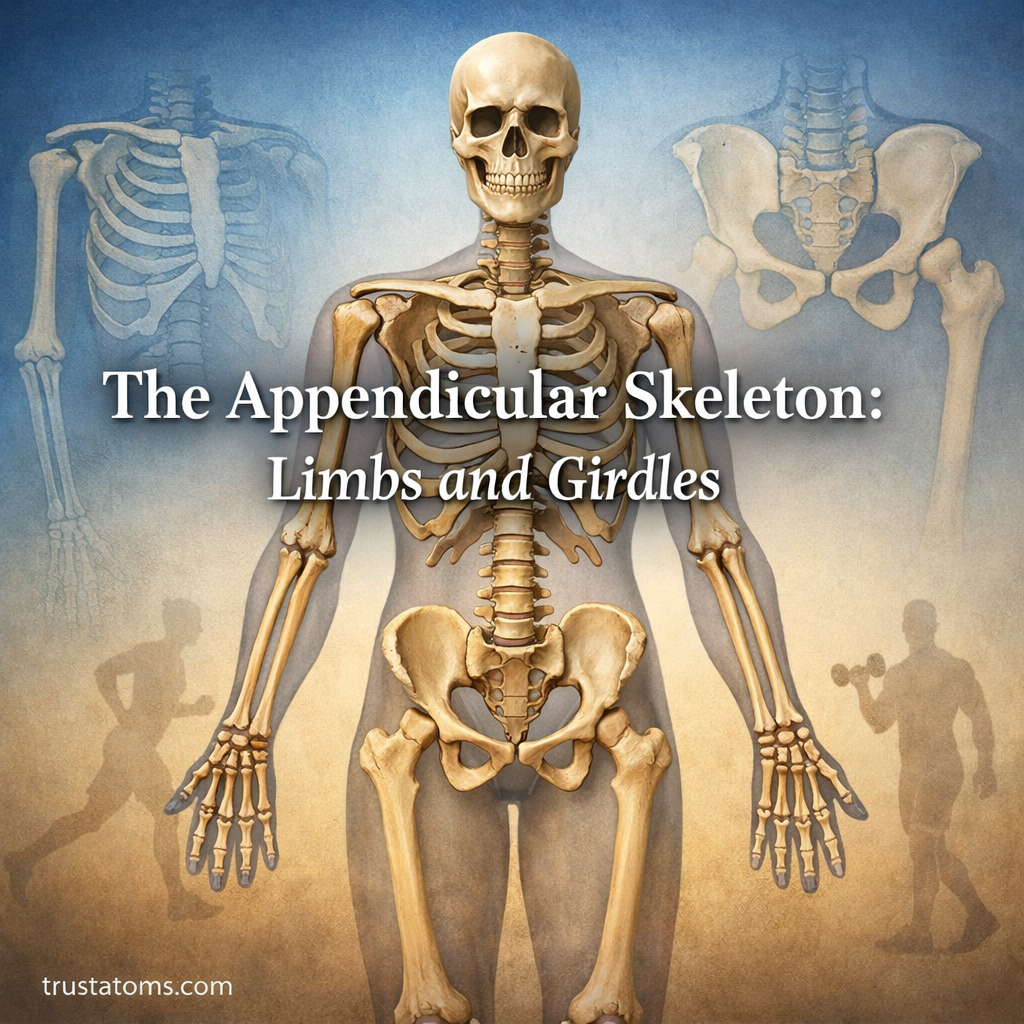
Illustration of the appendicular skeleton showing limbs and girdles including arms, legs, shoulder girdle, and pelvic girdle.
Illustration of the appendicular skeleton highlighting the limbs and girdles. trustatoms.com.

The appendicular skeleton is the part of the human skeletal system that enables movement, interaction with the environment, and physical activity. While the axial skeleton forms the body’s central structure, the appendicular skeleton includes the limbs and the girdles that attach them to the core.

Understanding how the appendicular skeleton works helps explain how we walk, lift, run, and perform everyday tasks.

Continue reading “The Appendicular Skeleton: Limbs and Girdles”

The Axial Skeleton: Spine and Rib Cage

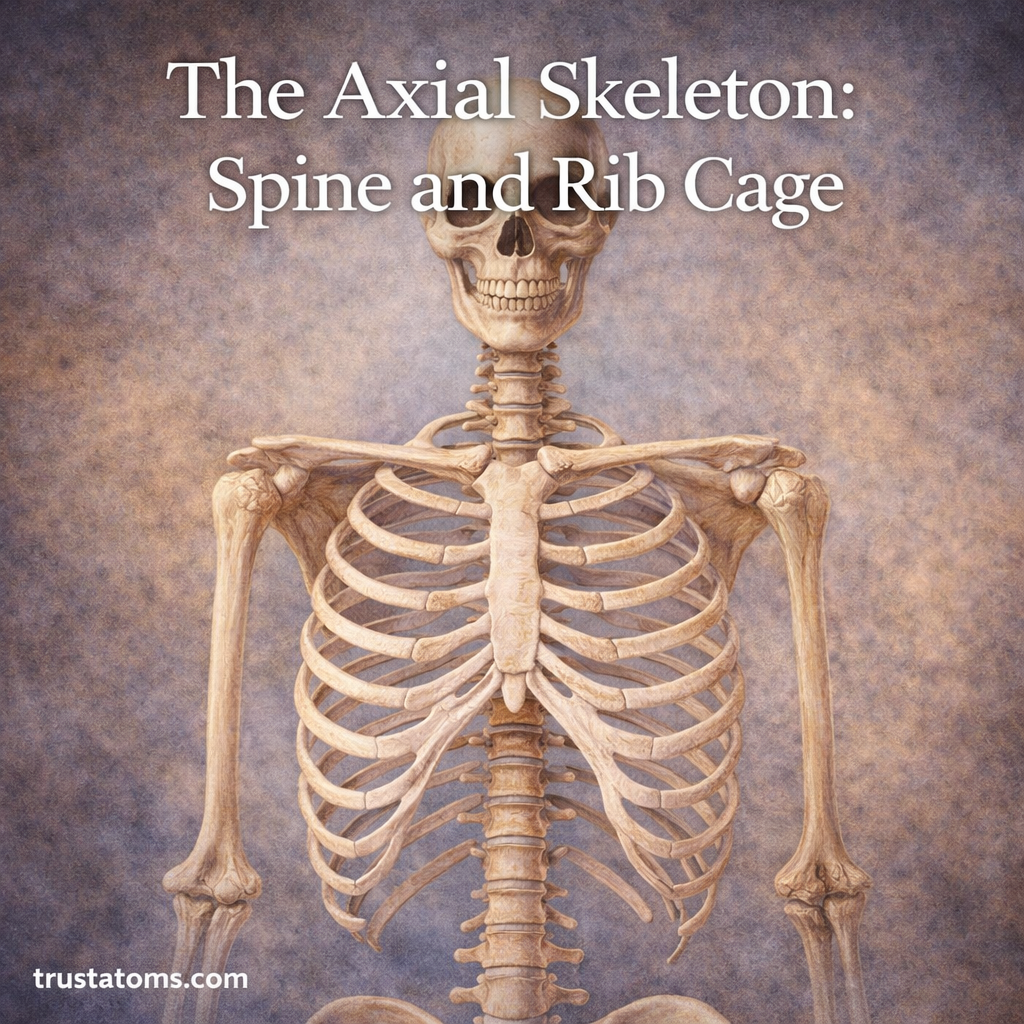
Illustration of the human axial skeleton highlighting the spine and rib cage structure.
Diagram showing the spine and rib cage as key components of the axial skeleton. trustatoms.com.

The axial skeleton forms the central framework of the human body. It includes the skull, spine, and rib cage, all of which protect vital organs and support posture.

Among these, the spine (vertebral column) and rib cage (thoracic cage) play especially important roles in stability, movement, and protection.

Continue reading “The Axial Skeleton: Spine and Rib Cage”

Connective Tissue in Structural Support

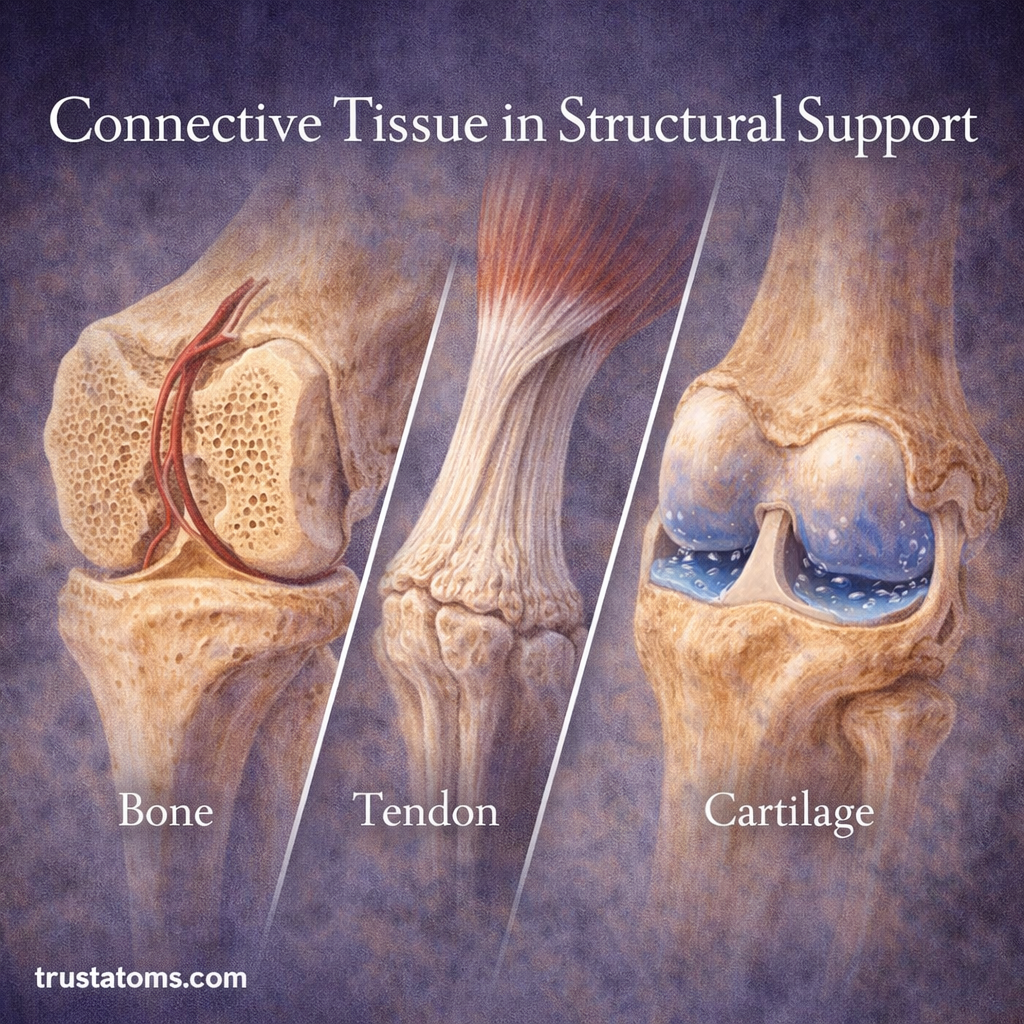
Illustration showing bone, tendon, and cartilage working together to provide structural support in the human body.
Diagram highlighting how bone, tendon, and cartilage contribute to structural support and movement. trustatoms.com.

Connective tissue is one of the most important yet often overlooked components of the human body. It forms the framework that holds everything together—supporting organs, connecting structures, and maintaining overall stability.

From bones and cartilage to tendons and ligaments, connective tissue plays a central role in structural support and movement.

Continue reading “Connective Tissue in Structural Support”

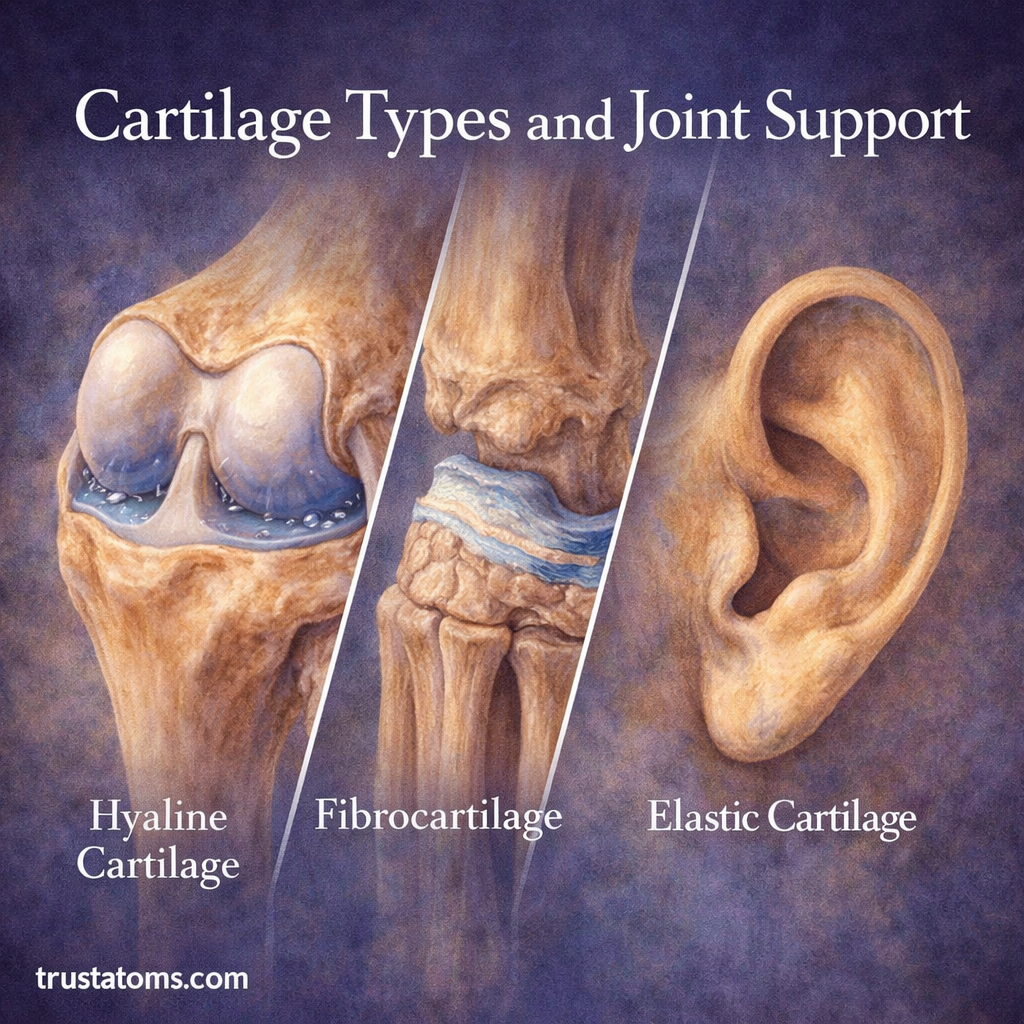
Cartilage Types and Joint Support

Illustration showing hyaline cartilage in a joint, fibrocartilage in the knee, and elastic cartilage in the ear.
Visual comparison of cartilage types and their roles in joint support and flexibility. trustatoms.com.

Cartilage is a specialized connective tissue that plays a critical role in joint function, flexibility, and shock absorption. Unlike bone, cartilage is smooth, flexible, and designed to reduce friction between moving parts of the body.

Understanding the different types of cartilage and how they support joints helps explain how your body maintains mobility while minimizing wear and tear.

Continue reading “Cartilage Types and Joint Support”

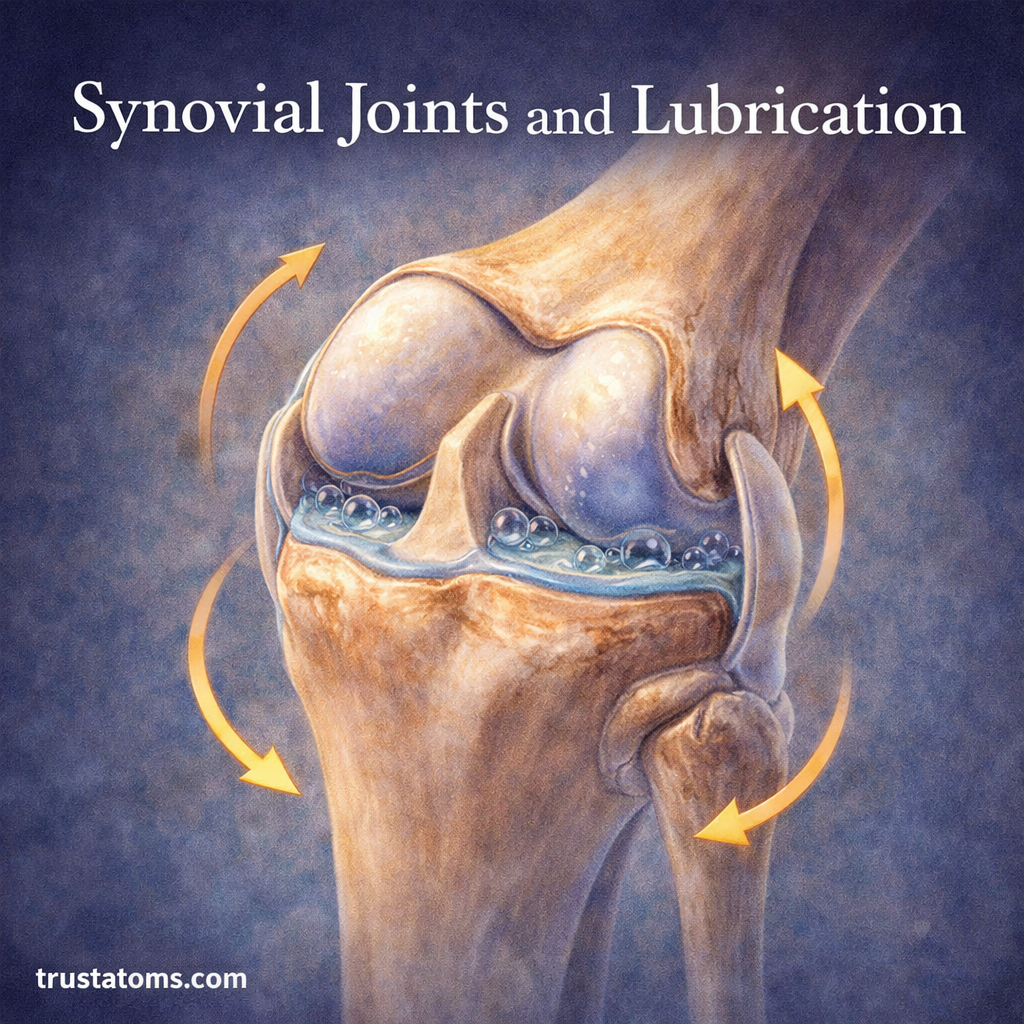
Synovial Joints and Lubrication

Illustration of a synovial knee joint showing cartilage surfaces and synovial fluid lubricating joint movement.
Diagram of a synovial joint demonstrating how fluid lubrication reduces friction and supports smooth movement. trustatoms.com.

Synovial joints are the most mobile and commonly used joints in the human body. From walking and running to lifting and rotating, these joints allow for smooth, controlled movement.

A key factor behind this efficiency is lubrication, which reduces friction and protects joint structures during motion. Understanding how synovial joints work—and how they stay lubricated—reveals why joint health is essential for everyday function.

Continue reading “Synovial Joints and Lubrication”

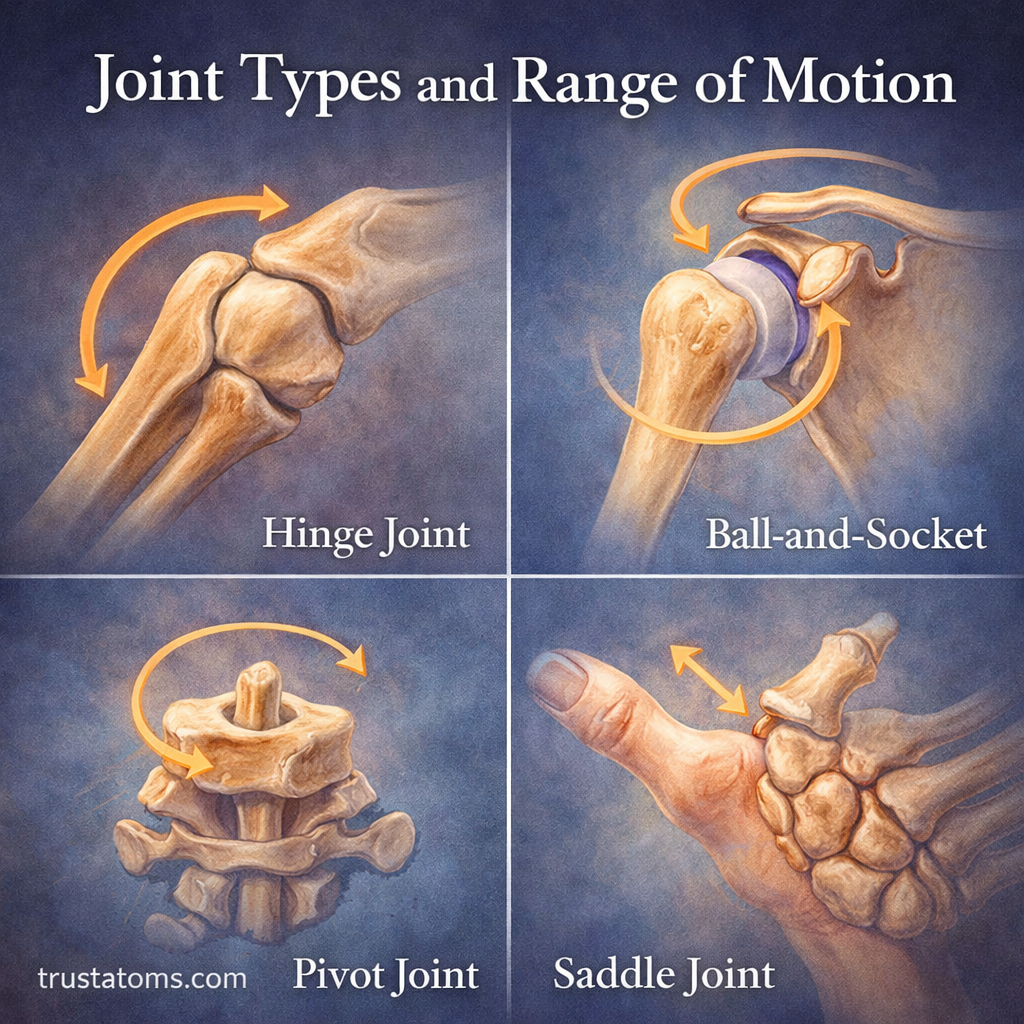
Joint Types and Range of Motion

Illustration showing different joint types including hinge, ball-and-socket, pivot, and saddle joints with their range of motion.
Diagram highlighting major joint types and how each allows different ranges of motion in the human body. trustatoms.com.

Joints are the connection points between bones that allow your body to move in different ways. From bending your elbow to rotating your shoulder, joints make movement possible while also providing stability.

Understanding joint types and their range of motion helps explain how the human body performs both simple and complex movements.

Continue reading “Joint Types and Range of Motion”