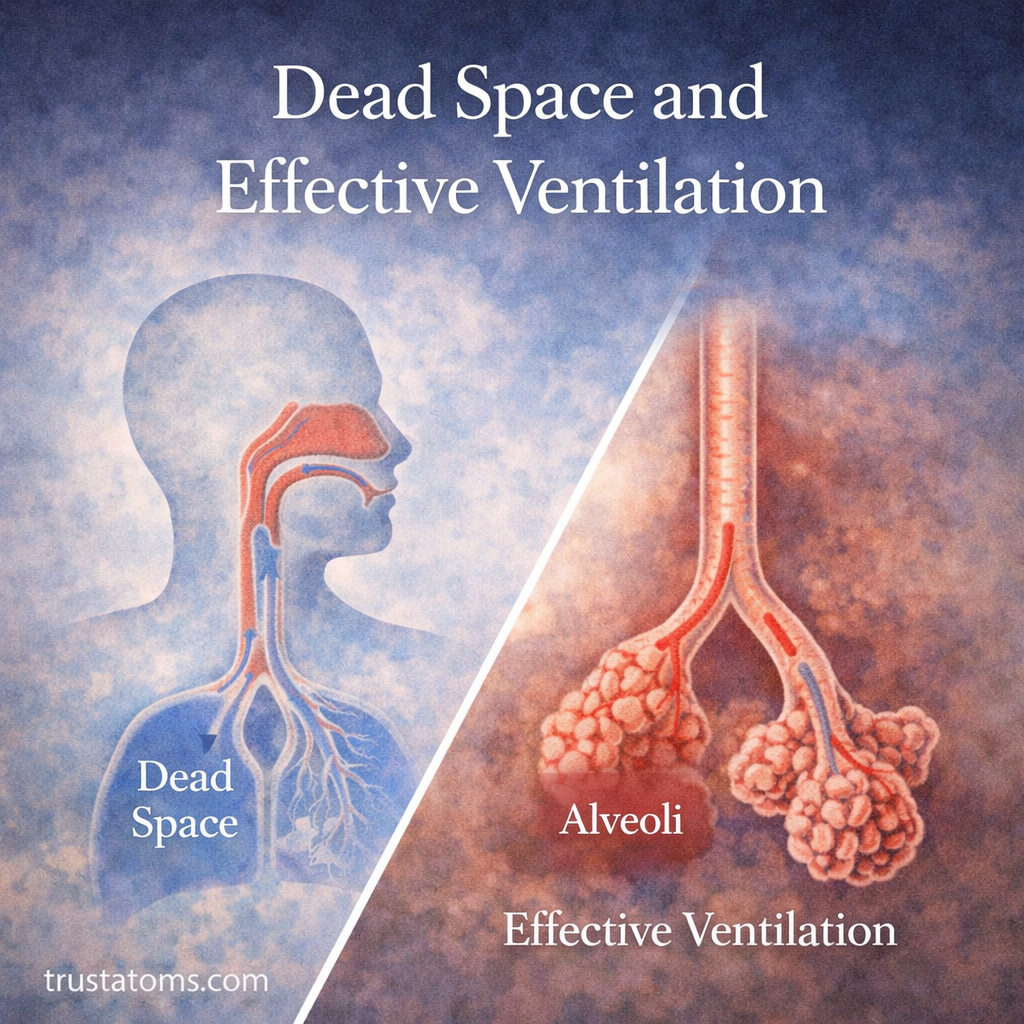
Dead Space and Effective Ventilation

Illustration showing dead space in the upper airways and effective ventilation in the alveoli of the lungs.
Illustration comparing dead space in the respiratory tract with effective ventilation occurring in the alveoli. trustatoms.com

Breathing may seem simple, but not every breath you take contributes equally to oxygen exchange. In fact, a portion of the air you inhale never reaches the areas of the lungs where gas exchange occurs. This concept is known as dead space, and it plays a crucial role in understanding how efficiently your respiratory system works.

In this article, we’ll break down what dead space is, how it affects effective ventilation, and why it matters for both health and performance.

Continue reading “Dead Space and Effective Ventilation”
Airflow Patterns and Turbulence

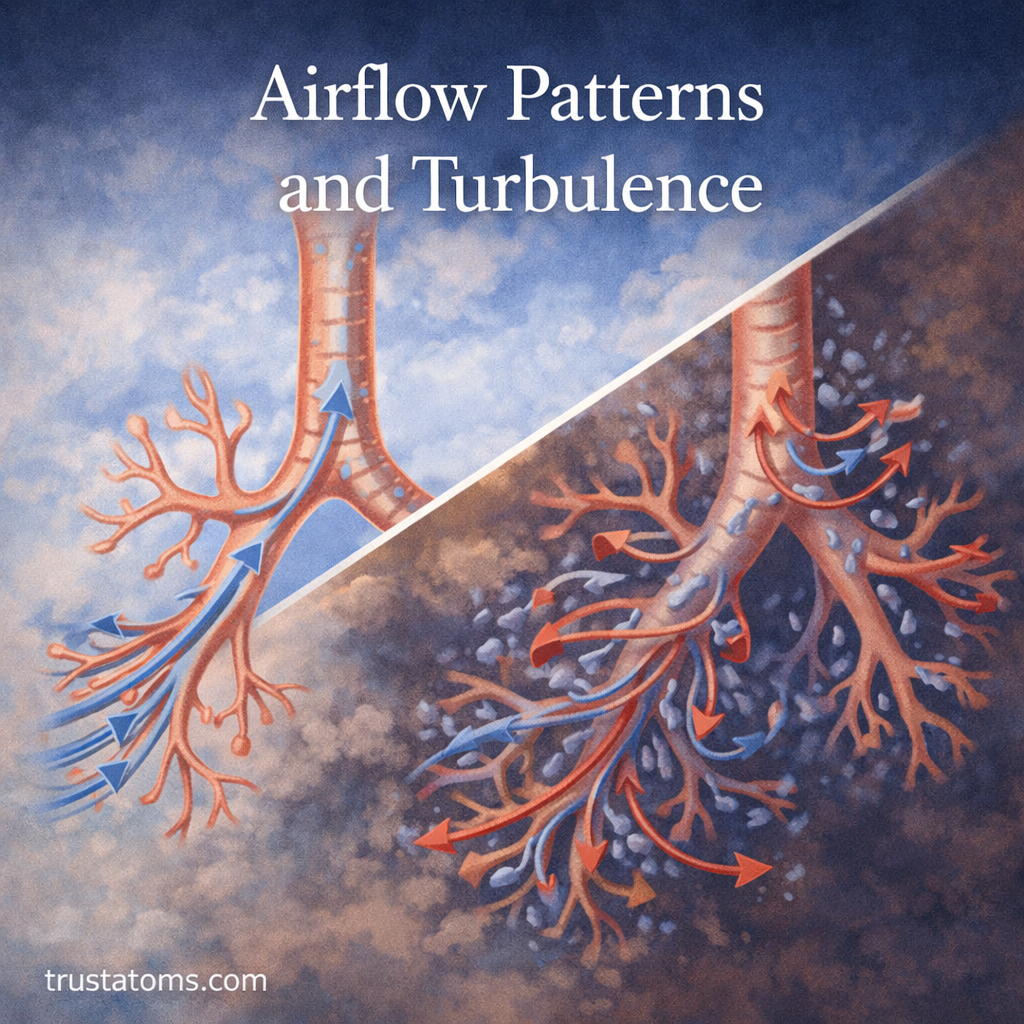
Illustration comparing laminar and turbulent airflow patterns in the human respiratory system.
Illustration showing the difference between smooth laminar airflow and chaotic turbulent airflow in the respiratory system. trustatoms.com

Air moves through your respiratory system with every breath, but it doesn’t always flow in the same way. Depending on factors like speed, airway size, and resistance, airflow can be smooth and orderly—or chaotic and turbulent.

Understanding airflow patterns and turbulence is essential in human anatomy, especially when studying breathing efficiency, lung health, and respiratory disorders.

Continue reading “Airflow Patterns and Turbulence”

Exercise and Increased Ventilation

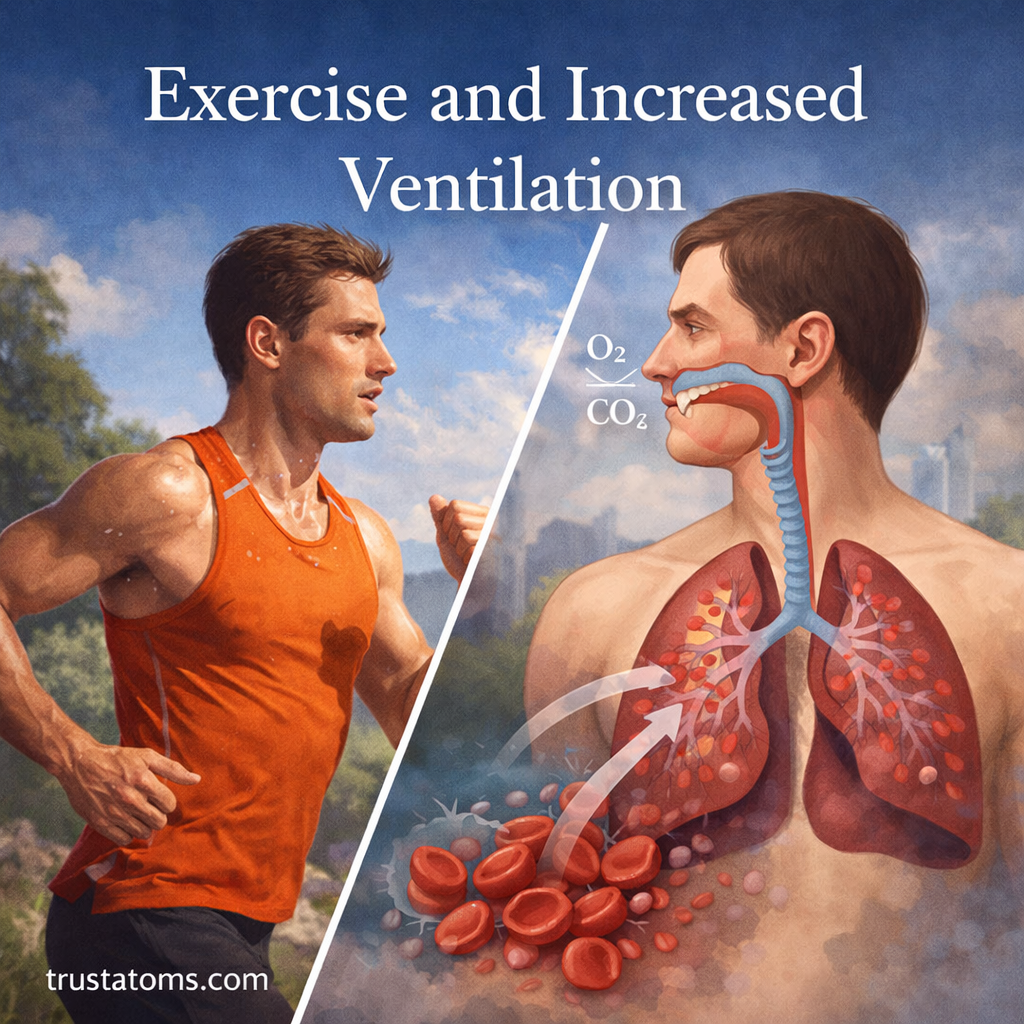
Illustration of a runner with a split view of the respiratory system showing oxygen intake and carbon dioxide release during exercise.
Illustration showing how exercise increases ventilation, with faster oxygen intake and carbon dioxide removal in the lungs. trustatoms.com

When you exercise, your body demands more energy—and that energy requires oxygen. To meet this demand, your respiratory system rapidly adjusts by increasing ventilation, or the movement of air in and out of the lungs.

This process is essential for delivering oxygen to working muscles and removing carbon dioxide, a waste product of metabolism. In this article, we’ll explore how and why ventilation increases during exercise, and what it means for overall performance and health.

Continue reading “Exercise and Increased Ventilation”

Respiratory Adaptations at High Altitude

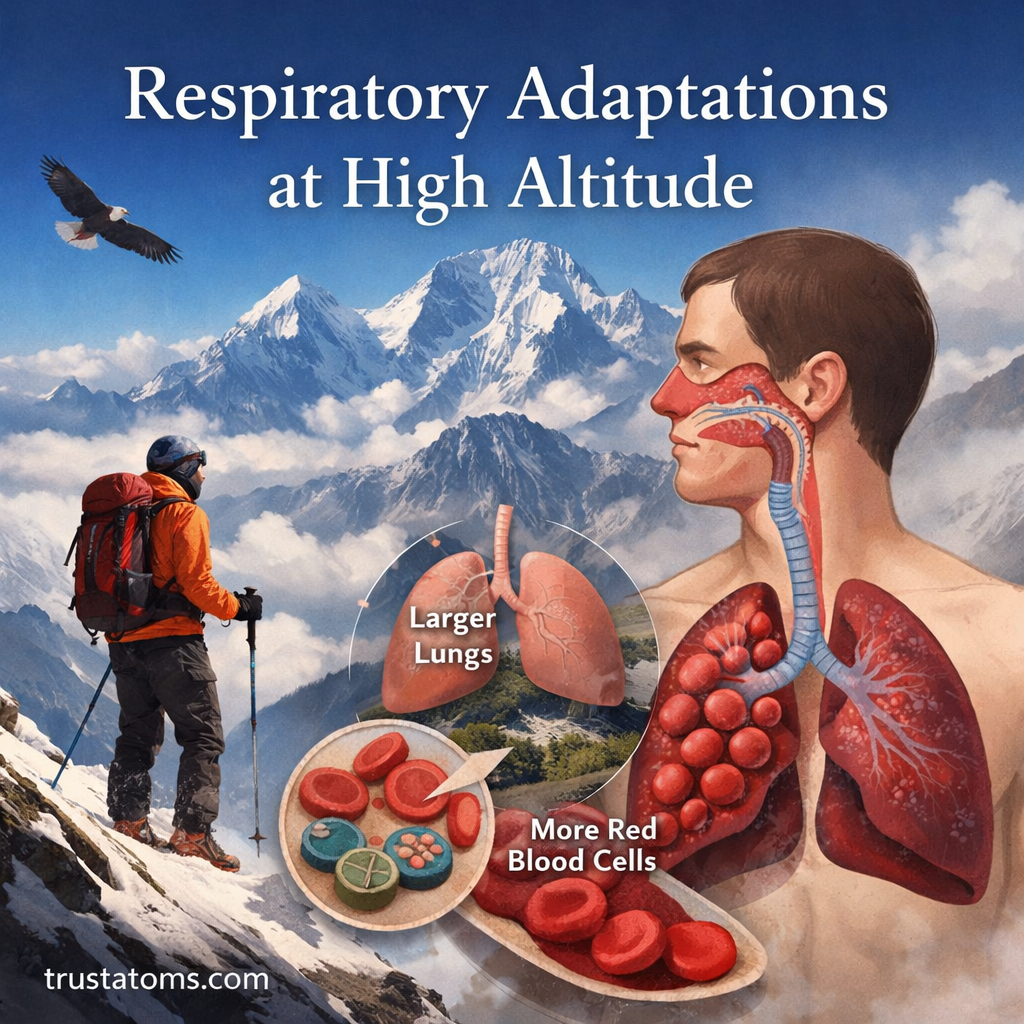
Illustration of respiratory adaptations at high altitude showing a mountaineer, lungs, and increased red blood cells.
Illustration of how the human respiratory system adapts to high altitude with increased lung function and oxygen transport. trustatoms.com

High-altitude environments present a unique challenge to the human body. As elevation increases, atmospheric pressure drops, meaning less oxygen is available with each breath. Despite this, millions of people live, work, and even perform intense physical activity at high altitudes.

So how does the body adapt?

This article explores the fascinating respiratory changes that occur when humans are exposed to high-altitude conditions—whether for a short trip or long-term living.

Continue reading “Respiratory Adaptations at High Altitude”

Oxygen Saturation and Hemoglobin Binding

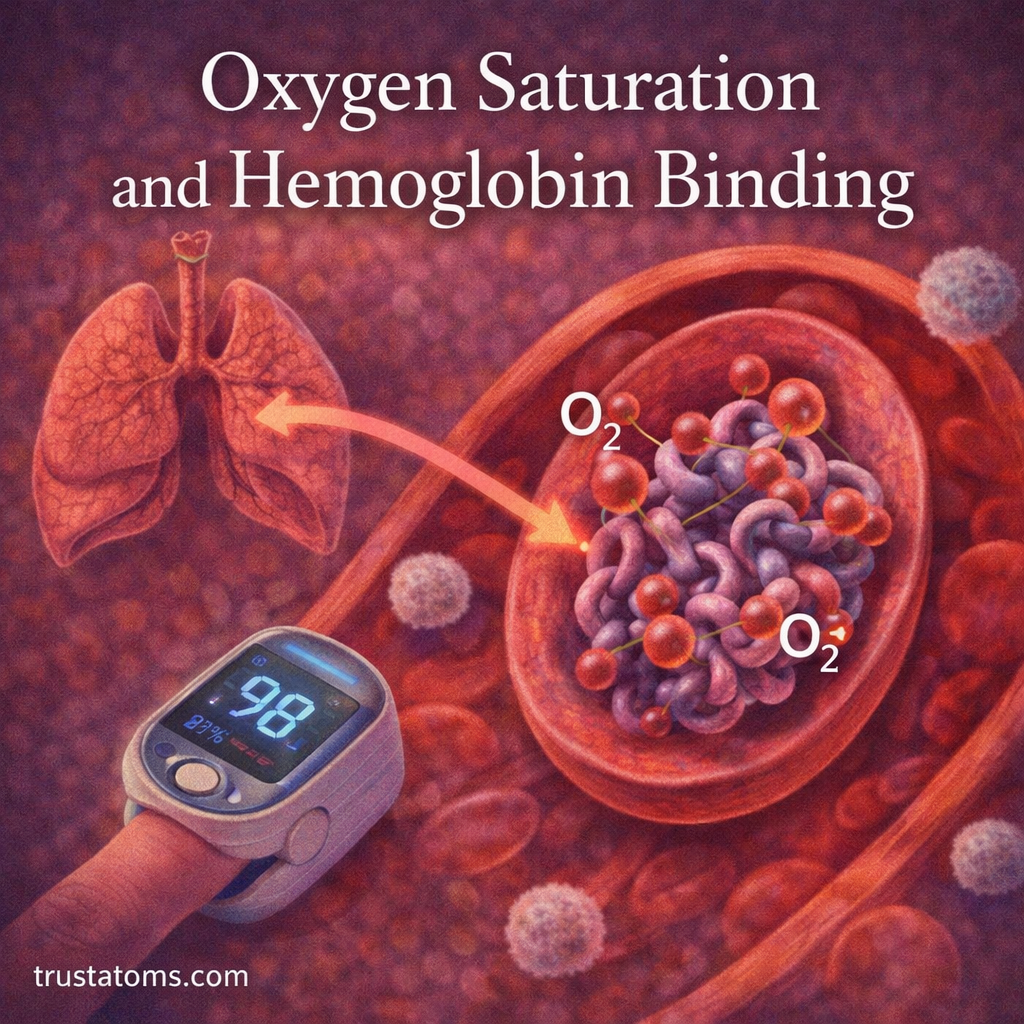
Illustration showing oxygen binding to hemoglobin in red blood cells with lungs and a pulse oximeter indicating oxygen saturation.
Oxygen binds to hemoglobin in red blood cells, allowing efficient transport from the lungs to body tissues. trustatoms.com.

Oxygen is essential for life, powering the body’s cells and enabling energy production. But oxygen doesn’t travel freely in large amounts through the blood—it relies on a specialized protein called hemoglobin to be transported efficiently.

The relationship between oxygen and hemoglobin determines oxygen saturation, a key indicator of how well oxygen is being delivered throughout the body.

Continue reading “Oxygen Saturation and Hemoglobin Binding”

Acid–Base Balance and CO₂ Regulation

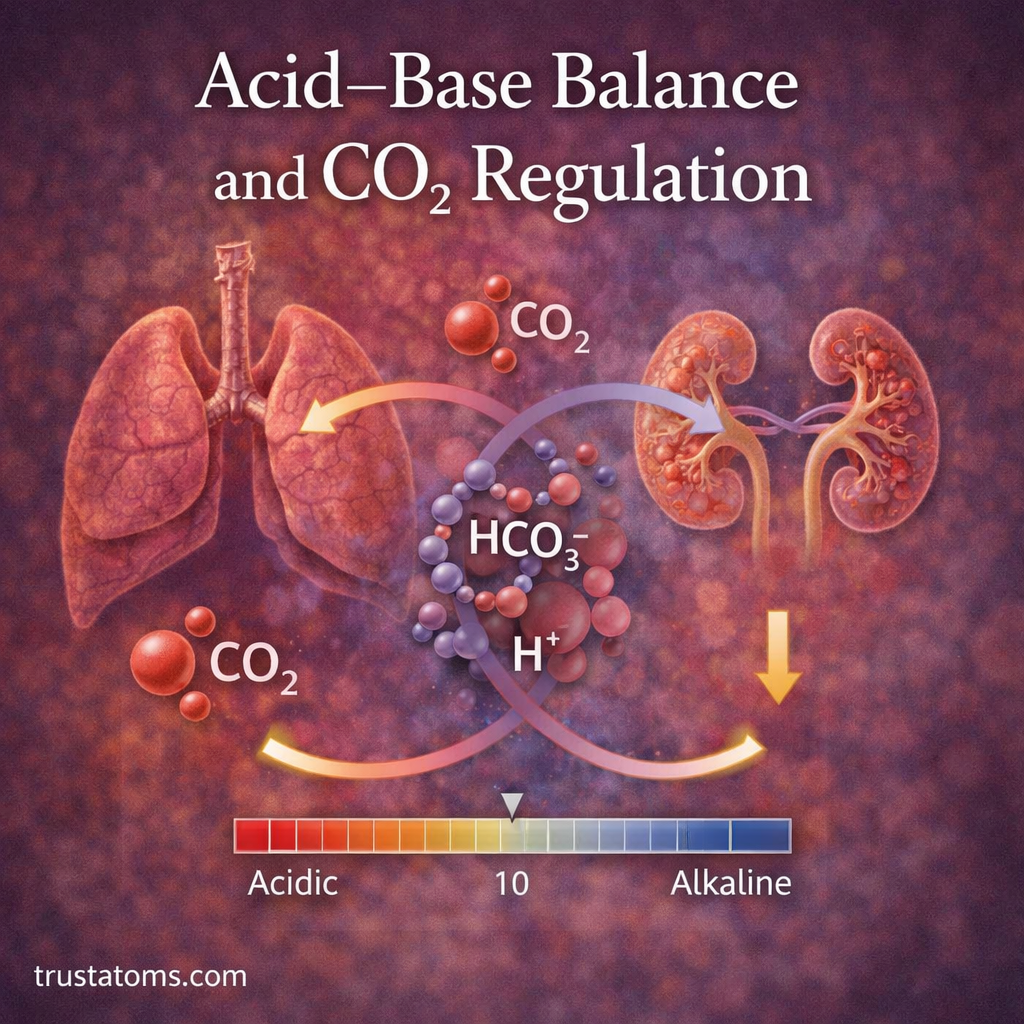
Illustration showing lungs and kidneys regulating carbon dioxide and pH balance through bicarbonate and hydrogen ion exchange.
The lungs and kidneys work together to regulate CO2 levels and maintain acid–base balance in the body. trustatoms.com.

The human body must maintain a stable internal environment to function properly. One of the most critical aspects of this balance is acid–base regulation, which keeps blood pH within a narrow range. A key player in this system is carbon dioxide (CO₂), a waste product of metabolism that directly influences acidity.

Through a combination of respiratory and chemical processes, the body carefully regulates CO₂ levels to maintain optimal pH and support vital functions.

Continue reading “Acid–Base Balance and CO₂ Regulation”

Chemoreceptors and CO₂ Sensitivity

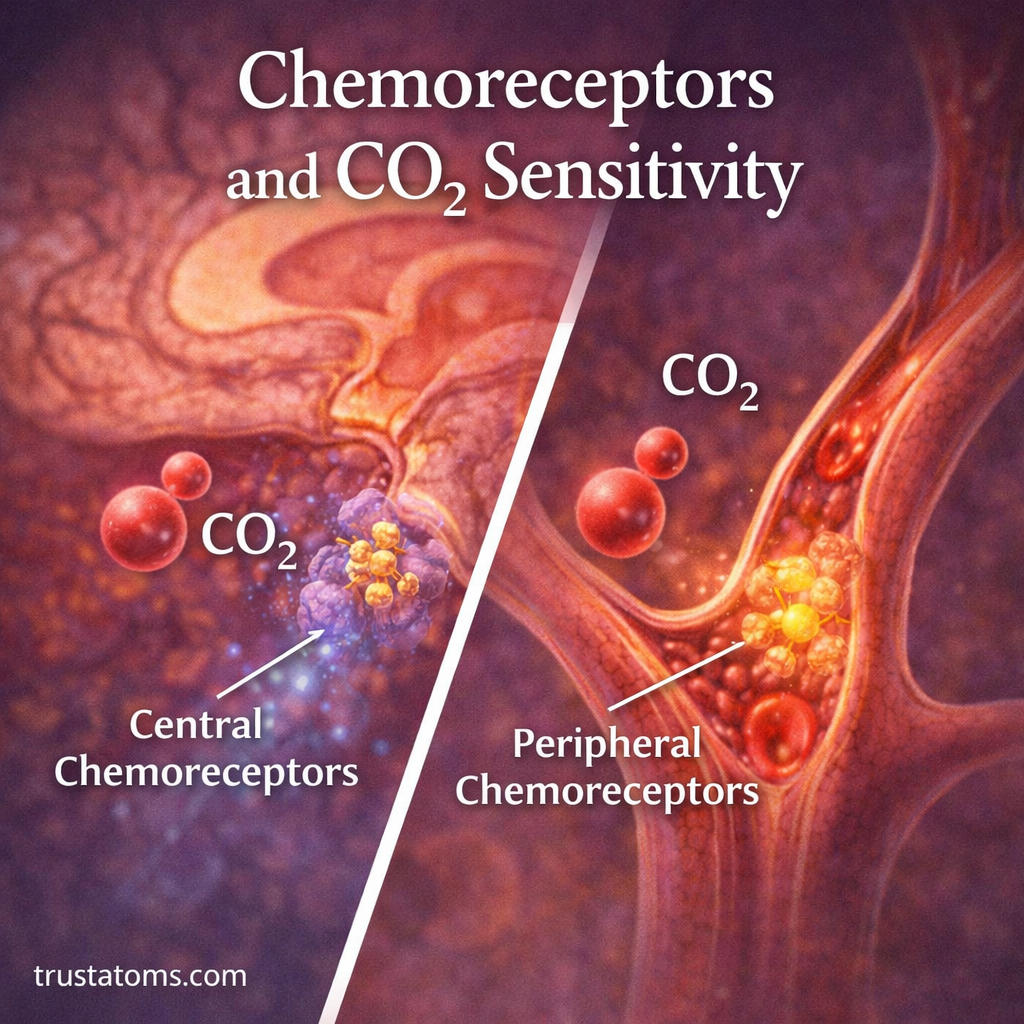
Illustration showing central chemoreceptors in the brain and peripheral chemoreceptors in arteries detecting carbon dioxide levels.
Chemoreceptors detect changes in carbon dioxide levels and signal the brain to adjust breathing rate and depth. trustatoms.com.

Breathing may feel automatic, but it is tightly regulated by the body to maintain balance. One of the most important factors controlling breathing is the level of carbon dioxide (CO₂) in the blood. Specialized sensors called chemoreceptors constantly monitor these levels and signal the brain to adjust breathing accordingly.

This system ensures that the body maintains proper oxygen delivery and prevents harmful buildup of carbon dioxide.

Continue reading “Chemoreceptors and CO₂ Sensitivity”

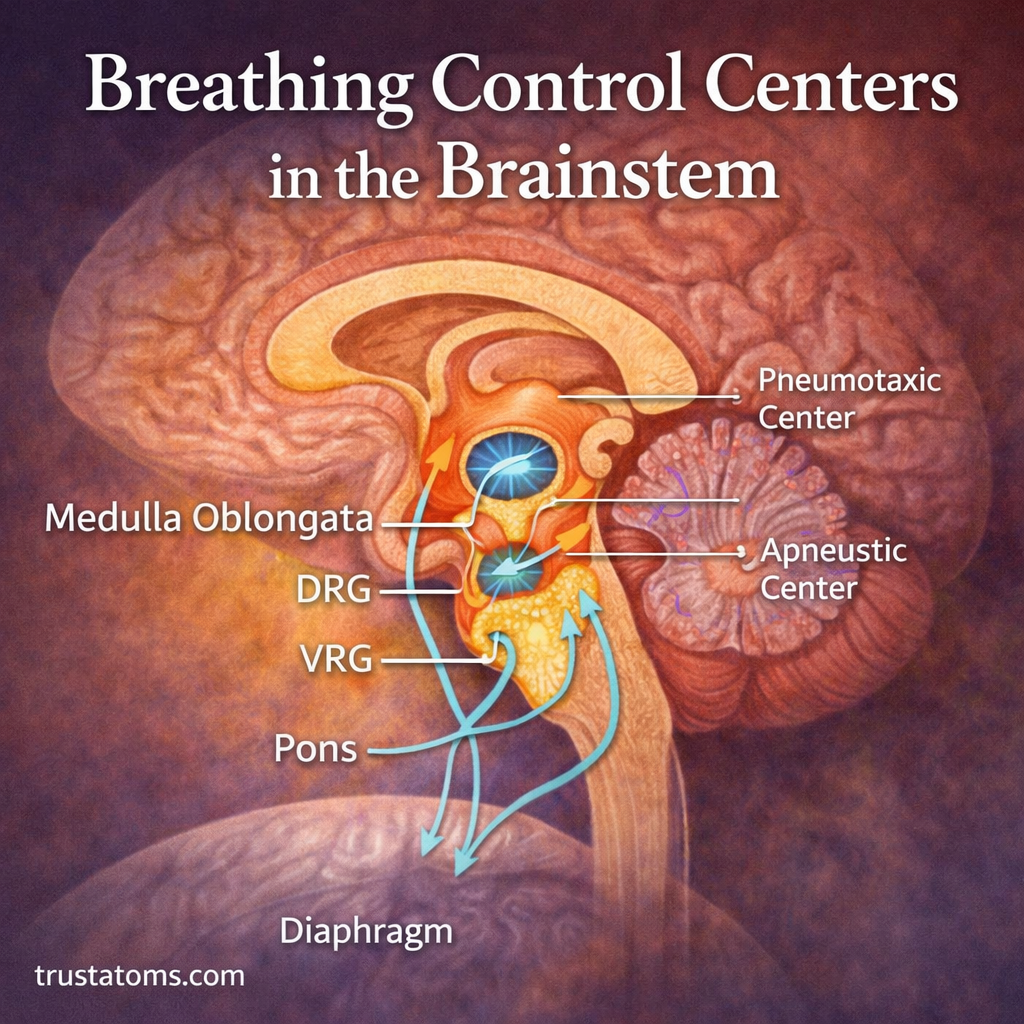
Breathing Control Centers in the Brainstem

Illustration of the brainstem showing the medulla oblongata and pons controlling breathing and sending signals to the diaphragm.
The brainstem regulates breathing automatically through the medulla and pons, controlling respiratory rhythm and depth. trustatoms.com.

Breathing is something most people rarely think about, yet it happens continuously—day and night—without conscious effort. This automatic process is controlled by specialized regions in the brain known as the breathing control centers, located in the brainstem.

These centers regulate the rhythm, depth, and rate of breathing, ensuring that the body receives enough oxygen and removes carbon dioxide efficiently.

Continue reading “Breathing Control Centers in the Brainstem”

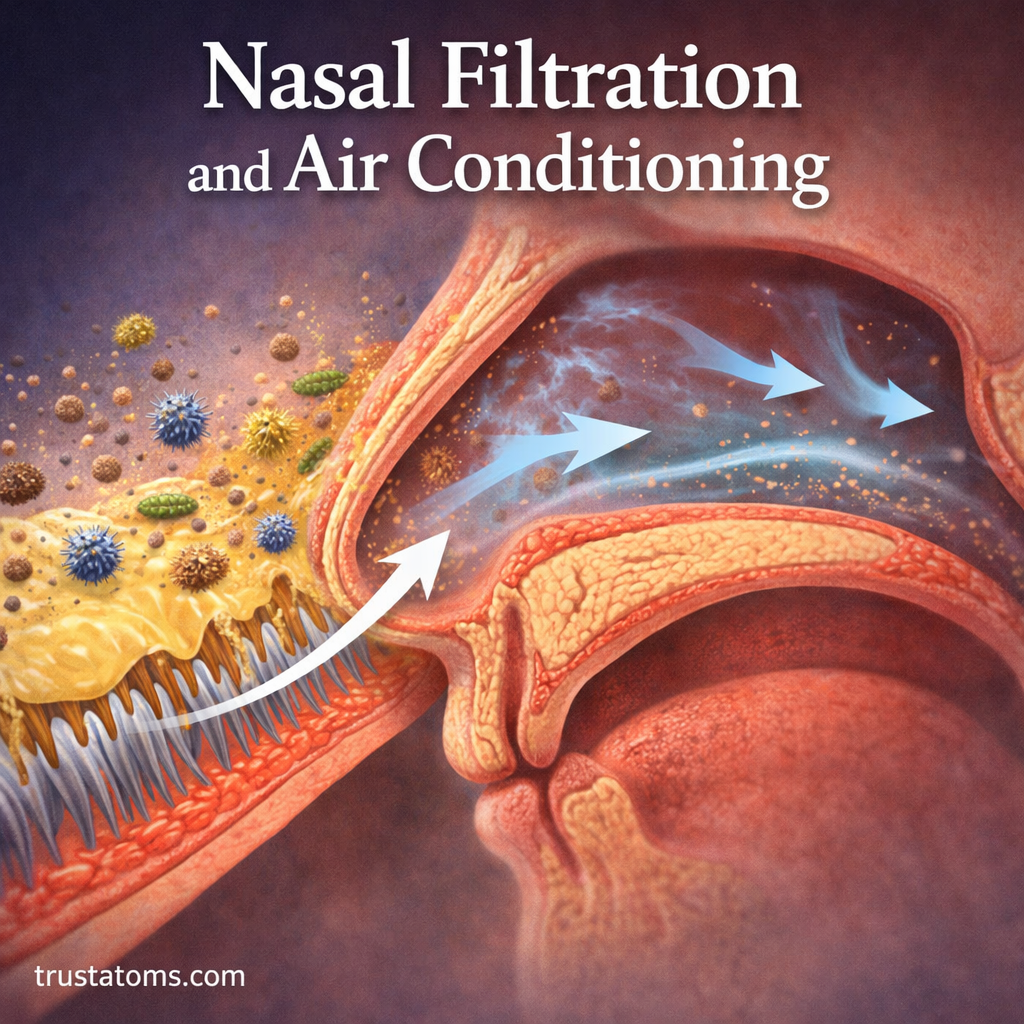
Nasal Filtration and Air Conditioning

Illustration of the nasal cavity showing how the nose filters particles with mucus and hairs while warming and humidifying incoming air.
The nose filters, warms, and humidifies incoming air before it reaches the lungs, supporting respiratory health. trustatoms.com.

Every breath you take passes through a highly efficient system designed to protect and prepare air before it reaches your lungs. The nose does far more than just allow airflow—it acts as a natural filter, humidifier, and temperature regulator.

This process, known as nasal filtration and air conditioning, is essential for maintaining respiratory health and preventing damage to sensitive lung tissues.

Continue reading “Nasal Filtration and Air Conditioning”

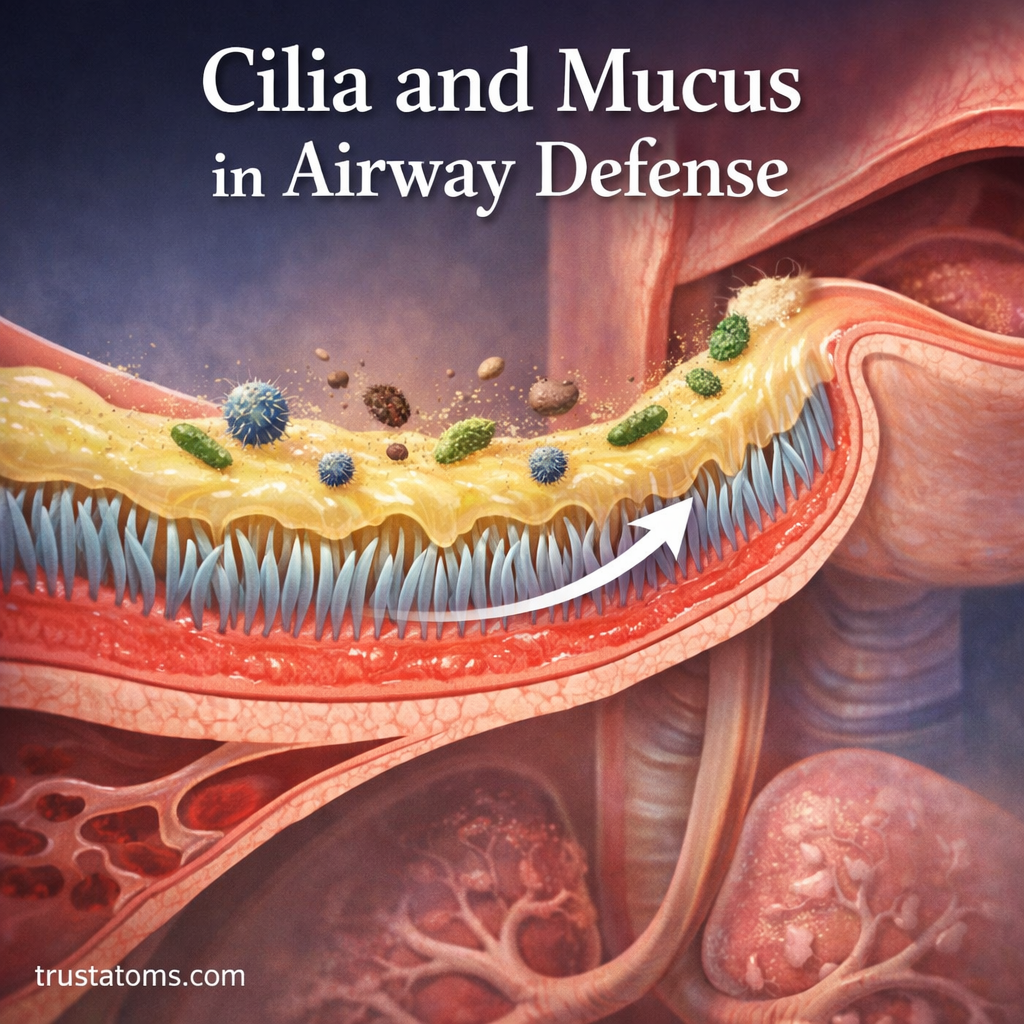
Cilia and Mucus in Airway Defense

Illustration of cilia moving mucus with trapped particles in the airway to protect the lungs from dust, bacteria, and viruses.
Cilia and mucus work together in the airway to trap and remove harmful particles, helping protect the lungs. trustatoms.com.

The human respiratory system is constantly exposed to airborne particles such as dust, bacteria, viruses, and pollutants. Despite this, the lungs remain remarkably protected. One of the most effective defense systems responsible for this protection is the coordinated action of cilia and mucus within the airways.

This built-in cleaning mechanism—often called the mucociliary escalator—plays a critical role in keeping the respiratory tract clear and functional.

Continue reading “Cilia and Mucus in Airway Defense”