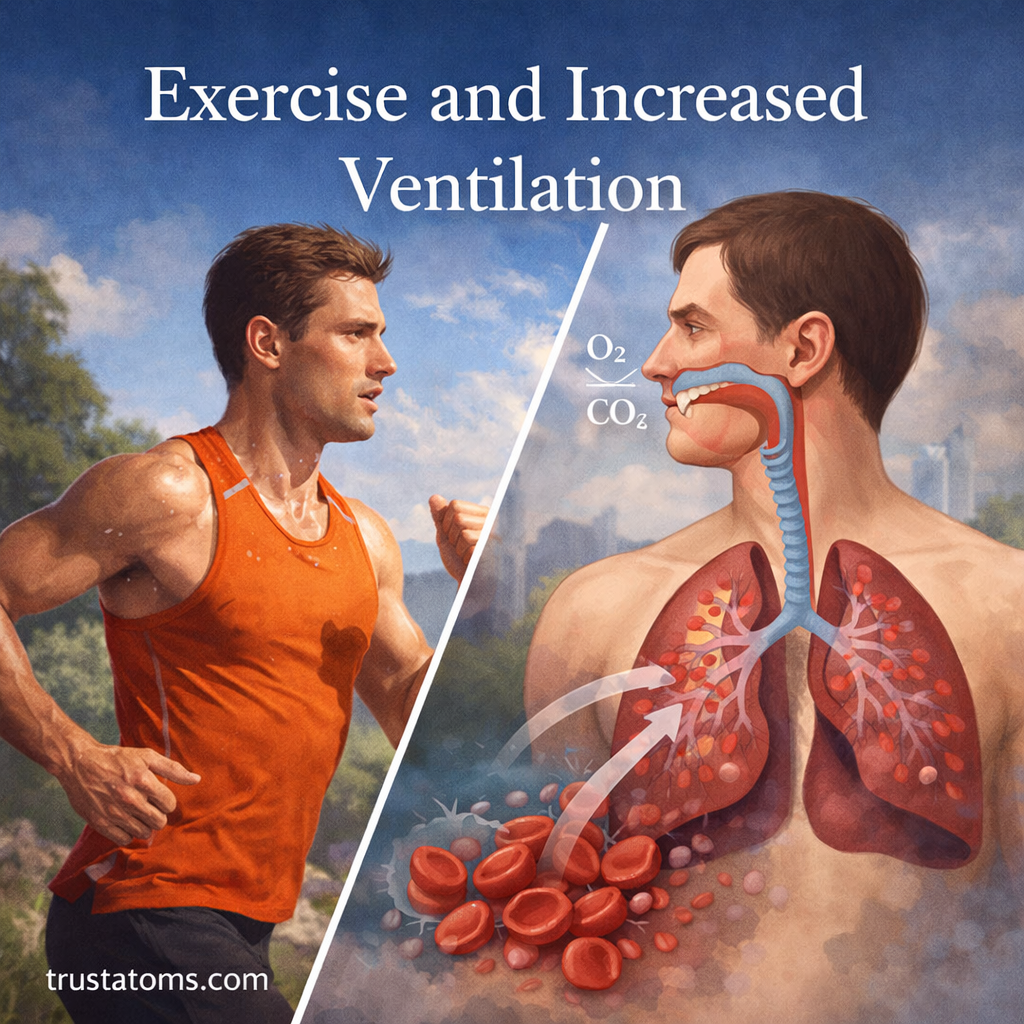
Exercise increases ventilation because working muscles consume more oxygen and produce more carbon dioxide as their energy demands rise. The respiratory system responds by increasing breathing depth and frequency, allowing the lungs to exchange more gases while helping maintain normal blood chemistry.
Even a brisk walk can make breathing noticeably deeper, while running may require much faster breaths. Understanding this response connects human anatomy with the physiology of the lungs, respiratory muscles, circulation, and exercise performance.
What Is Ventilation?
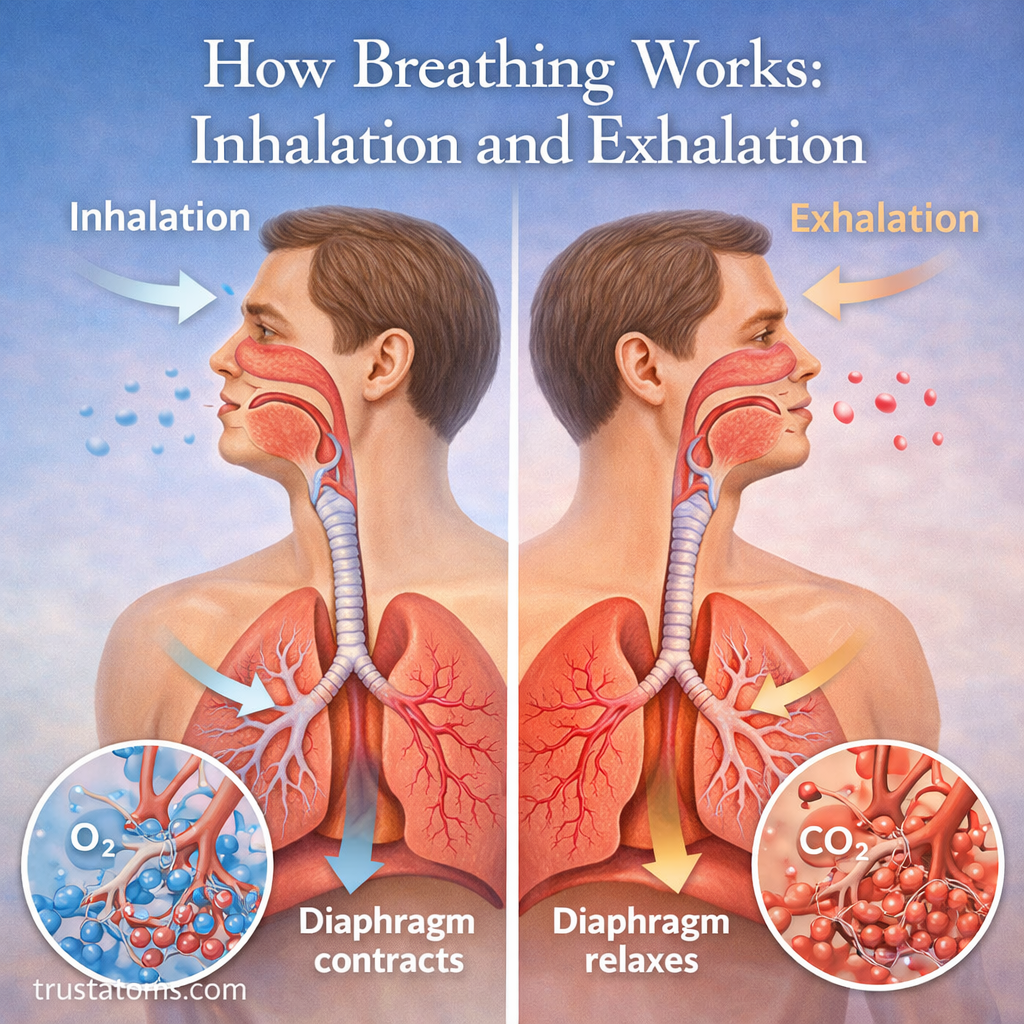
Pulmonary ventilation is the movement of air into and out of the lungs. Inhalation brings fresh air into the respiratory system, while exhalation removes air containing carbon dioxide released from the blood.
Ventilation is commonly measured as minute ventilation, the total volume of air moved through the lungs each minute. It depends on two measurements:
- Respiratory rate: The number of breaths taken per minute.
- Tidal volume: The volume of air inhaled or exhaled during a normal breath.
Minute ventilation equals respiratory rate multiplied by tidal volume. For example, breathing 12 times per minute with a tidal volume of 0.5 liters produces a minute ventilation of 6 liters per minute.
For more detail on breathing patterns, see Respiratory Rate and Ventilation Control. The mechanics of the main breathing muscle are explained in Diaphragm Function in Ventilation.
Not every inhaled breath reaches the gas-exchanging alveoli. Dead Space and Effective Ventilation explains this distinction, while Carbon Dioxide Removal and Ventilation describes how breathing eliminates metabolic carbon dioxide. Effective gas exchange also depends on blood reaching ventilated lung regions, as discussed in Ventilation–Perfusion Matching Principles.
Why Breathing Increases During Exercise
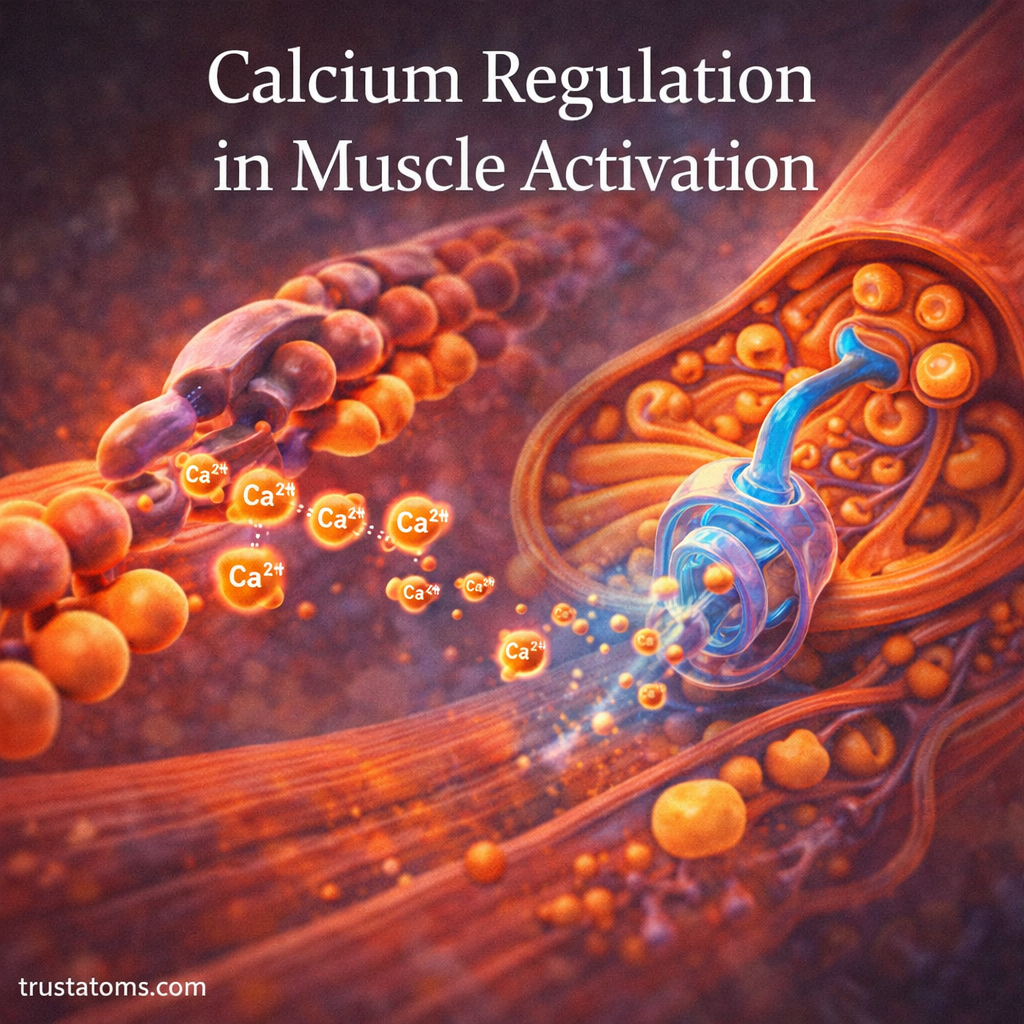
Muscle cells require adenosine triphosphate (ATP) to contract. During sustained aerobic activity, oxygen supports ATP production, while carbon dioxide is generated as a product of metabolism.
As exercise intensity rises, the respiratory and cardiovascular systems work together to deliver oxygen and remove carbon dioxide. Increased ventilation helps maintain appropriate arterial oxygen and carbon dioxide levels, which usually remain relatively stable during moderate exercise in healthy people.
Breathing does not increase simply because blood oxygen has fallen. Neural signals associated with movement and feedback from working muscles help stimulate ventilation before major changes in blood gases occur.
How Quickly Does Breathing Respond?
Ventilation begins increasing almost immediately when exercise starts. The response involves several overlapping control mechanisms.
- Central command: Brain regions involved in initiating movement also influence respiratory control centers.
- Muscle feedback: Sensory receptors in muscles and joints provide information about movement and physical activity.
- Chemical feedback: Changes in carbon dioxide, acidity, and other signals help adjust breathing as exercise continues.
During steady, moderate exercise, ventilation gradually approaches a level appropriate for the workload. If exercise intensity increases again, breathing adjusts further.
How Breathing Depth and Rate Change
At lower exercise intensities, much of the increase in ventilation comes from deeper breaths. As intensity becomes greater, breathing frequency contributes increasingly to the additional airflow.
Deeper Breaths During Moderate Exercise
Increasing tidal volume allows more fresh air to reach the alveoli with each breath. Because some inhaled air remains in the conducting airways, deeper breathing can increase effective alveolar ventilation more efficiently than simply taking many shallow breaths.
Faster Breathing During Intense Exercise
As tidal volume approaches a practical limit, further increases in minute ventilation rely more heavily on respiratory rate. Both the diaphragm and additional respiratory muscles contribute to moving larger volumes of air.
A Numerical Example of Exercise Ventilation
Consider a person whose breathing changes from rest to moderate physical activity. The following values are illustrative rather than measurements from a specific individual.
| Measurement | At Rest | During Exercise |
|---|---|---|
| Respiratory rate | 12 breaths/min | 24 breaths/min |
| Tidal volume | 0.5 L | 1.5 L |
| Minute ventilation | 6 L/min | 36 L/min |
In this example, minute ventilation increases sixfold because the person breathes both faster and deeper. During strenuous exercise, ventilation can exceed 100 liters per minute, particularly in well-trained individuals.
How Gas Exchange Adjusts During Exercise
Increasing airflow is only one part of the response. Blood flow through the lungs also rises as cardiac output increases, allowing more oxygen to enter circulating blood and more carbon dioxide to be transported to the lungs for removal.
Pulmonary capillaries recruit and distend as blood flow increases. These changes support gas exchange by expanding the available capillary blood volume and helping maintain efficient oxygen transfer.
In healthy lungs, oxygen uptake generally keeps pace with exercise demands. At very high intensities, however, some endurance athletes may experience reduced arterial oxygen saturation because pulmonary gas exchange cannot fully match the increased demands.
How Chemoreceptors Help Regulate Breathing
Chemoreceptors monitor chemical conditions relevant to respiratory control. They help refine ventilation during exercise and recovery.
- Central chemoreceptors: Located near the brainstem, they respond primarily to changes in the acidity of brain extracellular fluid associated with carbon dioxide.
- Peripheral chemoreceptors: Located in the carotid and aortic bodies, they respond to changes in arterial oxygen, carbon dioxide, and acidity.
During moderate exercise, these sensors help maintain blood gas stability rather than waiting for large disturbances. At higher intensities, increased acid production and carbon dioxide generated during buffering contribute to stronger ventilatory stimulation.
What Happens at the Ventilatory Threshold?
As exercise becomes more demanding, ventilation eventually begins rising disproportionately relative to oxygen consumption. This change is associated with the first ventilatory threshold, often identified during a graded exercise test.
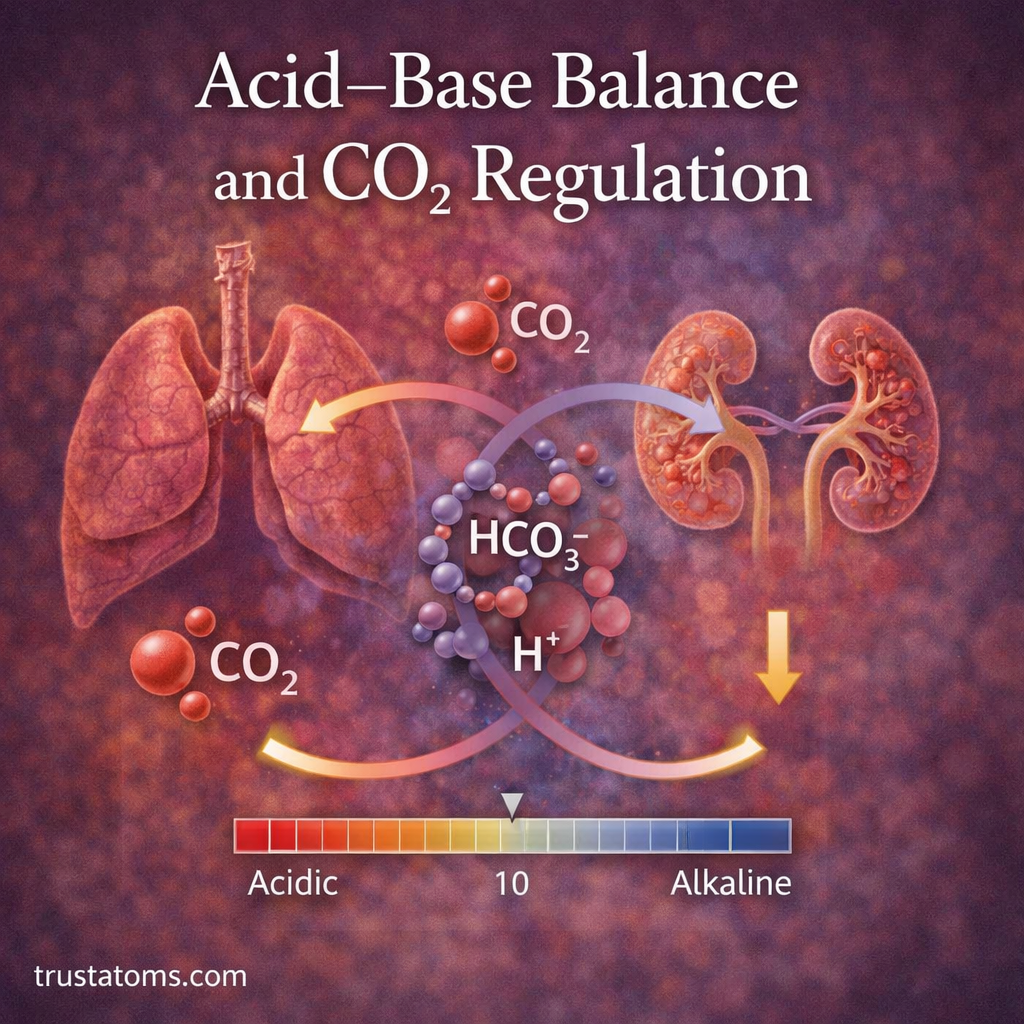
One contributing mechanism is increased carbon dioxide production when bicarbonate buffers hydrogen ions associated with greater metabolic acid production. The additional carbon dioxide stimulates breathing.
At still higher intensities, a second ventilatory threshold may occur, associated with respiratory compensation for metabolic acidosis. These thresholds help exercise physiologists evaluate endurance performance and prescribe training intensities.
How Endurance Training Changes Ventilation
Regular endurance training improves the body’s ability to deliver and use oxygen. Adaptations occur primarily in the cardiovascular system and working muscles rather than through large increases in adult lung size.
At a given absolute submaximal workload, trained individuals may produce less lactate and require less ventilation than before training. They may also use a different combination of tidal volume and breathing frequency.
At maximal exercise, trained endurance athletes can achieve very high ventilation because they can sustain greater metabolic workloads. Respiratory muscle endurance may also improve, although the magnitude of adaptation varies.
Factors That Influence Exercise Ventilation
The amount of ventilation required during physical activity differs between individuals and situations.
- Exercise intensity: Higher workloads generally increase oxygen consumption and carbon dioxide production.
- Fitness level: Training affects metabolic efficiency and the workload a person can sustain.
- Altitude: Lower oxygen availability stimulates increased ventilation, particularly during acclimatization.
- Temperature: Heat stress can increase ventilation independently of metabolic demand.
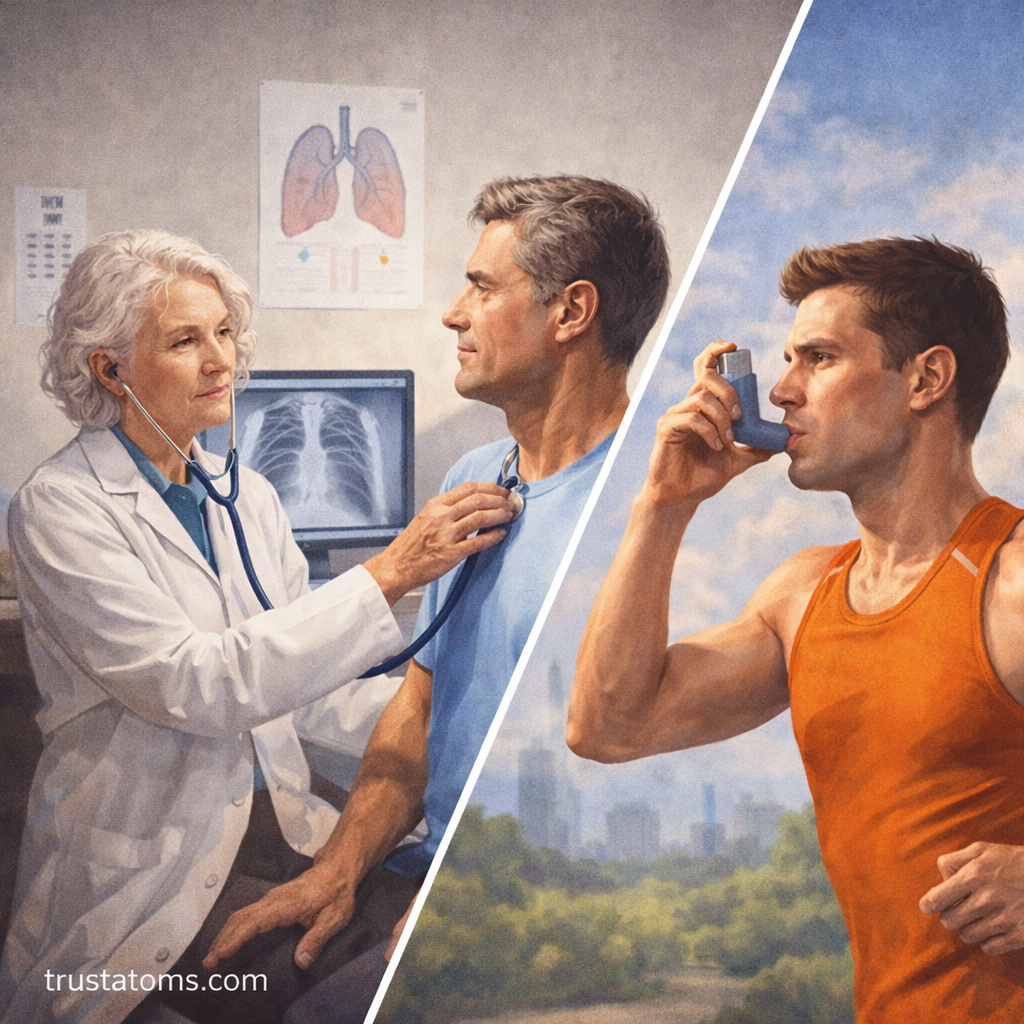
- Respiratory conditions: Asthma, chronic obstructive pulmonary disease, and other disorders can limit airflow or make breathing more difficult.
Heavy breathing during strenuous activity is usually a normal physiological response. However, unusually severe breathlessness, chest pain, fainting, or symptoms that are disproportionate to the activity warrant medical assessment.
Frequently Asked Questions
Why do you breathe harder during exercise?
Working muscles require more oxygen and generate more carbon dioxide. Neural signals and chemical feedback increase breathing depth and rate so the lungs can support greater gas exchange and help regulate blood acidity.
Does breathing faster always improve oxygen delivery?
No. Effective oxygen delivery also depends on breathing depth, pulmonary blood flow, hemoglobin, and cardiac output. Very rapid, shallow breathing can move substantial air through the conducting airways without producing an equally large increase in alveolar ventilation.
Why does breathing remain elevated after exercise?
Ventilation gradually decreases during recovery as metabolic demand falls and the body restores normal conditions. Carbon dioxide elimination, temperature regulation, and ongoing recovery processes can keep breathing elevated temporarily after activity stops.
Increased ventilation during exercise results from coordinated changes in breathing depth, respiratory rate, pulmonary circulation, and nervous system control. These adjustments allow gas exchange to match rising metabolic demands, while ventilatory thresholds and recovery patterns provide useful information about exercise intensity and physiological responses.
This article is for general education and is not medical advice. Talk to a qualified health professional about any medical concern.
Sources: Guyton and Hall Textbook of Medical Physiology; ACSM’s Guidelines for Exercise Testing and Prescription; West’s Respiratory Physiology: The Essentials.