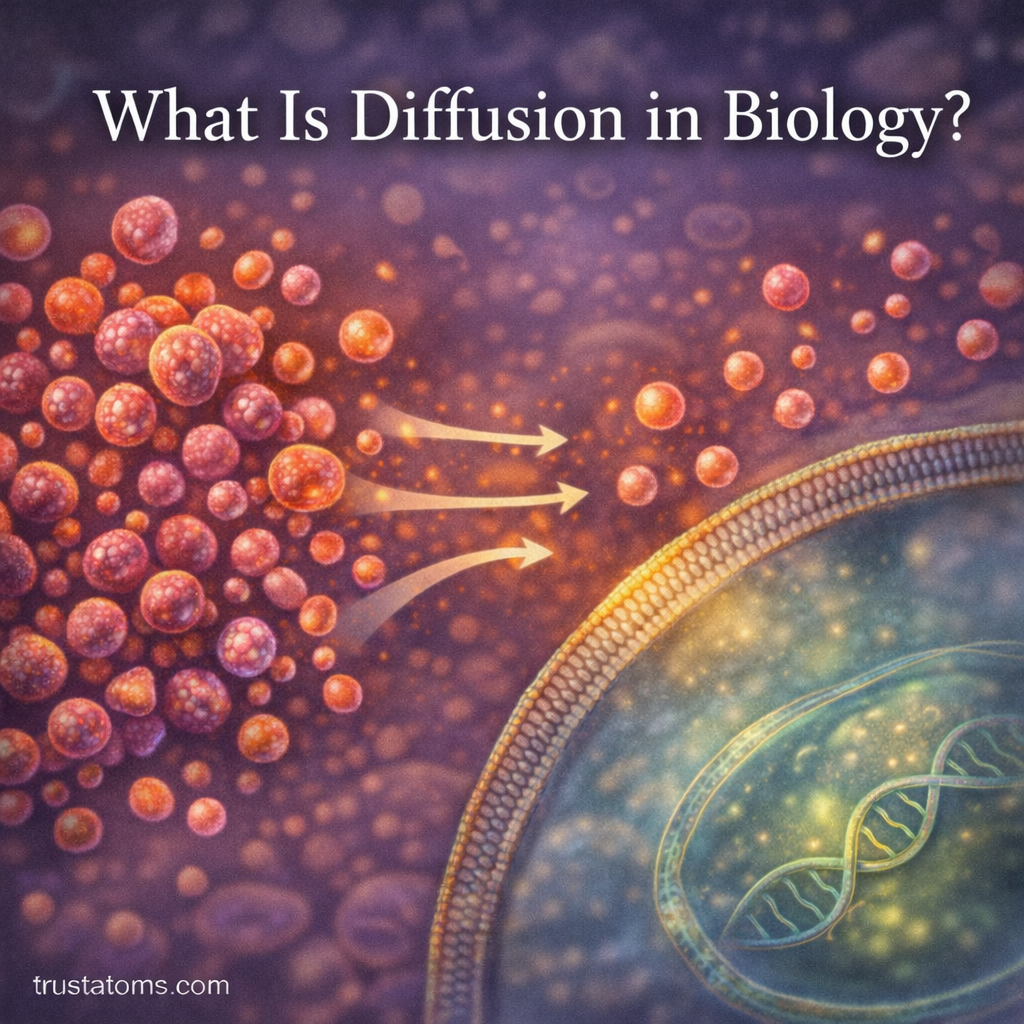
Diffusion is one of the most fundamental processes in biology. It allows molecules to move naturally from areas of higher concentration to areas of lower concentration without the need for energy. This simple movement plays a major role in how cells exchange materials, maintain balance, and support life.
Every living cell depends on diffusion to transport essential substances such as oxygen, carbon dioxide, nutrients, and waste products. Without diffusion, cells would struggle to maintain the chemical balance needed for normal biological function.
Understanding diffusion helps explain how cells interact with their environment and how many biological systems maintain stability.
Continue reading “What Is Diffusion in Biology?”