The human body constantly works to maintain internal balance, a state known as homeostasis. One of the key organs responsible for this balance is the pancreas, which produces hormones that regulate blood sugar, energy use, and metabolism.
Pancreatic hormones—primarily insulin and glucagon—work together to keep blood glucose levels within a healthy range. This balance is essential for proper organ function, energy supply, and long-term health.
What Is the Pancreas?
The pancreas is a gland located behind the stomach that has both digestive and hormonal functions.
Two Main Roles
- Exocrine function: produces digestive enzymes
- Endocrine function: releases hormones into the bloodstream
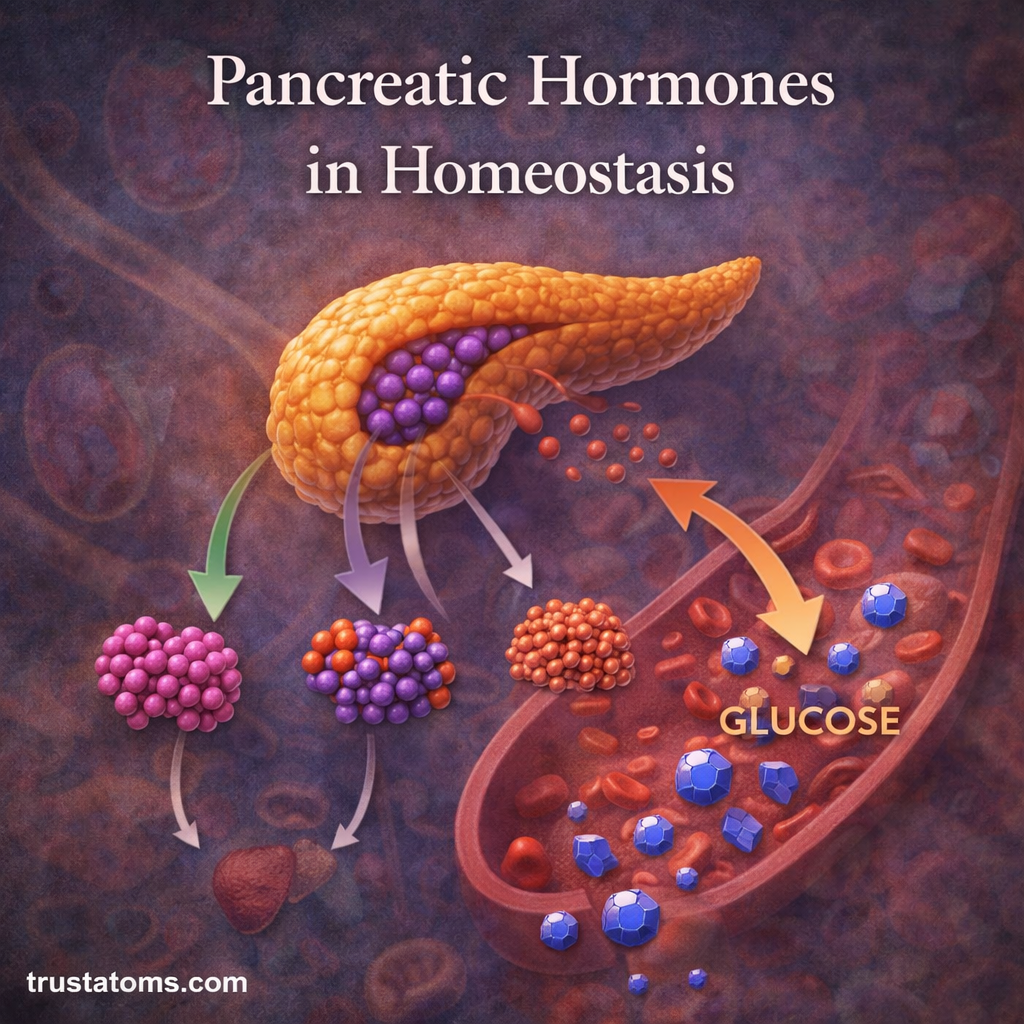
The endocrine portion contains clusters of cells called the islets of Langerhans, which are responsible for hormone production.
Key Pancreatic Hormones
Several hormones are produced by the pancreas, each with a specific role in maintaining homeostasis.
Insulin
Produced by beta cells, insulin lowers blood glucose levels.
Functions:
- Promotes glucose uptake into cells
- Encourages storage of glucose as glycogen
- Supports fat storage
- Reduces blood sugar after meals
Glucagon
Produced by alpha cells, glucagon raises blood glucose levels.
Functions:
- Stimulates glycogen breakdown in the liver
- Promotes glucose production (gluconeogenesis)
- Releases stored energy into the bloodstream
Somatostatin
Produced by delta cells, somatostatin regulates other hormones.
Functions:
- Inhibits insulin and glucagon release
- Slows digestion
- Helps fine-tune hormone balance
Pancreatic Polypeptide
Produced by PP cells, this hormone plays a supporting role.
Functions:
- Helps regulate appetite
- Influences digestive processes
- Supports overall pancreatic function
How Pancreatic Hormones Maintain Homeostasis
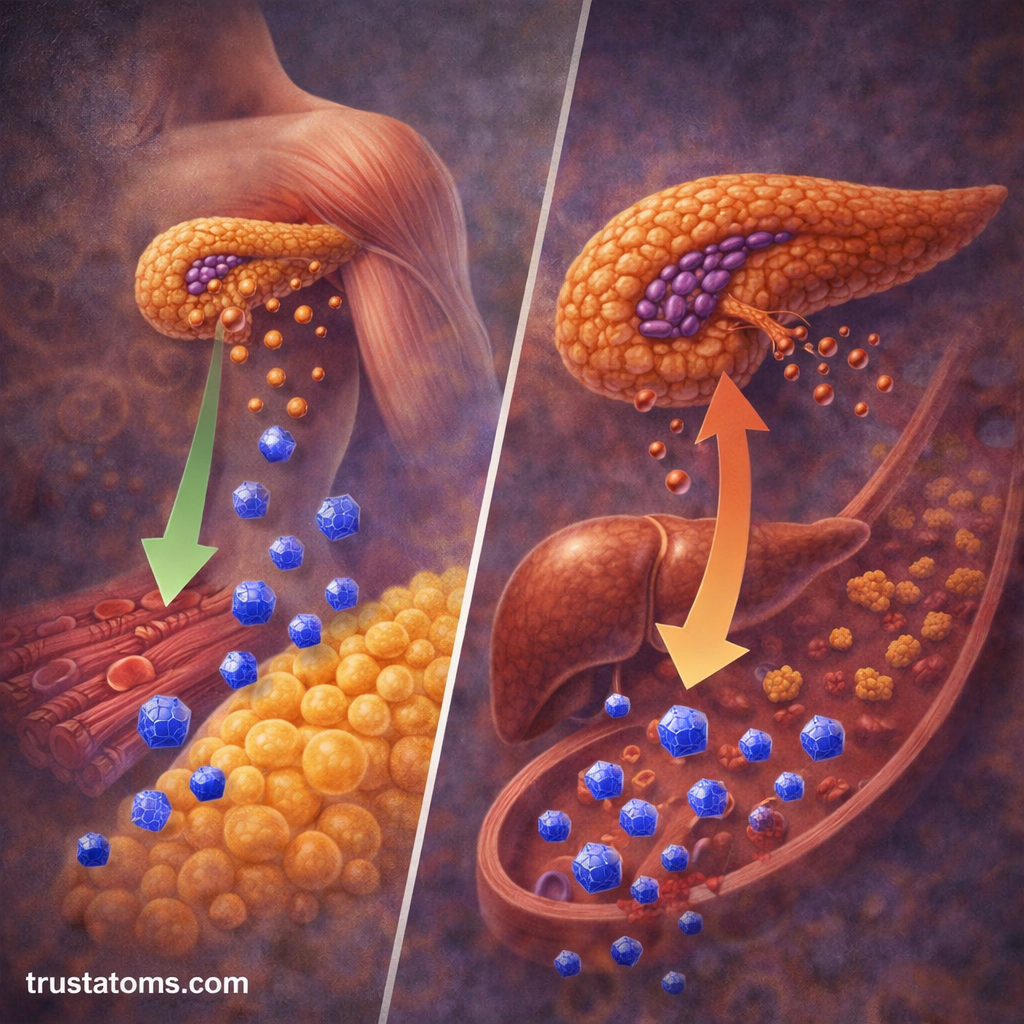
The pancreas maintains balance primarily through the interaction between insulin and glucagon.
After Eating (Fed State)
- Blood glucose levels rise
- The pancreas releases insulin
- Cells absorb glucose for energy
- Excess glucose is stored
- Blood sugar levels decrease
Between Meals (Fasting State)
- Blood glucose levels drop
- The pancreas releases glucagon
- The liver releases stored glucose
- Blood sugar levels increase
- Balance is restored
The Feedback System of Blood Sugar Regulation
Pancreatic hormones operate through a negative feedback loop.
How It Works
- High blood glucose → insulin release → glucose decreases
- Low blood glucose → glucagon release → glucose increases
- Hormone secretion adjusts based on current levels
This continuous feedback system keeps blood glucose within a narrow, healthy range.
Why Homeostasis Is Important
Maintaining stable internal conditions is essential for survival.
Key Benefits
- Ensures steady energy supply
- Protects organs from damage
- Supports brain function
- Maintains metabolic balance
Even small disruptions in this system can lead to noticeable symptoms.
Disorders Related to Pancreatic Hormones
When pancreatic hormone balance is disrupted, it can lead to health conditions.
Diabetes Mellitus
A condition involving impaired insulin function.
Types:
- Type 1: little or no insulin production
- Type 2: insulin resistance and reduced effectiveness
Hypoglycemia
Low blood sugar levels, often due to excess insulin or insufficient glucagon.
Symptoms:
- Dizziness
- Sweating
- Confusion
- Weakness
Hyperglycemia
High blood sugar levels due to insufficient insulin or excessive glucose production.
Symptoms:
- Increased thirst
- Frequent urination
- Fatigue
- Blurred vision
Factors That Influence Pancreatic Hormones
Several lifestyle and biological factors affect how pancreatic hormones function.
Key Influences
- Diet and nutrient intake
- Physical activity levels
- Body weight
- Stress and hormonal balance
- Sleep quality
Maintaining healthy habits supports optimal hormone regulation.
Supporting Pancreatic Health and Balance
Healthy lifestyle choices can help maintain proper hormone function.
Practical Tips
- Eat balanced meals with whole foods
- Limit excessive sugar and processed foods
- Exercise regularly
- Maintain a healthy weight
- Get adequate sleep
- Manage stress effectively
These strategies help improve insulin sensitivity and overall metabolic balance.
Key Takeaways
- The pancreas plays a central role in maintaining homeostasis.
- Insulin lowers blood glucose, while glucagon raises it.
- Additional hormones like somatostatin help regulate the system.
- Blood sugar is controlled through a precise feedback loop.
- Disruptions in pancreatic hormones can lead to conditions like diabetes.
Final Thoughts
Pancreatic hormones are essential for maintaining internal balance and ensuring that the body functions efficiently. By coordinating energy storage and release, these hormones keep blood glucose levels stable and support overall health.
Understanding how the pancreas regulates homeostasis highlights the importance of lifestyle choices and their impact on long-term metabolic well-being.