Calcium is one of the most essential minerals in the human body, playing a critical role in muscle contraction, nerve signaling, blood clotting, and bone strength. Maintaining stable calcium levels is vital for survival, and this balance is tightly regulated by a key hormone: parathyroid hormone (PTH).
Produced by the parathyroid glands, PTH ensures that calcium levels in the blood remain within a narrow, healthy range. Even small fluctuations can affect vital bodily functions, making PTH one of the most important regulators in human physiology.
What Is Parathyroid Hormone (PTH)?
Parathyroid hormone is a protein hormone secreted by the parathyroid glands, which are four small glands located behind the thyroid gland in the neck.
Primary Function of PTH
The main role of PTH is to increase blood calcium levels when they fall too low. It acts quickly and efficiently through multiple systems in the body to restore balance.
Why Calcium Balance Matters
Calcium is not just about bones. About 99% of calcium is stored in bones and teeth, but the remaining 1% in the bloodstream is crucial for:
- Muscle contraction (including the heart)
- Nerve transmission
- Hormone secretion
- Blood clotting
Because these processes are essential for life, the body prioritizes maintaining stable blood calcium levels—even if it means pulling calcium from bones.
How Parathyroid Hormone Regulates Calcium
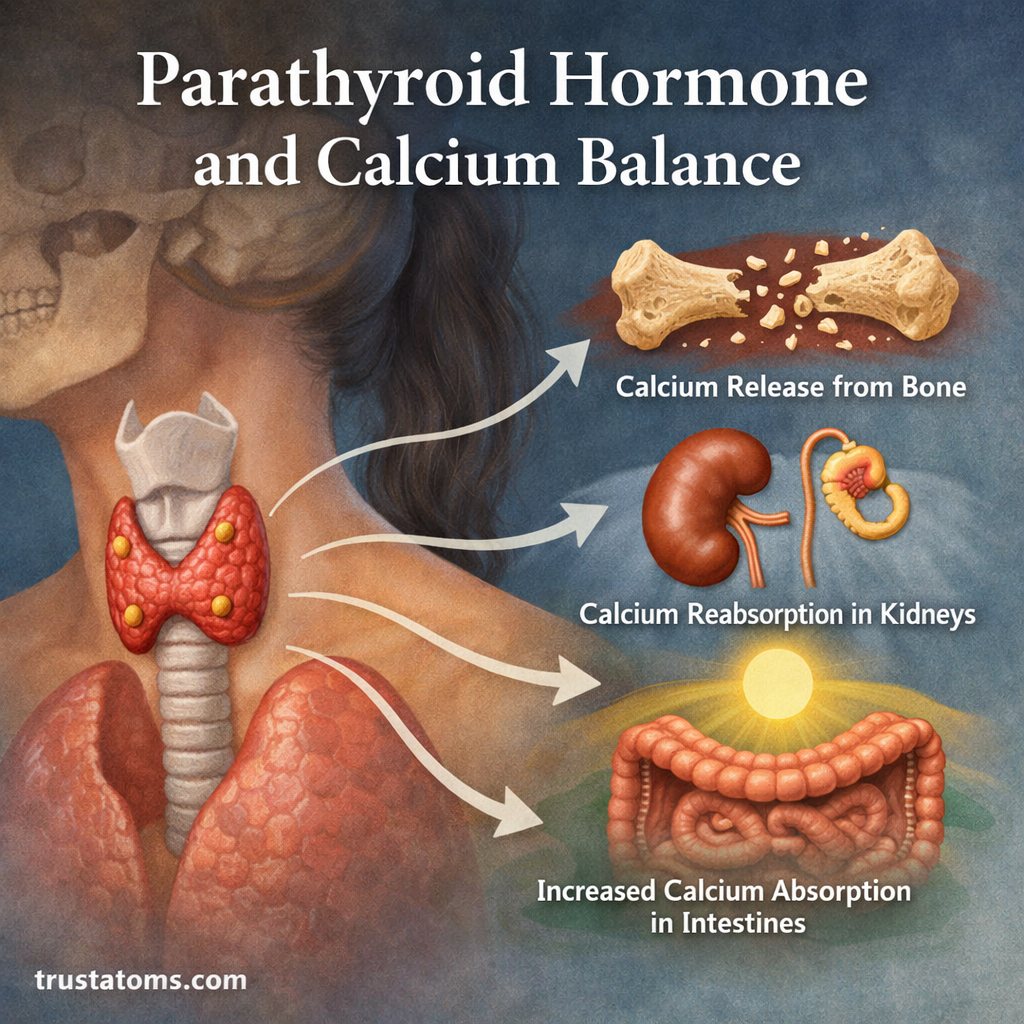
PTH raises blood calcium levels through three main mechanisms:
1. Bone Resorption
When calcium levels are low, PTH stimulates the release of calcium from bones.
- Activates osteoclasts (cells that break down bone tissue)
- Releases stored calcium into the bloodstream
- Helps restore normal calcium levels quickly
2. Increased Kidney Reabsorption
PTH acts on the kidneys to reduce calcium loss in urine.
- Increases calcium reabsorption back into the blood
- Decreases calcium excretion
- Conserves calcium in the body
3. Activation of Vitamin D
PTH stimulates the kidneys to convert vitamin D into its active form (calcitriol).
- Active vitamin D increases calcium absorption in the intestines
- Enhances dietary calcium uptake
- Provides a long-term solution for maintaining calcium levels
The Feedback Loop: Keeping Calcium Stable
The release of PTH is controlled by a negative feedback system:
- Blood calcium levels drop
- Parathyroid glands detect the decrease
- PTH is released
- Calcium levels rise through bone, kidney, and intestinal actions
- Once levels normalize, PTH secretion decreases
This feedback loop ensures that calcium levels remain stable without excessive fluctuations.
Relationship Between PTH and Vitamin D
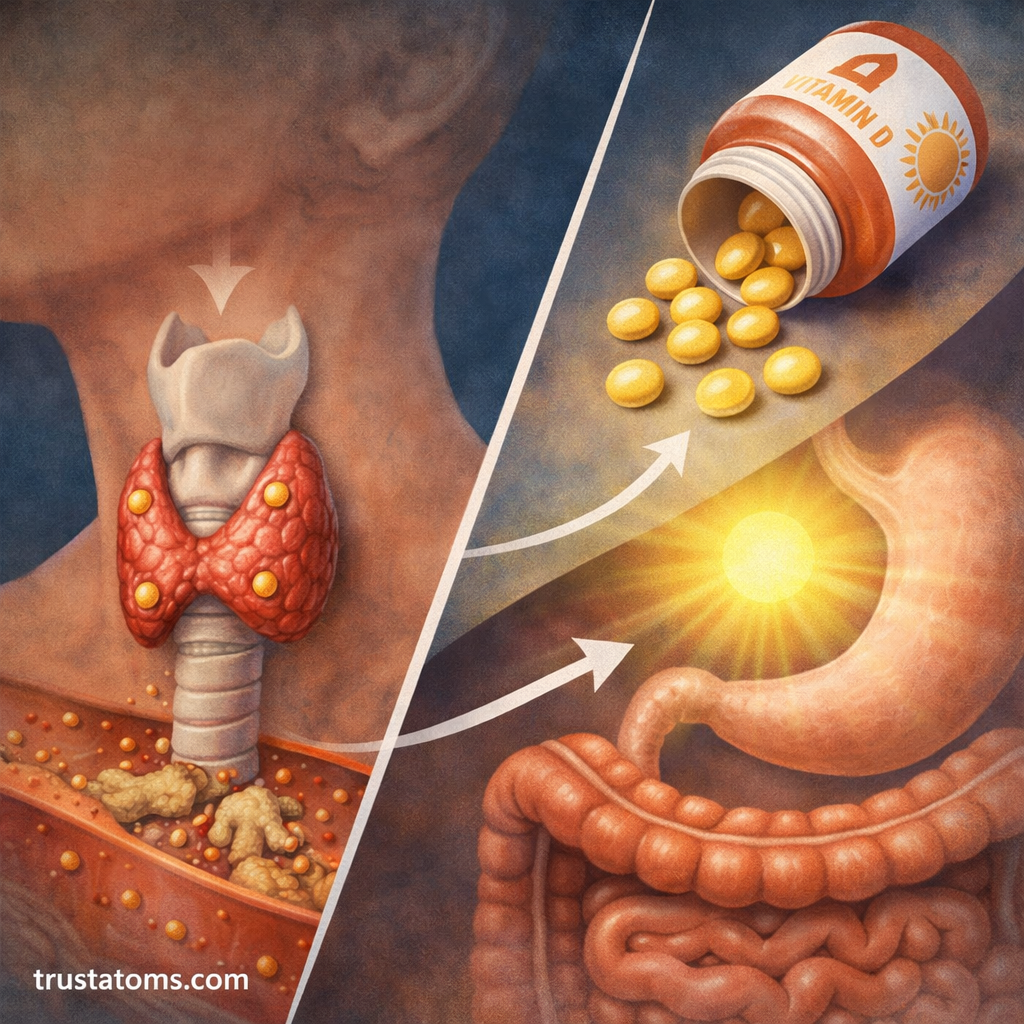
PTH and vitamin D work closely together to regulate calcium balance.
Key Interactions
- PTH activates vitamin D in the kidneys
- Active vitamin D increases calcium absorption from food
- Together, they maintain both short-term and long-term calcium levels
Without sufficient vitamin D, PTH must work harder, often leading to increased bone breakdown.
Disorders Related to Parathyroid Hormone
Imbalances in PTH can lead to serious health conditions.
Hyperparathyroidism (Too Much PTH)
Occurs when the parathyroid glands produce excessive hormone.
Effects:
- High blood calcium (hypercalcemia)
- Bone loss and fractures
- Kidney stones
- Fatigue and confusion
Hypoparathyroidism (Too Little PTH)
Occurs when PTH production is insufficient.
Effects:
- Low blood calcium (hypocalcemia)
- Muscle cramps and spasms
- Tingling in fingers and lips
- Seizures in severe cases
How the Body Prioritizes Calcium
The body prioritizes blood calcium stability over bone health. This means:
- If calcium intake is low, bones act as a reservoir
- Chronic imbalance can weaken bones over time
- Proper nutrition and hormonal balance are essential for long-term health
Key Takeaways
- Parathyroid hormone (PTH) is essential for maintaining stable blood calcium levels.
- It increases calcium through bone resorption, kidney reabsorption, and vitamin D activation.
- Calcium balance is critical for muscles, nerves, and heart function.
- PTH operates through a precise negative feedback loop.
- Imbalances in PTH can lead to serious conditions like hyperparathyroidism and hypoparathyroidism.
Final Thoughts
Parathyroid hormone plays a central role in keeping calcium levels within a narrow, life-sustaining range. While often overlooked compared to larger organs and systems, the tiny parathyroid glands have a massive impact on overall health.
Understanding how PTH regulates calcium not only highlights the complexity of the human body but also underscores the importance of maintaining proper nutrition and hormonal balance for long-term well-being.