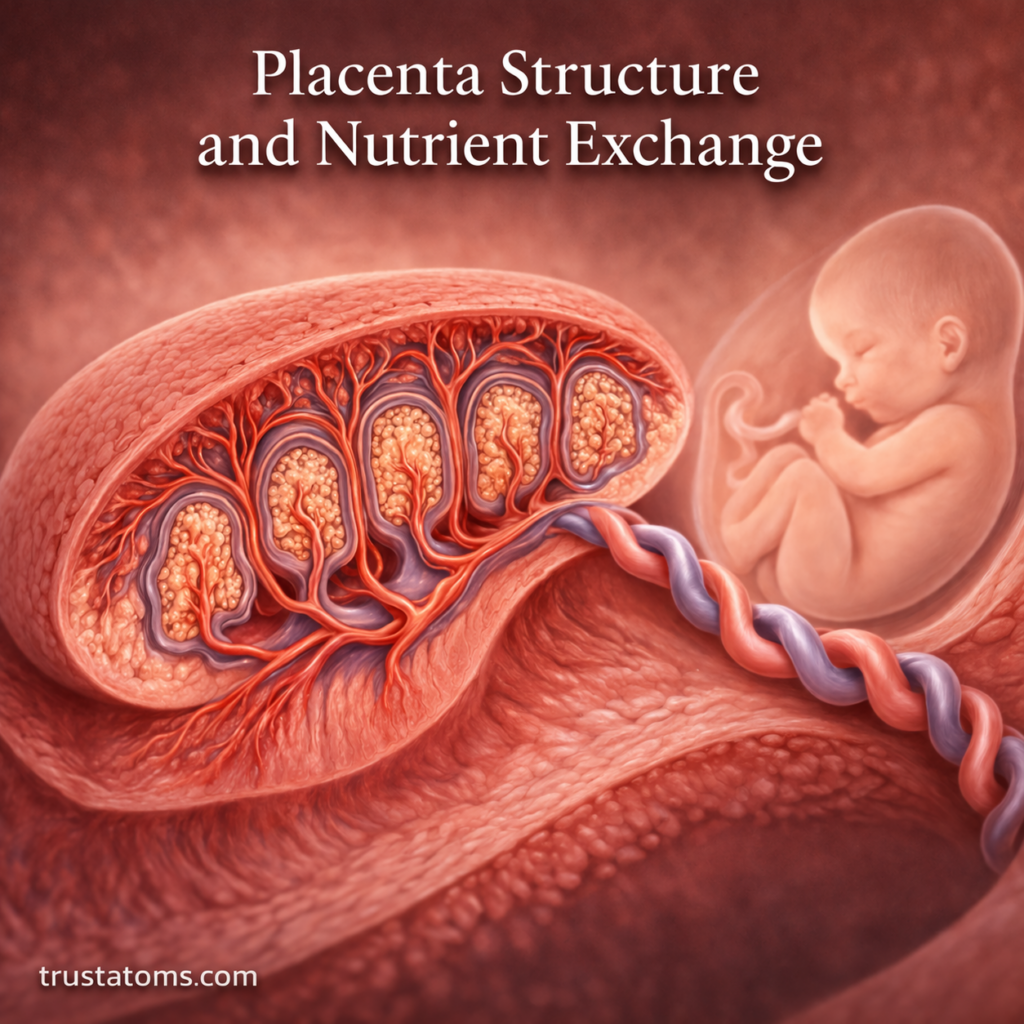
The placenta is a remarkable organ that forms during pregnancy to support the developing embryo and fetus. It acts as a lifeline between the mother and the baby, enabling the exchange of nutrients, oxygen, and waste products. Understanding the structure of the placenta and how nutrient exchange occurs provides key insights into human development and maternal health.
What Is the Placenta?
The placenta is a temporary organ that develops in the uterus during pregnancy. It connects to the fetus through the umbilical cord and attaches to the uterine wall.
Its primary role is to facilitate communication and exchange between maternal and fetal systems without directly mixing their blood.
Key Functions of the Placenta
- Supplies oxygen and essential nutrients to the fetus
- Removes carbon dioxide and metabolic waste
- Produces hormones that regulate pregnancy
- Acts as a selective barrier against harmful substances
- Supports immune protection for the fetus
Structure of the Placenta
The placenta has a complex structure designed to maximize efficiency in exchange processes.
Main Components
1. Maternal Side
- Attached to the uterine wall (endometrium)
- Contains maternal blood vessels
- Forms spaces called intervillous spaces filled with maternal blood
2. Fetal Side
- Faces the fetus
- Connected via the umbilical cord
- Covered by the amnion (a thin protective membrane)
Chorionic Villi: The Functional Units
Chorionic villi are tiny, finger-like projections that extend from the placenta into the maternal blood.
Features of Chorionic Villi
- Contain fetal blood vessels
- Increase surface area for exchange
- Surrounded by maternal blood in intervillous spaces
These structures are essential because they bring fetal blood close to maternal blood, allowing efficient transfer of substances.
How Nutrient Exchange Works
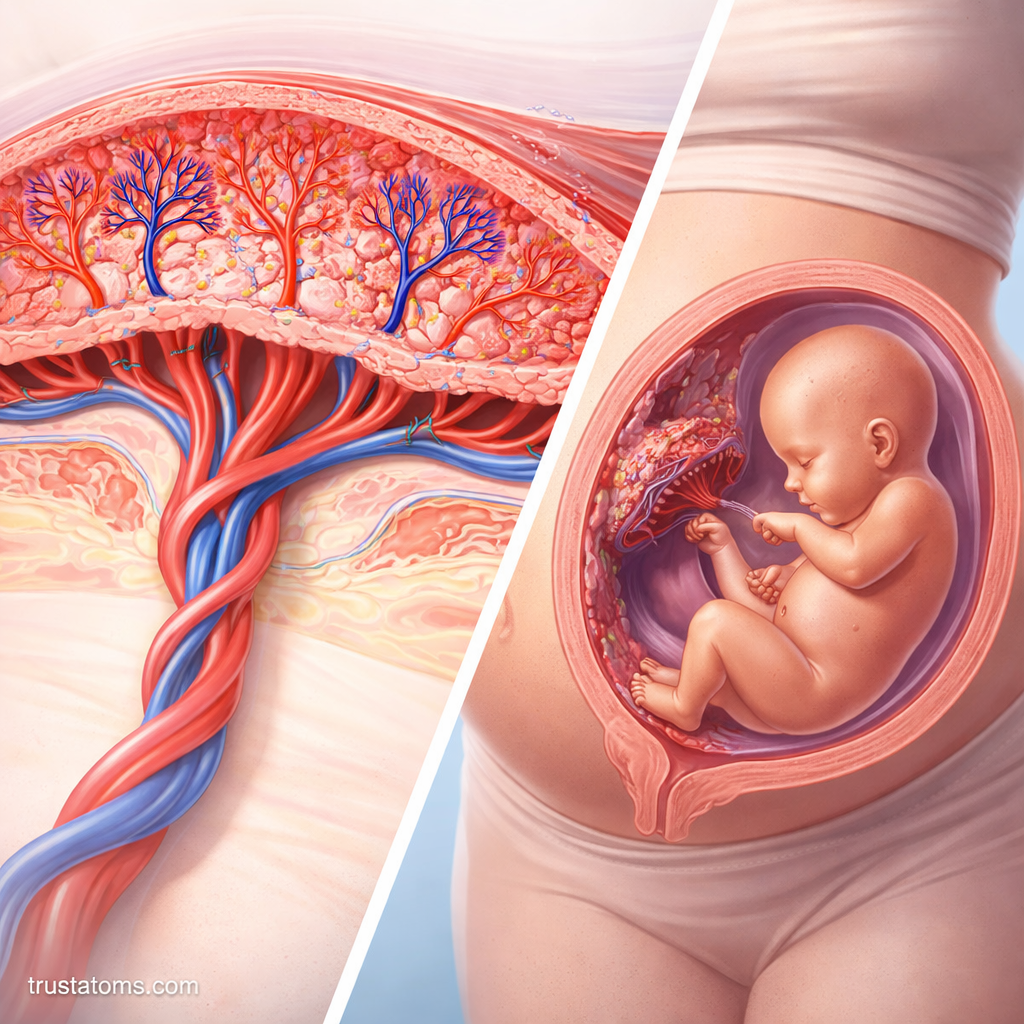
Nutrient exchange in the placenta occurs through several biological processes. Importantly, maternal and fetal blood do not mix directly.
Mechanisms of Exchange
1. Diffusion
- Oxygen and carbon dioxide move across the placental membrane
- Driven by concentration gradients
2. Facilitated Diffusion
- Glucose is transported using carrier proteins
- Ensures a steady energy supply to the fetus
3. Active Transport
- Amino acids, ions, and vitamins are actively transported
- Requires energy to move substances against concentration gradients
4. Pinocytosis (Endocytosis)
- Large molecules like antibodies are transferred
- Supports fetal immune protection
Role of the Umbilical Cord
The umbilical cord connects the fetus to the placenta and serves as the transport pathway for blood.
Components of the Umbilical Cord
- Two umbilical arteries: carry deoxygenated blood from the fetus to the placenta
- One umbilical vein: carries oxygenated, nutrient-rich blood back to the fetus
This circulation ensures continuous delivery of essential substances and removal of waste.
Placental Hormones and Their Functions
The placenta also functions as an endocrine organ, producing hormones that maintain pregnancy and support fetal development.
Key Hormones
- Human chorionic gonadotropin (hCG): maintains early pregnancy
- Progesterone: supports the uterine lining
- Estrogen: promotes uterine growth and blood flow
- Human placental lactogen (hPL): regulates maternal metabolism to support fetal growth
The Placental Barrier
The placental barrier is a semi-permeable structure that separates maternal and fetal blood.
What Can Cross the Placenta?
Can pass through:
- Oxygen and carbon dioxide
- Nutrients (glucose, amino acids, fatty acids)
- Some antibodies (IgG)
- Certain medications and small molecules
Limited or blocked:
- Many bacteria
- Large proteins
- Some harmful substances (though not all)
While protective, the barrier is not perfect, which is why maternal health and exposure to substances matter during pregnancy.
Importance of Efficient Placental Function
A well-functioning placenta is essential for healthy fetal development.
Potential Issues with Placental Function
- Poor nutrient transfer can lead to restricted fetal growth
- Abnormal implantation can affect blood flow
- Placental insufficiency may cause complications during pregnancy
Monitoring placental health is a key part of prenatal care.
Key Takeaways
- The placenta is a temporary organ that supports fetal growth and development
- Its structure includes maternal and fetal components designed for efficient exchange
- Chorionic villi increase surface area for nutrient and gas transfer
- Multiple transport mechanisms ensure delivery of essential substances
- The placenta also produces hormones and acts as a protective barrier
Final Thoughts
The placenta is one of the most vital and sophisticated organs in human anatomy. Its ability to manage nutrient exchange, waste removal, hormonal regulation, and protection highlights its central role in pregnancy.
By understanding how the placenta works, we gain a deeper appreciation for the delicate balance required to support life before birth.