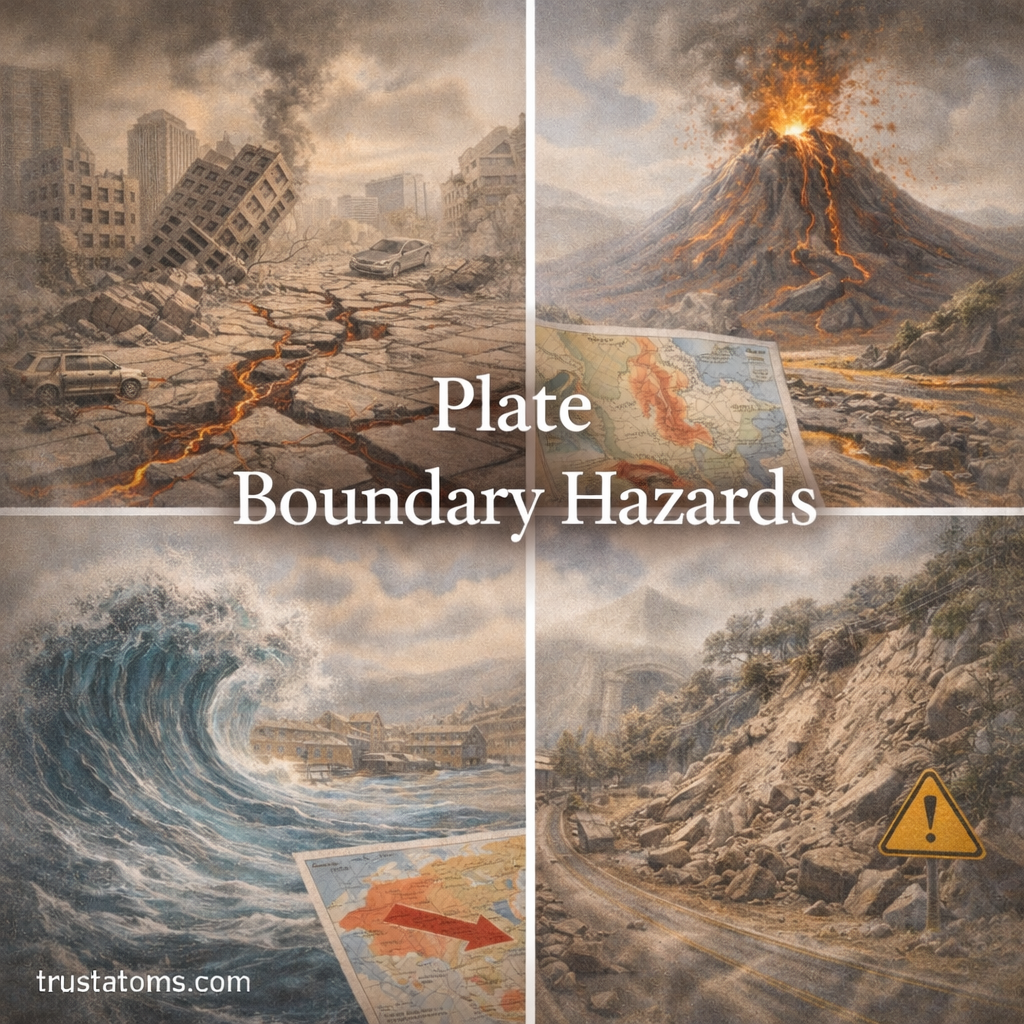
Plate boundary hazards are some of the most powerful and destructive natural events on Earth. These hazards occur where tectonic plates meet, move, and interact. The movement of these massive plates generates earthquakes, volcanic eruptions, and other geological events that can impact millions of people.
Understanding plate boundary hazards is essential for predicting risks, improving safety, and planning resilient communities.
What Are Plate Boundaries?
Earth’s outer shell, known as the lithosphere, is divided into large sections called tectonic plates. These plates float on the semi-fluid asthenosphere beneath them and are constantly moving.
Plate boundaries are the edges where these plates interact. Most geological activity occurs along these boundaries.
Types of Plate Boundaries
There are three main types of plate boundaries, each associated with different hazards.
Divergent Boundaries
Divergent boundaries occur where tectonic plates move away from each other.
Key features:
- Magma rises to fill the gap
- New crust is formed
- Common at mid-ocean ridges
Associated hazards:
- Volcanic activity
- Shallow earthquakes
Convergent Boundaries
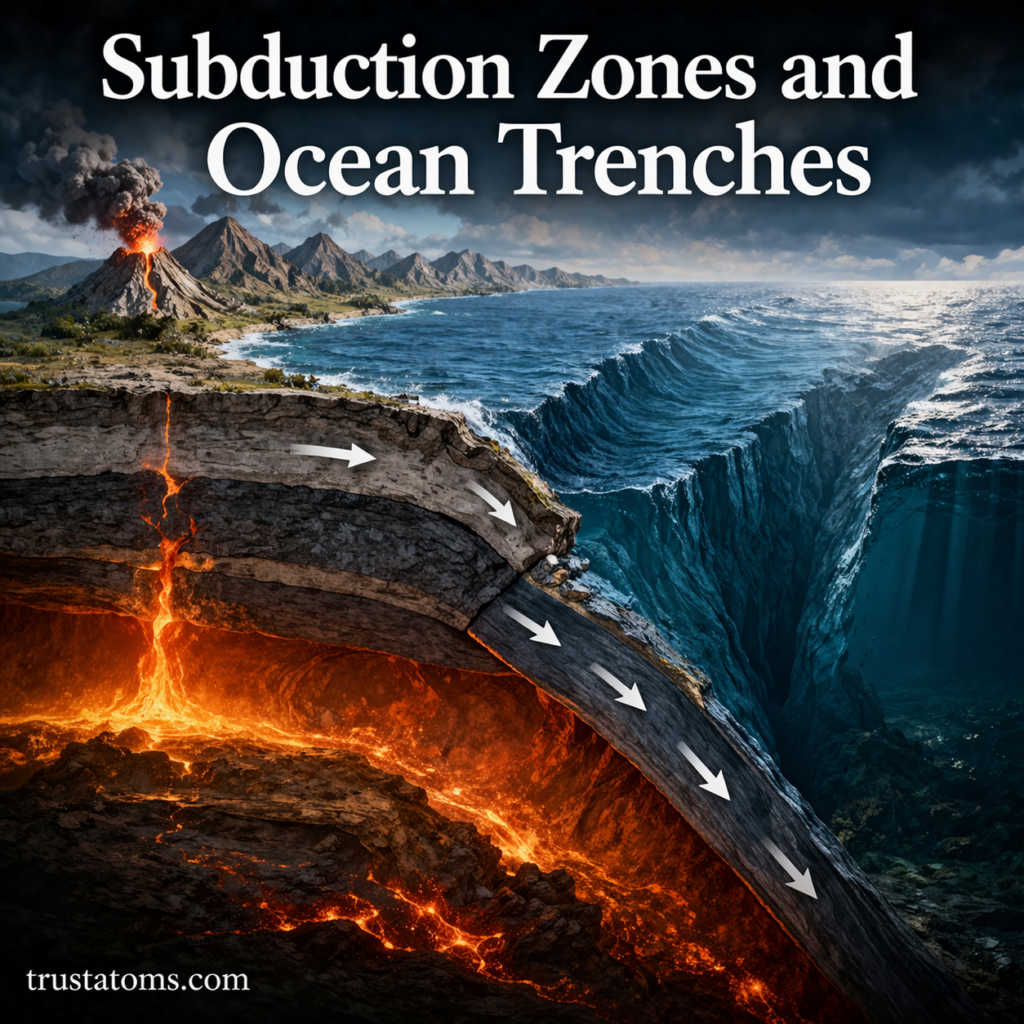
Convergent boundaries occur where two plates move toward each other.
There are three main types:
- Oceanic–continental convergence
- Oceanic–oceanic convergence
- Continental–continental collision
Associated hazards:
- Powerful earthquakes
- Volcanic eruptions
- Mountain building
- Tsunamis
These are often the most dangerous plate boundaries due to intense pressure and energy release.
Transform Boundaries
Transform boundaries occur where plates slide past each other horizontally.
Key features:
- No crust is created or destroyed
- Movement is side-to-side
Associated hazards:
- Frequent earthquakes
- Surface rupture
These earthquakes can occur suddenly and without warning.
Major Plate Boundary Hazards
Different plate interactions produce different types of hazards.
Earthquakes
Earthquakes are the most common hazard at plate boundaries.
- Caused by sudden release of built-up stress
- Can range from minor tremors to major disasters
- Often occur along fault lines
A well-known example is the 2011 Tōhoku Earthquake, which caused widespread destruction and triggered a tsunami.
Volcanic Eruptions
Volcanoes are commonly found at convergent and divergent boundaries.
- Magma rises due to plate movement
- Eruptions release ash, gas, and lava
- Can impact both local and global environments
The Mount St. Helens Eruption is a notable example of explosive volcanic activity.
Tsunamis
Tsunamis are large ocean waves typically triggered by underwater earthquakes.
- Often occur at subduction zones
- Can travel across entire oceans
- Cause severe coastal flooding
Tsunamis are especially dangerous because they can strike with little warning.
Landslides
Plate boundary activity can destabilize slopes.
- Earthquakes can trigger landslides
- Volcanic activity can weaken rock structures
- Heavy rainfall in active regions increases risk
Why Plate Boundary Hazards Occur
These hazards result from the movement and interaction of tectonic plates.
Key Causes
- Stress buildup and sudden release
- Friction between moving plates
- Magma pressure beneath the surface
- Structural weaknesses in Earth’s crust
When these forces exceed the strength of rocks, energy is released in the form of geological hazards.
Regions Most Affected by Plate Boundary Hazards
Certain areas of the world are more prone to these hazards.
The Pacific Ring of Fire
- Surrounds the Pacific Ocean
- Contains many active volcanoes and earthquake zones
- One of the most hazardous regions on Earth
Other High-Risk Areas
- Himalayan region (continental collision)
- Mid-Atlantic Ridge (divergent boundary)
- California’s fault systems (transform boundary)
Impacts of Plate Boundary Hazards
Plate boundary hazards can have significant consequences.
Human Impacts
- Loss of life and injuries
- Damage to infrastructure
- Displacement of communities
Environmental Impacts
- Landscape changes
- Habitat destruction
- Air and water contamination
Economic Impacts
- Costly repairs and rebuilding
- Disruption of trade and transportation
- Long-term economic challenges
How Scientists Monitor Plate Boundaries
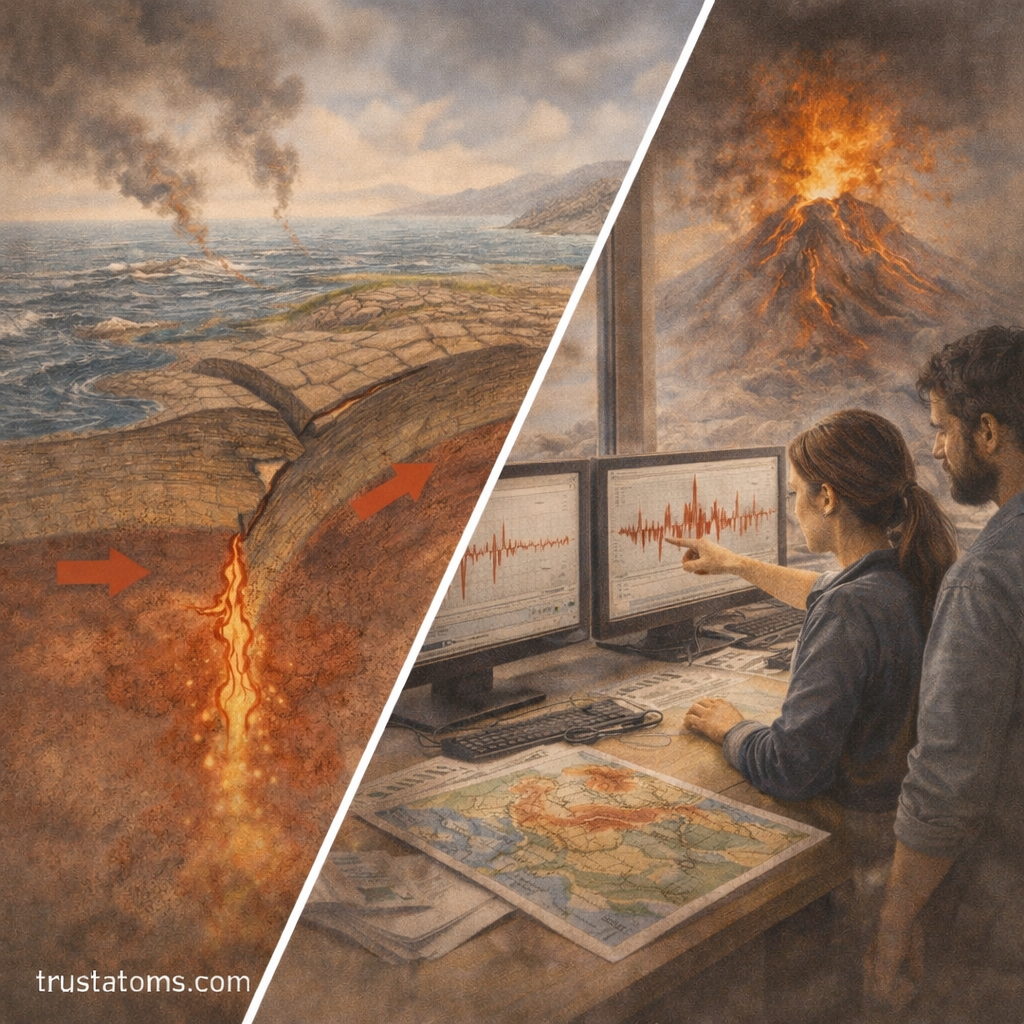
Monitoring helps reduce risk and improve preparedness.
Tools and Techniques
- Seismographs to detect earthquakes
- GPS systems to track plate movement
- Satellite imagery for surface changes
- Volcanic gas monitoring
These tools provide valuable data for forecasting and early warnings.
Reducing Risk from Plate Boundary Hazards
While these hazards cannot be prevented, their impact can be minimized.
Preparedness Strategies
- Build structures to withstand earthquakes
- Develop early warning systems
- Create evacuation plans for volcanic and tsunami risks
Public Awareness
- Educate communities about risks
- Conduct drills and training
- Promote emergency preparedness
Why Plate Boundary Hazards Matter
Plate boundary hazards shape the Earth’s surface and influence where and how people live. Understanding these processes helps scientists predict potential risks and helps communities stay safe.
Final Thoughts
Plate boundary hazards are a powerful reminder of the dynamic nature of our planet. From earthquakes to volcanic eruptions, these events are driven by the constant movement of tectonic plates beneath our feet.
By studying these hazards and preparing effectively, we can reduce their impact and build more resilient societies.