The lungs do not function in isolation—they rely on a thin, fluid-filled membrane system called the pleura to move smoothly within the chest cavity. Along with this structure, pleural pressure plays a crucial role in keeping the lungs expanded and enabling efficient breathing.
Understanding the pleura and pleural pressure helps explain how the lungs stay inflated and what happens when this system is disrupted.
What Is the Pleura?
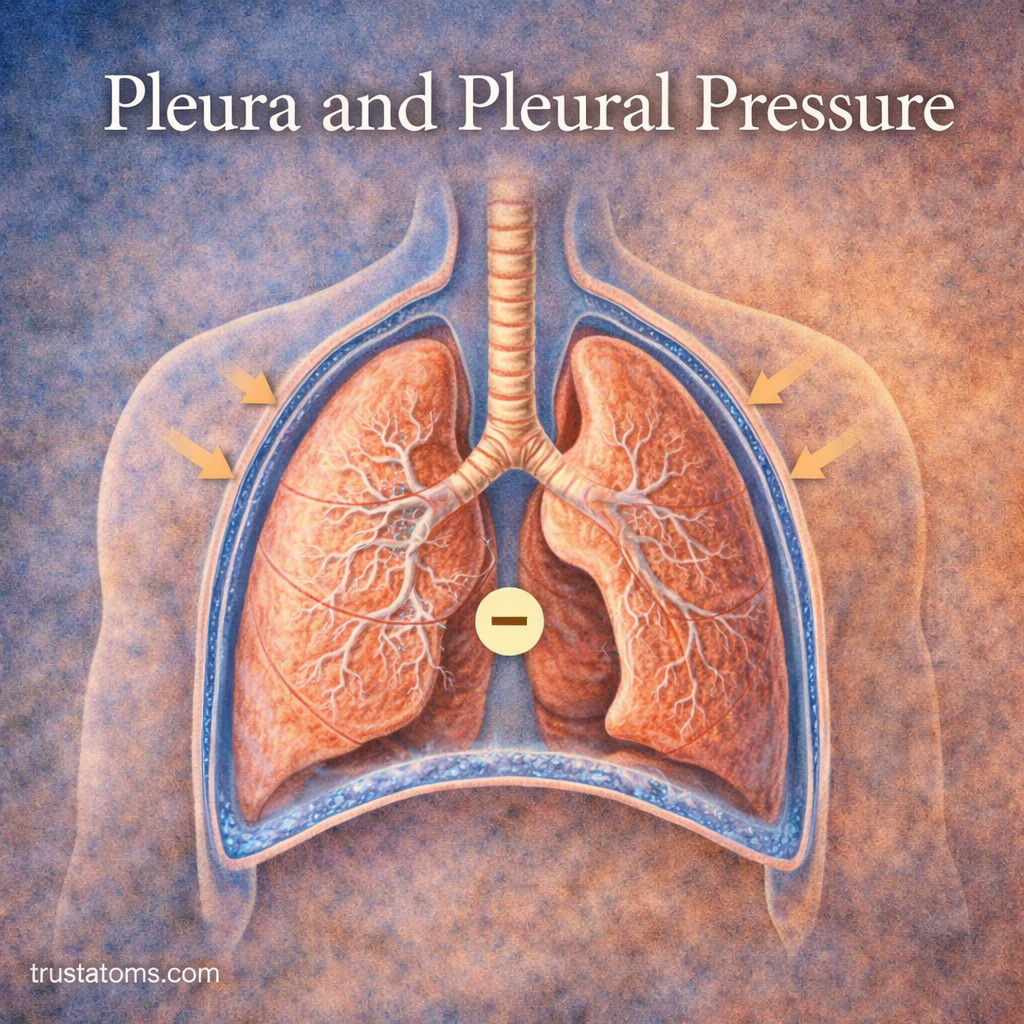
The pleura is a double-layered membrane that surrounds the lungs and lines the chest cavity.
It consists of two layers:
- Visceral pleura
- Covers the surface of the lungs
- Parietal pleura
- Lines the inside of the chest wall
Between these layers is a thin space known as the pleural cavity.
The Pleural Cavity and Pleural Fluid
The pleural cavity is not empty—it contains a small amount of fluid called pleural fluid.
This fluid serves two main purposes:
- Reduces friction between the lung and chest wall
- Allows smooth movement during breathing
It also helps create a surface tension effect that keeps the lungs closely attached to the chest wall.
What Is Pleural Pressure?
Pleural pressure is the pressure within the pleural cavity.
Under normal conditions:
- Pleural pressure is negative relative to atmospheric pressure
This negative pressure is essential because it:
- Keeps the lungs expanded
- Prevents lung collapse
- Allows the lungs to follow the movement of the chest wall
How Pleural Pressure Works During Breathing
Pleural pressure changes with each breath, helping drive airflow into and out of the lungs.
During Inhalation
- The diaphragm contracts and moves downward
- The chest cavity expands
- Pleural pressure becomes more negative
- Lungs expand
- Air flows into the lungs
During Exhalation
- The diaphragm relaxes
- The chest cavity volume decreases
- Pleural pressure becomes less negative
- Lungs recoil
- Air is pushed out
Why Negative Pleural Pressure Is Important
Negative pleural pressure acts like a suction force that keeps the lungs inflated.
Without it:
- The lungs would collapse due to their natural elastic recoil
- Air would not be able to enter properly
This pressure difference is what allows the lungs to expand passively as the chest wall moves.
Relationship Between Pleura and Lung Expansion
The pleura connects the lungs to the chest wall in a functional way.
This relationship allows:
- The lungs to follow chest movements
- Efficient expansion during inhalation
- Smooth contraction during exhalation
The pleural fluid ensures this connection remains frictionless and stable.
What Happens When Pleural Pressure Is Disrupted?
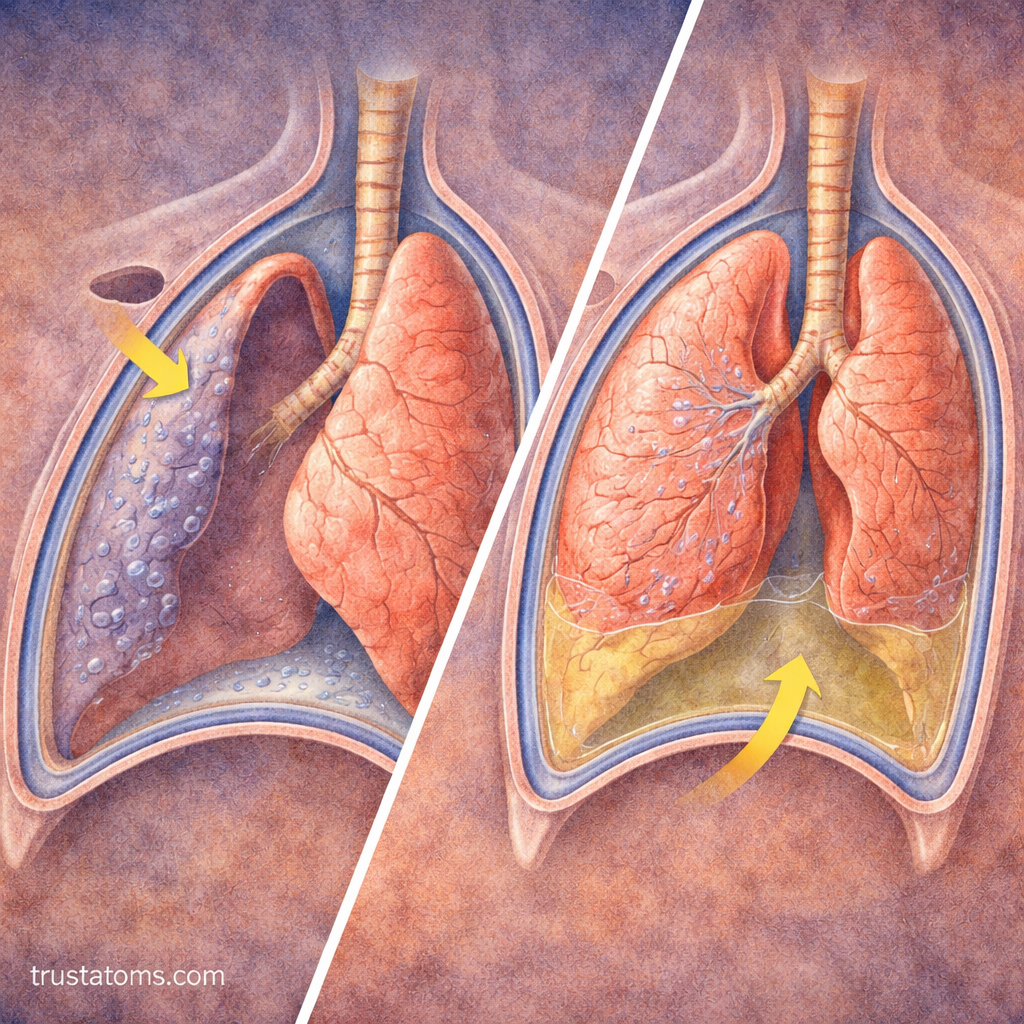
Disruption of normal pleural pressure can severely affect breathing.
1. Pneumothorax (Collapsed Lung)
- Air enters the pleural cavity
- Negative pressure is lost
- Lung collapses
2. Pleural Effusion
- Excess fluid builds up in the pleural space
- Compresses the lungs
- Reduces lung expansion
3. Hemothorax
- Blood accumulates in the pleural cavity
- Interferes with lung expansion
How the Body Maintains Pleural Pressure
The body maintains proper pleural pressure through:
- Sealed pleural cavity
- Balanced fluid production and removal
- Elastic forces of the lungs and chest wall
These mechanisms ensure that the pressure remains slightly negative under normal conditions.
Pleura and Breathing Efficiency
The pleura and pleural pressure system allow:
- Minimal energy use during breathing
- Smooth lung expansion and contraction
- Consistent airflow
Without this system, breathing would require much more effort and would be far less efficient.
Why the Pleura Is Essential
The pleura is more than just a protective membrane—it is an active component of respiration.
It:
- Maintains lung position
- Enables pressure changes needed for breathing
- Reduces friction during movement
Its role is essential for normal lung function.
Final Thoughts
Pleura and pleural pressure are fundamental to how the lungs operate. By creating a negative pressure environment and allowing smooth movement within the chest cavity, this system ensures that breathing remains efficient and effortless.
When this delicate balance is disrupted, even simple breathing can become difficult—highlighting the importance of the pleural system in respiratory health.