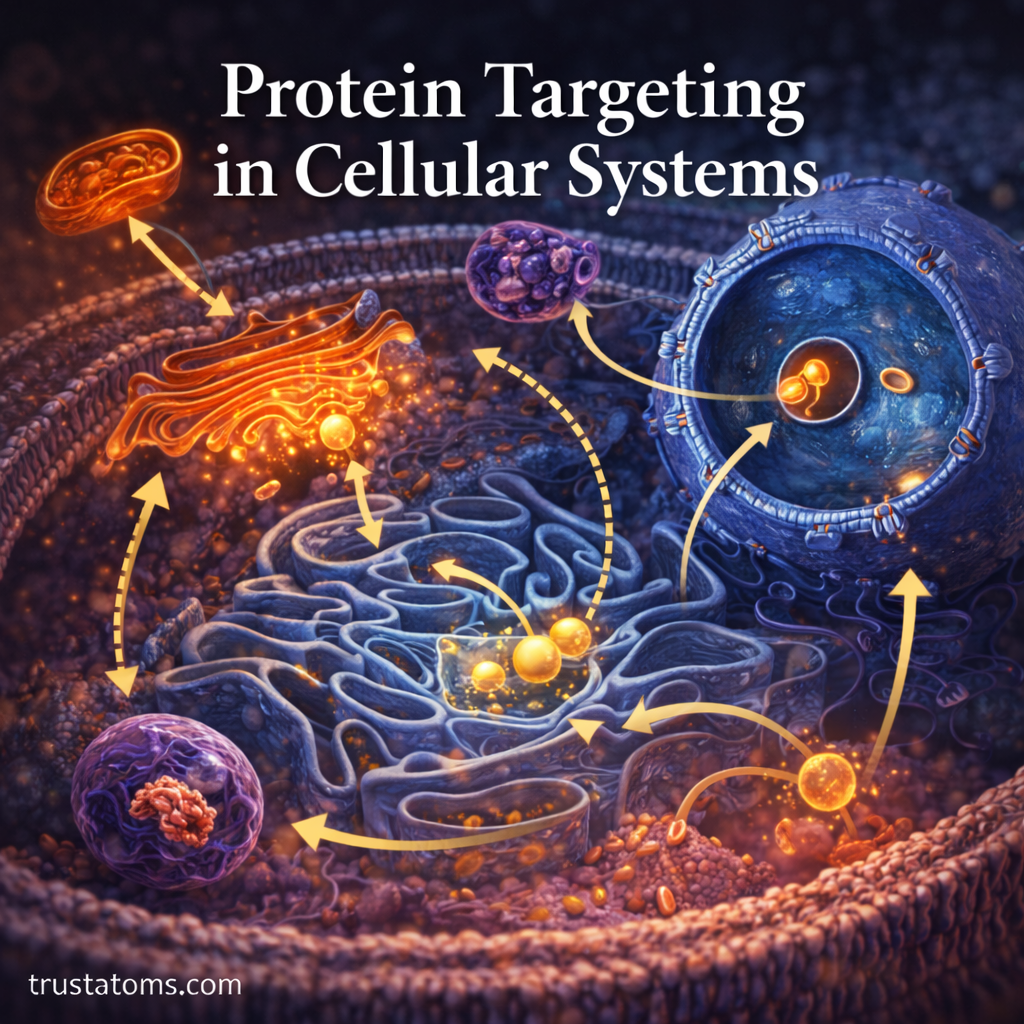
Cells contain thousands of proteins that perform specialized tasks. However, for proteins to function correctly, they must be delivered to the right location within the cell. This process is known as protein targeting.
Protein targeting ensures that newly synthesized proteins reach their correct cellular destinations, such as membranes, organelles, or the extracellular environment. Without this precise system, essential cellular functions would break down.
Understanding protein targeting helps scientists study how cells organize internal processes and how errors in these systems can lead to disease.
What Is Protein Targeting?
Protein targeting refers to the mechanisms that direct proteins to specific locations within or outside a cell.
After proteins are produced by ribosomes, they do not automatically function where they are made. Instead, many proteins must be transported to specialized cellular compartments.
These destinations may include:
- The nucleus
- The mitochondria
- The endoplasmic reticulum
- The Golgi apparatus
- Lysosomes
- The cell membrane
- Outside the cell
Protein targeting systems ensure that each protein reaches its proper location to carry out its biological role.
Why Protein Targeting Is Important
Cells rely on highly organized internal structures. Protein targeting helps maintain this organization by delivering proteins precisely where they are needed.
Key reasons protein targeting is essential include:
- Ensuring enzymes reach the correct metabolic pathways
- Delivering structural proteins to cellular components
- Sending signaling molecules to membranes
- Transporting secreted proteins outside the cell
- Maintaining proper organelle function
If proteins fail to reach the correct location, cellular processes can become disrupted.
Signal Sequences and Targeting Signals
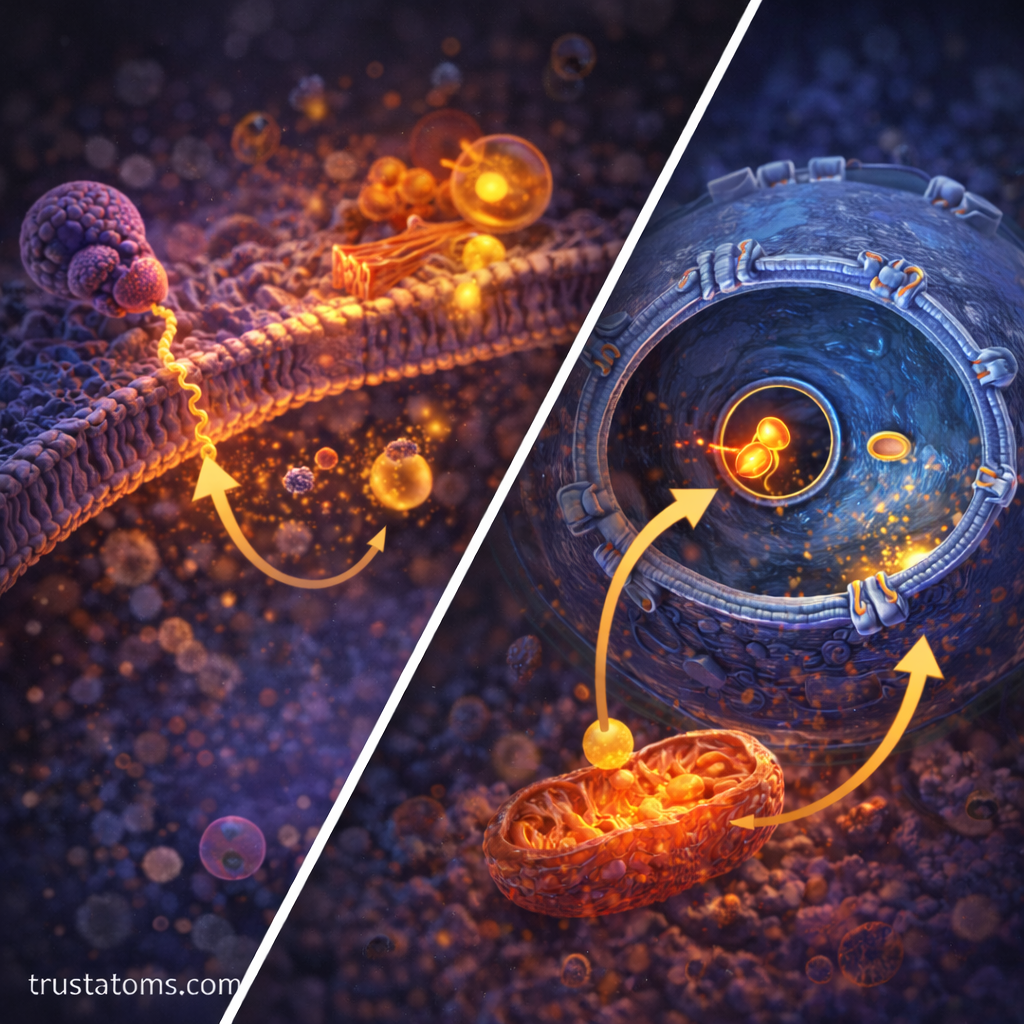
Many proteins contain short amino acid sequences that act as targeting signals.
These signals function like molecular “addresses” that direct proteins to their correct destinations.
Targeting signals can appear:
- At the beginning of the protein (N-terminal signal peptide)
- At the end of the protein (C-terminal signal sequence)
- Within the middle of the protein sequence
These signals are recognized by specialized cellular machinery that guides proteins to their target locations.
Examples include:
- Nuclear localization signals (NLS)
- Mitochondrial targeting sequences
- Endoplasmic reticulum signal peptides
Protein Targeting to the Endoplasmic Reticulum
One of the most important protein targeting pathways involves the endoplasmic reticulum (ER).
Proteins destined for secretion or membrane insertion typically enter the ER during synthesis.
This process occurs through the following steps:
- A signal peptide emerges from the ribosome.
- A molecule called the signal recognition particle (SRP) binds to the signal sequence.
- The SRP directs the ribosome to the ER membrane.
- The protein is inserted into or transported across the ER membrane.
From the ER, proteins move through the secretory pathway to other destinations.
The Secretory Pathway
Many proteins travel through a cellular transport system known as the secretory pathway.
This pathway includes several organelles that modify and sort proteins.
Endoplasmic Reticulum
In the ER, proteins:
- Begin folding into their proper shapes
- Undergo initial chemical modifications
- Enter transport vesicles
Golgi Apparatus
Proteins then move to the Golgi apparatus, where they are further modified.
Functions of the Golgi include:
- Adding carbohydrate groups (glycosylation)
- Sorting proteins for different destinations
- Packaging proteins into vesicles
Vesicular Transport
Transport vesicles carry proteins to their final locations, such as:
- The cell membrane
- Lysosomes
- Extracellular space
This vesicle-based transport system maintains efficient protein distribution.
Targeting Proteins to the Nucleus
Proteins that function in the nucleus must pass through nuclear pores in the nuclear membrane.
These proteins contain nuclear localization signals (NLS) that allow them to be recognized by transport proteins.
The process typically involves:
- Recognition of the NLS by nuclear import receptors
- Transport through nuclear pore complexes
- Release of the protein inside the nucleus
This system ensures that transcription factors and DNA-related proteins reach the nucleus where they regulate gene activity.
Mitochondrial Protein Targeting
Although mitochondria contain their own DNA, most mitochondrial proteins are produced in the cytoplasm and imported into the organelle.
These proteins contain mitochondrial targeting sequences that guide them to mitochondrial membranes.
The import process involves:
- Recognition of the targeting signal.
- Transport through protein channels in mitochondrial membranes.
- Folding and processing inside the organelle.
These proteins help mitochondria perform their role in energy production.
Lysosomal Protein Targeting
Lysosomes contain enzymes that break down cellular waste and macromolecules.
Proteins destined for lysosomes are marked with a special chemical tag known as mannose-6-phosphate (M6P).
This tag allows lysosomal enzymes to be recognized and transported through the Golgi apparatus to lysosomes.
If this targeting system fails, cellular waste may accumulate, leading to metabolic disorders.
Quality Control in Protein Targeting
Cells use quality control systems to ensure that proteins are correctly folded and properly delivered.
Key quality control mechanisms include:
- Monitoring protein folding in the endoplasmic reticulum
- Detecting misfolded proteins
- Degrading defective proteins through cellular recycling systems
These processes prevent damaged proteins from accumulating and disrupting cellular functions.
Protein Targeting and Disease
Errors in protein targeting can contribute to several diseases.
Genetic Disorders
Mutations affecting targeting signals may prevent proteins from reaching their proper destinations.
This can lead to:
- Metabolic diseases
- Enzyme deficiencies
- Cellular dysfunction
Neurodegenerative Diseases
Protein misfolding and improper targeting can contribute to neurological disorders such as:
- Alzheimer’s disease
- Parkinson’s disease
- Huntington’s disease
These diseases often involve accumulation of misfolded or mislocalized proteins.
Lysosomal Storage Diseases
Defects in lysosomal targeting pathways can prevent enzymes from reaching lysosomes.
As a result, cellular waste builds up and damages tissues.
Examples include:
- Tay-Sachs disease
- Pompe disease
- Gaucher disease
Experimental Techniques for Studying Protein Targeting
Scientists use many techniques to study how proteins move within cells.
Common methods include:
- Fluorescent protein tagging to track protein location
- Confocal microscopy to observe intracellular movement
- Genetic manipulation to modify targeting signals
- Biochemical assays to analyze protein transport pathways
These approaches allow researchers to observe protein targeting in real time.
Future Directions in Protein Targeting Research
Protein targeting continues to be an important area of biological research.
Emerging areas include:
- Artificial intelligence models predicting protein localization
- Advanced imaging of protein movement in living cells
- Improved understanding of organelle communication networks
- Therapies correcting protein targeting defects
These advances may improve treatments for diseases related to cellular transport errors.
Final Thoughts
Protein targeting is a critical process that ensures proteins reach the correct cellular destinations. Through signal sequences, transport systems, and organelle pathways, cells maintain an organized internal structure that supports efficient biological function.
By understanding how proteins are directed within cells, scientists gain deeper insight into cellular organization, disease mechanisms, and potential therapeutic strategies.