Reproductive hormones play a central role in human anatomy, controlling processes such as puberty, the menstrual cycle, sperm production, pregnancy, and overall fertility. These hormones operate through a tightly regulated system involving the brain and reproductive organs, ensuring that reproductive functions occur in a coordinated and balanced way.
Understanding how these hormones interact helps explain how the body maintains reproductive health and responds to internal and external changes.
What Are Reproductive Hormones?
Reproductive hormones are chemical messengers that regulate the development and function of the reproductive system. They are produced by glands in the endocrine system and travel through the bloodstream to target organs.
Primary Hormones Involved
- Gonadotropin-releasing hormone (GnRH)
- Luteinizing hormone (LH)
- Follicle-stimulating hormone (FSH)
- Estrogen
- Progesterone
- Testosterone
Each hormone has a specific role, but they work together in a coordinated feedback system.
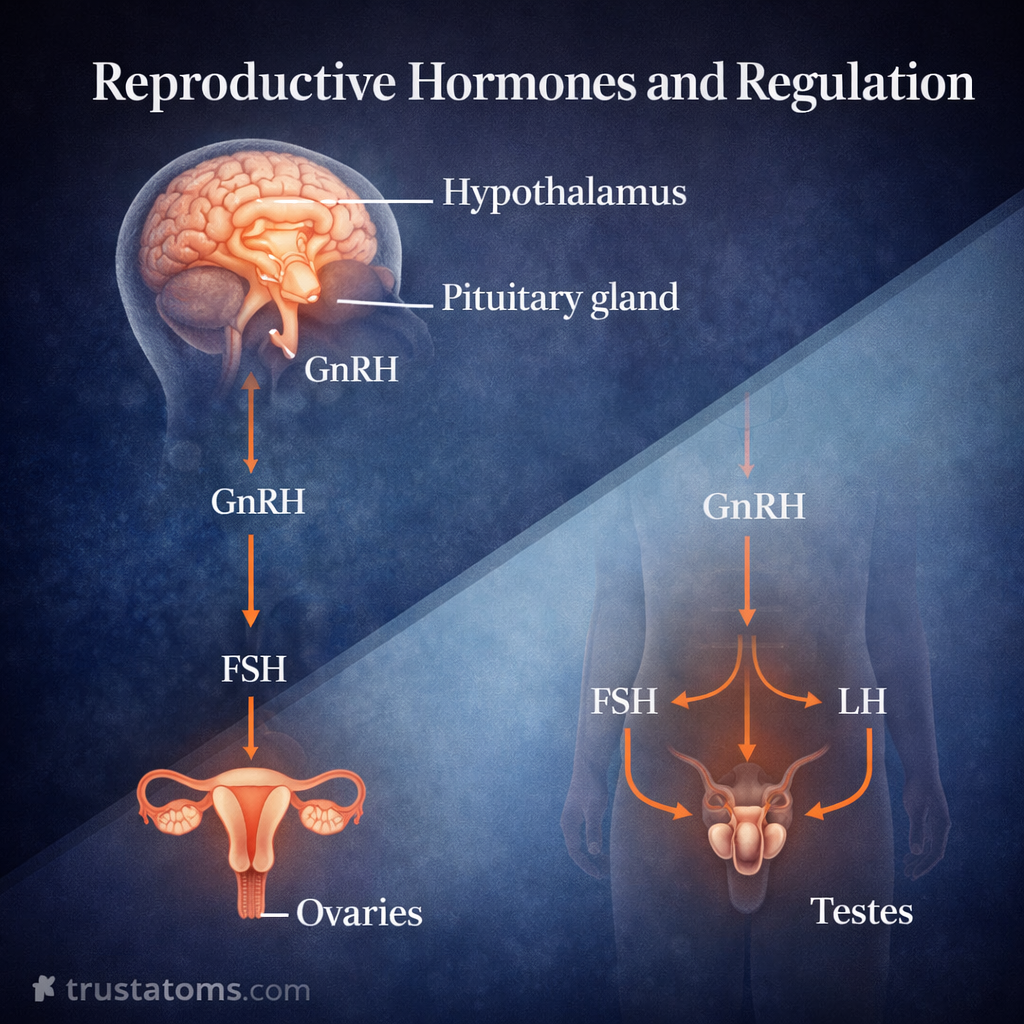
The Hypothalamic-Pituitary-Gonadal (HPG) Axis
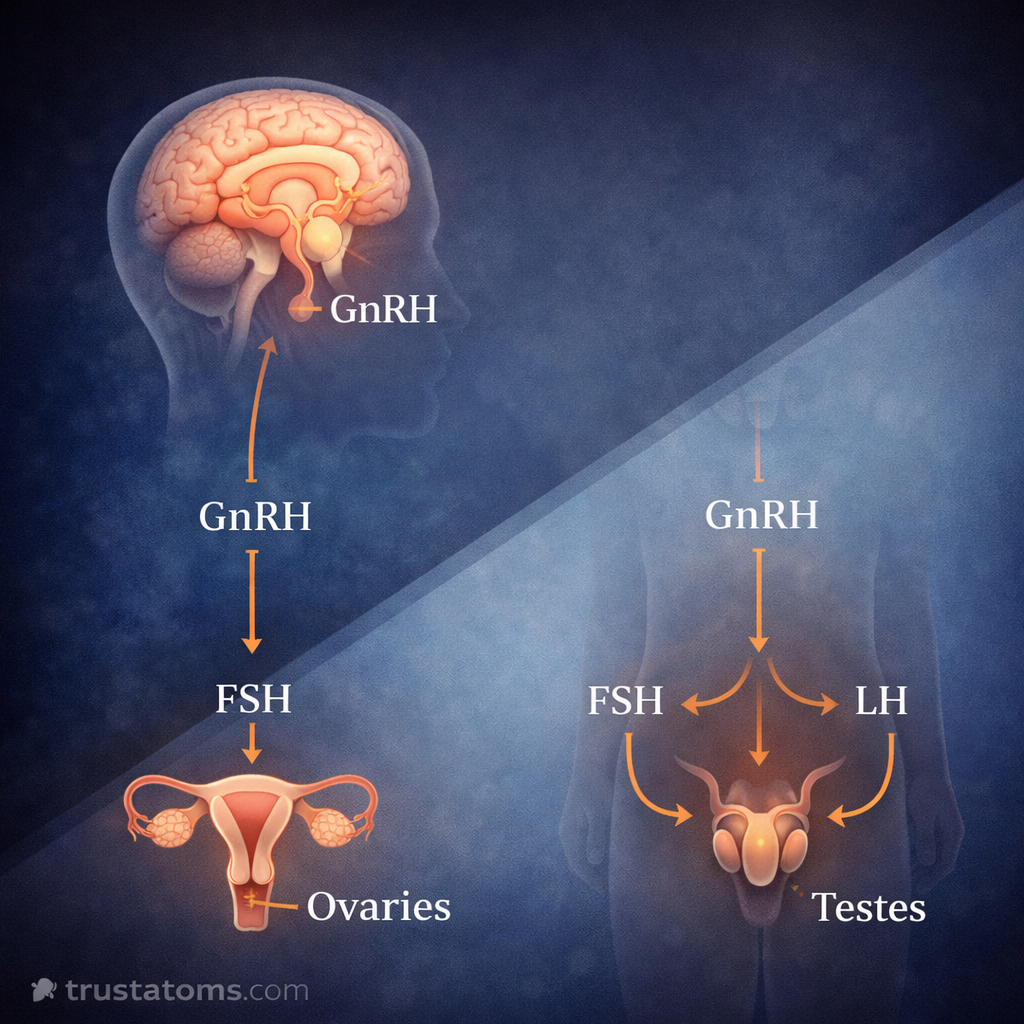
The regulation of reproductive hormones is controlled by a system known as the hypothalamic-pituitary-gonadal (HPG) axis.
How the HPG Axis Works
- The hypothalamus releases GnRH
- GnRH stimulates the pituitary gland
- The pituitary releases LH and FSH
- LH and FSH act on the gonads (ovaries or testes)
- The gonads produce sex hormones (estrogen, progesterone, testosterone)
This system operates through feedback loops to maintain hormonal balance.
Key Hormones and Their Functions
Gonadotropin-Releasing Hormone (GnRH)
- Produced by the hypothalamus
- Controls the release of LH and FSH
- Released in pulses to regulate timing
Luteinizing Hormone (LH)
- Triggers ovulation in females
- Stimulates testosterone production in males
Follicle-Stimulating Hormone (FSH)
- Promotes egg development in ovaries
- Supports sperm production in testes
Female Reproductive Hormones
Female reproductive hormones regulate the menstrual cycle, ovulation, and pregnancy.
Estrogen
- Develops female secondary sexual characteristics
- Regulates the growth of the uterine lining
- Plays a role in bone health and cardiovascular function
Progesterone
- Prepares the uterus for implantation
- Maintains pregnancy
- Reduces uterine contractions
Male Reproductive Hormones
In males, hormones regulate sperm production and the development of male characteristics.
Testosterone
- Produced primarily in the testes
- Responsible for male secondary sexual characteristics
- Supports sperm production
- Influences muscle mass and bone density
Hormonal Regulation of the Menstrual Cycle
The menstrual cycle is a clear example of hormonal coordination.
Phases of the Menstrual Cycle
1. Follicular Phase
- FSH stimulates follicle development
- Estrogen levels rise
2. Ovulation
- A surge in LH triggers the release of an egg
3. Luteal Phase
- Progesterone prepares the uterus for implantation
- If fertilization does not occur, hormone levels drop
Feedback Mechanisms in Hormone Regulation
Reproductive hormones are regulated through feedback loops.
Negative Feedback
- High levels of estrogen, progesterone, or testosterone signal the brain to reduce hormone production
- Maintains balance and prevents overproduction
Positive Feedback
- Occurs briefly during ovulation
- Rising estrogen levels trigger an LH surge
Hormonal Changes During Puberty
Puberty marks the beginning of reproductive capability.
Key Changes
- Increased GnRH release
- Activation of the HPG axis
- Development of secondary sexual characteristics
- Initiation of menstrual cycles or sperm production
Hormonal Regulation During Pregnancy
During pregnancy, hormonal regulation shifts to support fetal development.
Important Hormones
- Human chorionic gonadotropin (hCG): maintains early pregnancy
- Progesterone: supports the uterine lining
- Estrogen: promotes uterine growth and blood flow
These hormones ensure a stable environment for the developing fetus.
Factors That Affect Hormonal Balance
Several factors can influence reproductive hormones:
- Stress and lifestyle
- Nutrition and body weight
- Age and developmental stage
- Medical conditions or hormonal disorders
Maintaining hormonal balance is essential for reproductive health.
Key Takeaways
- Reproductive hormones regulate fertility, development, and reproductive cycles
- The HPG axis coordinates communication between the brain and reproductive organs
- Hormones like estrogen, progesterone, and testosterone have specific roles
- Feedback mechanisms maintain hormonal balance
- Hormonal changes occur during puberty, the menstrual cycle, and pregnancy
Final Thoughts
Reproductive hormones and their regulation form a highly coordinated system essential for human reproduction. From puberty through adulthood, these hormones guide development, fertility, and overall reproductive function.
Understanding how this system works provides valuable insight into human biology and highlights the importance of maintaining hormonal balance for long-term health.