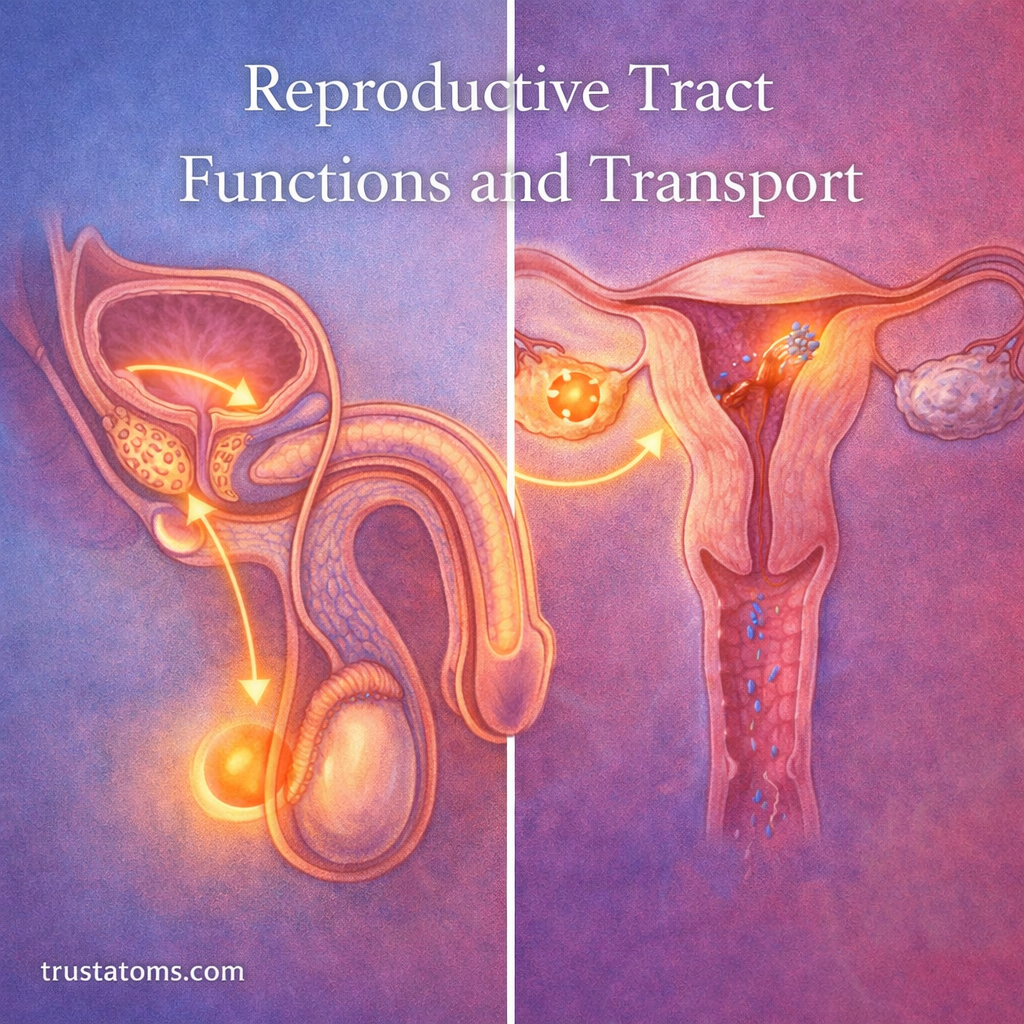
The reproductive tract plays a critical role in human reproduction by enabling the production, transport, and delivery of reproductive cells. In both males and females, specialized structures ensure that gametes (sperm and eggs) are produced, moved efficiently, and supported for fertilization. Understanding how these systems function provides insight into the coordination required for successful reproduction.
Overview of the Reproductive Tract
The reproductive tract includes a series of organs and ducts designed to:
- Produce gametes (sperm in males, eggs in females)
- Transport these cells to the site of fertilization
- Support fertilization and early development
Although male and female systems differ in structure, both are designed for efficient transport and timing.
Male Reproductive Tract Functions
The male reproductive tract is responsible for producing, maturing, and delivering sperm.
Key Structures and Their Roles
- Testes – produce sperm and testosterone
- Epididymis – stores and matures sperm
- Vas deferens – transports sperm from the epididymis
- Seminal vesicles – add nutrient-rich fluid to sperm
- Prostate gland – contributes fluid that supports sperm mobility
- Urethra – delivers semen out of the body
Sperm Transport Pathway
Sperm travel through a defined route:
- Produced in the seminiferous tubules of the testes
- Move to the epididymis for maturation
- Travel through the vas deferens during ejaculation
- Mix with fluids from accessory glands
- Exit through the urethra
This pathway ensures sperm are properly developed and supported before release.
Female Reproductive Tract Functions
The female reproductive tract supports egg production, fertilization, and potential pregnancy.
Key Structures and Their Roles
- Ovaries – produce eggs and hormones
- Fallopian tubes – transport eggs and are the site of fertilization
- Uterus – supports embryo implantation and development
- Cervix – regulates passage between uterus and vagina
- Vagina – receives sperm and serves as the birth canal
Egg Transport Pathway
The movement of the egg follows a coordinated process:
- An egg is released from the ovary during ovulation
- Fimbriae guide the egg into the fallopian tube
- Cilia and muscular contractions move the egg toward the uterus
- If fertilization occurs, the embryo travels to the uterus
- If not, the egg is shed during menstruation
How Transport Occurs in the Reproductive Tract
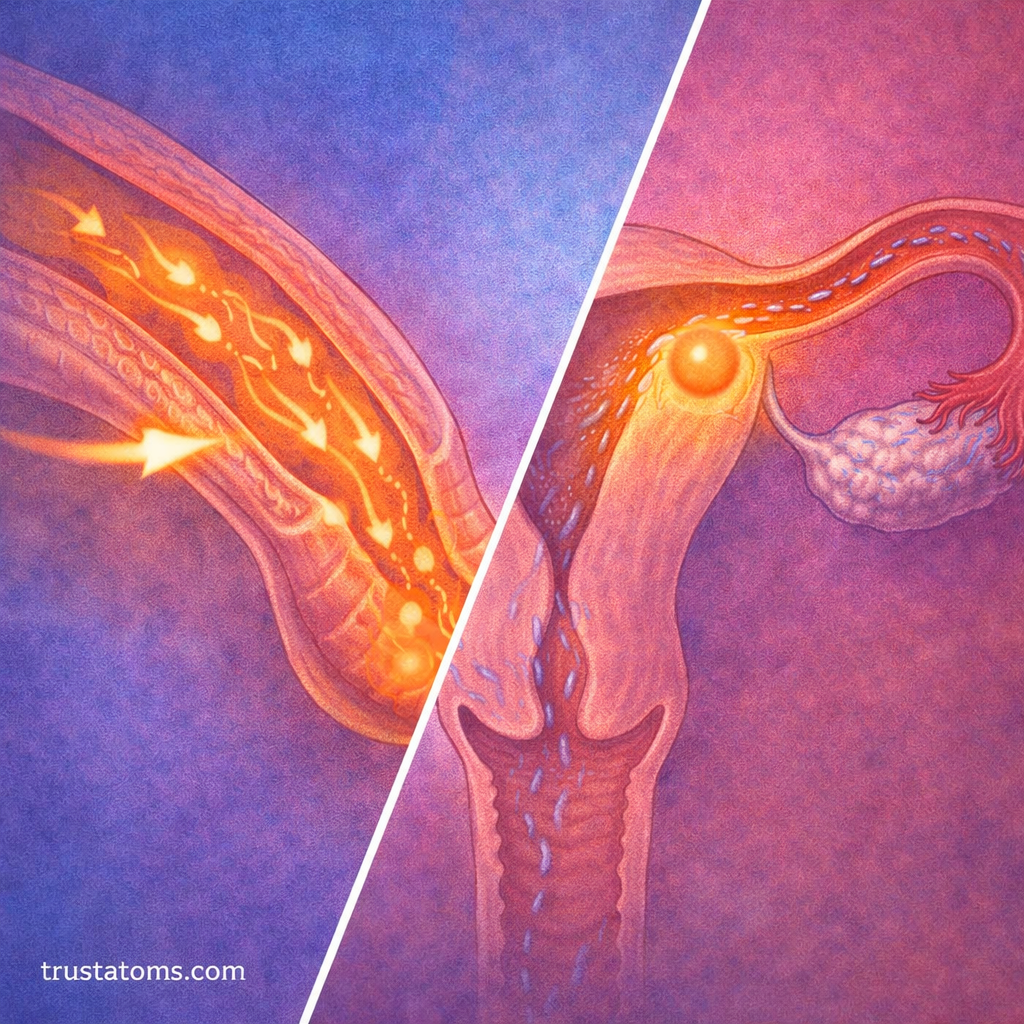
Transport within the reproductive tract relies on both structural design and physiological mechanisms.
Key Transport Mechanisms
- Muscular contractions (peristalsis) – move gametes through ducts
- Ciliary action – tiny hair-like structures that guide eggs in the fallopian tubes
- Fluid secretions – support sperm movement and survival
- Pressure changes – assist in propulsion during ejaculation
These mechanisms ensure that gametes reach the correct location at the right time.
Timing and Coordination in Reproduction
Successful reproduction depends on precise timing between sperm and egg transport.
Important Factors
- Ovulation timing determines when the egg is available
- Sperm can survive in the female tract for several days
- Fertilization typically occurs in the fallopian tube
- Hormones regulate the readiness of reproductive structures
This coordination increases the likelihood of fertilization.
Differences Between Male and Female Transport Systems
While both systems focus on gamete movement, they differ in purpose and timing.
Male System
- Continuous sperm production
- Rapid transport during ejaculation
- Designed for delivery
Female System
- Cyclical egg release
- Slower, controlled transport
- Designed for fertilization and development
These differences reflect the distinct roles of each system in reproduction.
Factors That Affect Reproductive Transport
Several factors can influence how effectively gametes move through the reproductive tract:
- Hormonal balance
- Structural abnormalities
- Infections or inflammation
- Lifestyle factors (stress, diet, smoking)
- Age
Disruptions in transport can affect fertility and reproductive success.
Key Takeaways
- The reproductive tract enables the production and movement of sperm and eggs
- Male and female systems have specialized structures for transport
- Sperm travel through a series of ducts before ejaculation
- Eggs move through the fallopian tubes toward the uterus
- Transport relies on muscular contractions, cilia, and fluid support
- Proper timing and coordination are essential for fertilization
Final Thoughts
Reproductive tract functions and transport highlight the complexity and precision of the human body. From sperm production to egg movement and fertilization, each step depends on coordinated structures and processes. By understanding these pathways, you gain a clearer picture of how reproduction works and why each component is essential for success.