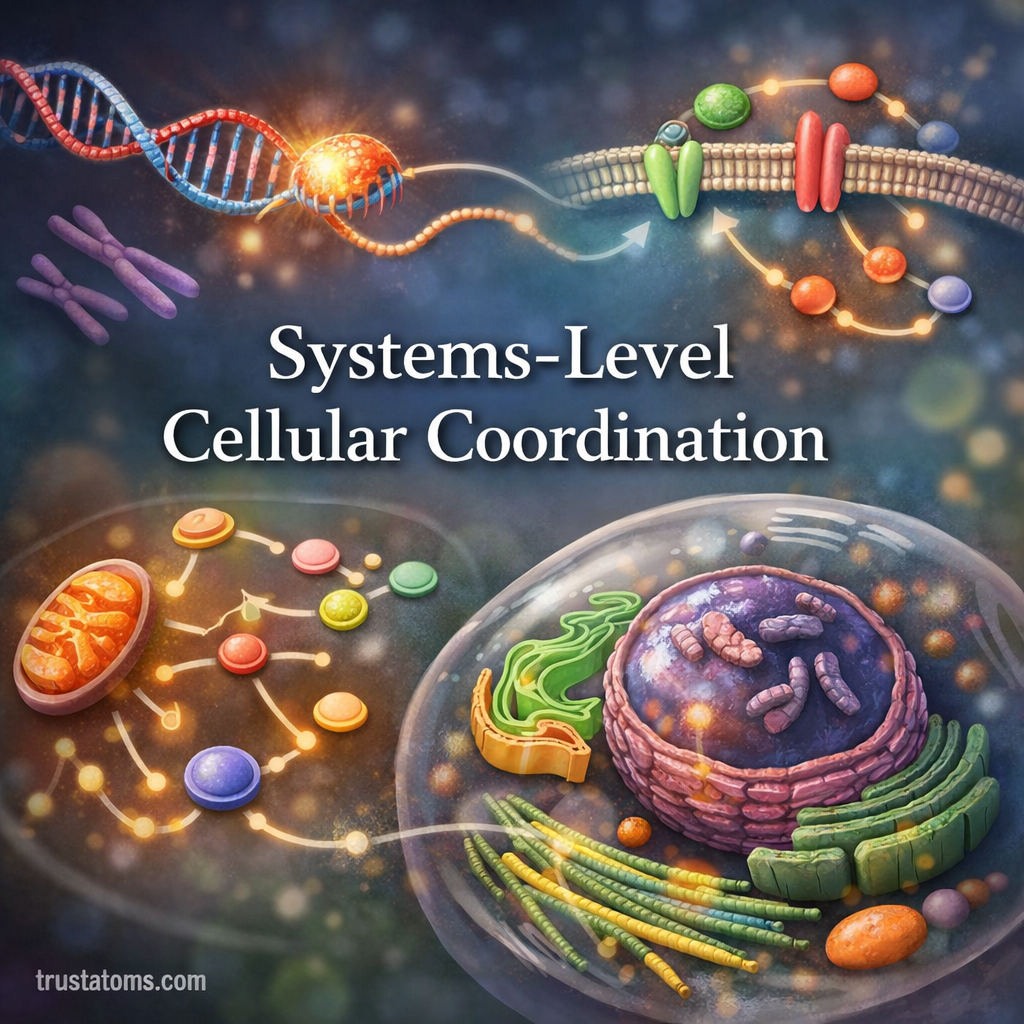
Cells constantly adjust which genes are active and which remain silent. While DNA provides the instructions, RNA molecules play a major role in controlling how those instructions are used. Instead of acting only as intermediates between DNA and proteins, many RNAs function as regulators that coordinate complex molecular systems inside the cell.
These systems—known as RNA regulatory networks—involve interactions among messenger RNA (mRNA), non-coding RNA molecules, proteins, and DNA. Together, they control gene expression, cellular responses, and the timing of biological processes.
Understanding RNA regulatory networks helps scientists explain how cells adapt, differentiate, and maintain stability in constantly changing environments.
What Are RNA Regulatory Networks?
RNA regulatory networks are interconnected systems of RNA molecules and proteins that control gene expression. Rather than working alone, regulatory RNAs interact with multiple molecular partners to influence when genes are turned on or off.
In simple terms, these networks determine:
- Which genes are expressed
- When genes are expressed
- How much protein is produced
- How long RNA molecules remain active
Instead of a simple linear pathway (DNA → RNA → protein), gene regulation often works more like a complex web of interactions.
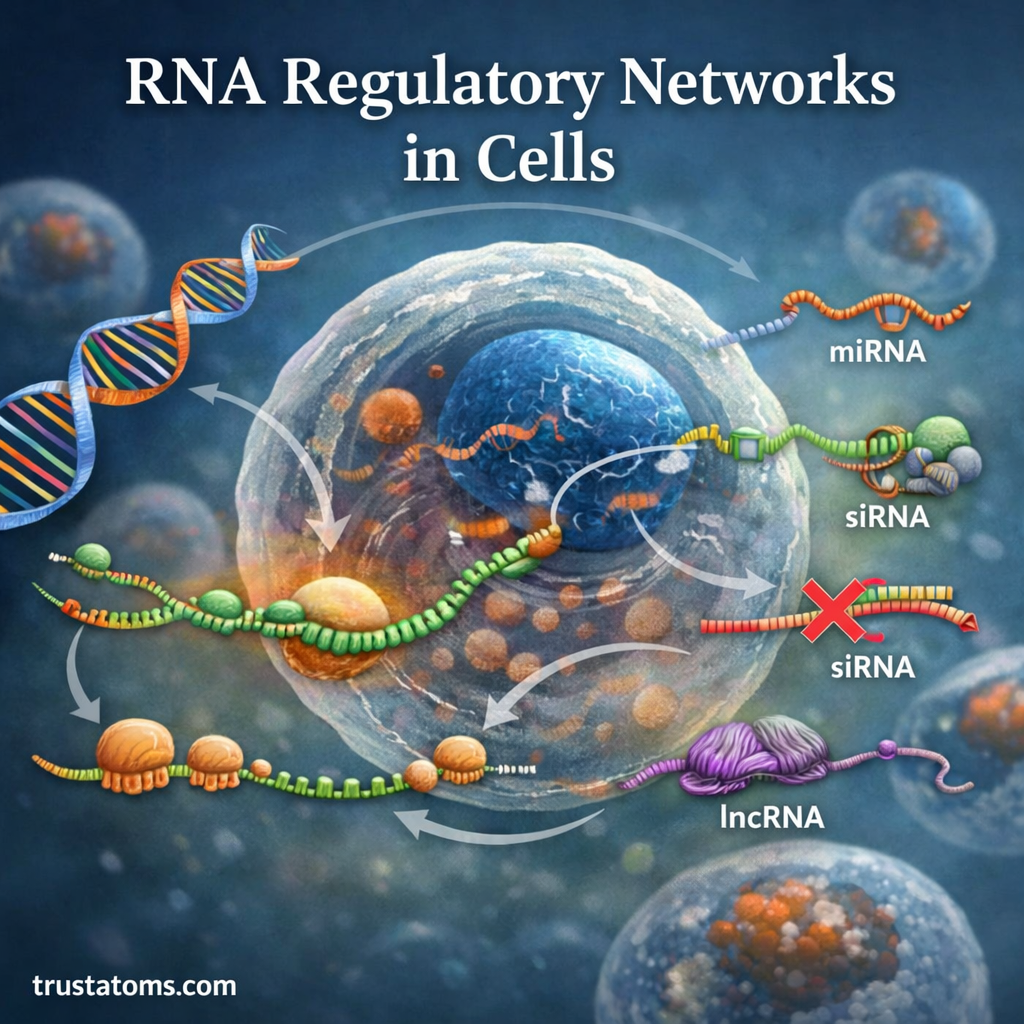
Key components in RNA regulatory networks include:
- Messenger RNA (mRNA)
- MicroRNA (miRNA)
- Small interfering RNA (siRNA)
- Long non-coding RNA (lncRNA)
- RNA-binding proteins
- Ribosomes and translation factors
Together, these molecules form regulatory loops that maintain balance inside the cell.
Why RNA Regulation Is Important
Cells need precise control over gene activity. Without regulation, genes could produce proteins at the wrong time or in the wrong amounts.
RNA regulatory networks help cells:
- Respond to environmental signals
- Control cell growth and division
- Maintain metabolic balance
- Guide development and differentiation
- Prevent harmful mutations or abnormal gene expression
For example, during development, specific genes must activate in a precise sequence. RNA regulators help ensure these timing signals occur correctly.
Because the genome stores the complete genetic instructions for the organism, RNA networks operate as a control layer that determines how those instructions are used inside the cell.
Major Types of Regulatory RNA
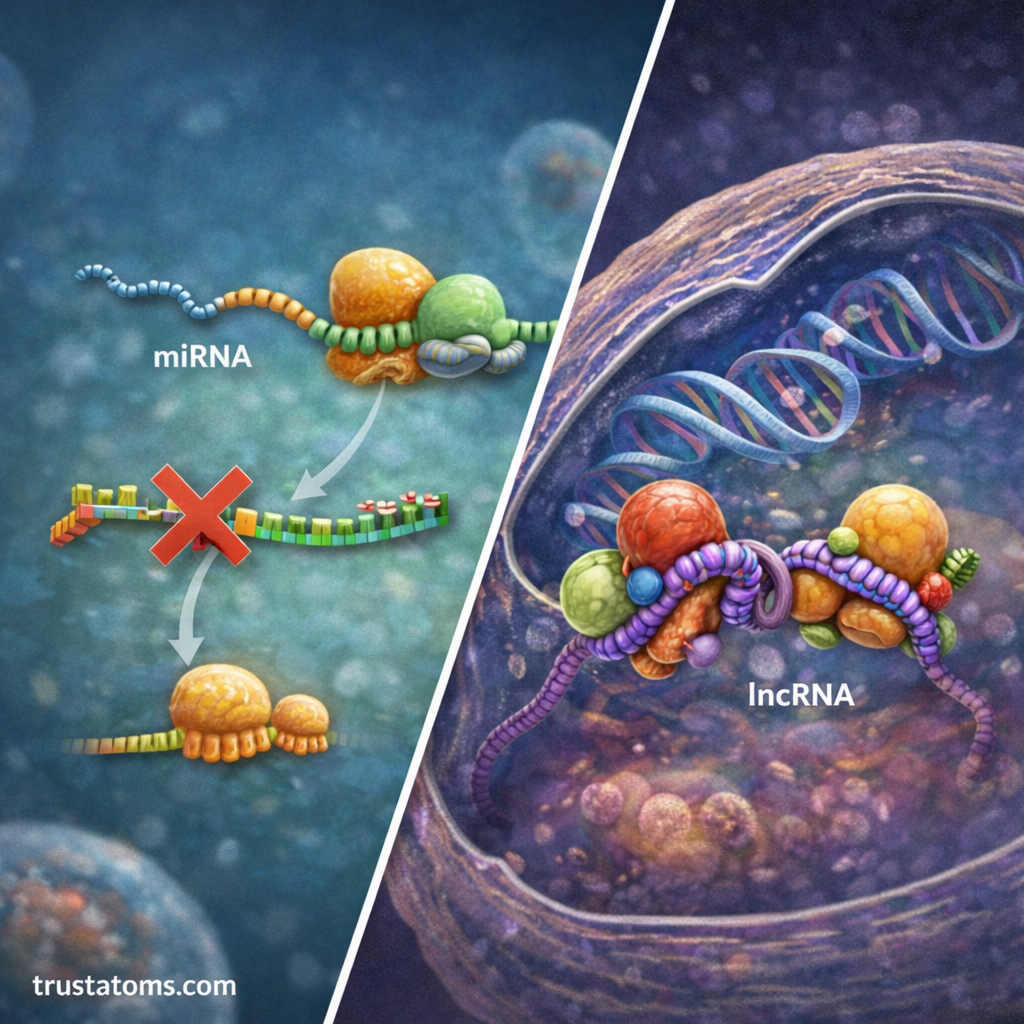
Different classes of RNA contribute to gene regulation in distinct ways. Some silence genes, while others stabilize transcripts or influence chromatin structure.
MicroRNA (miRNA)
MicroRNAs are short RNA molecules about 22 nucleotides long that regulate gene expression after transcription.
They work by:
- Binding to complementary sequences on mRNA
- Blocking translation
- Triggering mRNA degradation
A single microRNA can regulate hundreds of target genes, making it a powerful component of RNA regulatory networks.
Examples of roles for miRNA include:
- Developmental timing
- Immune system regulation
- Cancer suppression
- Metabolic control
Because they target many genes simultaneously, microRNAs act like molecular dimmer switches, adjusting protein production levels.
Small Interfering RNA (siRNA)
Small interfering RNAs are similar in size to microRNAs but function primarily in RNA interference (RNAi).
Their role includes:
- Recognizing specific RNA sequences
- Guiding cellular enzymes to destroy matching RNA
- Silencing genes with high precision
siRNAs are particularly important in:
- Viral defense
- Gene silencing
- Experimental gene knockdown in research
Scientists often use siRNA technology in laboratories to study gene function.
Long Non-Coding RNA (lncRNA)
Long non-coding RNAs are RNA molecules longer than 200 nucleotides that do not code for proteins but still play important regulatory roles.
Unlike small RNAs, lncRNAs often act as molecular scaffolds that organize proteins and DNA into regulatory complexes.
They can regulate genes by:
- Modifying chromatin structure
- Recruiting transcription factors
- Blocking transcription machinery
- Stabilizing RNA transcripts
Some lncRNAs control large groups of genes across entire chromosome regions.
How RNA Regulatory Networks Work
RNA regulatory networks rely on dynamic molecular interactions. Instead of acting independently, RNAs influence each other through layered regulatory mechanisms.
These interactions include:
1. Transcriptional Regulation
Certain RNA molecules affect how genes are transcribed from DNA.
For example:
- lncRNAs may recruit chromatin-modifying enzymes
- Chromatin changes alter gene accessibility
- This determines whether transcription occurs
In this way, RNA molecules can influence which genes are available for expression.
2. Post-Transcriptional Regulation
After transcription produces mRNA, RNA regulatory networks control what happens next.
Regulatory RNAs can:
- Destroy mRNA
- Prevent translation
- Stabilize transcripts
- Control RNA transport inside the cell
MicroRNAs are especially important at this stage.
For instance:
- A microRNA binds to a target mRNA.
- Protein complexes recognize the binding.
- The mRNA is either degraded or translation is blocked.
This prevents unnecessary protein production.
3. Feedback Loops
RNA regulatory networks frequently form feedback systems.
These loops allow cells to maintain stable internal conditions.
Examples include:
Positive feedback
- RNA molecules activate genes that produce more of the same RNA regulators.
Negative feedback
- RNA regulators shut down gene activity once enough protein is produced.
Feedback loops help stabilize gene expression and prevent overproduction of cellular components.
Network Complexity in Gene Regulation
One of the most remarkable features of RNA regulatory systems is their network complexity.
Instead of one regulator controlling one gene, networks often involve:
- One RNA regulating many genes
- Multiple RNAs regulating the same gene
- RNA molecules interacting with each other
- Protein factors modifying RNA activity
For example:
- A microRNA may suppress several metabolic genes.
- A lncRNA may recruit chromatin modifiers.
- RNA-binding proteins may stabilize or degrade transcripts.
Together, these interactions create multi-layered regulatory circuits.
RNA Networks in Cellular Processes
RNA regulatory networks influence nearly every major biological process.
Cellular Development
During development, cells must adopt specific identities such as:
- Neurons
- Muscle cells
- Immune cells
RNA networks regulate which genes activate during differentiation, ensuring that each cell type forms correctly.
Stress Responses
Cells constantly encounter environmental stresses such as:
- Heat
- Nutrient shortages
- Toxins
- Viral infections
RNA regulatory networks allow cells to rapidly adjust gene expression in response to these changes.
MicroRNAs and siRNAs often silence genes that are unnecessary during stress while activating protective pathways.
Immune System Regulation
RNA regulators play essential roles in immune signaling.
They help:
- Control inflammation
- Regulate immune cell activation
- Prevent excessive immune responses
Disruption of these networks can lead to autoimmune diseases.
Cancer and Disease
Abnormal RNA regulation is linked to many diseases.
Examples include:
- Cancer caused by dysregulated microRNAs
- Neurological disorders associated with RNA processing defects
- Viral infections exploiting RNA interference pathways
Because of this, RNA networks are a major focus in modern biomedical research.
Scientists are exploring RNA-based therapies that target regulatory RNA molecules to treat disease.
RNA Regulatory Networks and Systems Biology
Modern biology increasingly studies gene regulation through a systems biology approach.
Instead of examining individual genes, researchers analyze entire regulatory networks.
This involves combining:
- Genomics
- RNA sequencing
- Computational modeling
- Molecular biology experiments
These methods help scientists map how thousands of RNA molecules interact within a single cell.
As a result, RNA regulatory networks are now viewed as central organizing systems of cellular function, coordinating information flow between DNA, RNA, and proteins.
The Future of RNA Network Research
RNA biology has rapidly evolved over the past two decades. Many RNA molecules once considered “junk” are now known to have critical regulatory roles.
Current research areas include:
- RNA-based drug therapies
- CRISPR and RNA editing technologies
- Synthetic gene regulatory circuits
- RNA biomarkers for disease detection
As scientists continue mapping RNA networks, new discoveries may transform medicine, biotechnology, and genetics.
The growing field of RNA research highlights a fundamental principle of biology: gene regulation is not controlled by DNA alone but by intricate molecular networks centered around RNA.
Conclusion
RNA regulatory networks represent one of the most sophisticated control systems in biology. Through interactions among microRNAs, siRNAs, long non-coding RNAs, and proteins, cells precisely regulate gene expression and adapt to changing conditions.
These networks influence everything from development and metabolism to immune responses and disease processes. Rather than acting as passive intermediates, RNA molecules serve as active regulators that coordinate complex cellular functions.
As research advances, understanding RNA regulatory networks will continue to reshape our knowledge of genetics, molecular biology, and human health.