Running is a dynamic, high-impact form of human movement that places greater demands on the body compared to walking. Each stride involves coordinated muscle activity, joint motion, and force absorption to propel the body forward efficiently.
Understanding running mechanics and impact forces is essential for improving performance, preventing injury, and optimizing movement patterns in both recreational and competitive runners.
What Is Running Mechanics?
Running mechanics refers to how the body moves during running, including stride patterns, posture, joint motion, and muscle coordination.
Unlike walking, running includes a flight phase, where both feet are off the ground at the same time. This increases speed but also introduces higher impact forces when the foot contacts the ground again.
A well-coordinated running form is:
- Efficient and energy-conserving
- Stable with controlled movement
- Balanced between propulsion and shock absorption
- Consistent in rhythm and stride
The Running Gait Cycle
The running gait cycle differs from walking due to its increased intensity and the presence of a flight phase.
1. Stance Phase
This occurs when the foot is in contact with the ground.
Sub-phases include:
- Initial contact (foot strike)
- Midstance (body passes over the foot)
- Toe-off (push-off phase)
2. Flight Phase
After toe-off, both feet are airborne before the next foot strike.
This phase:
- Allows forward momentum
- Requires precise coordination for landing
- Increases overall impact forces
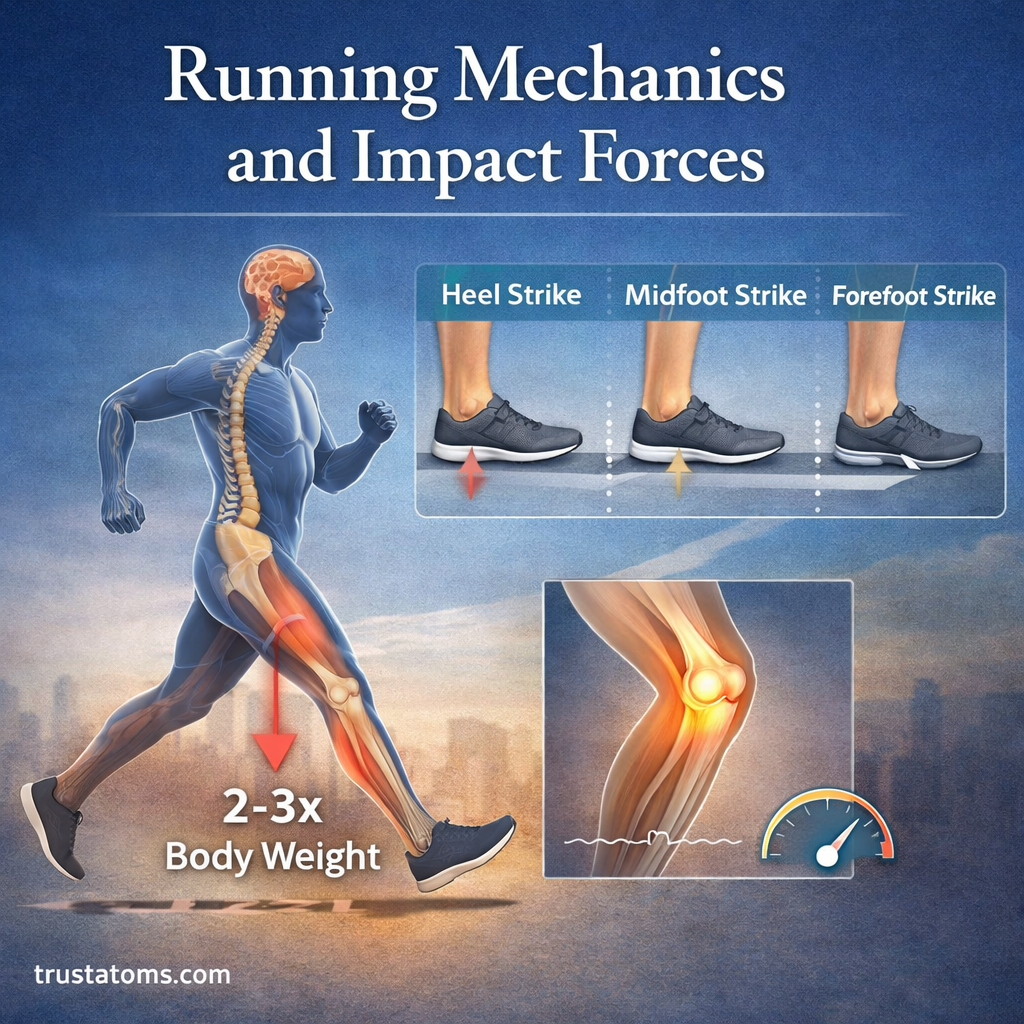
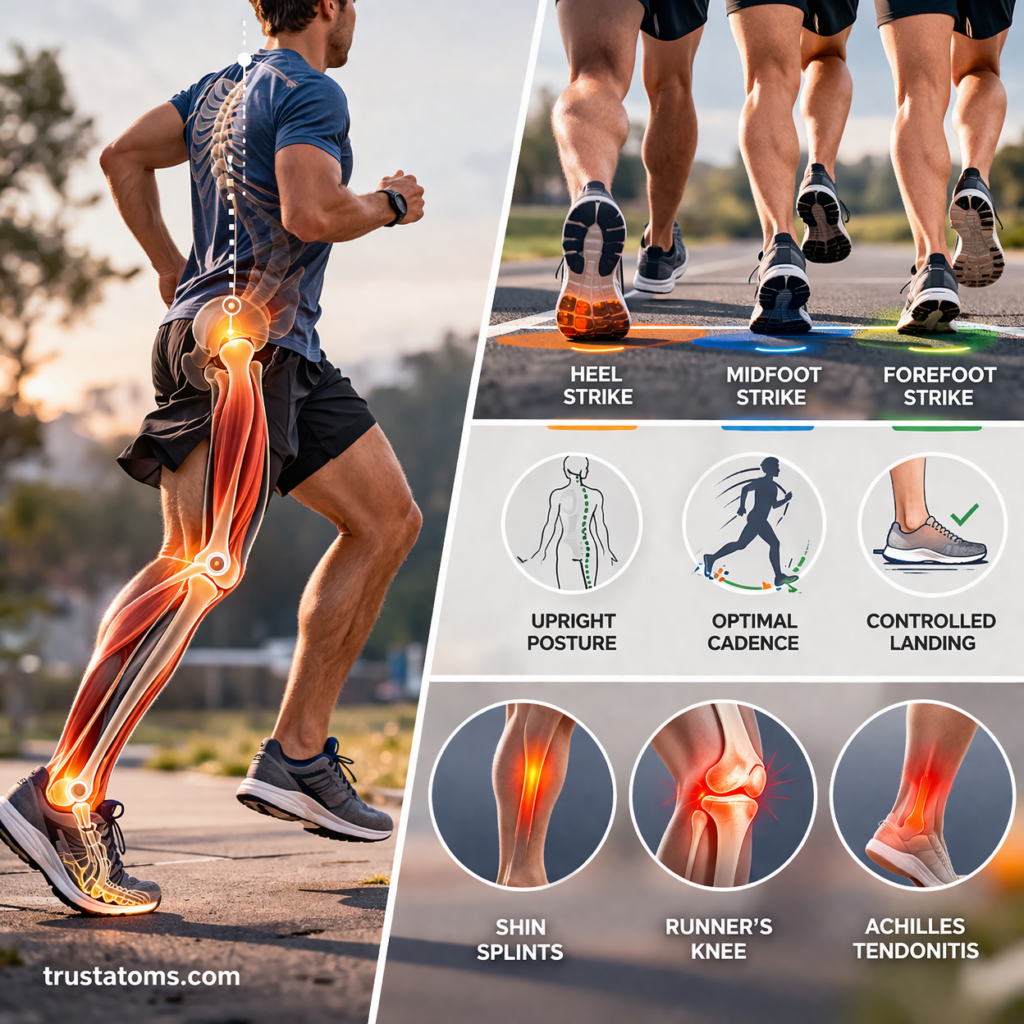
Types of Foot Strike Patterns
Runners typically land in one of three ways:
Heel Strike
- Heel contacts the ground first
- Common among recreational runners
- Often associated with longer strides
Midfoot Strike
- Foot lands flat or nearly flat
- Promotes balanced force distribution
- Often seen in trained runners
Forefoot Strike
- Ball of the foot lands first
- Engages calf muscles more actively
- Common in sprinters and barefoot runners
Each pattern has advantages and trade-offs depending on speed, terrain, and individual biomechanics.
Impact Forces in Running
Running generates significantly higher forces than walking.
Ground Reaction Forces
When the foot hits the ground, the surface pushes back with force—this is known as ground reaction force.
- Can reach 2 to 3 times body weight during normal running
- Increases with speed and stride length
- Must be absorbed by muscles, joints, and connective tissues
Shock Absorption
The body reduces impact forces through:
- Knee flexion during landing
- Ankle movement to cushion contact
- Muscle activation to stabilize joints
- Tendons storing and releasing energy
Efficient shock absorption reduces stress on bones and joints.
Key Muscles Involved in Running
Running relies on coordinated muscle activity across the lower body and core.
Primary Muscle Groups
- Gluteus maximus: provides power and propulsion
- Quadriceps: absorb impact and extend the knee
- Hamstrings: assist in hip extension and leg recovery
- Calf muscles: generate push-off force
- Hip flexors: lift the leg during the swing phase
Core Muscles
- Stabilize the torso
- Maintain posture
- Improve movement efficiency
Joint Mechanics During Running
Each joint contributes to movement and force management:
Hip
- Drives forward motion through extension
- Stabilizes the pelvis
Knee
- Absorbs shock during landing
- Extends during push-off
Ankle
- Controls foot placement
- Generates propulsion through plantarflexion
Proper joint alignment is critical for reducing injury risk.
Factors That Influence Running Mechanics
Several variables affect how a person runs:
Individual Factors
- Body structure and limb length
- Muscle strength and flexibility
- Previous injuries
External Factors
- Running surface (track, road, trail)
- Footwear
- Speed and distance
Technique Variables
- Stride length
- Cadence (steps per minute)
- Arm swing and posture
Small adjustments in these areas can significantly improve efficiency.
Common Running Injuries Linked to Impact Forces
High-impact forces can contribute to overuse injuries, especially when mechanics are inefficient.
Frequent Issues
- Shin splints
- Runner’s knee (patellofemoral pain)
- Achilles tendonitis
- Stress fractures
Contributing Factors
- Poor shock absorption
- Overstriding
- Muscle imbalances
- Sudden increases in training intensity
Proper mechanics and gradual progression help reduce these risks.
Improving Running Efficiency
Optimizing running mechanics can enhance performance and reduce injury risk.
Practical Tips
- Maintain an upright posture with slight forward lean
- Increase cadence to reduce impact per step
- Avoid overstriding
- Strengthen core and lower body muscles
- Focus on smooth, controlled foot placement
Even small improvements can lead to better endurance and comfort.
Why Understanding Impact Forces Matters
Impact forces are a natural part of running, but how the body manages them determines long-term outcomes.
By understanding these forces, runners can:
- Improve performance
- Prevent injuries
- Train more effectively
- Extend their running longevity
Final Thoughts
Running mechanics and impact forces highlight the complexity of what may seem like a simple activity. Each step involves precise coordination between muscles, joints, and the nervous system to handle high forces while maintaining forward motion.
By focusing on efficient movement patterns and proper technique, individuals can run more safely, comfortably, and effectively over time.