Seasonal weather patterns are the predictable changes in weather conditions that occur throughout the year. These patterns are driven primarily by Earth’s tilt, its orbit around the Sun, and the way energy is distributed across the planet.
Understanding seasonal weather helps explain why temperatures, precipitation, and daylight hours vary—and why different regions experience unique climates throughout the year.
What Causes Seasonal Changes?
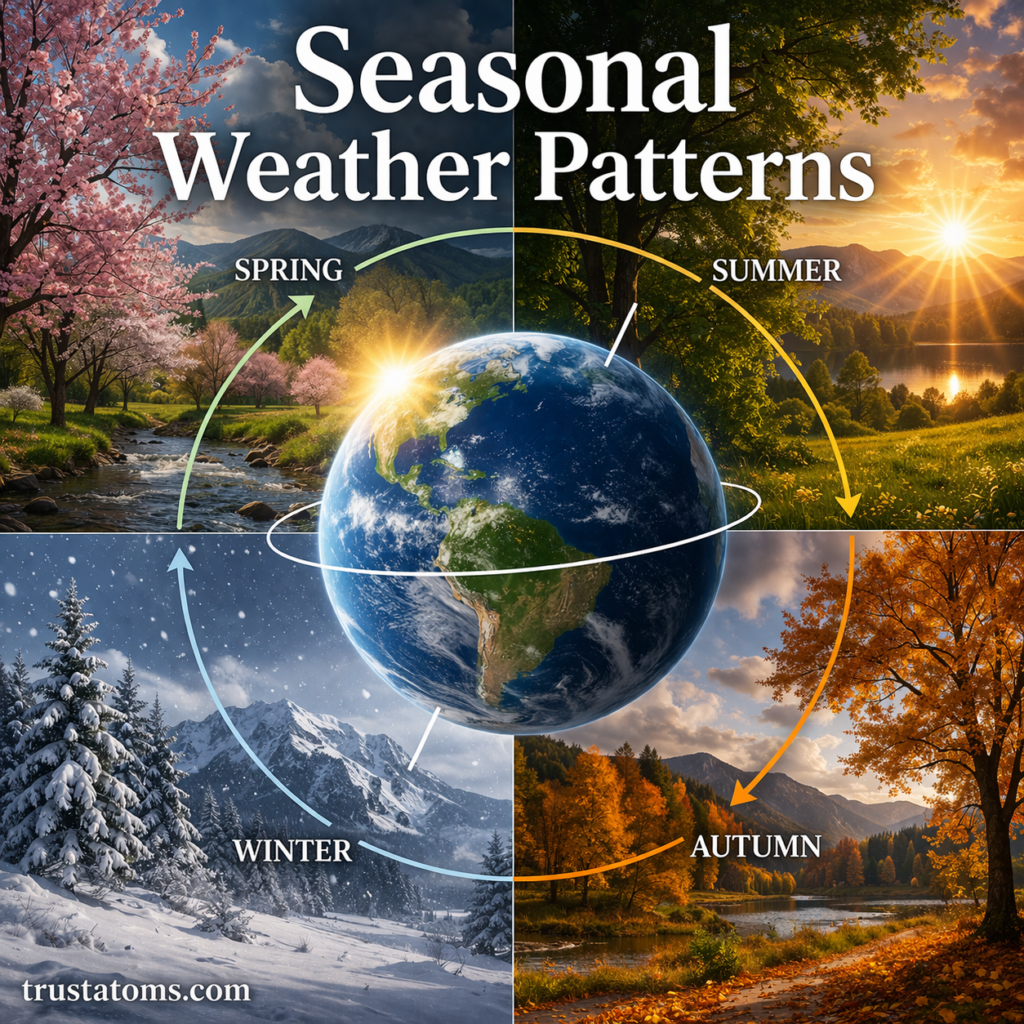
The main reason for seasonal weather patterns is Earth’s axial tilt, which is approximately 23.5 degrees.
How Earth’s Tilt Affects Seasons
As Earth orbits the Sun:
- One hemisphere tilts toward the Sun (summer)
- The other tilts away from the Sun (winter)
- The angle of sunlight changes throughout the year
This affects how much solar energy each region receives.
Key Factors Behind Seasonal Weather
- Sun Angle
- Higher angle = more direct sunlight = warmer temperatures
- Lower angle = less direct sunlight = cooler temperatures
- Day Length
- Longer days increase heating
- Shorter days reduce heating
- Energy Distribution
- Uneven heating across Earth drives atmospheric and ocean circulation
The Four Main Seasons
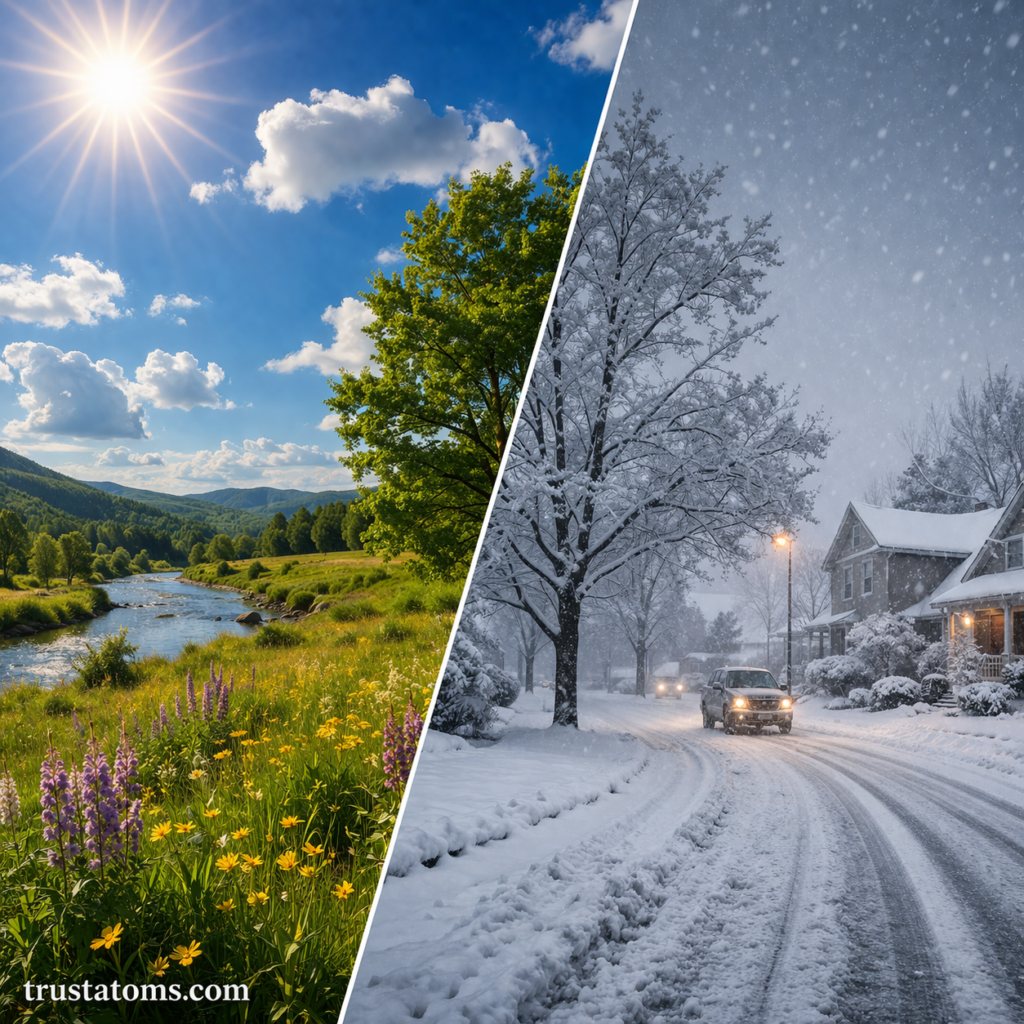
Most regions experience four distinct seasons, though their intensity varies by location.
1. Spring
- Temperatures begin to rise
- Snow melts and vegetation grows
- Increased rainfall in many regions
Weather characteristics:
- Mild temperatures
- Variable weather patterns
- Frequent storms due to unstable air
2. Summer
- Warmest season of the year
- Longest daylight hours
- Strong solar heating
Weather characteristics:
- High temperatures
- Thunderstorms in many regions
- Increased humidity in some areas
3. Autumn (Fall)
- Temperatures begin to drop
- Daylight hours decrease
- Transition toward winter conditions
Weather characteristics:
- Cooler air
- Changing vegetation (leaf color)
- Stable weather in many regions
4. Winter
- Coldest season
- Shortest days and longest nights
- Reduced solar energy
Weather characteristics:
- Low temperatures
- Snow and ice in colder regions
- Generally drier air
How Latitude Affects Seasonal Patterns
Seasonal changes vary depending on how close a location is to the equator.
Tropical Regions
- Minimal seasonal temperature variation
- Seasons defined more by wet and dry periods
- Consistent daylight throughout the year
Mid-Latitudes
- Distinct four seasons
- Moderate temperature variation
- Frequent weather changes
Examples include much of North America, Europe, and parts of Asia.
Polar Regions
- Extreme seasonal differences
- Long periods of daylight (summer) and darkness (winter)
- Very cold temperatures year-round
Seasonal Shifts in Weather Patterns
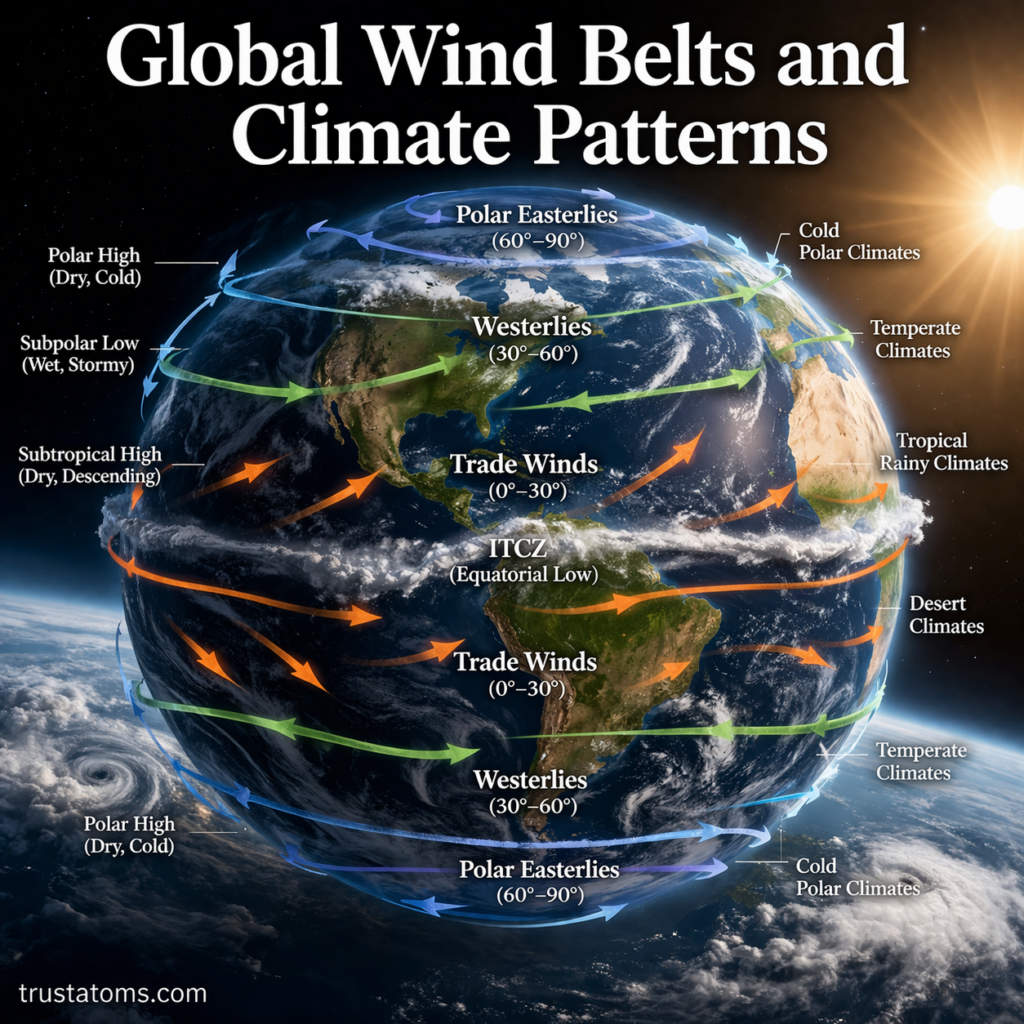
Seasonal changes influence large-scale atmospheric circulation.
Jet Streams
- High-altitude winds that shift position with the seasons
- Influence storm tracks and temperature patterns
Pressure Systems
- High and low-pressure systems move differently depending on the season
- Affect precipitation and wind patterns
Ocean Currents
- Help distribute heat globally
- Influence coastal climates and seasonal weather
Seasonal Storm Patterns
Different types of storms are more common in certain seasons.
Spring and Summer
- Thunderstorms
- Tornadoes (especially in mid-latitudes)
- Tropical storms and hurricanes (late summer)
Autumn
- Transition storms
- Increased rainfall in some regions
- Early cold fronts
Winter
- Snowstorms and blizzards
- Cold fronts
- Ice storms
Why Seasonal Weather Matters
Seasonal patterns affect many aspects of life on Earth.
Environmental Impacts
- Plant growth cycles
- Animal migration and behavior
- Water availability
Human Impacts
- Agriculture and food production
- Energy use (heating and cooling)
- Travel and infrastructure planning
Seasonal Weather and Climate Change
Climate change is influencing traditional seasonal patterns.
Observed Changes
- Warmer winters
- Longer summers
- Shifts in precipitation patterns
- More extreme weather events
Potential Effects
- Altered growing seasons
- Increased droughts or flooding
- Changes in ecosystems
Key Takeaways
- Seasonal weather patterns are caused primarily by Earth’s tilt and orbit
- Sun angle and daylight duration determine temperature changes
- Different regions experience seasons differently based on latitude
- Seasonal shifts influence storms, winds, and ocean currents
- Climate change is altering traditional seasonal patterns
Final Thoughts
Seasonal weather patterns are a fundamental part of Earth’s climate system. They shape ecosystems, influence human activity, and drive many of the natural processes we depend on.
By understanding how seasons work, we gain a clearer picture of how energy moves across the planet—and how changes to that system can impact the world around us.