The endocrine system relies on hormones to send messages throughout the body. But once a hormone reaches its target cell, the message must be converted into action. This process is known as signal transduction.
Signal transduction allows cells to interpret hormonal signals and produce specific responses, making it a critical part of how the body regulates growth, metabolism, and overall function.
What Is Signal Transduction?
Signal transduction is the process by which a cell converts an արտաքին signal—such as a hormone—into a functional response.
In simple terms:
- A hormone binds to a receptor
- The receptor activates internal signaling pathways
- The cell responds by changing its activity
This process ensures that hormonal messages are carried out effectively.
Why Signal Transduction Matters
Without signal transduction, hormones would not be able to influence cellular behavior.
It enables cells to:
- Respond to external signals
- Adjust metabolism and energy use
- Control growth and development
- Coordinate complex physiological processes
It acts as the bridge between hormone binding and cellular action.
Steps of Signal Transduction
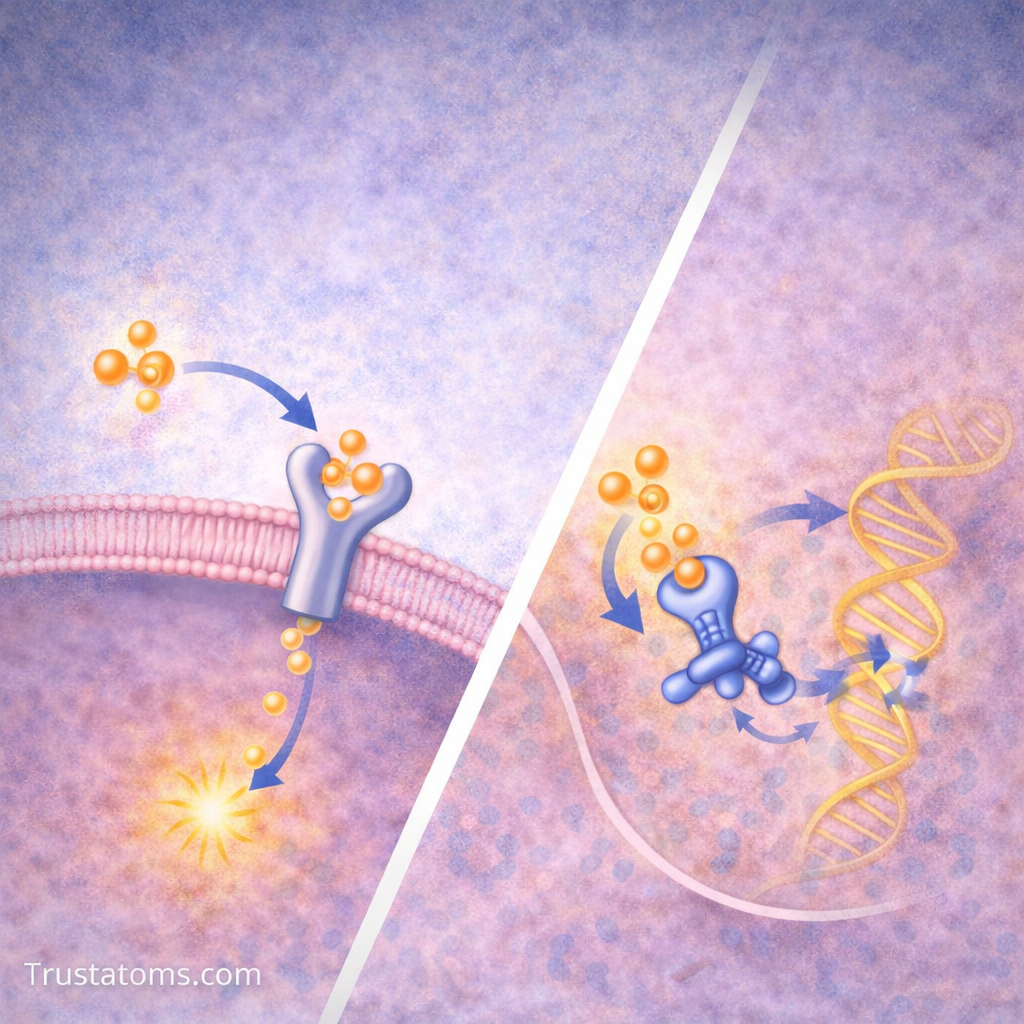
Signal transduction typically follows a sequence of steps that amplify and transmit the signal inside the cell.
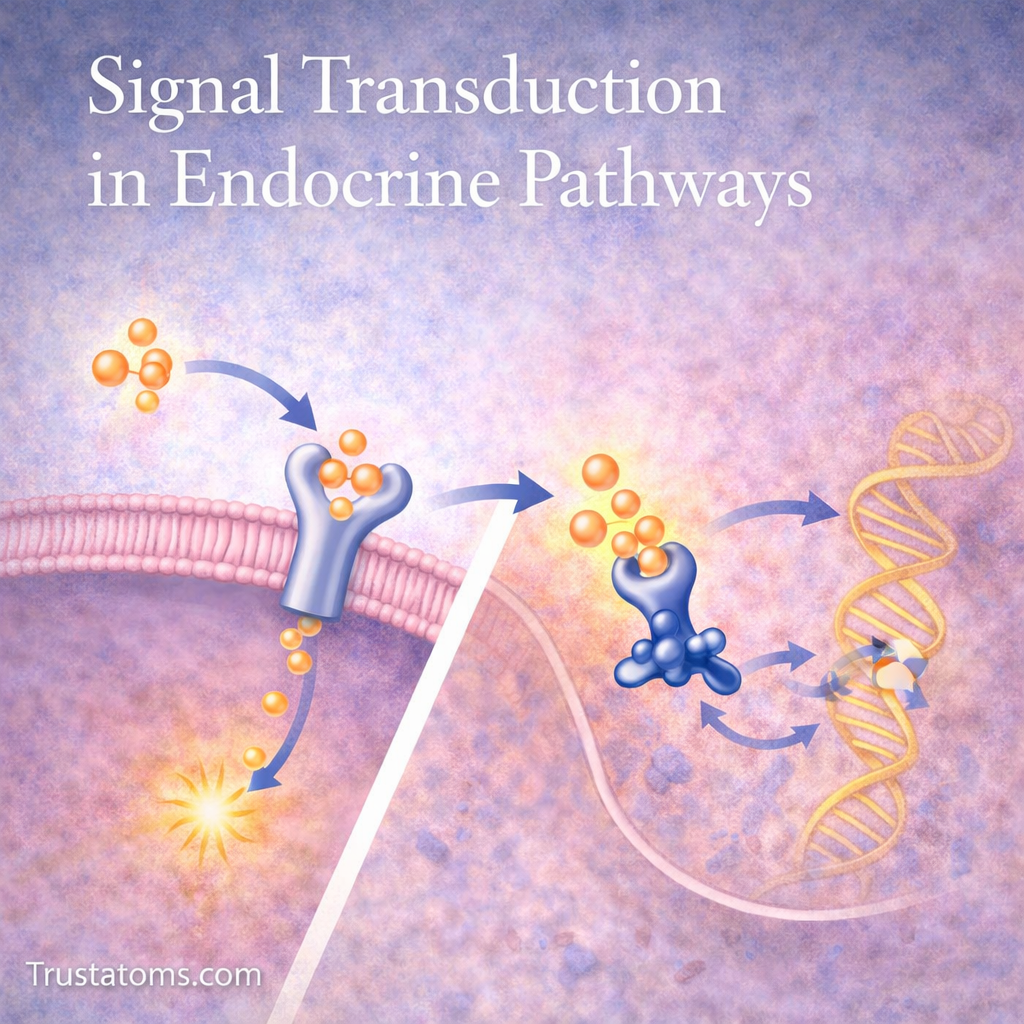
1. Reception
- A hormone (ligand) binds to a specific receptor
- The receptor may be on the cell surface or inside the cell
- Binding changes the receptor’s shape and activates it
2. Transduction
- The activated receptor triggers a cascade of internal signals
- Secondary messengers relay the signal within the cell
- Enzymes and proteins are activated in sequence
This step often amplifies the signal, allowing a small amount of hormone to produce a large effect.
3. Response
- The cell carries out a specific action
- This may involve gene expression, enzyme activity, or secretion
- The response depends on the type of cell and hormone
Types of Signal Transduction Pathways
Different hormones use different signaling pathways depending on their chemical properties.
1. Second Messenger Systems
Used by water-soluble hormones that cannot enter the cell.
Common second messengers:
- cAMP (cyclic AMP)
- Calcium ions (Ca²⁺)
- IP3 (inositol triphosphate)
How it works:
- Hormone binds to a surface receptor
- Receptor activates a G protein
- Secondary messengers carry the signal inside the cell
2. Intracellular Signaling Pathways
Used by lipid-soluble hormones that can pass through the cell membrane.
How it works:
- Hormone enters the cell
- Binds to an intracellular receptor
- The complex interacts with DNA in the nucleus
- Gene expression is altered
This leads to slower but longer-lasting effects.
Signal Amplification
One of the most important features of signal transduction is amplification.
What this means:
- One hormone molecule can activate many receptors
- Each receptor can trigger multiple signaling molecules
- The signal grows stronger as it spreads
This allows the body to respond efficiently even to low hormone levels.
Regulation of Signal Transduction
Signal transduction pathways must be tightly controlled to prevent excessive responses.
Regulatory mechanisms include:
- Receptor desensitization (reduced responsiveness)
- Breakdown of second messengers
- Feedback inhibition
- Enzyme deactivation
These controls ensure signals are temporary and appropriate.
Examples of Signal Transduction in the Body
Insulin Signaling
- Insulin binds to receptors on muscle and fat cells
- Activates pathways that increase glucose uptake
- Helps regulate blood sugar levels
Adrenaline (Epinephrine)
- Binds to receptors on target cells
- Activates cAMP signaling pathways
- Increases heart rate and energy availability
Thyroid Hormones
- Enter cells and bind to nuclear receptors
- Influence gene expression
- Regulate metabolism over time
What Happens When Signal Transduction Fails?
Disruptions in signaling pathways can lead to serious health issues.
Common problems:
- Insulin resistance (impaired signaling)
- Hormonal imbalances
- Abnormal cell growth
- Metabolic disorders
These conditions highlight the importance of proper signal transmission.
Key Features of Signal Transduction
- Converts external signals into cellular responses
- Involves multiple steps and molecules
- Amplifies signals for efficiency
- Highly specific and regulated
- Essential for endocrine communication
Final Thoughts
Signal transduction in endocrine pathways is the process that turns hormonal messages into real biological effects. From rapid metabolic changes to long-term gene expression, this system ensures that the body responds accurately and efficiently.
Understanding signal transduction reveals how deeply interconnected the endocrine system is, and how even small signals can lead to significant changes within the body.