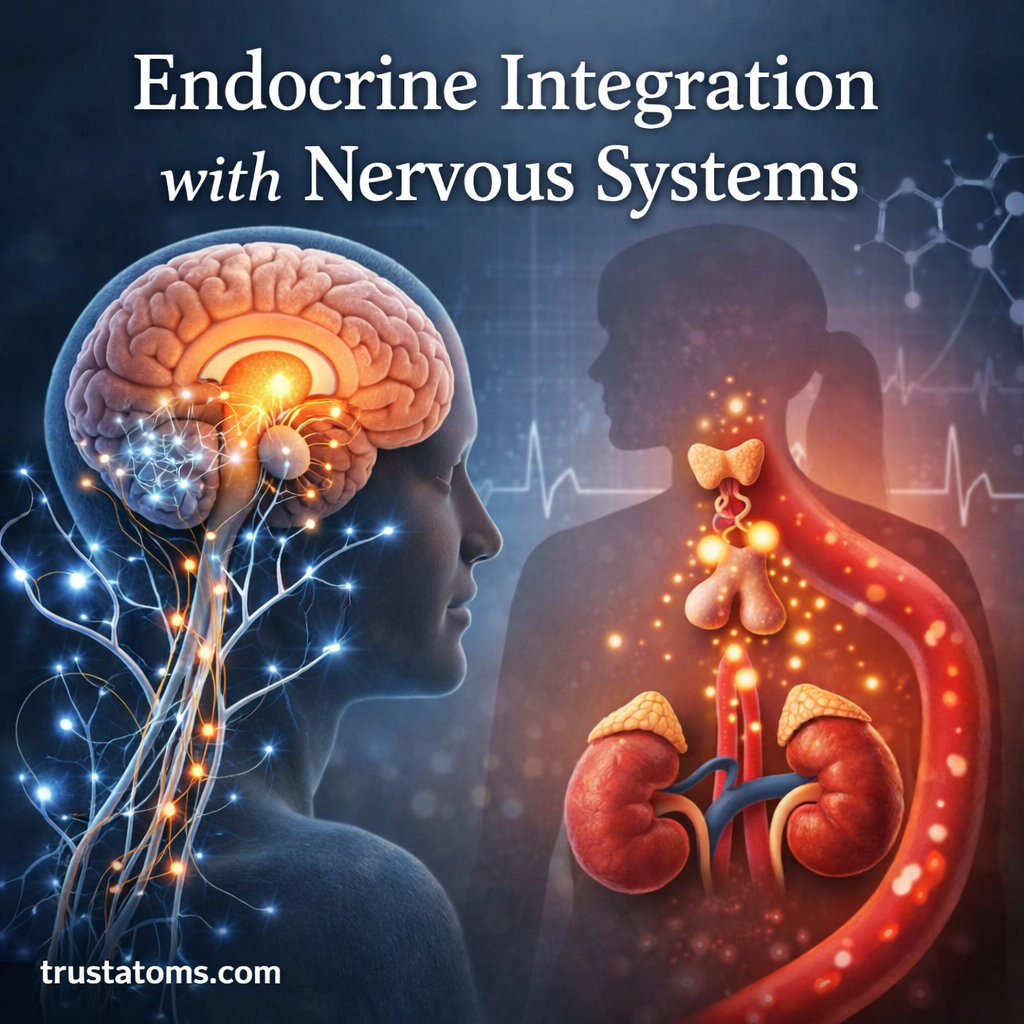
The nervous and endocrine systems work together to coordinate rapid responses and longer-lasting changes that maintain the body’s internal balance. The nervous system communicates through electrical impulses and neurotransmitters, while the endocrine system releases hormones into the bloodstream, with the hypothalamus connecting these two forms of regulation.
The human body relies on two major communication systems to maintain balance and respond to internal and external changes: the nervous system and the endocrine system. While they operate differently—one using rapid electrical signals and the other using circulating chemical messengers—they are closely interconnected, as explored in endocrine and nervous system signaling. Their integration connects organ structure with function throughout human anatomy.
How Nervous and Endocrine Signaling Differ
The nervous system sends electrical signals along neurons and releases neurotransmitters at specialized connections called synapses. This allows rapid communication with muscles, glands, and other neurons.
Endocrine signaling occurs when hormones enter the bloodstream and reach tissues containing appropriate receptors. Hormonal responses may begin within seconds or develop over hours or days, depending on the hormone and target tissue.
| Feature | Nervous system | Endocrine system |
|---|---|---|
| Primary signals | Electrical impulses and neurotransmitters | Hormones |
| Communication route | Neurons and synapses | Bloodstream |
| Typical response | Milliseconds to seconds | Seconds to days |
| Targeting | Specific neural connections | Cells with suitable hormone receptors |
| Common functions | Reflexes, movement, sensation | Metabolism, growth, reproduction |
These differences are not absolute. Some hormones act quickly, while certain neural signals produce prolonged effects. Both systems use chemical messengers and influence many of the same organs.
How Both Systems Maintain Homeostasis
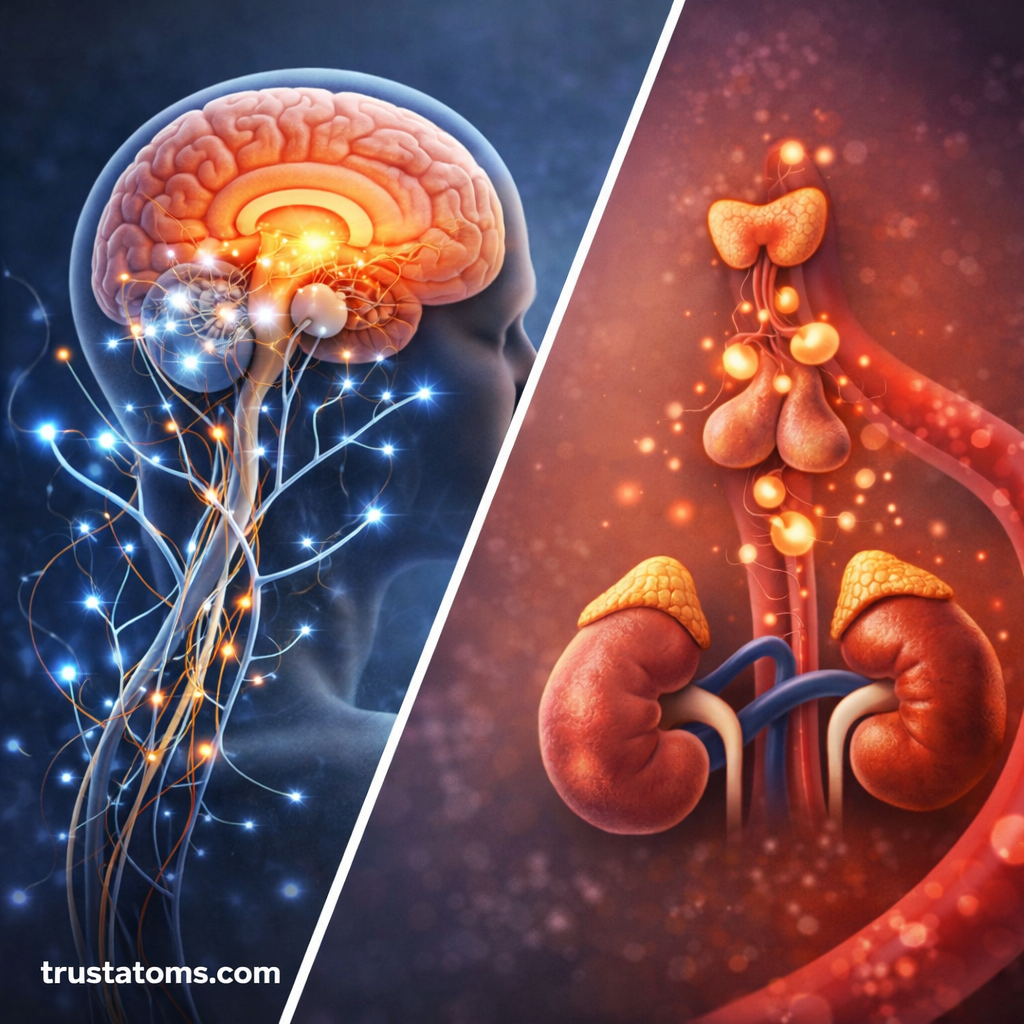
Homeostasis refers to maintaining internal conditions within ranges compatible with normal body function. Nervous and endocrine signals coordinate adjustments when temperature, blood pressure, blood glucose, or fluid balance changes.
For example, when blood pressure falls, neural reflexes can rapidly adjust heart rate and blood vessel diameter. Hormonal mechanisms involving the kidneys and adrenal glands can then help regulate blood volume and pressure over longer periods.
Integration allows the body to combine immediate corrections with sustained adjustments rather than relying on either system independently.
The Hypothalamus Connects Neural and Hormonal Control
The hypothalamus is the primary structure that connects the nervous and endocrine systems.
Located beneath the thalamus, this brain region receives information from other neural circuits and monitors internal conditions such as temperature, blood osmolarity, and energy availability.
Specialized hypothalamic neurons convert this information into autonomic responses and hormonal signals. Through its connections with the pituitary gland, the hypothalamus influences growth, reproduction, metabolism, stress responses, and water balance.
The hypothalamus therefore acts as an integration center, coordinating information about the body’s condition with appropriate physiological responses.
The Hypothalamic-Pituitary Axis
The pituitary gland is connected to the hypothalamus and contains two major divisions with different methods of hormonal control.
Anterior Pituitary: Hormonal Communication
The hypothalamus releases regulatory hormones into blood vessels of the hypothalamic-hypophyseal portal system. These hormones travel directly to the anterior pituitary, where they stimulate or inhibit secretion of pituitary hormones.
Examples include thyroid-stimulating hormone (TSH), which regulates thyroid hormone production, and adrenocorticotropic hormone (ACTH), which stimulates cortisol secretion from the adrenal cortex.
Posterior Pituitary: Direct Neural Connections
The posterior pituitary receives axons from hormone-producing neurons in the hypothalamus. These neurons synthesize oxytocin and antidiuretic hormone (ADH), also called vasopressin.
The hormones travel along the axons and are stored in nerve endings within the posterior pituitary until released into the bloodstream. ADH helps regulate water retention by the kidneys, while oxytocin contributes to uterine contractions and milk ejection.
One specialized pathway is the HPA Axis, which coordinates hypothalamic, pituitary, and adrenal hormone activity during stress.
Neuroendocrine Cells Convert Neural Signals Into Hormones
Neuroendocrine cells receive signals associated with nervous system activity and release chemical messengers that influence distant tissues. Hypothalamic neurosecretory neurons provide a clear example because they are nerve cells capable of releasing hormones into the circulation.
Another example involves chromaffin cells in the adrenal medulla. These modified sympathetic neuroendocrine cells respond to signals from preganglionic sympathetic neurons by releasing epinephrine and norepinephrine into the blood.
These relationships are examined further in Neuroendocrine Connections, including how neural activity influences hormone secretion.
Example: How the Body Responds to a Sudden Threat
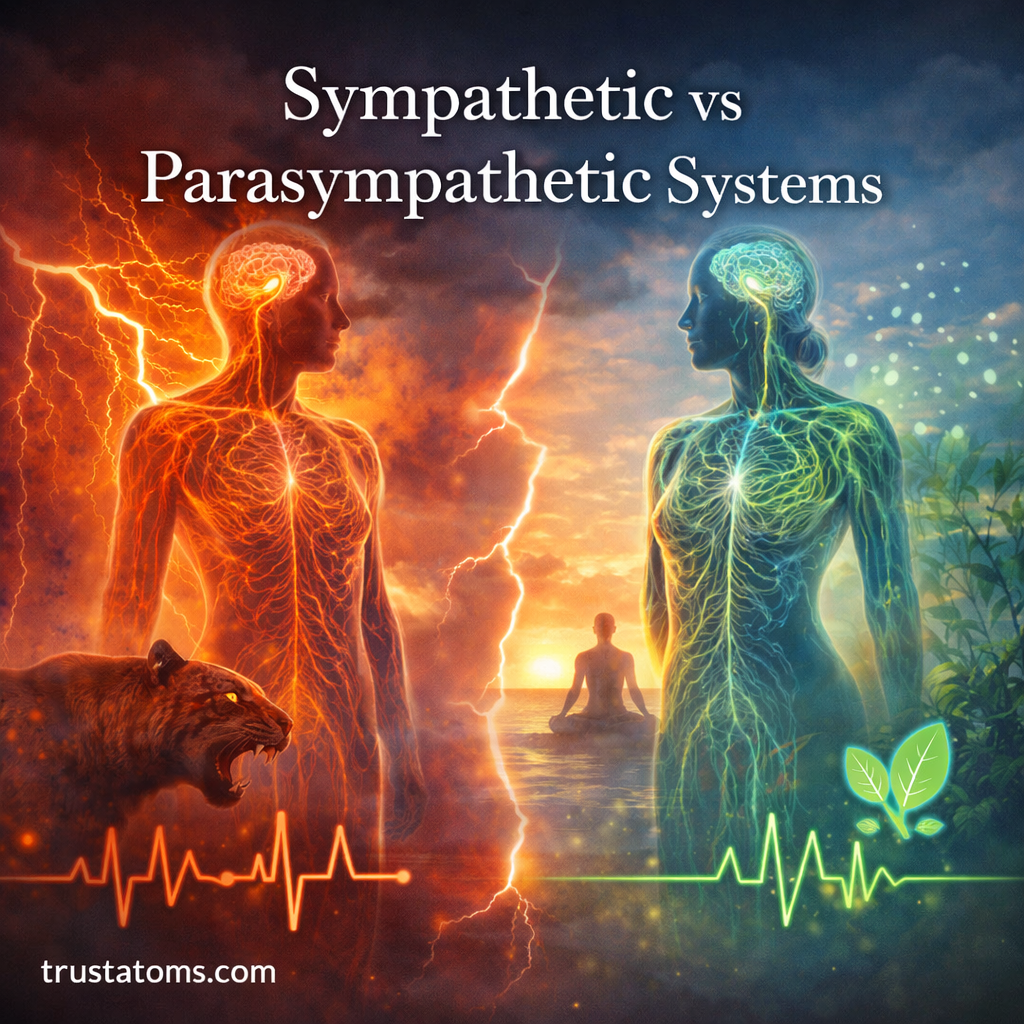
Imagine stepping into a street and noticing an approaching vehicle. Within moments, sensory and brain circuits recognize danger, and sympathetic nervous system activity increases.
Heart rate rises, breathing may become faster, and blood flow is redistributed to support rapid movement. Sympathetic nerves also stimulate the adrenal medulla to release epinephrine, reinforcing some of these immediate responses.
If the stressful situation continues, the hypothalamus releases corticotropin-releasing hormone (CRH). This stimulates pituitary ACTH secretion, which promotes cortisol release from the adrenal cortex.
Cortisol helps regulate energy availability and modifies aspects of the stress response. The sympathetic and hormonal pathways overlap, but their timing and mechanisms differ.
Negative Feedback Prevents Excessive Hormone Release
Negative feedback occurs when a physiological response reduces the signals that originally stimulated it. This mechanism helps prevent hormone concentrations from rising or falling without appropriate control.
For example, increasing cortisol concentrations normally suppress CRH and ACTH secretion through feedback involving the hypothalamus and pituitary gland.
Positive feedback is less common. During childbirth, cervical stretching can stimulate oxytocin release, which strengthens uterine contractions and increases cervical stretching until delivery interrupts the cycle.
Circadian Rhythms Link the Brain to Hormone Release
The suprachiasmatic nucleus (SCN), located in the hypothalamus, functions as a central biological clock. It receives information about environmental light through pathways originating in the retina.
SCN signals influence the timing of sleep, body temperature changes, and hormone secretion. Through a multisynaptic pathway involving autonomic nerves, the circadian system regulates melatonin production by the pineal gland.
Cortisol also follows a daily rhythm, generally rising toward the usual waking period. Circadian timing helps coordinate endocrine activity with predictable daily changes in behavior and environmental conditions.
What Happens When Neuroendocrine Regulation Is Disrupted?
Disorders affecting the hypothalamus, pituitary gland, endocrine glands, or their signaling pathways can disturb normal regulation.
- Central diabetes insipidus: Insufficient ADH release can cause excessive production of dilute urine and increased thirst.
- Cushing’s syndrome: Prolonged exposure to excessive cortisol can affect metabolism, blood pressure, and body composition.
- Hypothyroidism: Inadequate thyroid hormone activity can slow metabolism and cause fatigue, although the underlying cause may be thyroidal or central.
- Circadian disruption: Irregular sleep schedules or certain neurological conditions can interfere with the timing of hormonal and physiological processes.
Diagnosis depends on symptoms, examination, and appropriate laboratory testing. A single hormone measurement may be insufficient because secretion often changes with time of day, stress, and physiological conditions.
Frequently Asked Questions
What connects the nervous system to the endocrine system?
The hypothalamus is the main integration center connecting neural information with endocrine regulation. It controls pituitary hormone release and participates in autonomic nervous system regulation.
Which system responds faster to danger?
The nervous system generally produces faster responses because electrical impulses travel rapidly along neurons. Hormonal signals can reinforce these reactions and support longer-lasting physiological adjustments.
Can the nervous system directly trigger hormone release?
Yes. Hypothalamic neurons directly control hormone release from the posterior pituitary, while sympathetic nerve signals stimulate adrenal medulla cells to release catecholamines into the bloodstream.
Nervous and endocrine integration allows the body to combine rapid electrical communication with hormone-mediated regulation of metabolism, stress, fluid balance, and daily rhythms. The hypothalamus and pituitary coordinate many of these interactions, while feedback loops help maintain stable internal conditions. Understanding these pathways explains how a single stimulus can produce immediate physical reactions and sustained hormonal changes.
This article is for general education and is not medical advice. Talk to a qualified health professional about any medical concern.
Sources: Guyton and Hall Textbook of Medical Physiology; Williams Textbook of Endocrinology; Principles of Neural Science by Kandel and colleagues.