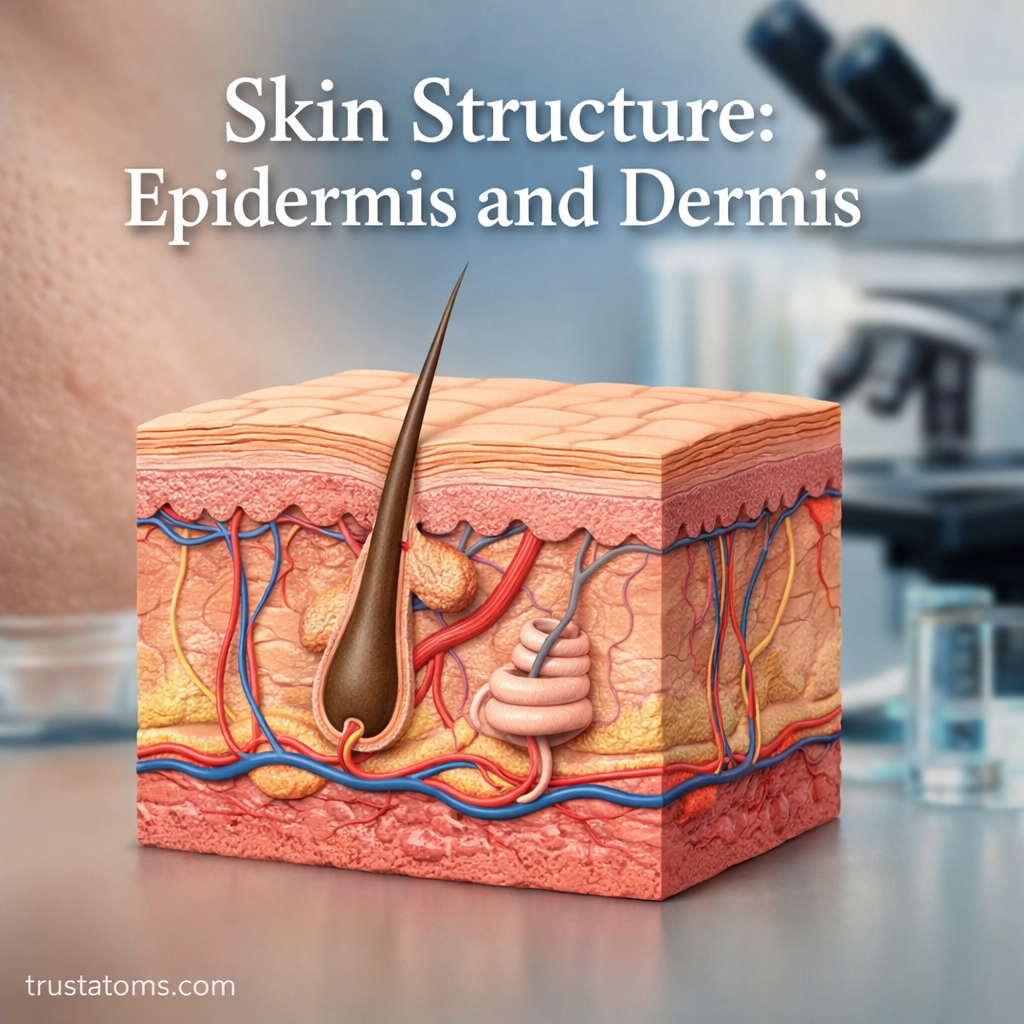
The skin is the body’s largest organ, acting as a protective barrier between your internal systems and the external environment. It plays a vital role in protection, temperature regulation, sensation, and immune defense.
Understanding the structure of the skin—specifically the epidermis and dermis—helps explain how it performs these essential functions every day.
Overview of Skin Layers
The skin is composed of three main layers:
- Epidermis (outer layer)
- Dermis (middle layer)
- Hypodermis (deep layer, also called subcutaneous tissue)
This article focuses on the two primary layers responsible for most skin functions: the epidermis and dermis.
What Is the Epidermis?
The epidermis is the outermost layer of the skin. It acts as the body’s first line of defense against environmental threats such as bacteria, UV radiation, and chemicals.
Key Characteristics of the Epidermis
- Made mostly of keratinocytes (cells that produce keratin)
- Contains no blood vessels (avascular)
- Continuously regenerates and sheds
- Provides waterproofing and protection
Layers of the Epidermis
The epidermis is made up of several sublayers, each with a specific role:
- Stratum basale
- Deepest layer
- Produces new skin cells
- Contains melanocytes (pigment-producing cells)
- Stratum spinosum
- Provides strength and flexibility
- Cells begin producing keratin
- Stratum granulosum
- Cells start to die and harden
- Forms a water-resistant barrier
- Stratum lucidum (only in thick skin like palms and soles)
- Adds extra protection
- Stratum corneum
- Outermost layer
- Made of dead, flattened cells
- Continuously sheds and renews
Functions of the Epidermis
- Protects against pathogens and environmental damage
- Prevents water loss (dehydration)
- Produces melanin for UV protection
- Initiates immune responses
What Is the Dermis?
The dermis lies directly beneath the epidermis and is much thicker. It provides structural support and houses many important components like blood vessels, nerves, and glands.
Key Characteristics of the Dermis
- Rich in collagen and elastin fibers
- Contains blood vessels and nerve endings
- Supports elasticity and strength
- Nourishes the epidermis
Layers of the Dermis
The dermis has two main layers:
- Papillary layer
- Thin, upper layer
- Contains capillaries and sensory receptors
- Helps regulate temperature
- Reticular layer
- Thicker, deeper layer
- Contains dense connective tissue
- Provides skin strength and elasticity
Structures Found in the Dermis
The dermis contains several critical structures:
- Hair follicles
- Sweat glands
- Sebaceous (oil) glands
- Blood vessels
- Nerve endings (for touch, pain, and temperature)
Functions of the Dermis
- Supplies nutrients to the epidermis
- Regulates body temperature through blood flow and sweat
- Enables sensation (touch, pressure, pain)
- Provides structural integrity and elasticity
Epidermis vs Dermis: Key Differences
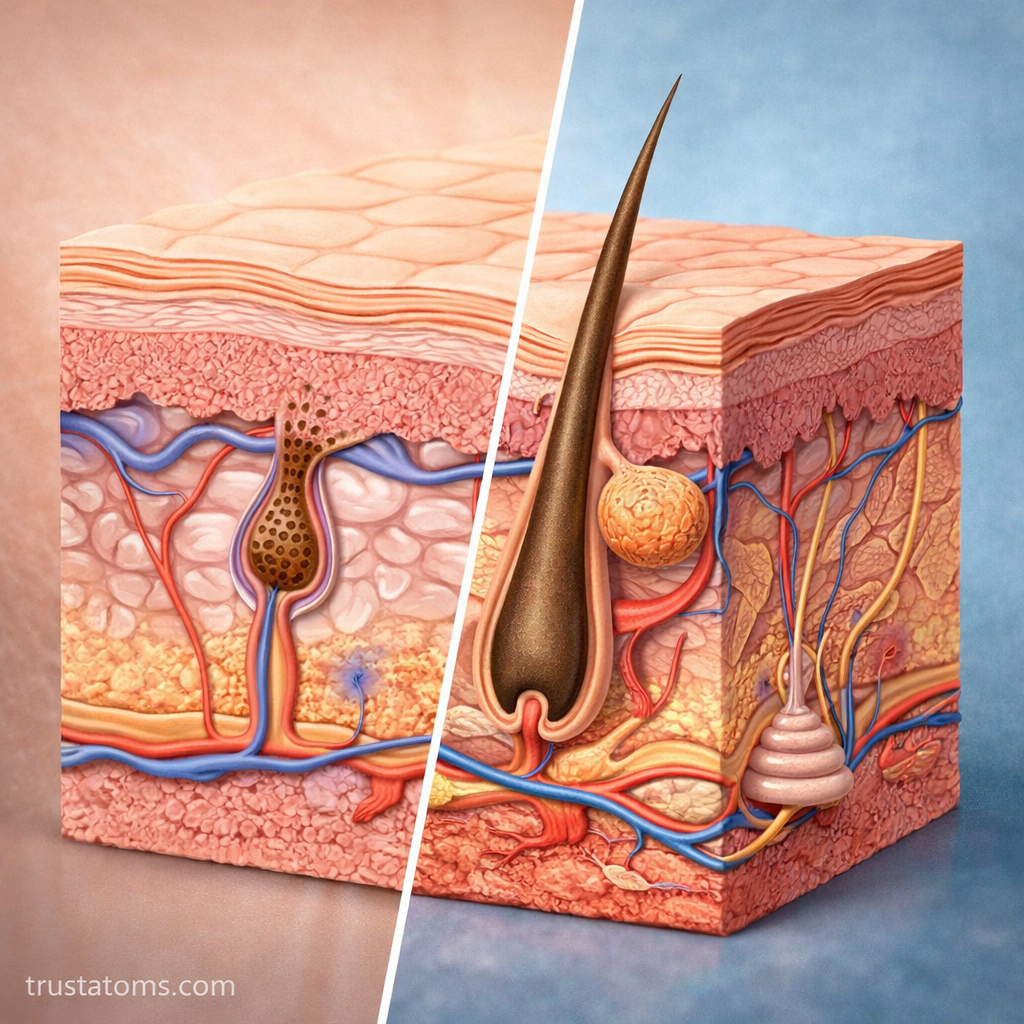
Understanding how these two layers differ helps clarify their roles:
- Epidermis is thin, outer, and protective
- Dermis is thicker, inner, and supportive
- Epidermis has no blood vessels; dermis is highly vascular
- Epidermis renews constantly; dermis provides long-term structure
Together, they work as a coordinated system to maintain skin health and function.
How the Epidermis and Dermis Work Together
These two layers are closely connected and rely on each other:
- The dermis supplies nutrients and oxygen to the epidermis
- The epidermis protects the dermis from damage
- Sensory signals originate in the dermis but are perceived at the surface
- Injury to one layer often affects the other
For example, a shallow scrape may only damage the epidermis, while deeper cuts that reach the dermis can bleed and take longer to heal.
Why Skin Structure Matters
Understanding skin structure is important in many real-world contexts:
- Medicine: Helps diagnose burns, infections, and skin diseases
- Skincare: Explains how products interact with different layers
- Aging: Loss of collagen in the dermis leads to wrinkles
- Healing: Deeper wounds involving the dermis require more time to repair
Common Conditions Related to These Layers
Some common skin conditions affect specific layers:
- Sunburn: Primarily damages the epidermis
- Dermatitis: Inflammation involving both layers
- Acne: Occurs in hair follicles within the dermis
- Burns: Classified by depth (epidermis vs dermis involvement)
Final Thoughts
The epidermis and dermis form a highly specialized and efficient system that protects, supports, and connects the body to its environment.
While the epidermis acts as a protective shield, the dermis provides strength, nourishment, and sensory capabilities. Together, they ensure that the skin remains resilient, responsive, and essential to overall health.