The small intestine is the primary site of nutrient absorption in the human body. While digestion begins in the mouth and stomach, it is in the small intestine where most nutrients are finally broken down and absorbed into the bloodstream.
Its structure is uniquely designed to maximize surface area and efficiency, allowing the body to extract essential nutrients from food.
Overview of the Small Intestine
The small intestine is a long, coiled tube that connects the stomach to the large intestine. It measures about 20 feet (6 meters) in length in adults.
Its main functions include:
- Completing digestion with enzymes
- Absorbing nutrients into the bloodstream
- Transporting remaining material to the large intestine
Three Main Sections of the Small Intestine
The small intestine is divided into three regions, each with specialized roles.
Duodenum
- The first and shortest section
- Receives partially digested food (chyme) from the stomach
- Mixes chyme with bile from the liver and enzymes from the pancreas
Jejunum
- The middle section
- Primary site for nutrient absorption
- Contains many folds to increase surface area
Ileum
- The final section
- Absorbs remaining nutrients, especially vitamin B12 and bile salts
- Connects to the large intestine
Structural Features That Maximize Absorption
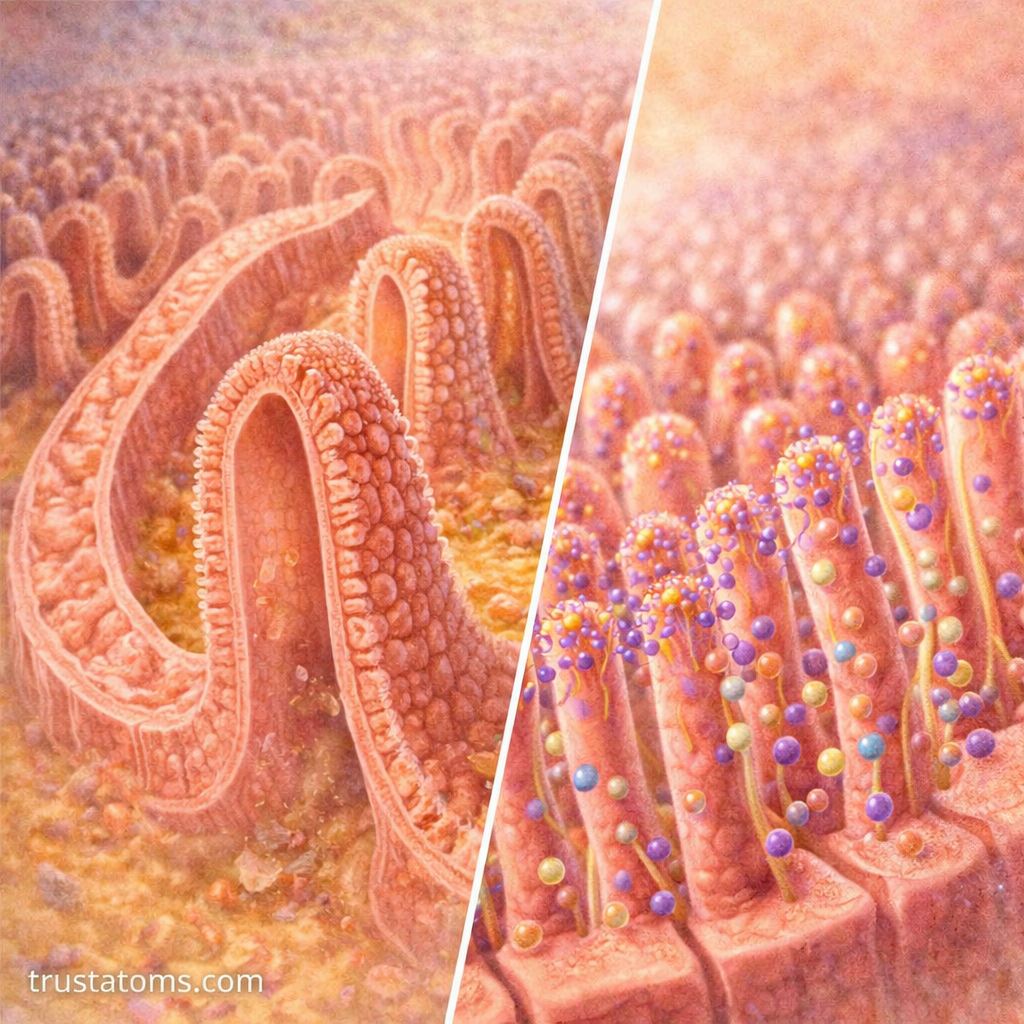
The small intestine is highly adapted for efficient absorption.
Circular Folds (Plicae Circulares)
- Large folds in the intestinal lining
- Slow down food movement
- Increase surface area
Villi
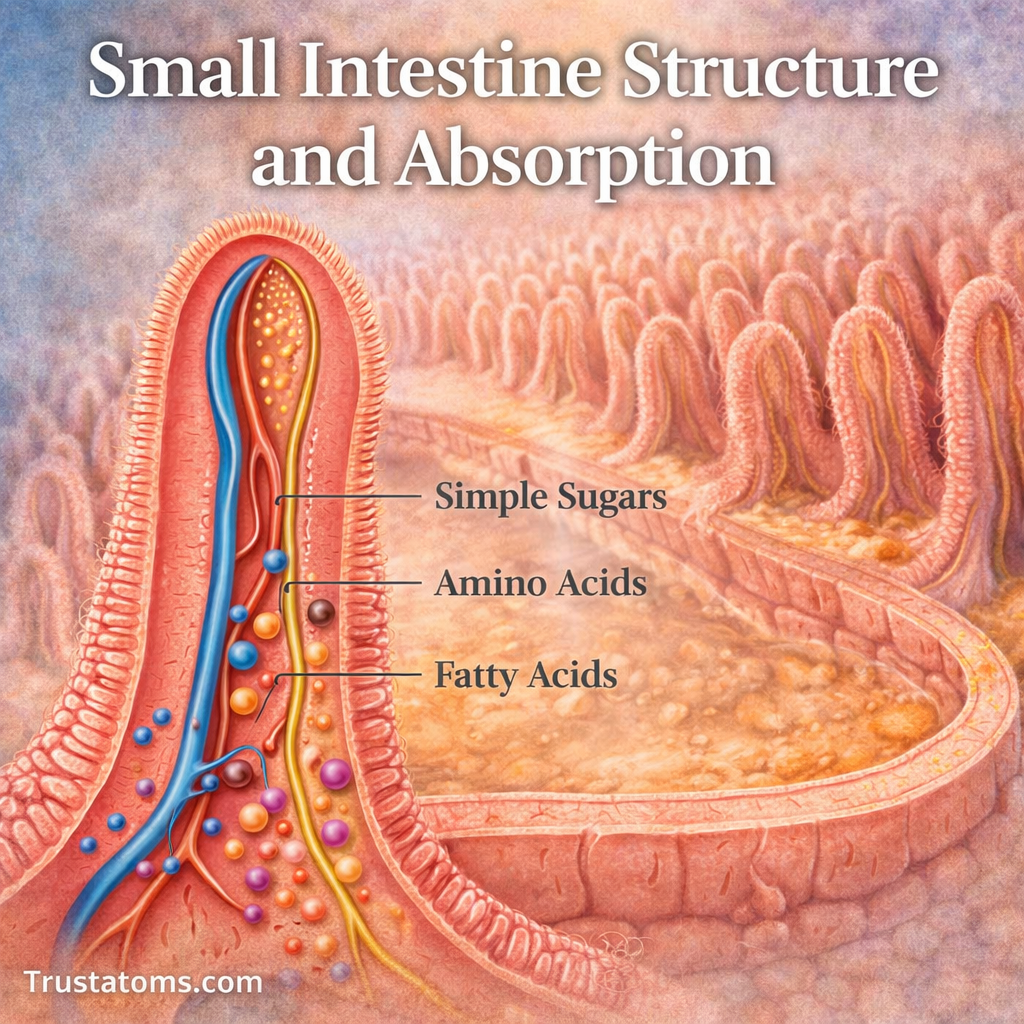
- Finger-like projections lining the intestine
- Contain blood vessels and lymphatic vessels
- Increase absorption efficiency
Microvilli (Brush Border)
- Tiny projections on the surface of cells
- Create an even larger surface area
- Contain enzymes that complete digestion
Together, these features create a massive surface area—often compared to the size of a tennis court.
How Nutrient Absorption Works
Absorption in the small intestine involves multiple processes that move nutrients into circulation.
Step-by-Step Absorption Process
- Chyme enters the small intestine from the stomach
- Enzymes break nutrients into smaller molecules
- Nutrients come into contact with villi
- Nutrients pass through intestinal cells
- Nutrients enter blood or lymph vessels
Types of Nutrient Absorption
Different nutrients are absorbed in different ways.
Carbohydrates
- Broken down into simple sugars (like glucose)
- Absorbed into the bloodstream through capillaries
Proteins
- Broken down into amino acids
- Transported into the blood
Fats
- Broken into fatty acids and glycerol
- Absorbed into lymphatic vessels (lacteals)
- Later enter the bloodstream
Vitamins and Minerals
- Absorbed through specialized transport mechanisms
- Some require specific conditions (e.g., vitamin B12 in the ileum)
Role of Blood and Lymphatic Systems
Once absorbed, nutrients are transported throughout the body.
Blood Capillaries
- Carry sugars, amino acids, and water-soluble nutrients
- Transport nutrients directly to the liver via the portal vein
Lacteals (Lymphatic Vessels)
- Absorb fats and fat-soluble vitamins
- Deliver nutrients into the lymphatic system before entering the bloodstream
Enzymes in the Small Intestine
The small intestine relies on enzymes to complete digestion.
Sources of Enzymes
- Pancreas (e.g., amylase, lipase, proteases)
- Small intestine lining (brush border enzymes)
Functions
- Break carbohydrates into simple sugars
- Convert proteins into amino acids
- Break fats into absorbable components
Why Surface Area Is Critical
The efficiency of absorption depends heavily on surface area.
Without folds, villi, and microvilli:
- Nutrient absorption would be limited
- Digestion would be incomplete
- The body would not receive enough energy and nutrients
This structural design allows the small intestine to absorb nutrients quickly and effectively.
Common Issues with Absorption
Problems in the small intestine can reduce nutrient uptake.
Examples Include:
- Malabsorption syndromes (e.g., celiac disease)
- Damage to villi
- Inflammation or infection
These conditions can lead to nutrient deficiencies and digestive symptoms.
Key Takeaways
- The small intestine is the main site of nutrient absorption.
- It consists of the duodenum, jejunum, and ileum.
- Structural features like villi and microvilli maximize surface area.
- Different nutrients are absorbed through specific pathways.
- Blood and lymph systems transport absorbed nutrients throughout the body.
The small intestine’s design makes it one of the most efficient and essential organs in the digestive system.