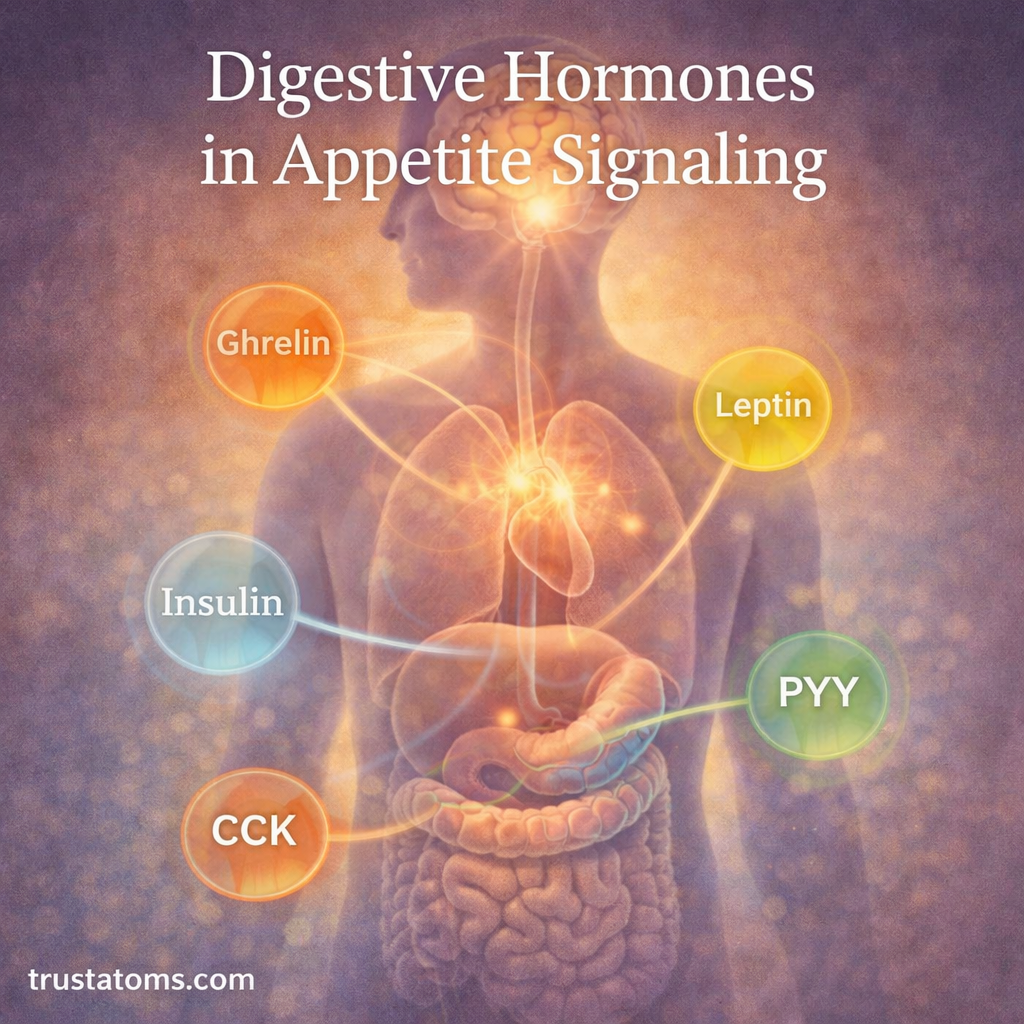
Digestive hormones regulate appetite by sending chemical signals between the digestive system and brain that influence hunger, fullness, and food intake. Ghrelin helps stimulate hunger, while hormones such as cholecystokinin (CCK), peptide YY (PYY), and glucagon-like peptide-1 (GLP-1) help signal when enough food has been eaten.
These signals connect the stomach, intestines, pancreas, and brain through coordinated processes involving human anatomy and the endocrine system. Understanding them helps explain why hunger changes throughout the day and why feeling full involves more than simply filling the stomach.
What Is Appetite Signaling?
Appetite signaling is the process through which the body communicates its energy needs and responds to food intake. Hunger encourages eating, while satiation helps end a meal and satiety helps maintain fullness afterward.
Three main components coordinate these responses:
- Digestive organs: The stomach and intestines detect food and release hormones.
- The brain: The hypothalamus and other brain regions process hunger and fullness signals.
- Hormonal and nervous pathways: Chemical messengers and nerves transmit information about digestion and energy availability.
The Gut-Brain Axis: How Appetite Signals Travel
The gut-brain axis is a two-way communication network connecting the digestive tract with the central nervous system. Hormones released by digestive organs can act through the bloodstream, while nerves, including the vagus nerve, carry information about stomach stretching and intestinal activity.
The brain combines these messages with information about energy stores, blood glucose, and food-related sensory cues. For a closer look at these connections, see Gut–Brain Communication Pathways.
Six Hormones That Influence Hunger and Fullness
Ghrelin: Signals Hunger Before Meals
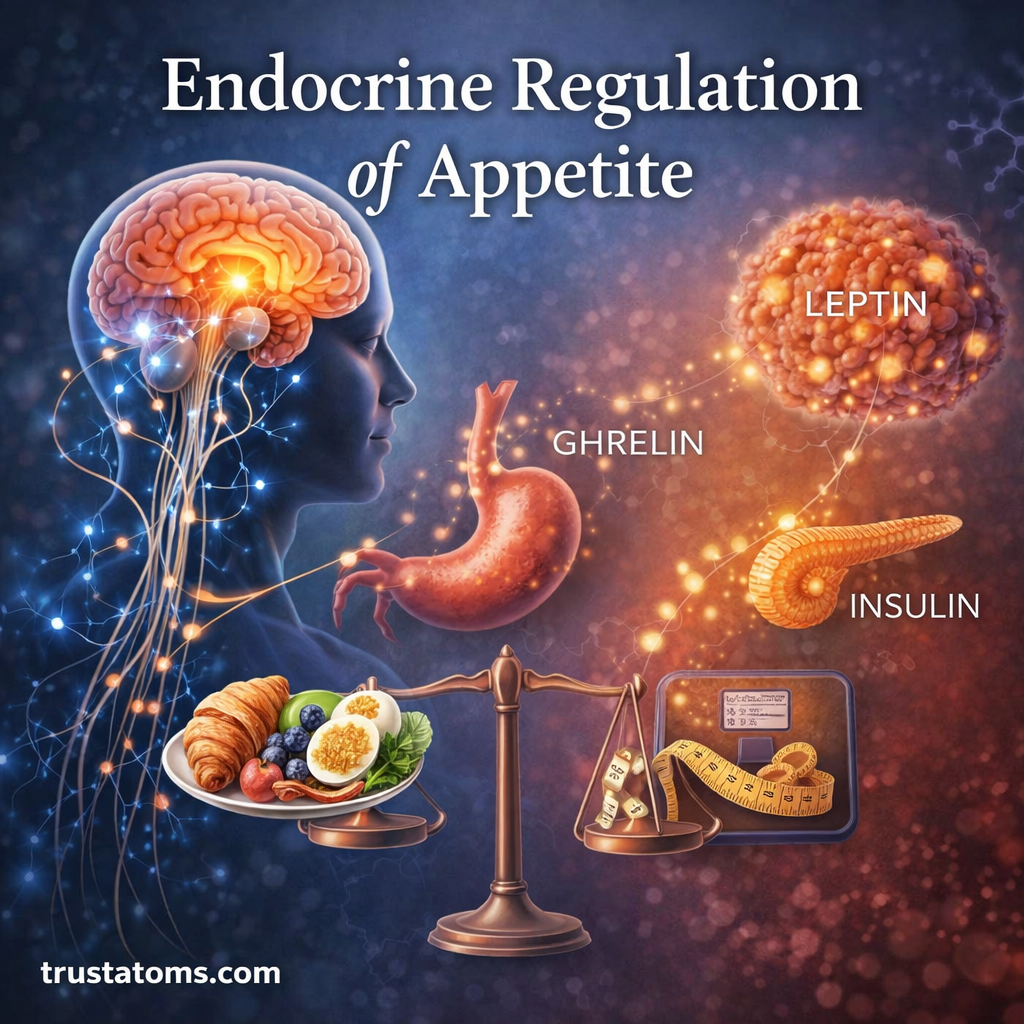
Ghrelin is produced mainly in the stomach. Its levels commonly rise before meals and fall after eating. It acts on appetite-regulating brain circuits to encourage food intake, although hunger also depends on learned habits, food availability, and other signals.
Leptin: Communicates Long-Term Energy Stores
Leptin is produced by fat (adipose) tissue and helps regulate long-term energy balance. Its circulating levels generally reflect stored body fat, allowing the brain to adjust hunger and energy expenditure over time.
Leptin is not primarily a rapid, meal-ending signal. In leptin resistance, the brain responds less effectively to leptin despite its presence in the bloodstream.
Insulin: Connects Blood Glucose and Energy Availability
Insulin is released by the pancreas in response to rising blood glucose levels. It helps cells absorb and use glucose and also provides the brain with information about energy availability. Its effects on appetite depend on the broader metabolic and hormonal environment.
Peptide YY (PYY): Supports Fullness After Eating
PYY is released mainly by specialized cells in the lower small intestine and colon after food intake. Its levels rise following meals, and it helps reduce appetite and slow digestive movement. PYY contributes to the feeling of remaining satisfied after eating.
Cholecystokinin (CCK): Helps End a Meal
CCK is released from the upper small intestine, particularly when fats and proteins enter it. It stimulates pancreatic enzyme secretion and gallbladder contraction, supporting digestion. CCK also activates pathways associated with satiation, helping limit meal size.
Glucagon-Like Peptide-1 (GLP-1): Slows Digestion and Promotes Satiety
GLP-1 is secreted by intestinal cells in response to nutrients. It stimulates glucose-dependent insulin release, slows gastric emptying, and contributes to fullness. Medications that activate GLP-1 receptors use some of these biological effects to help manage type 2 diabetes and, in certain formulations, obesity.
How Appetite Hormones Work Together During a Meal

Consider someone who eats lunch at noon after several hours without food. Their appetite may increase as ghrelin rises before the meal. Once they begin eating, nutrients entering the small intestine stimulate CCK, followed by additional signals involving GLP-1 and PYY.
As digestion continues, stomach stretching and hormonal messages contribute to fullness. Insulin responds to nutrient absorption, while leptin provides longer-term information about energy reserves. These signals overlap rather than switching on and off at exact times.
This explains why a meal’s effects on hunger can continue after eating stops. Hormonal responses vary with meal composition, individual physiology, and other factors.
Factors That Change Appetite Hormone Responses
Appetite signals are influenced by everyday conditions, not just the amount of food in the stomach.
- Sleep: Insufficient sleep can alter hunger regulation and increase food cravings, although individual hormonal responses vary.
- Meal composition: Protein, fat, and fiber influence digestive processes and fullness signals in different ways.
- Stress: Acute or prolonged stress can increase or suppress appetite depending on the person and circumstances.
- Physical activity: Exercise can temporarily change appetite-related hormones and influence longer-term metabolic regulation.
Common Issues with Appetite Regulation
Appetite regulation can become less effective when hormonal signaling, metabolism, sleep, or other physiological processes are disrupted. Examples include persistent hunger, reduced fullness after meals, and appetite changes associated with illness or medication.
These patterns are not necessarily caused by a single hormone deficiency. Endocrine Regulation of Appetite explains how several hormonal systems interact to influence eating behavior.
Stress-related appetite changes can also involve cortisol and metabolic regulation, particularly when stress is prolonged.
Supporting Normal Hunger and Fullness Signals
Consistent sleep schedules, regular physical activity, and meals containing protein and fiber can support normal appetite regulation. Eating at a comfortable pace may also make it easier to notice developing fullness.
These habits support general health but cannot guarantee a particular hormone level or resolve every appetite problem. Persistent or unexplained changes in hunger deserve professional evaluation.
Frequently Asked Questions
Which digestive hormone makes you hungry?
Ghrelin is the best-known hunger-stimulating hormone produced mainly by the stomach. Its levels often increase before eating, but hunger is influenced by several hormones and brain pathways.
Which hormones tell the brain you are full?
CCK, PYY, and GLP-1 contribute to meal-related fullness. Leptin helps regulate longer-term energy balance rather than directly ending an individual meal.
Can appetite hormones change with poor sleep?
Yes. Sleep restriction can affect appetite-related signaling and increase hunger or cravings in some people. The size and direction of individual hormone changes are not always consistent.
Digestive hormones help coordinate the transition from hunger before a meal to fullness during digestion. Ghrelin, CCK, PYY, GLP-1, insulin, and leptin contribute different information, allowing the brain to respond to both immediate food intake and longer-term energy needs.
This article is for general education and is not medical advice. Talk to a qualified health professional about any medical concern.
Sources: Guyton and Hall Textbook of Medical Physiology; Williams Textbook of Endocrinology; National Institute of Diabetes and Digestive and Kidney Diseases (NIDDK).