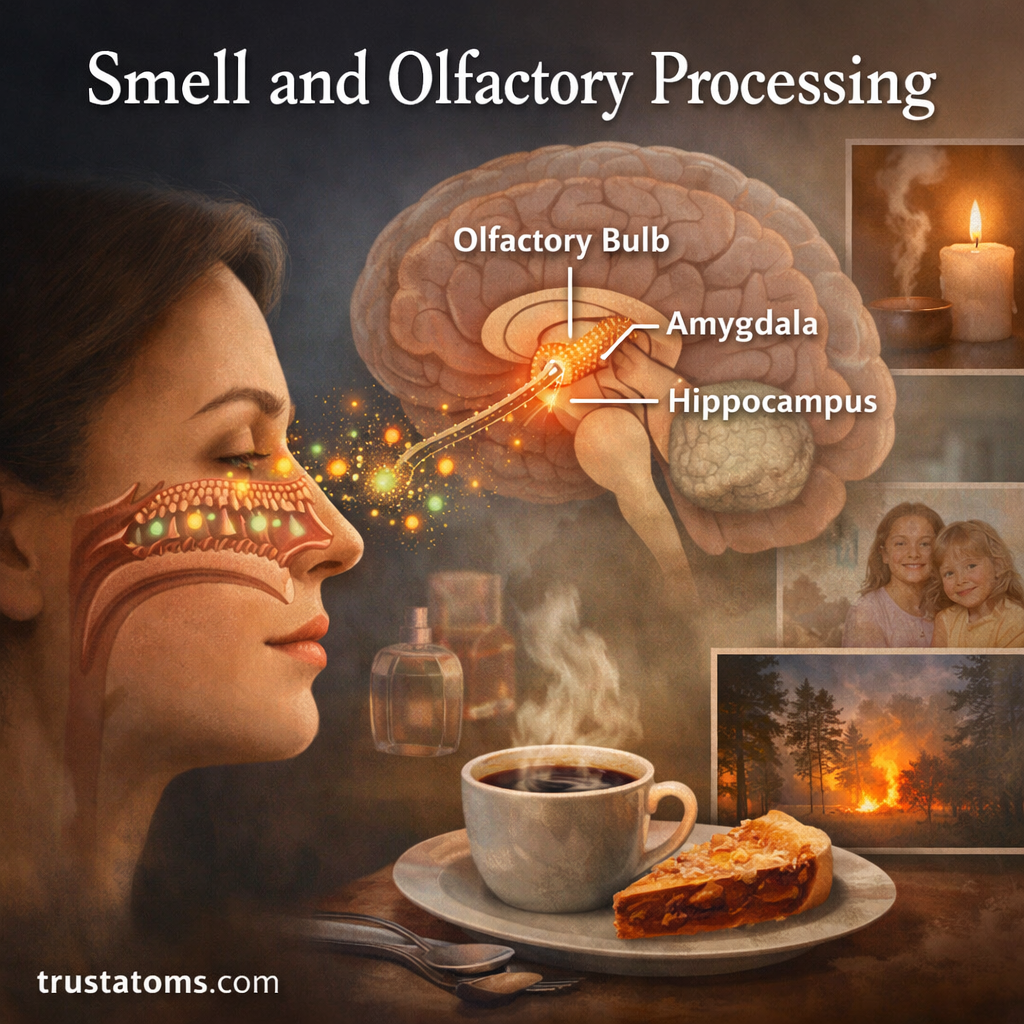
The sense of smell, also known as olfaction, is one of the most direct and powerful sensory systems in the human body. Unlike vision or hearing, smell is closely tied to memory, emotion, and instinctive behavior. From detecting danger (like smoke or spoiled food) to enhancing taste and triggering memories, olfactory processing plays a critical role in daily life.
What Is Olfaction?
Olfaction is the process by which the body detects and interprets airborne chemical molecules (odorants). These molecules enter the nose and interact with specialized sensory receptors, allowing the brain to identify different smells.
Key characteristics of olfaction:
- It is a chemical sense (like taste)
- It works through airborne particles
- It has a strong link to emotion and memory
- It operates both consciously and subconsciously
Structure of the Olfactory System
The olfactory system includes several specialized structures that work together to detect and process smells.
1. Nasal Cavity
The nasal cavity is the entry point for odor molecules.
- Air carrying odorants enters through the nostrils
- The molecules dissolve in mucus lining the nasal passages
- This allows them to interact with sensory receptors
2. Olfactory Epithelium
Located at the top of the nasal cavity, the olfactory epithelium contains:
- Olfactory receptor neurons (ORNs)
- Supporting cells
- Basal cells (which regenerate neurons)
Each receptor neuron has tiny hair-like structures called cilia, which detect odor molecules.
3. Olfactory Bulb
The olfactory bulb sits just above the nasal cavity at the base of the brain.
- It receives signals from receptor neurons
- It organizes and processes scent information
- It begins identifying patterns of odors
4. Olfactory Cortex and Brain Pathways
Signals are sent from the olfactory bulb to several brain regions:
- Primary olfactory cortex – identifies smells
- Amygdala – links smells to emotions
- Hippocampus – connects smells to memories
This direct connection explains why smells can instantly trigger vivid memories.
How Smell Works: Step-by-Step
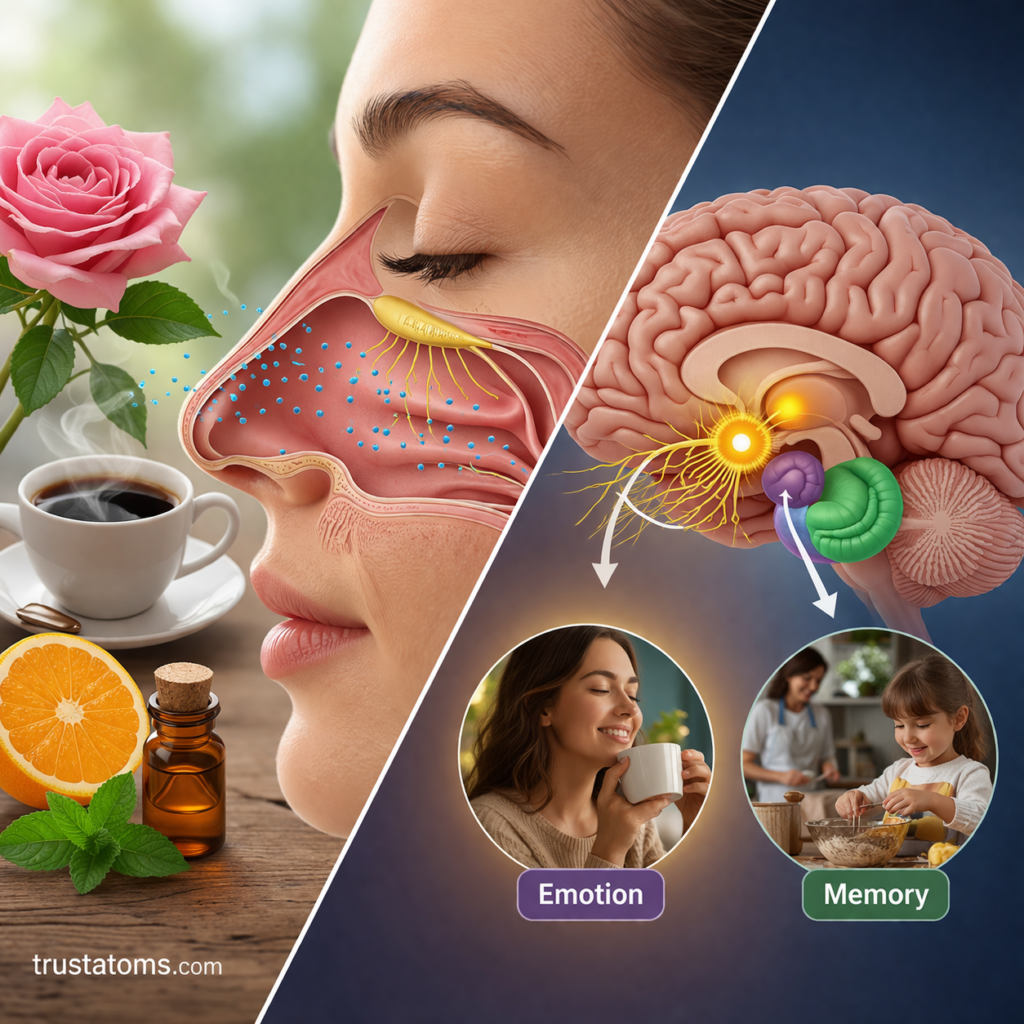
Olfactory processing follows a clear sequence:
Step 1: Odor Detection
- Odor molecules enter the nose during breathing or sniffing
- They dissolve in mucus in the nasal cavity
Step 2: Receptor Activation
- Molecules bind to specific receptors on olfactory neurons
- Each receptor responds to certain molecular features
Step 3: Signal Transmission
- Activated neurons send electrical signals through the olfactory nerve
- Signals travel to the olfactory bulb
Step 4: Signal Processing
- The olfactory bulb organizes signals into recognizable patterns
- These patterns represent specific smells
Step 5: Brain Interpretation
- Signals are sent to higher brain regions
- The brain identifies the smell and links it to memory or emotion
Why Smell Is So Powerful
Smell is uniquely powerful compared to other senses because of its direct brain connections.
Direct Link to Emotion
Unlike other senses, smell bypasses the thalamus (the brain’s relay center) and connects directly to emotional centers.
- This explains immediate emotional reactions to scents
- Pleasant smells can trigger comfort or nostalgia
- Unpleasant smells can trigger disgust or alertness
Strong Memory Association
Smells are strongly tied to memory due to their connection with the hippocampus.
Examples:
- A perfume may remind you of a specific person
- The smell of food can bring back childhood memories
- Environmental scents can trigger detailed recollections
Types of Odors and Detection
Humans can detect thousands of different odors using combinations of receptors.
Basic Odor Categories
While smell is complex, some general categories include:
- Floral (e.g., roses)
- Fruity (e.g., citrus)
- Spicy (e.g., cinnamon)
- Putrid (e.g., decay)
- Resinous (e.g., pine)
- Chemical (e.g., ammonia)
Each odor is recognized through a pattern of receptor activation, not a single receptor.
Smell and Taste Connection
Smell plays a major role in how we perceive flavor.
- Taste detects basic flavors: sweet, salty, sour, bitter, umami
- Smell adds complexity and detail to food
When your sense of smell is impaired (like during a cold), food often tastes bland because:
- Odor molecules cannot reach the olfactory receptors effectively
- Flavor perception is reduced
Adaptation and Sensitivity
The olfactory system can quickly adapt to constant smells.
Olfactory Adaptation
- Continuous exposure to a smell reduces sensitivity
- The brain begins to ignore familiar odors
Example:
- You may stop noticing a perfume after wearing it for a while
Sensitivity Factors
Smell sensitivity can vary based on:
- Age (declines over time)
- Health conditions
- Environmental exposure
- Genetics
Disorders of Smell
Olfactory dysfunction can affect quality of life and safety.
Common Conditions
- Anosmia – complete loss of smell
- Hyposmia – reduced sense of smell
- Parosmia – distorted smell perception
- Phantosmia – smelling odors that aren’t present
Causes
- Viral infections (e.g., colds)
- Nasal blockages
- Head injuries
- Neurological disorders
Importance of Smell in Daily Life
Smell serves several essential functions:
- Safety – detecting smoke, gas leaks, spoiled food
- Nutrition – enhancing appetite and food enjoyment
- Social interaction – subtle cues in body odor and environment
- Memory and emotion – linking experiences to scents
Final Thoughts
Smell and olfactory processing are vital components of human sensory experience. From detecting environmental hazards to shaping emotional memories, the olfactory system plays a powerful and often underestimated role in how we interact with the world. Its unique connection to the brain’s emotional and memory centers makes it one of the most deeply personal and influential senses we have.