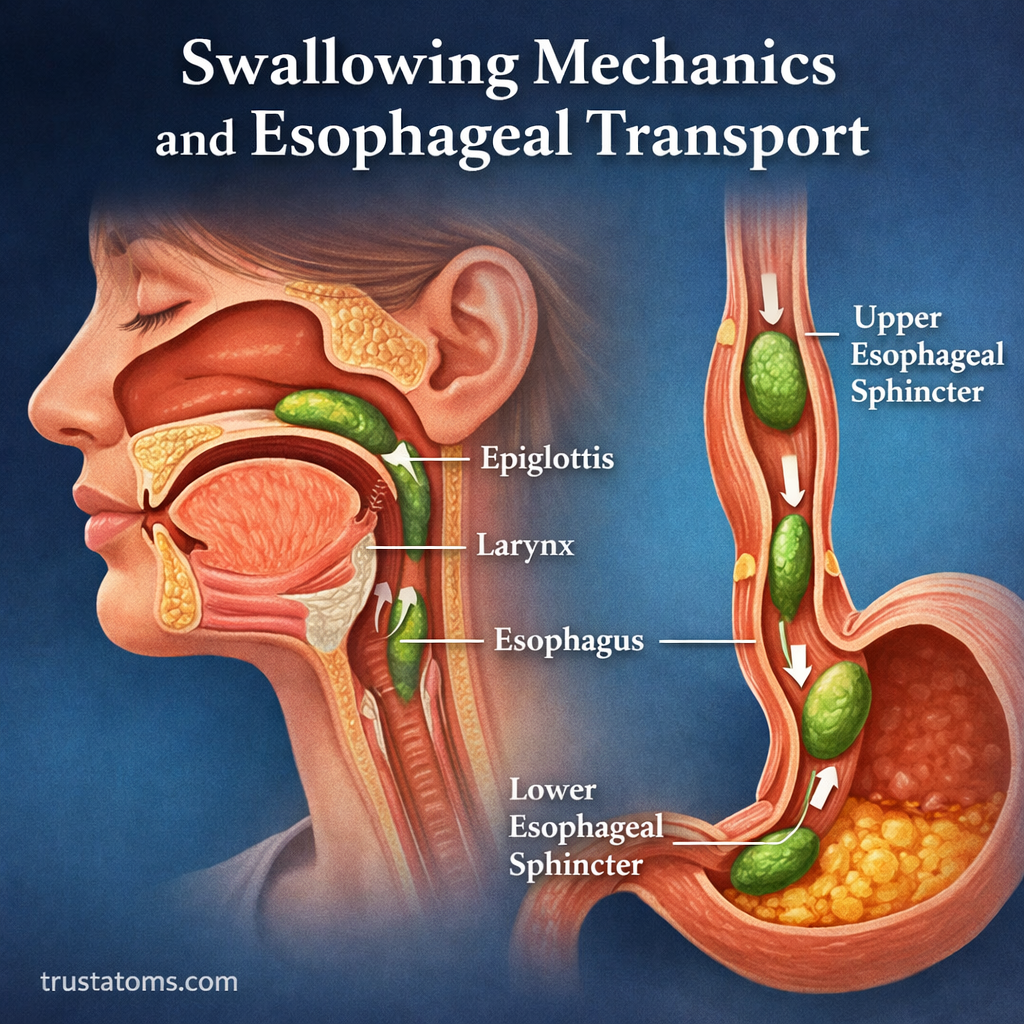
Swallowing is something most people do hundreds of times a day without thinking. Behind this simple action is a highly coordinated sequence of muscular movements and reflexes that move food and liquids safely from the mouth to the stomach.
This process, known as deglutition, involves the mouth, throat (pharynx), and esophagus working together in precise timing to prevent choking and ensure efficient transport.
What Is Swallowing?
Swallowing is the process of moving food, liquids, or saliva from the mouth into the stomach. It involves both voluntary and involuntary actions.
- The oral phase is voluntary—you decide to swallow.
- The pharyngeal and esophageal phases are automatic and controlled by the nervous system.
This coordination ensures that food enters the digestive tract while the airway remains protected.
The Three Phases of Swallowing
1. Oral Phase (Voluntary)
The oral phase begins once food has been chewed and mixed with saliva to form a soft mass called a bolus.
Key steps:
- The tongue pushes the bolus toward the back of the mouth.
- The soft palate begins to rise.
- The bolus moves into the pharynx.
This phase is under conscious control and sets up the rest of the swallowing process.
2. Pharyngeal Phase (Involuntary)
Once the bolus reaches the throat, a rapid reflex is triggered to protect the airway and direct food toward the esophagus.
Key actions include:
- The soft palate lifts to block the nasal cavity.
- The epiglottis folds down to cover the airway.
- The larynx moves upward to reduce the risk of aspiration.
- The upper esophageal sphincter opens.
This phase happens in less than a second and is critical for safe swallowing.
3. Esophageal Phase (Involuntary)
After passing through the upper esophageal sphincter, the bolus enters the esophagus—a muscular tube connecting the throat to the stomach.
During this phase:
- Waves of muscle contraction, called peristalsis, push the bolus downward.
- The lower esophageal sphincter relaxes to allow entry into the stomach.
- The sphincter then closes to prevent backflow.
This phase ensures smooth, one-way movement into the stomach.
What Is Peristalsis?
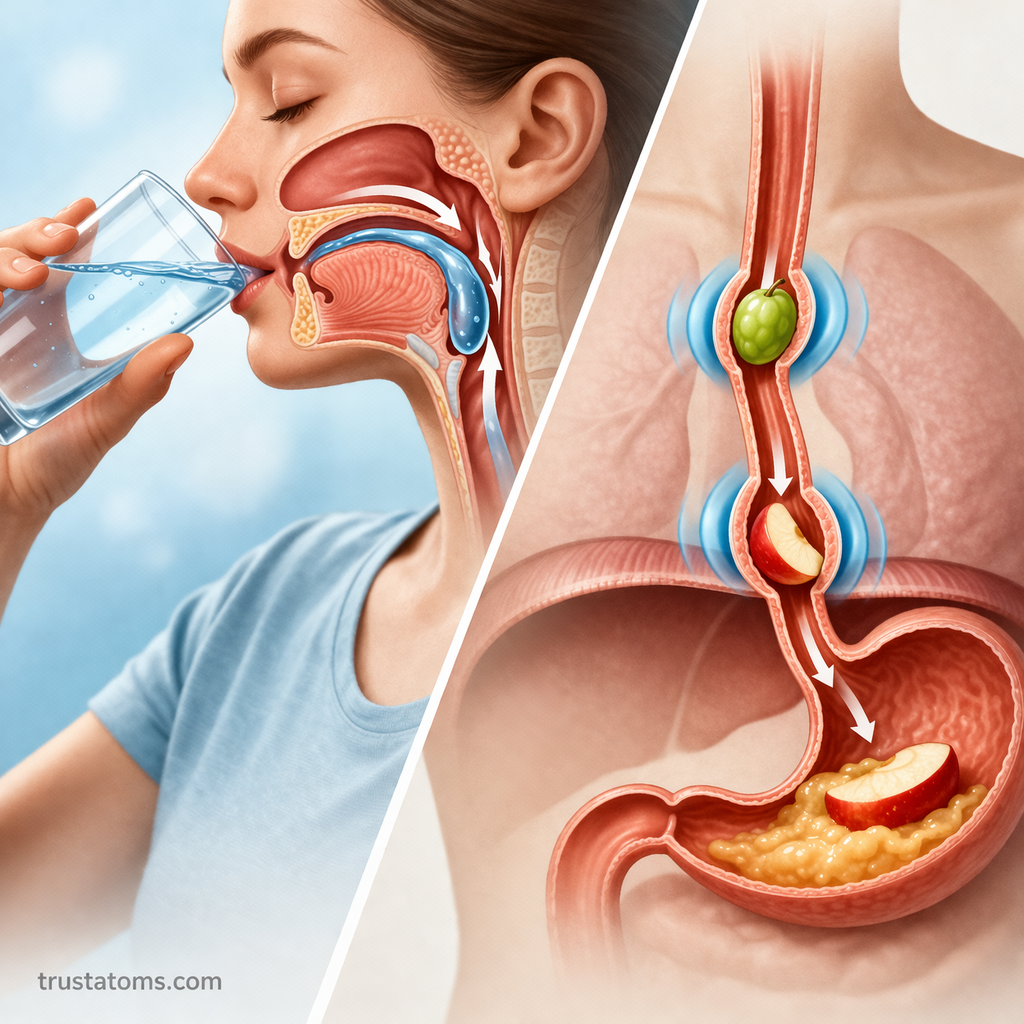
Peristalsis is the key mechanism that drives esophageal transport.
It involves:
- Sequential contraction of circular muscles behind the bolus
- Relaxation ahead of the bolus
- A coordinated wave-like motion
This movement allows food to travel even against gravity—for example, when lying down.
Role of the Esophagus in Transport
The esophagus is not just a passive tube—it plays an active role in moving food efficiently.
Its functions include:
- Generating peristaltic waves
- Coordinating sphincter opening and closing
- Preventing reflux of stomach contents
The esophagus is lined with smooth muscle (and skeletal muscle in the upper portion), allowing both voluntary initiation and involuntary continuation of swallowing.
Upper and Lower Esophageal Sphincters
Upper Esophageal Sphincter (UES)
- Located at the top of the esophagus
- Opens during swallowing
- Prevents air from entering the esophagus during breathing
Lower Esophageal Sphincter (LES)
- Located at the junction with the stomach
- Relaxes to allow food entry
- Prevents stomach acid from flowing back into the esophagus
Proper function of these sphincters is essential for efficient and safe digestion.
Nervous System Control of Swallowing
Swallowing is controlled by a complex interaction between the brain and nerves.
Key components:
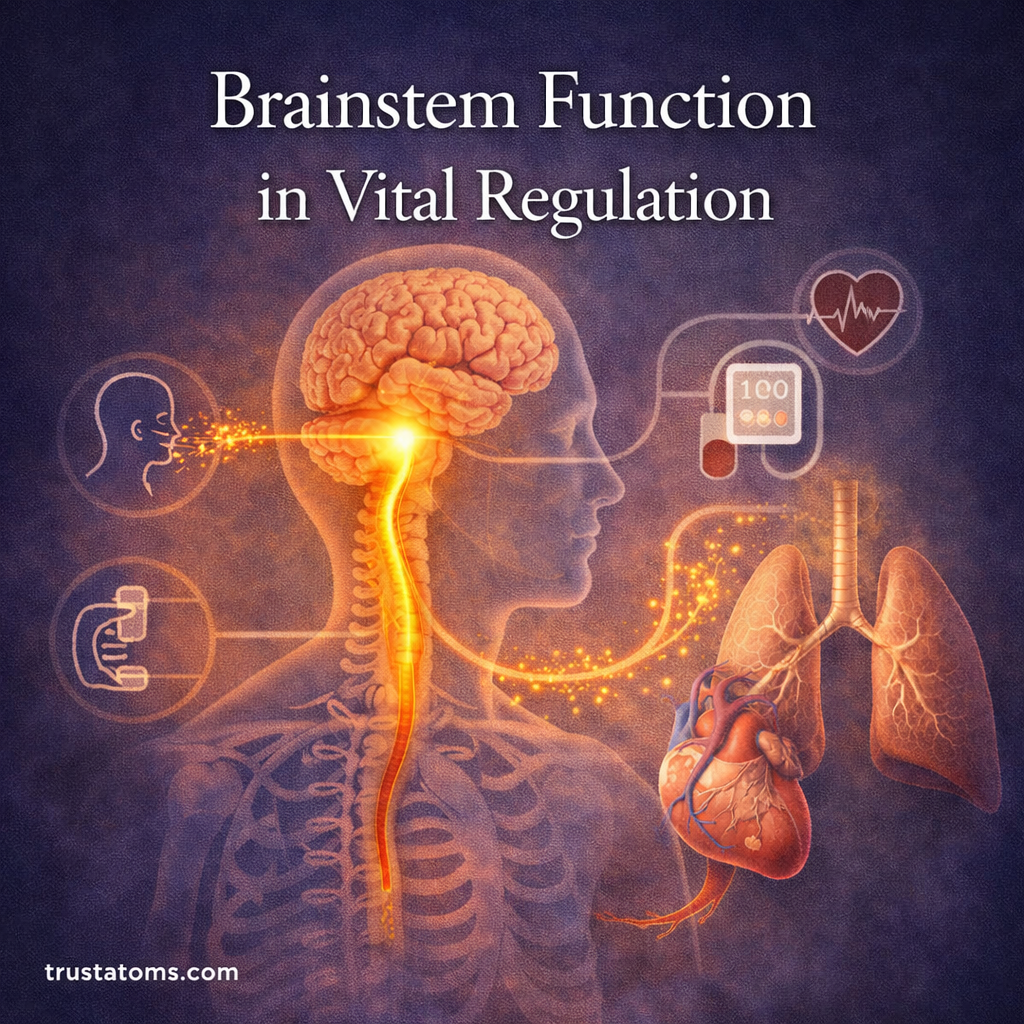
- The swallowing center in the brainstem
- Cranial nerves that control muscles of the mouth and throat
- Reflex pathways that coordinate involuntary phases
Once the swallowing reflex is triggered, the sequence continues automatically without conscious effort.
Common Issues with Swallowing Mechanics
Disruptions in swallowing can lead to noticeable symptoms and health risks.
Common problems include:
- Dysphagia (difficulty swallowing)
- Aspiration (food entering the airway)
- Gastroesophageal reflux (acid moving back into the esophagus)
These conditions may result from muscle weakness, nerve damage, or structural abnormalities.
Why Swallowing Efficiency Matters
Efficient swallowing is essential for:
- Safe passage of food and liquids
- Prevention of choking or aspiration
- Proper digestion and nutrient intake
Even small disruptions in timing or coordination can significantly affect overall health.
Key Takeaways
- Swallowing involves three phases: oral, pharyngeal, and esophageal.
- It transitions from voluntary control to automatic reflexes.
- Peristalsis drives food through the esophagus.
- Sphincters regulate entry and prevent backflow.
- The nervous system coordinates the entire process with precision.
Understanding swallowing mechanics highlights how the body protects itself while maintaining efficient digestion.