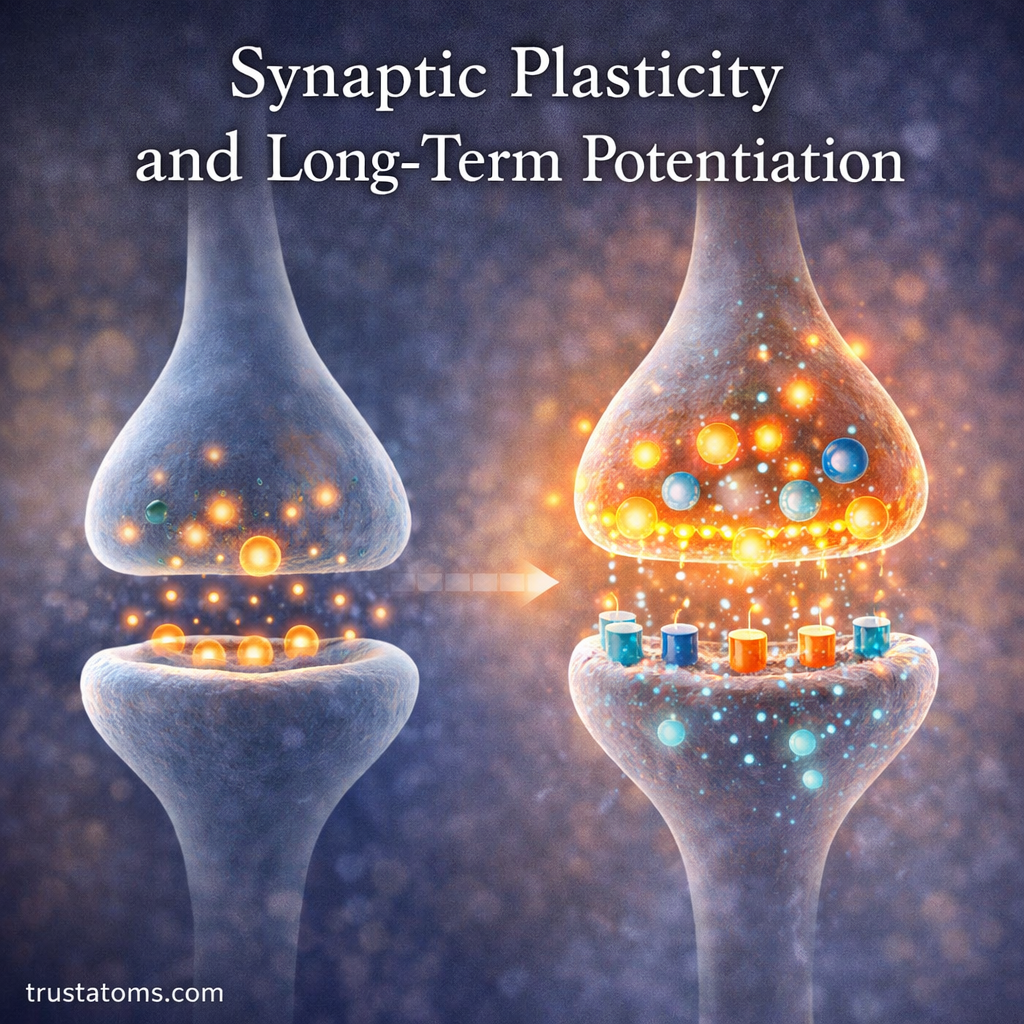
The human brain is constantly changing. Every time you learn a new skill, remember a fact, or adapt to an experience, your brain is physically reshaping itself. This ability is known as synaptic plasticity, and one of its most important mechanisms is long-term potentiation (LTP).
Together, these processes form the biological foundation of learning and memory.
What Is Synaptic Plasticity?
Synaptic plasticity refers to the brain’s ability to strengthen or weaken connections between neurons, known as synapses.
These changes occur in response to:
- Experience
- Learning
- Repetition
- Environmental input
Rather than being fixed, neural connections are dynamic and adaptable throughout life.
Why Synaptic Plasticity Matters
Synaptic plasticity is essential for:
- Learning new information
- Forming memories
- Adapting to new environments
- Recovering from brain injury
Without it, the brain would not be able to store experiences or improve performance over time.
What Is Long-Term Potentiation (LTP)?
Long-term potentiation is a lasting increase in the strength of synaptic connections following repeated stimulation.
In simple terms:
Neurons that fire together become stronger together.
This strengthening allows signals to pass more efficiently between neurons, making it easier to recall information or perform learned tasks.
How Long-Term Potentiation Works
LTP occurs through a series of cellular and chemical changes at the synapse.
Step-by-Step Process
- A neuron repeatedly stimulates another neuron
- Neurotransmitters (like glutamate) are released
- Receptors on the receiving neuron become more responsive
- More ion channels open, strengthening the signal
- The connection becomes more efficient over time
As a result, the pathway becomes easier to activate in the future.
Key Structures Involved in LTP
Hippocampus
The hippocampus is a critical brain region for memory formation and is one of the primary sites where LTP occurs.
It helps:
- Convert short-term memories into long-term memories
- Strengthen neural pathways through repetition
- Organize and store information
Synapses
LTP occurs specifically at synapses, where neurons communicate.
Changes at synapses include:
- Increased neurotransmitter release
- Greater receptor sensitivity
- Structural changes (more connections or stronger links)
NMDA and AMPA Receptors
Two key receptor types are involved in LTP:
- NMDA receptors – detect repeated stimulation and allow calcium entry
- AMPA receptors – increase responsiveness to neurotransmitters
Together, they enable the strengthening of synaptic connections.
Long-Term Potentiation vs. Long-Term Depression
While LTP strengthens connections, the brain also uses long-term depression (LTD) to weaken them.
Key Differences
- LTP → strengthens synapses
- LTD → weakens synapses
This balance allows the brain to:
- Remove unnecessary connections
- Refine neural networks
- Improve efficiency
Both processes are essential for healthy brain function.
Role of Repetition and Practice
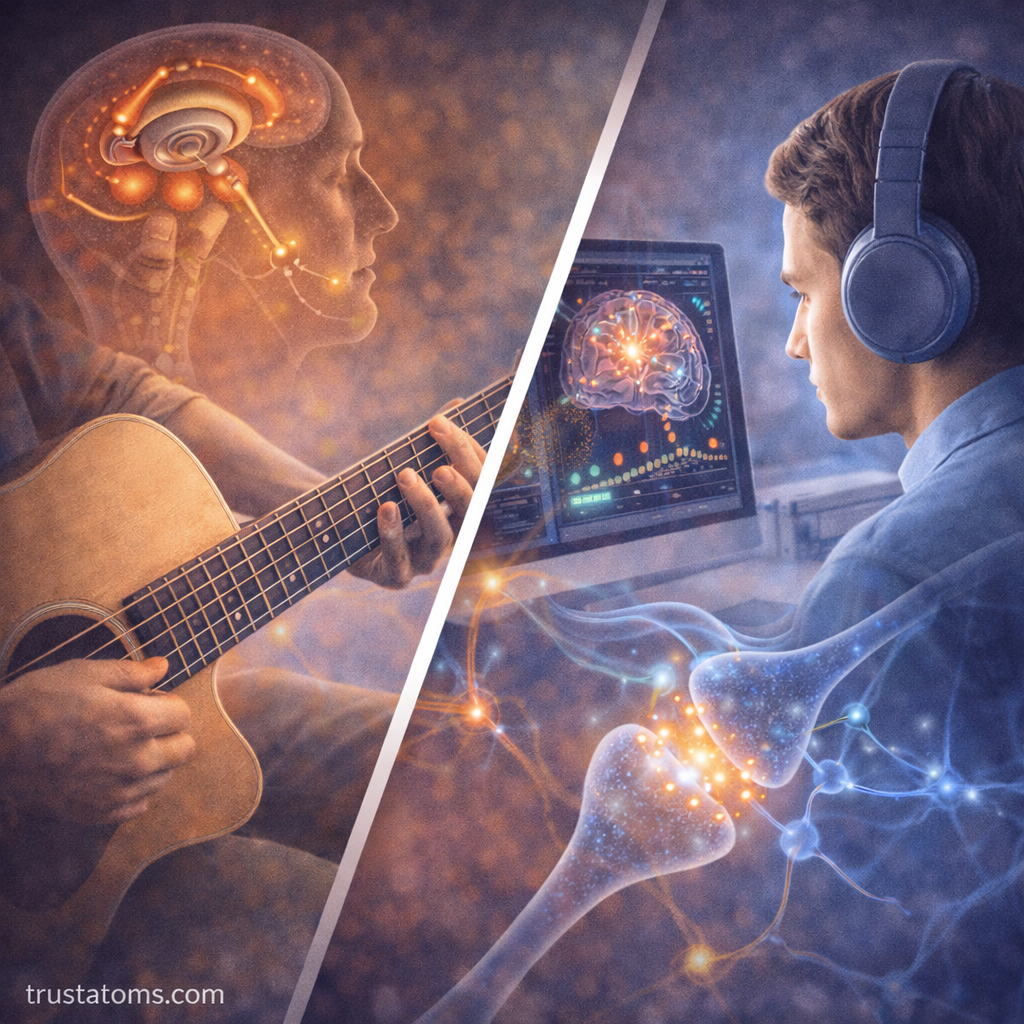
Repetition is a key driver of synaptic plasticity and LTP.
Examples include:
- Practicing a musical instrument
- Studying for an exam
- Repeating physical movements in sports
With repetition:
- Neural pathways become stronger
- Signals travel faster
- Tasks require less effort
This is why consistent practice leads to mastery.
Synaptic Plasticity and Memory Formation
Memory formation relies heavily on LTP.
Types of Memory Affected
- Short-term memory – temporary and less stable
- Long-term memory – strengthened through LTP
The more frequently a memory is accessed or reinforced, the stronger the associated neural connections become.
Structural Changes in the Brain
Synaptic plasticity can lead to physical changes in the brain, including:
- Growth of new synaptic connections
- Increased dendritic branching
- Strengthening of existing pathways
These structural changes reflect how learning literally reshapes the brain.
Synaptic Plasticity Across the Lifespan
While plasticity is strongest during early development, it continues throughout life.
Lifelong Adaptation
- Children: rapid learning and brain development
- Adults: continued learning and skill acquisition
- Aging: slower plasticity but still present
This lifelong adaptability allows humans to keep learning and adjusting.
Factors That Influence Synaptic Plasticity
Several factors can enhance or impair synaptic plasticity:
Positive Influences
- Regular learning and mental stimulation
- Physical exercise
- Quality sleep
- Healthy nutrition
Negative Influences
- Chronic stress
- Sleep deprivation
- Neurodegenerative conditions
- Lack of stimulation
Maintaining brain health supports stronger and more effective neural connections.
Clinical Relevance of LTP
Understanding synaptic plasticity and LTP is important in medicine and neuroscience.
Applications include:
- Treating memory disorders (e.g., Alzheimer’s disease)
- Rehabilitation after brain injury or stroke
- Enhancing learning and cognitive performance
Research continues to explore how these mechanisms can be influenced for better outcomes.
Key Takeaways
- Synaptic plasticity allows the brain to adapt and change
- Long-term potentiation strengthens neural connections
- Repetition and experience drive stronger synapses
- LTP plays a central role in learning and memory
- The brain remains adaptable throughout life
Final Thoughts
Synaptic plasticity and long-term potentiation are at the heart of how we learn, remember, and grow. Every experience leaves a trace in the brain, shaping connections that influence future behavior and understanding.
By strengthening important pathways and refining neural networks, the brain becomes more efficient over time. This remarkable adaptability is what allows humans to continuously learn and evolve throughout life.