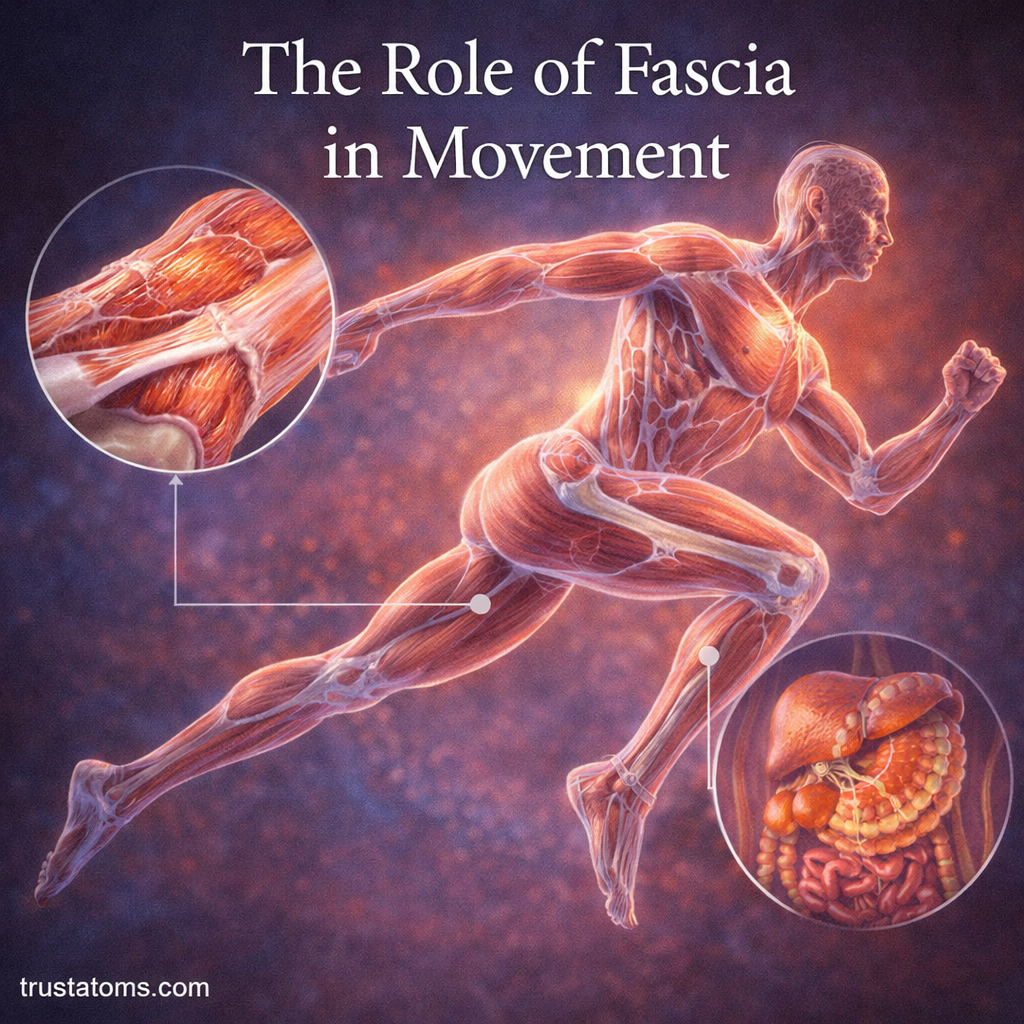
When most people think about movement, they focus on muscles, bones, and joints. However, an often-overlooked component plays a critical role in how the body moves: fascia.
Fascia is a connective tissue network that surrounds and links muscles, organs, and structures throughout the body. It not only supports movement but also helps coordinate force, stability, and flexibility.
What Is Fascia?
Fascia is a thin, fibrous connective tissue made primarily of collagen.
Key Characteristics
- Wraps around muscles, bones, nerves, and organs
- Forms a continuous, body-wide network
- Provides structure and support
- Transmits force between different parts of the body
Unlike isolated muscle groups, fascia connects everything into a functional system.
Types of Fascia
Fascia is not uniform—it exists in different forms depending on its function and location.
1. Superficial Fascia
- Located just beneath the skin
- Contains fat and connective tissue
- Helps with insulation and cushioning
2. Deep Fascia
- Surrounds muscles, bones, and joints
- Provides structural support
- Plays a key role in movement and force transmission
3. Visceral Fascia
- Surrounds internal organs
- Helps maintain organ position
- Allows organs to move smoothly
How Fascia Supports Movement
Fascia contributes to movement in ways that go beyond muscle contraction.
1. Force Transmission
Fascia helps transfer force across different parts of the body.
- Movement is not isolated to one muscle
- Force can spread through fascial connections
- Enables coordinated, full-body movement
Example
When you run, force generated in your legs can be distributed through fascia to support posture and balance.
2. Elastic Energy Storage
Fascia can store and release energy like a spring.
- During movement, fascia stretches
- It then recoils to assist motion
Why This Matters
- Improves efficiency
- Reduces energy cost
- Enhances athletic performance
3. Movement Coordination
Fascia links muscles into functional chains.
- Helps synchronize muscle activity
- Supports smooth, coordinated motion
- Reduces strain on individual muscles
Fascia and Flexibility
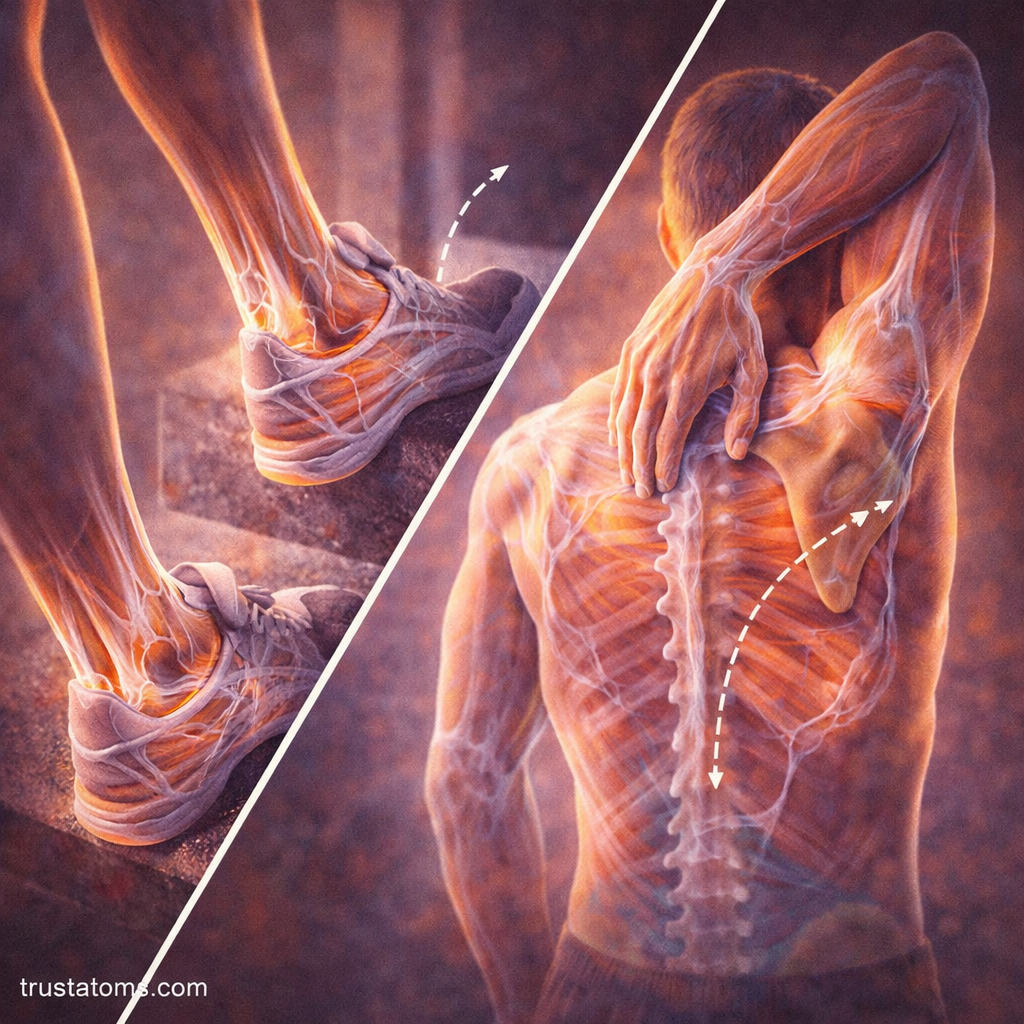
Fascia plays a major role in flexibility and range of motion.
Healthy Fascia
- Elastic and hydrated
- Allows smooth movement
- Supports full range of motion
Restricted Fascia
- Tight or stiff
- Limits movement
- Can contribute to discomfort or injury
Fascia and Posture
Fascia helps maintain body alignment.
How It Works
- Provides tension across the body
- Supports upright posture
- Distributes load evenly
Poor posture can lead to:
- Imbalanced fascial tension
- Movement inefficiency
- Increased strain on muscles and joints
Fascia and Injury
Fascial health affects injury risk and recovery.
When Fascia Is Healthy
- Absorbs and distributes stress
- Reduces localized strain
- Supports resilience
When Fascia Is Compromised
- Becomes stiff or restricted
- Limits movement
- Increases injury risk
Fascia in Everyday Movement
Fascia is involved in nearly all daily activities.
Examples
- Walking → fascial elasticity supports efficient motion
- Reaching → fascia helps coordinate multiple muscle groups
- Lifting → distributes force across the body
Factors That Affect Fascia Health
Several factors influence how well fascia functions.
1. Movement
- Regular movement keeps fascia flexible
- Lack of activity can lead to stiffness
2. Hydration
- Fascia relies on water for elasticity
- Dehydration can reduce flexibility
3. Repetitive Patterns
- Repeated movements can create imbalances
- May lead to restricted fascial areas
Improving Fascia Function
Maintaining healthy fascia supports better movement and performance.
Effective Strategies
- Stretching regularly
- Engaging in varied movement patterns
- Staying hydrated
- Using techniques like foam rolling
Common Misconceptions
“Fascia is just packing material”
False.
- Fascia plays an active role in movement and force transmission
“Only muscles control movement”
Not entirely.
- Fascia works with muscles to coordinate and enhance movement
Why Fascia Matters in Human Anatomy
Fascia is essential for:
- Efficient movement
- Force distribution
- Flexibility and mobility
- Injury prevention
It connects the body into a unified system, rather than isolated parts.
Final Thoughts
Fascia is a critical yet often overlooked component of movement. By linking muscles, storing energy, and coordinating motion, it plays a vital role in how the body performs everyday and athletic activities.
Understanding fascia provides a more complete picture of human movement—one that goes beyond muscles alone.