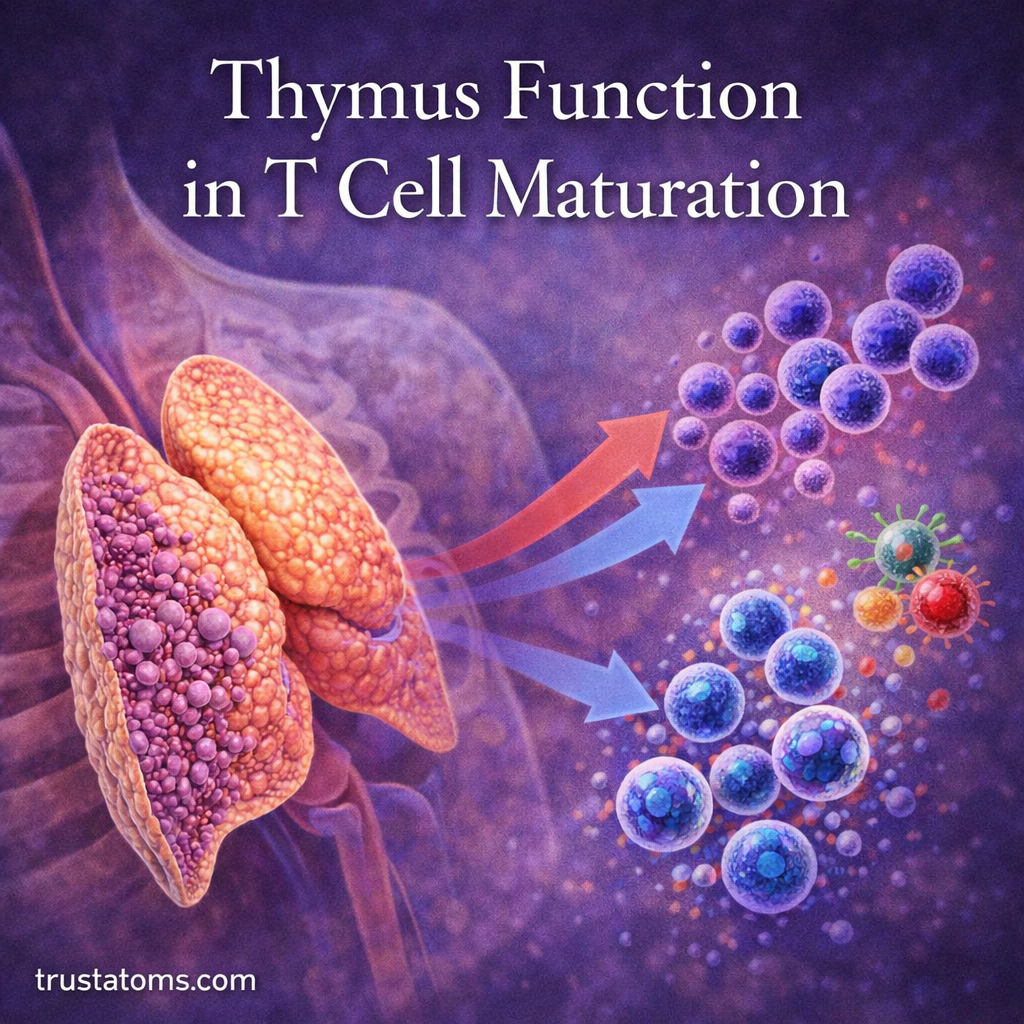
The thymus is a specialized organ of the immune system responsible for the development and maturation of T cells. Although relatively small and often overlooked, it plays a critical role in training immune cells to recognize threats while avoiding damage to the body’s own tissues.
Located in the upper chest, just behind the sternum, the thymus is most active during childhood and early adulthood.
What Is the Thymus?
The thymus is part of the lymphatic system and serves as the primary site where T lymphocytes (T cells) mature.
Key Characteristics
- Located between the lungs, behind the breastbone
- Composed of two lobes
- Largest and most active during childhood
- Gradually shrinks with age (a process called involution)
Despite shrinking over time, its early role is essential for long-term immune function.
What Are T Cells?
T cells are a type of white blood cell that play a central role in adaptive immunity.
Main Types of T Cells
- Helper T cells (CD4+)
- Coordinate immune responses
- Activate other immune cells
- Cytotoxic T cells (CD8+)
- Destroy infected or abnormal cells
- Regulatory T cells
- Prevent autoimmune responses
- Maintain immune balance
T cells are produced in the bone marrow but must mature in the thymus to become functional.
Structure of the Thymus
The thymus has a distinct internal organization that supports T cell development.
Key Regions
- Cortex
- Outer region
- Dense with immature T cells
- Site of early development
- Medulla
- Inner region
- Contains more mature T cells
- Site of final selection
This structure ensures that T cells develop in a controlled and efficient environment.
How T Cells Mature in the Thymus
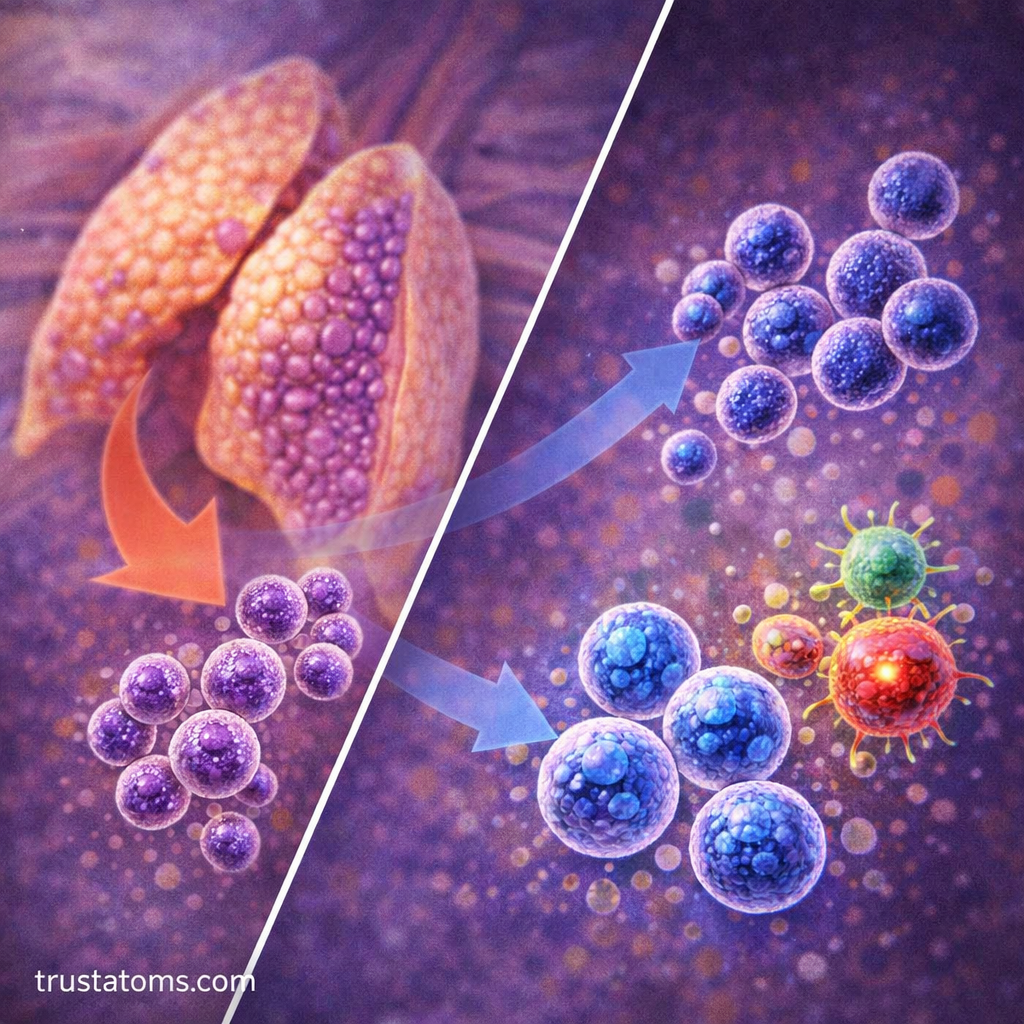
T cell maturation is a highly selective process designed to produce effective and safe immune cells.
Step-by-Step Process
- Immature T cells arrive from the bone marrow
- They enter the thymic cortex and begin development
- T cells are tested for their ability to recognize antigens (positive selection)
- T cells that react too strongly to self-antigens are eliminated (negative selection)
- Surviving T cells mature and exit into the bloodstream
Only a small percentage of T cells successfully complete this process.
Positive and Negative Selection
The thymus uses two key selection processes to ensure proper immune function.
Positive Selection
- Ensures T cells can recognize antigens presented by the body’s own cells
- T cells that fail this test are removed
Negative Selection
- Eliminates T cells that react strongly to the body’s own tissues
- Prevents autoimmune diseases
Together, these processes create a population of T cells that are both functional and safe.
Why the Thymus Shrinks with Age
The thymus gradually decreases in size after puberty, a process known as thymic involution.
Key Changes
- Functional tissue is replaced with fat
- T cell production slows down
- Existing T cells continue to provide immunity
Although the thymus becomes less active, the immune system retains memory from earlier development.
Role of the Thymus in Immune Health
The thymus is essential for building a strong and balanced immune system.
Key Functions
- Produces functional T cells
- Prevents autoimmune reactions
- Supports immune system coordination
- Establishes long-term immune memory
Without proper thymus function, the body would struggle to defend against infections safely.
What Happens If the Thymus Is Abnormal?
Problems with the thymus can affect immune development and function.
Possible Issues
- Congenital absence (e.g., DiGeorge syndrome)
- Reduced T cell production
- Increased susceptibility to infections
- Risk of autoimmune disorders
In some cases, thymus abnormalities may also be linked to conditions like myasthenia gravis.
Thymus vs. Bone Marrow
Both organs are essential for immune cell development but serve different roles.
Key Differences
- Bone marrow
- Produces all blood cells
- Origin of T cell precursors
- Thymus
- Matures and trains T cells
- Ensures immune tolerance
Together, they form a complete system for immune cell development.
Supporting Immune Development
While the thymus naturally changes over time, overall health supports immune function.
Helpful Practices
- Maintain a balanced diet
- Get adequate sleep
- Exercise regularly
- Manage stress levels
- Stay up to date with vaccinations
Why the Thymus Is Essential
The thymus is critical for:
- Developing functional T cells
- Preventing harmful immune responses
- Building a balanced immune system
- Supporting lifelong immunity
Even though it becomes less active with age, its early role has lasting effects.
Final Thoughts
The thymus is a key training center for the immune system, ensuring that T cells can effectively protect the body without causing harm. Through careful selection and maturation processes, it creates a powerful and precise defense system.
Understanding thymus function provides insight into how the body develops immunity and maintains internal balance throughout life.