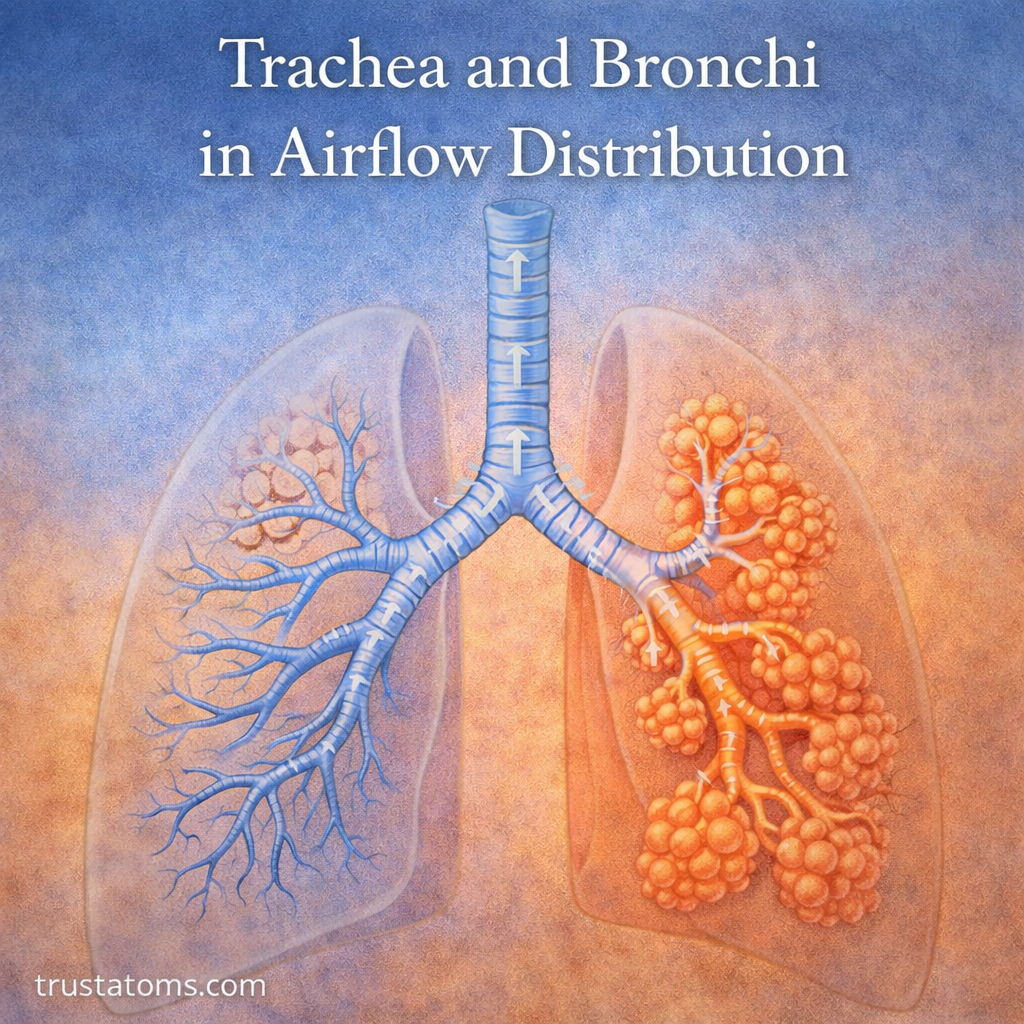
The trachea and bronchi play a central role in directing air from the upper respiratory tract into the lungs. These structures act as a branching airway system, ensuring that inhaled air is efficiently distributed to every part of the lungs.
Understanding how airflow moves through the trachea and bronchi provides insight into how the respiratory system supports breathing, oxygen delivery, and overall lung function.
Overview of Airflow Distribution
Airflow distribution refers to how air travels from the outside environment into the lungs and is evenly delivered to microscopic air sacs called alveoli.
This process depends on:
- Open and unobstructed airways
- Coordinated breathing mechanics
- Efficient branching of the airway system
The trachea and bronchi form the foundation of this distribution network.
The Structure of the Trachea
The trachea, also known as the windpipe, is a rigid tube that connects the larynx to the bronchi.
Key Features of the Trachea
- Approximately 10–12 cm long in adults
- Supported by C-shaped cartilage rings
- Lined with mucus-producing cells
- Contains tiny hair-like structures called cilia
Functions of the Trachea
The trachea is responsible for maintaining a clear and stable airway.
Primary Functions
- Conducts air to and from the lungs
- Keeps the airway open with cartilage support
- Filters particles using mucus
- Moves trapped debris upward via cilia (mucociliary clearance)
This ensures that air entering the lungs is cleaner and safer.
The Bronchi: Branching Airways
At the lower end of the trachea, the airway splits into two primary bronchi—one leading to each lung.
Types of Bronchi
- Primary bronchi: Enter each lung
- Secondary bronchi: Branch into lung lobes
- Tertiary bronchi: Further divide into smaller segments
This branching pattern continues into smaller airways called bronchioles.
Functions of the Bronchi
The bronchi are responsible for distributing air throughout the lungs.
Key Roles
- Direct airflow into different lung regions
- Regulate airflow using smooth muscle
- Continue filtering air with mucus and cilia
- Maintain airway structure with cartilage
This system ensures that air reaches all areas of the lungs efficiently.
How Airflow Moves Through the Trachea and Bronchi
Airflow follows a structured path through the respiratory system.
Step-by-Step Airflow Path
- Air enters through the nose or mouth
- Passes through the pharynx and larynx
- Travels down the trachea
- Splits into the primary bronchi
- Continues through smaller bronchi and bronchioles
- Reaches alveoli for gas exchange
This organized pathway allows for even distribution of air.
Airflow Regulation in the Bronchi
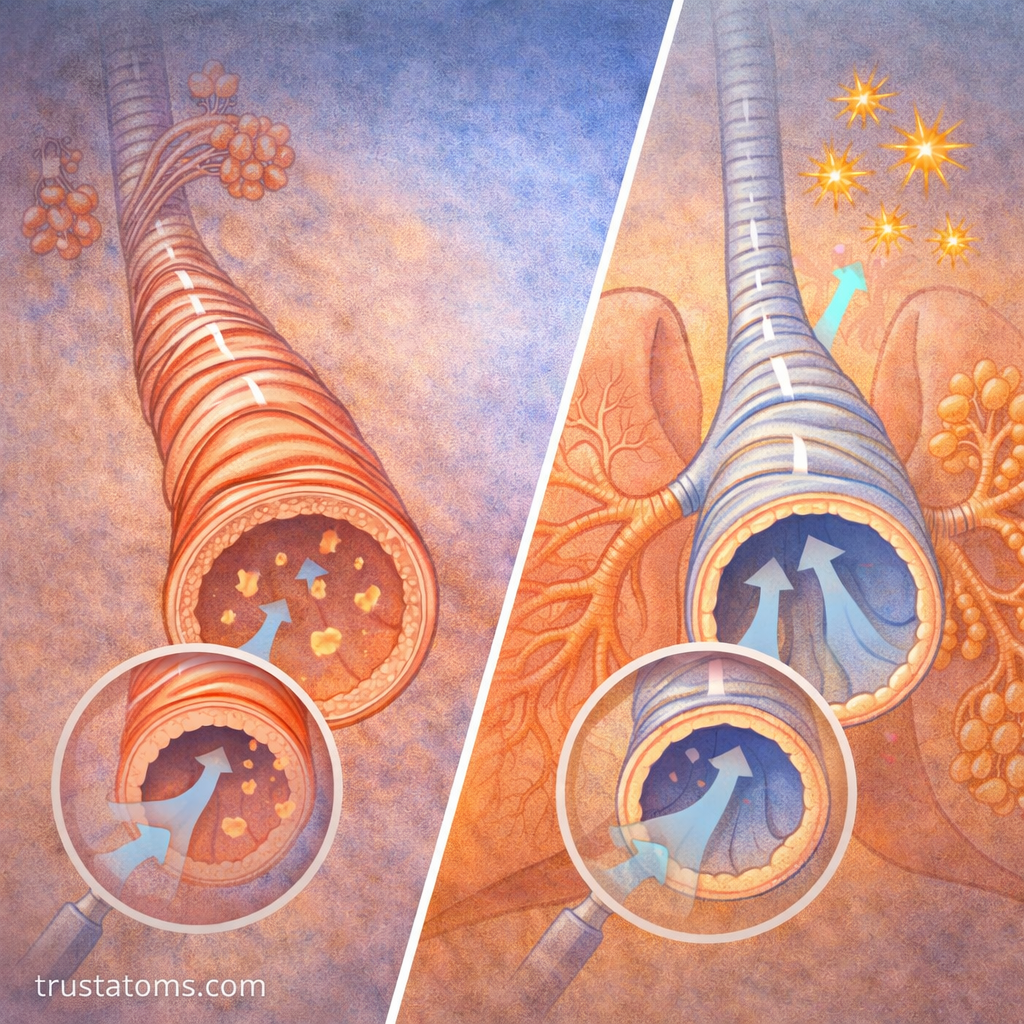
The bronchi are not just passive tubes—they actively regulate airflow.
Mechanisms of Control
- Smooth muscle contraction narrows airways (bronchoconstriction)
- Smooth muscle relaxation widens airways (bronchodilation)
- Nervous system signals adjust airway diameter
- Chemical signals (e.g., inflammation) can alter airflow
This regulation helps the body adapt to different conditions, such as exercise or exposure to irritants.
Importance of Mucus and Cilia
Both the trachea and bronchi are lined with mucus and cilia that work together to protect the lungs.
How This System Works
- Mucus traps dust, bacteria, and pollutants
- Cilia move mucus upward toward the throat
- Debris is swallowed or expelled
This process is known as the mucociliary escalator.
Factors That Affect Airflow Distribution
Several factors can influence how air moves through the trachea and bronchi.
1. Airway Diameter
- Narrow airways restrict airflow
- Wider airways improve airflow
2. Lung Elasticity
- Healthy lungs expand easily
- Reduced elasticity affects airflow distribution
3. Mucus Production
- Excess mucus can block airways
- Balanced mucus protects without obstruction
4. Inflammation
- Swelling narrows airways
- Common in respiratory diseases
Common Conditions Affecting the Trachea and Bronchi
Problems in these airways can significantly impact breathing.
Examples Include:
- Asthma: Airway narrowing and inflammation
- Bronchitis: Inflammation of the bronchi
- Tracheitis: Inflammation of the trachea
- Chronic obstructive pulmonary disease (COPD): Persistent airflow limitation
These conditions can disrupt airflow and reduce oxygen delivery.
Why Airflow Distribution Matters
Efficient airflow distribution is essential for:
- Delivering oxygen evenly throughout the lungs
- Maximizing gas exchange in alveoli
- Maintaining respiratory efficiency
- Supporting physical activity and endurance
Any disruption in this system can lead to breathing difficulties and reduced performance.
Final Thoughts
The trachea and bronchi form a highly organized airway network that ensures air is properly distributed throughout the lungs. From maintaining open airways to regulating airflow and filtering particles, these structures are essential for healthy breathing.
Understanding their role highlights the importance of keeping airways clear and functioning properly to support overall respiratory health.