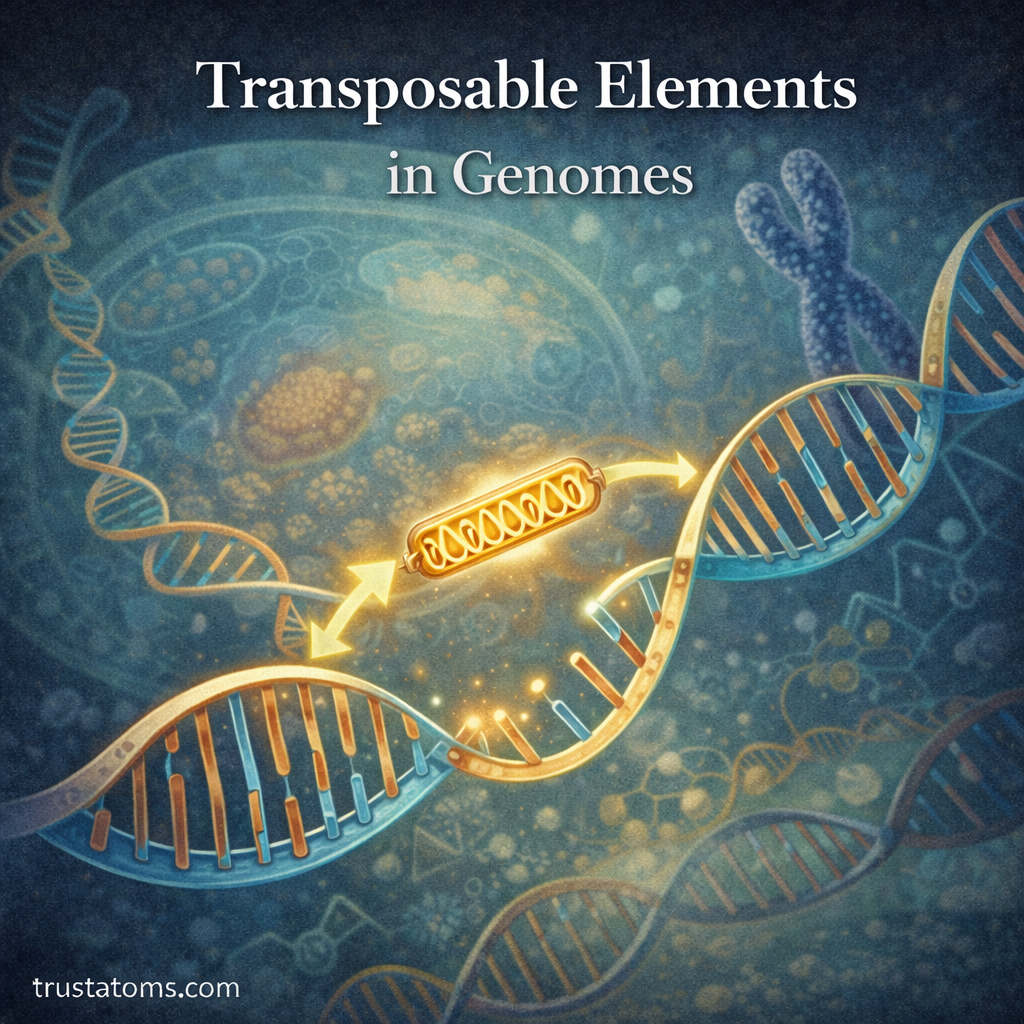
Genomes are not static collections of genes. Instead, they are dynamic systems where certain DNA sequences can move from one location to another. These mobile genetic sequences are known as transposable elements, sometimes referred to as “jumping genes.”
Transposable elements are found in the genomes of nearly all organisms, including bacteria, plants, animals, and humans. They can influence gene regulation, genome evolution, and genetic diversity. While once considered “junk DNA,” scientists now understand that transposable elements play important roles in shaping genome structure and function.
This article explores what transposable elements are, how they move within genomes, and their impact on biology and evolution.
What Are Transposable Elements?
Transposable elements are DNA sequences that can change their position within a genome. When they move, they can insert themselves into new locations in the DNA.
This movement is called transposition.
Transposable elements can:
- Insert into new genomic regions
- Duplicate themselves during movement
- Influence nearby genes
- Alter genome structure
These mobile sequences were first discovered in the 1940s by geneticist Barbara McClintock, who observed unusual genetic patterns in maize (corn). Her work later earned a Nobel Prize and fundamentally changed how scientists understand genome organization.
Types of Transposable Elements
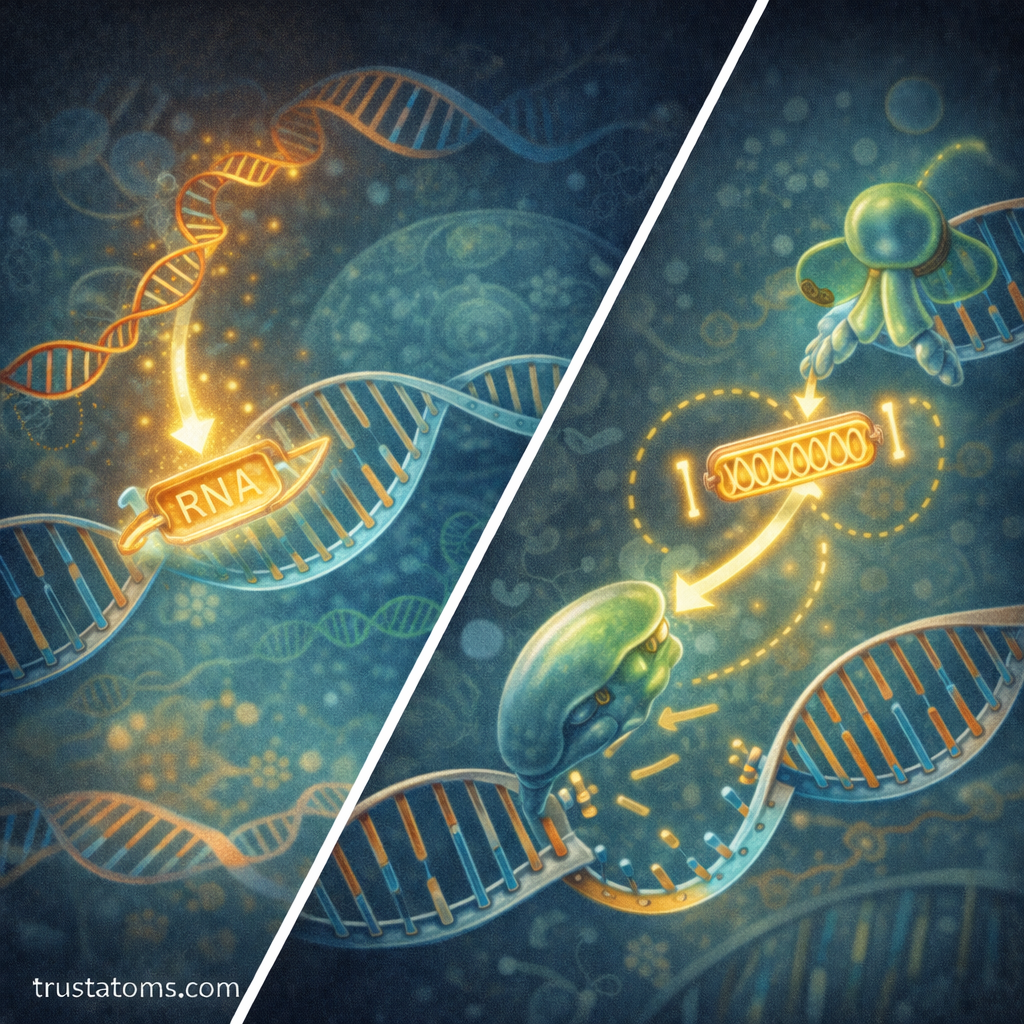
Transposable elements fall into two main categories based on how they move within the genome.
DNA Transposons
DNA transposons move using a cut-and-paste mechanism.
In this process:
- The transposon is cut out of its original location.
- It moves to a new position in the genome.
- Specialized enzymes insert the sequence into the new site.
DNA transposons rely on enzymes called transposases, which recognize specific sequences and catalyze the movement.
Key features of DNA transposons include:
- Direct DNA movement without RNA intermediates
- Short terminal repeat sequences at their ends
- Enzymatic machinery for transposition
Many DNA transposons are inactive in modern genomes, but they remain as remnants of past genetic activity.
Retrotransposons
Retrotransposons move using a copy-and-paste mechanism that involves RNA.
The process occurs in several steps:
- The DNA sequence is transcribed into RNA.
- The RNA is converted back into DNA.
- The new DNA copy inserts into another genomic location.
Because retrotransposons replicate themselves during movement, they can rapidly increase their number within the genome.
Retrotransposons are extremely common and include several types:
- Long terminal repeat (LTR) retrotransposons
- Long interspersed nuclear elements (LINEs)
- Short interspersed nuclear elements (SINEs)
In the human genome, retrotransposons make up a significant portion of total DNA.
How Common Are Transposable Elements?
Transposable elements are widespread in the genomes of many organisms.
Approximate proportions of genomes composed of transposable elements include:
- Humans: ~45% of the genome
- Maize: up to 80–90%
- Fruit flies: about 20%
- Many plants: often more than 50%
Although many of these elements are no longer active, their historical activity has shaped genome size and structure.
Effects of Transposable Elements on Genes
When transposable elements insert into new genomic locations, they can influence genes in several ways.
Gene Disruption
If a transposable element inserts within a gene, it may disrupt the gene’s normal function.
Possible outcomes include:
- Loss of gene activity
- Altered protein production
- Changes in cellular processes
Such insertions can sometimes cause genetic diseases.
Gene Regulation
Transposable elements can also affect how genes are regulated.
Some elements contain regulatory sequences that influence nearby genes by:
- Activating gene expression
- Repressing transcription
- Altering promoter activity
In some cases, these regulatory changes may benefit the organism by introducing new gene expression patterns.
Genome Rearrangements
Transposable elements can also contribute to structural changes in genomes.
Their activity may lead to:
- DNA duplications
- Deletions
- Chromosomal rearrangements
- Gene copy expansion
These changes can generate genetic variation that contributes to evolutionary adaptation.
Transposable Elements and Evolution
Transposable elements play a major role in genome evolution.
Because they move and replicate within genomes, they create opportunities for genetic innovation.
Generation of Genetic Diversity
Transposable elements introduce mutations and rearrangements that increase genetic variation.
This diversity provides raw material for natural selection.
Over time, beneficial changes may become fixed in populations.
Evolution of New Genes
Sometimes transposable elements contribute to the creation of new genes.
This can happen when:
- A transposable element carries regulatory sequences that activate nearby DNA
- DNA fragments from transposable elements are incorporated into functional genes
- Gene duplication events occur through transposition
These processes can lead to new biological functions.
Regulatory Innovation
Many regulatory elements in modern genomes originated from ancient transposable elements.
Researchers have found that some transposable element sequences now function as:
- Gene promoters
- Enhancers
- Transcription factor binding sites
These regulatory roles help control when and where genes are expressed.
Cellular Defense Against Transposable Elements
Because uncontrolled transposition can damage the genome, cells have evolved mechanisms to limit their activity.
DNA Methylation
Cells often silence transposable elements by adding chemical modifications to their DNA.
DNA methylation prevents these sequences from being actively transcribed.
RNA Interference
Cells can also suppress transposable elements through RNA-based defense systems.
Small RNA molecules recognize transposable element transcripts and block their activity.
This mechanism helps prevent excessive transposition.
Chromatin Regulation
Some transposable elements are packaged into tightly condensed chromatin regions.
This structure prevents them from being accessed by transcription machinery.
Together, these defenses help maintain genome stability.
Applications in Biotechnology and Genetics
Transposable elements have become valuable tools in genetic research and biotechnology.
Genetic Engineering
Scientists use modified transposable elements to insert genes into genomes for research purposes.
These systems allow researchers to:
- Study gene function
- Create transgenic organisms
- Investigate genetic regulation
Gene Therapy Research
Some transposon-based systems are being explored for medical gene delivery.
These systems may provide safer alternatives for introducing therapeutic genes into human cells.
Genome Annotation
Transposable elements also help scientists identify evolutionary relationships between species.
Comparing transposable element patterns across genomes can reveal:
- Evolutionary history
- Species divergence
- Genome expansion events
Challenges in Studying Transposable Elements
Despite extensive research, transposable elements remain difficult to study.
Genome Complexity
Because transposable elements often occur in repeated sequences, they can be difficult to analyze with traditional sequencing methods.
Inactive Remnants
Many transposable elements are ancient and inactive, making it challenging to determine their historical activity.
Dynamic Activity
Some elements become active only under certain conditions, such as stress or environmental changes.
This variability complicates experimental studies.
Future Research Directions
Advances in genomics and computational biology are helping scientists better understand transposable elements.
Emerging research areas include:
- High-resolution genome sequencing technologies
- AI-based analysis of repetitive DNA sequences
- Understanding transposon roles in gene regulation
- Studying transposable elements in disease development
As research progresses, scientists continue discovering new ways that these mobile DNA sequences influence genomes.
Final Thoughts
Transposable elements are a fundamental component of genomes. Although once dismissed as nonfunctional DNA, they are now recognized as important contributors to genome structure, gene regulation, and evolutionary change.
By moving within genomes and influencing genetic organization, transposable elements help drive biological diversity and adaptation. Continued research into these mobile sequences will deepen our understanding of genome evolution and the complex mechanisms that shape life.