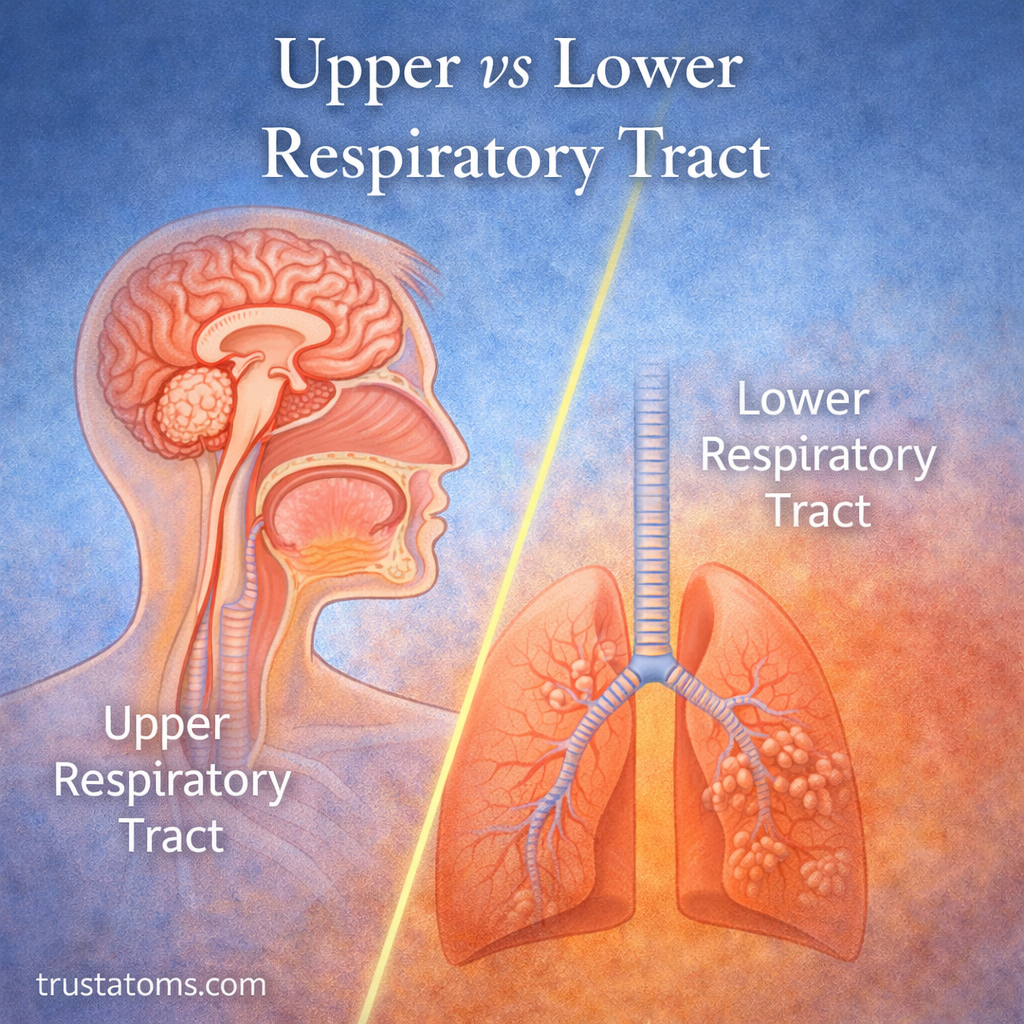
The respiratory system is divided into two main sections: the upper respiratory tract and the lower respiratory tract. Together, these structures work to move air in and out of the body, filter harmful particles, and enable gas exchange.
Understanding the differences between these two regions helps clarify how breathing works and how various respiratory conditions develop.
Overview of the Respiratory Tract
The respiratory tract is a continuous system of airways that begins at the nose and ends deep within the lungs.
It is divided into:
- Upper respiratory tract: Air entry, filtering, and conditioning
- Lower respiratory tract: Air conduction and gas exchange
Each part plays a specialized role in supporting efficient breathing.
What Is the Upper Respiratory Tract?
The upper respiratory tract includes the structures that air passes through before reaching the lungs.
Main Components
- Nose and nasal cavity
- Sinuses
- Pharynx (throat)
- Larynx (voice box)
Functions of the Upper Respiratory Tract
The upper respiratory tract prepares incoming air before it reaches the lungs.
Key Functions
- Filters dust, bacteria, and particles using mucus and hair
- Warms incoming air to body temperature
- Moistens air to protect lung tissue
- Enables speech through the larynx
- Provides the sense of smell
This preparation is essential for protecting delicate lung structures.
What Is the Lower Respiratory Tract?
The lower respiratory tract includes the structures responsible for moving air into the lungs and exchanging gases.
Main Components
- Trachea (windpipe)
- Bronchi
- Bronchioles
- Alveoli (air sacs)
- Lungs
Functions of the Lower Respiratory Tract
The lower respiratory tract is where oxygen and carbon dioxide exchange occurs.
Key Functions
- Conducts air deeper into the lungs
- Distributes air through branching airways
- Facilitates gas exchange in alveoli
- Supplies oxygen to the bloodstream
- Removes carbon dioxide from the body
This region is critical for sustaining life.
Key Differences Between Upper and Lower Respiratory Tract
Understanding the distinctions between these two regions helps explain their roles and vulnerabilities.
Structural Differences
- Upper tract: Located above the trachea
- Lower tract: Located from the trachea down into the lungs
Functional Differences
- Upper tract: Air conditioning and protection
- Lower tract: Gas exchange and oxygen delivery
Exposure to Environment
- Upper tract: Direct exposure to outside air
- Lower tract: More protected and internal
How the Two Systems Work Together
The upper and lower respiratory tracts function as a coordinated system.
Step-by-Step Airflow
- Air enters through the nose or mouth
- Filtered and warmed in the upper tract
- Travels through the larynx and trachea
- Moves into bronchi and bronchioles
- Reaches alveoli for gas exchange
This seamless process ensures efficient breathing and oxygen delivery.
Common Conditions Affecting Each Region
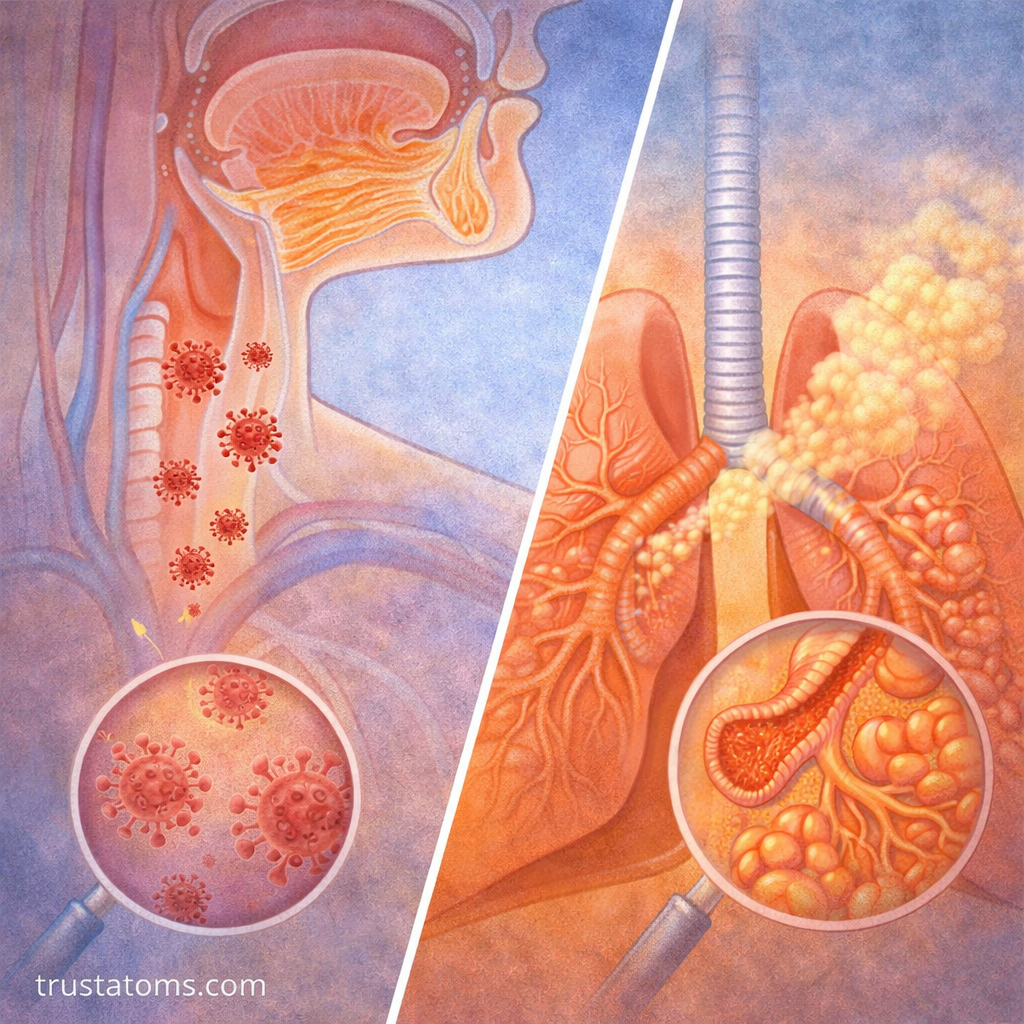
Different parts of the respiratory tract are affected by different conditions.
Upper Respiratory Tract Conditions
- Common cold
- Sinusitis
- Allergies
- Pharyngitis
Lower Respiratory Tract Conditions
- Bronchitis
- Pneumonia
- Asthma
- Chronic obstructive pulmonary disease (COPD)
Recognizing where a condition occurs helps guide treatment.
Why This Distinction Matters
Separating the respiratory system into upper and lower sections is important for:
- Diagnosing respiratory illnesses
- Understanding symptoms (e.g., cough vs. nasal congestion)
- Targeting treatments effectively
- Studying how infections spread
It also helps healthcare providers communicate more clearly about respiratory health.
Everyday Examples of Upper vs Lower Function
You can observe these systems in action during daily life.
Examples
- Breathing cold air: Upper tract warms it
- Sneezing: Upper tract removes irritants
- Deep breathing: Lower tract expands lung capacity
- Exercise: Lower tract increases oxygen exchange
Each part adapts to support your body’s needs.
Final Thoughts
The upper and lower respiratory tracts work together to ensure efficient breathing, protect against harmful particles, and maintain proper gas exchange. While the upper tract focuses on filtering and conditioning air, the lower tract handles the critical task of oxygen delivery and carbon dioxide removal.
Understanding this division provides a clearer picture of how the respiratory system functions and why maintaining respiratory health is essential.