The human body relies on efficient nutrient absorption to maintain energy, growth, and overall health. At the center of this process are villi and microvilli, tiny structural adaptations in the small intestine that dramatically increase the surface area available for absorption.
Without these specialized features, the body would struggle to absorb enough nutrients from food.
What Are Villi?
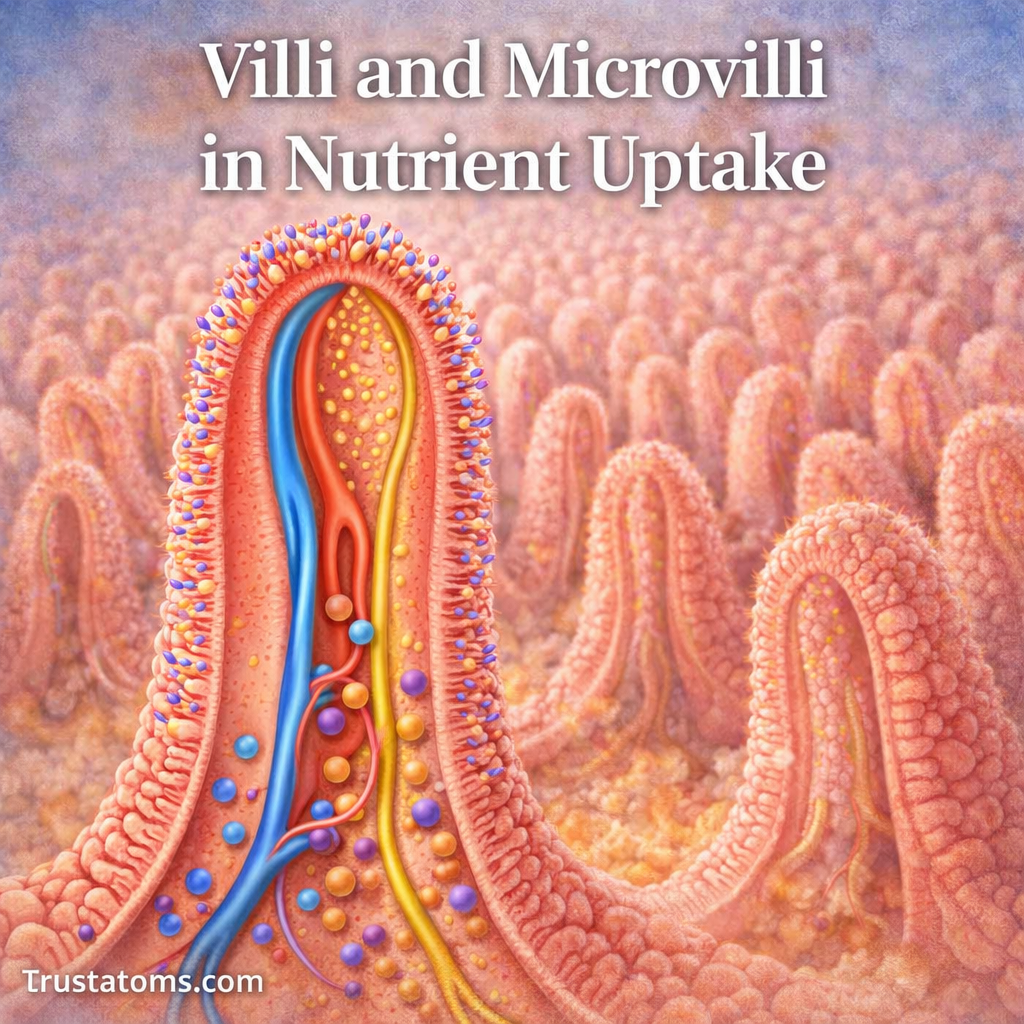
Villi are small, finger-like projections that line the inner surface of the small intestine.
Key Characteristics of Villi
- Microscopic but visible under magnification
- Covered in epithelial cells
- Contain blood vessels and lymphatic vessels (lacteals)
- Increase surface area for absorption
Each villus acts like a tiny absorption unit, helping move nutrients from the digestive tract into circulation.
What Are Microvilli?
Microvilli are even smaller projections located on the surface of the epithelial cells that cover each villus.
Key Features of Microvilli
- Form the brush border
- Greatly expand the surface area beyond villi alone
- Contain digestive enzymes
- Directly involved in final stages of digestion
Together, villi and microvilli create a highly efficient system for nutrient uptake.
How Surface Area Enhances Absorption
The small intestine is designed to maximize contact between nutrients and absorptive surfaces.
Surface Area Adaptations Include:
- Circular folds (plicae circulares)
- Villi (finger-like projections)
- Microvilli (cellular extensions)
This layered structure increases the surface area to an enormous scale—often compared to the size of a tennis court.
Structure of a Villus
Each villus is more than just a projection—it contains specialized components that support absorption.
Inside a Villus:
- Capillaries: Absorb sugars and amino acids
- Lacteal (lymph vessel): Absorbs fats
- Epithelial cells: Form the outer surface with microvilli
- Connective tissue: Provides structure and support
This design allows multiple types of nutrients to be absorbed simultaneously.
How Nutrients Are Absorbed
Nutrient absorption occurs through the combined action of villi and microvilli.
Step-by-Step Process
- Digested nutrients reach the small intestine
- Nutrients come into contact with microvilli
- Enzymes on the brush border complete digestion
- Nutrients pass through epithelial cells
- Nutrients enter blood or lymph vessels
This process ensures rapid and efficient nutrient uptake.
Types of Nutrients Absorbed
Different nutrients follow different absorption pathways.
Carbohydrates
- Absorbed as simple sugars (e.g., glucose)
- Enter capillaries and travel to the liver
Proteins
- Absorbed as amino acids
- Transported through the bloodstream
Fats
- Absorbed as fatty acids and glycerol
- Enter lacteals and move through the lymphatic system
Vitamins and Minerals
- Absorbed through specialized transport mechanisms
- Some require specific regions of the intestine
Role of the Brush Border
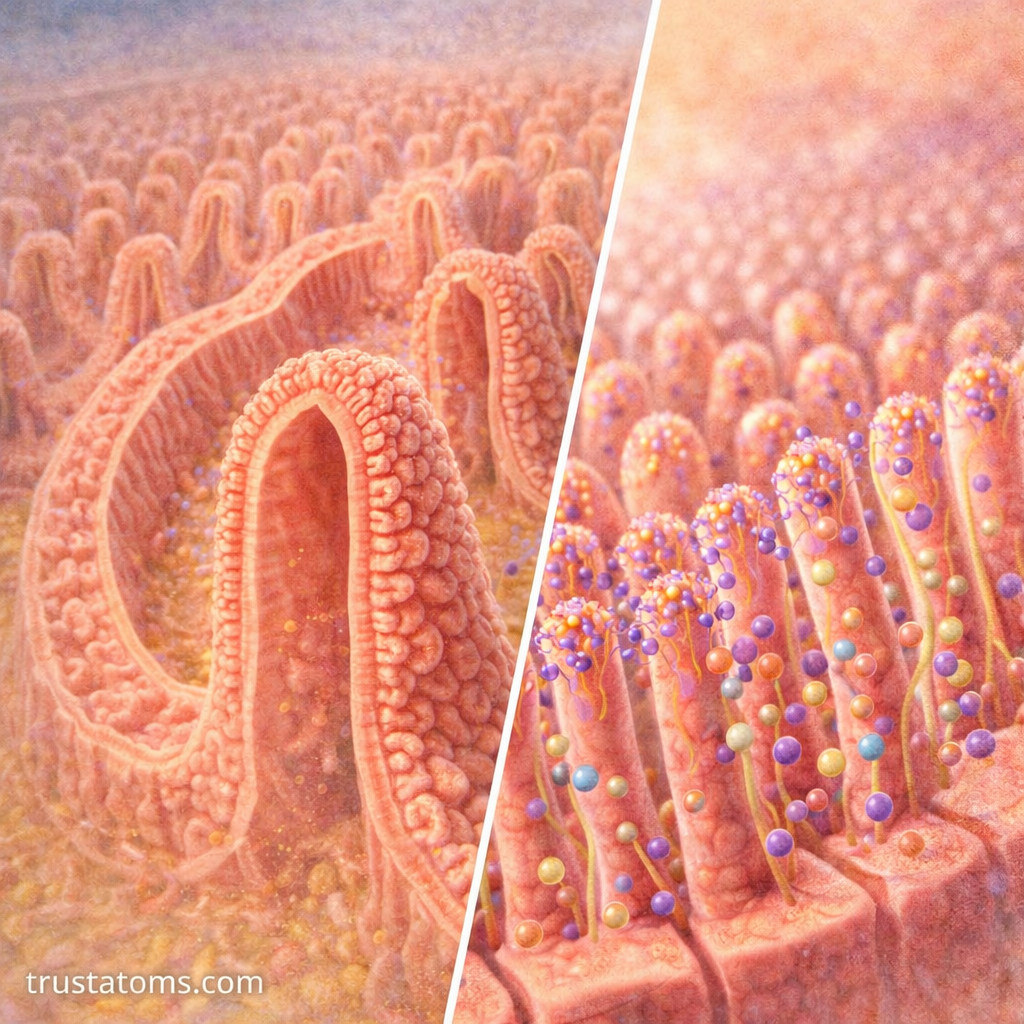
The brush border is formed by densely packed microvilli and plays a critical role in digestion and absorption.
Functions of the Brush Border
- Houses enzymes that complete digestion
- Facilitates direct nutrient absorption
- Increases efficiency of nutrient transfer
Without the brush border, many nutrients would remain only partially digested.
Why Villi and Microvilli Are Essential
These structures are crucial for maintaining proper nutrition.
They:
- Maximize nutrient absorption
- Speed up digestion
- Ensure efficient transfer into circulation
- Support overall metabolic function
Even small damage to these structures can significantly impact health.
Conditions That Affect Villi and Microvilli
Certain conditions can damage or reduce the effectiveness of these structures.
Common Examples:
- Celiac disease (damage to villi from gluten response)
- Intestinal infections
- Inflammatory disorders
Damage to villi reduces surface area, leading to poor nutrient absorption and deficiencies.
Key Takeaways
- Villi and microvilli are essential for nutrient absorption in the small intestine.
- They dramatically increase surface area for efficient digestion.
- Microvilli form the brush border, where final digestion occurs.
- Different nutrients are absorbed through specific pathways.
- Healthy villi are critical for proper nutrition and overall health.
Understanding these microscopic structures highlights how the body efficiently converts food into usable nutrients.