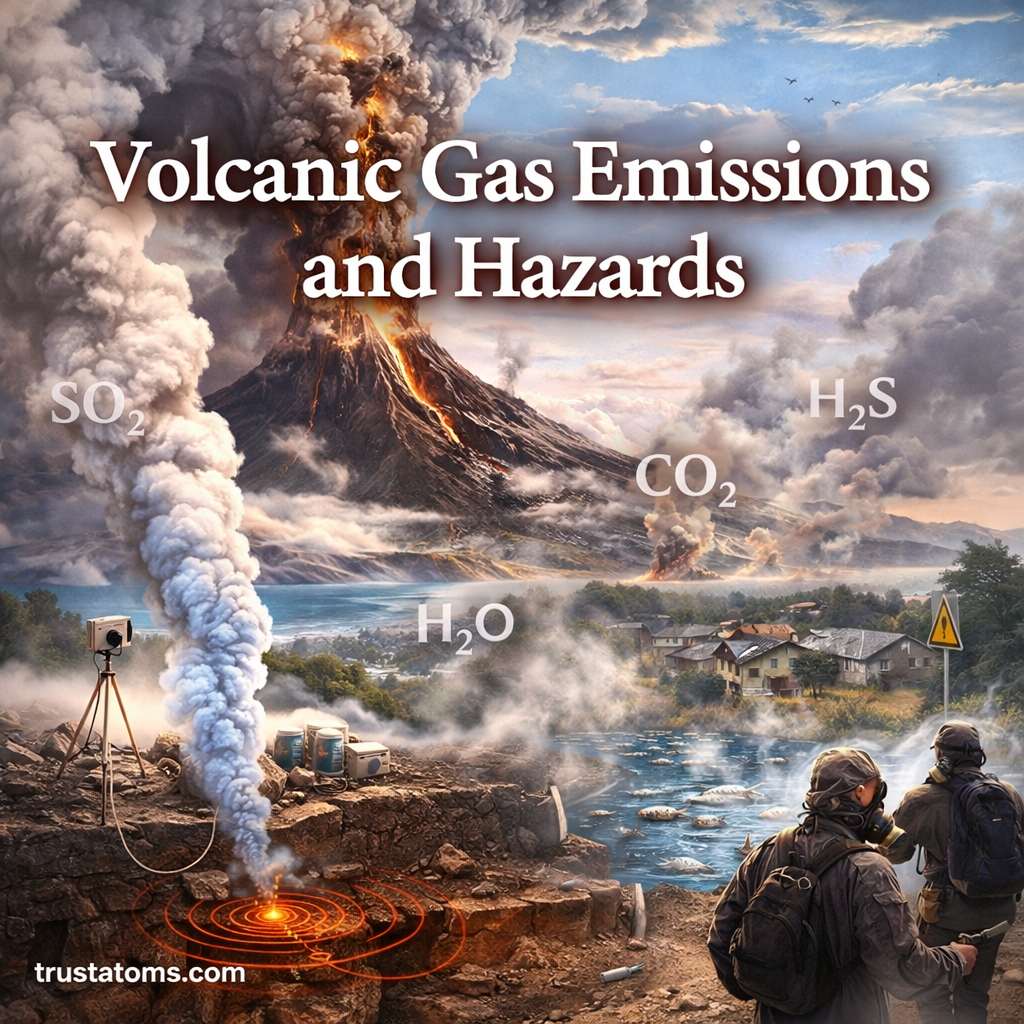
Volcanoes are often associated with lava and explosive eruptions, but one of their most dangerous and overlooked features is the release of volcanic gases. These gases can affect air quality, climate, and human health—even when a volcano is not actively erupting.
Understanding volcanic gas emissions is essential for assessing volcanic hazards and protecting nearby communities.
What Are Volcanic Gas Emissions?
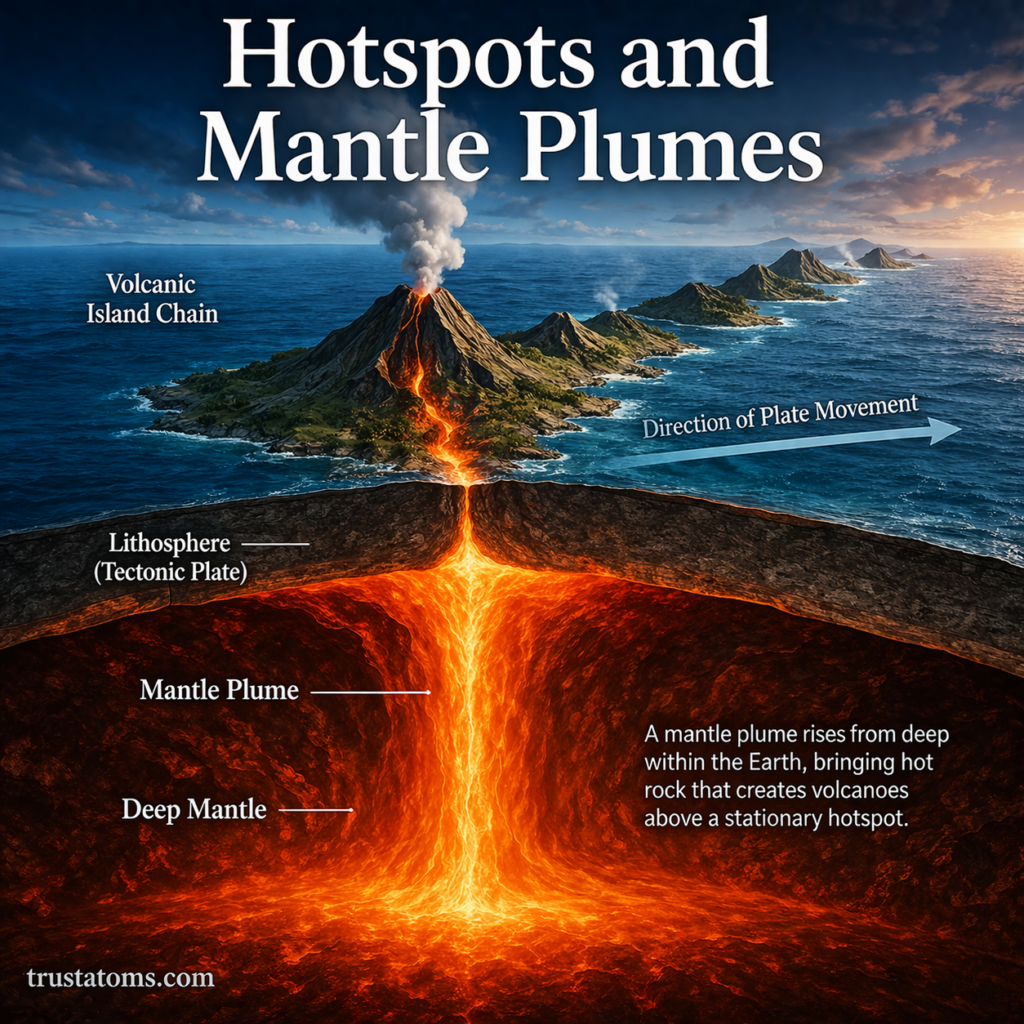
Volcanic gas emissions are gases released from magma beneath Earth’s surface. As magma rises, pressure decreases, allowing dissolved gases to escape into the atmosphere.
These gases can be released:
- During volcanic eruptions
- Through cracks and vents (fumaroles)
- From soil and groundwater near volcanoes
Even dormant volcanoes can emit gases continuously.
Common Types of Volcanic Gases
Volcanic gases vary in composition, but several are especially important due to their impact.
Water Vapor (H₂O)
- The most abundant volcanic gas
- Generally not harmful on its own
- Plays a role in cloud formation and climate
Carbon Dioxide (CO₂)
- Colorless and odorless
- Can accumulate in low-lying areas
- Displaces oxygen and poses suffocation risks
Sulfur Dioxide (SO₂)
- Produces a sharp, irritating smell
- Can form acid rain when combined with water
- Irritates lungs and eyes
Hydrogen Sulfide (H₂S)
- Smells like rotten eggs
- Toxic at high concentrations
- Can damage the nervous system
Other Gases
- Hydrogen (H₂)
- Carbon monoxide (CO)
- Hydrochloric acid (HCl)
These gases can vary depending on the volcano and magma composition.
How Volcanic Gases Are Released
Volcanic gases escape through several pathways:
Eruptions
- Large amounts released rapidly
- Can spread gases over wide areas
Fumaroles
- Openings in the ground that emit steam and gases
- Often found near active or dormant volcanoes
Diffuse Emissions
- Gases seep slowly through soil and rock
- Can accumulate without visible warning
Hazards of Volcanic Gas Emissions
Volcanic gases pose serious risks to both people and the environment.
Health Hazards
- Breathing difficulties and lung damage
- Eye and skin irritation
- Suffocation in areas with high CO₂ levels
Environmental Impacts
- Acid rain damaging plants and water sources
- Soil contamination
- Harm to wildlife and ecosystems
Climate Effects
- Sulfur dioxide can reflect sunlight, cooling the atmosphere
- Large eruptions can temporarily affect global climate
Dangerous Situations and Risk Areas
Certain conditions make volcanic gases more hazardous:
- Low-lying areas where gases can accumulate
- Valleys and depressions near volcanoes
- Poorly ventilated indoor or underground spaces
- Regions with active fumaroles
Carbon dioxide is especially dangerous because it is heavier than air and can collect near the ground.
How Volcanic Gas Emissions Are Monitored
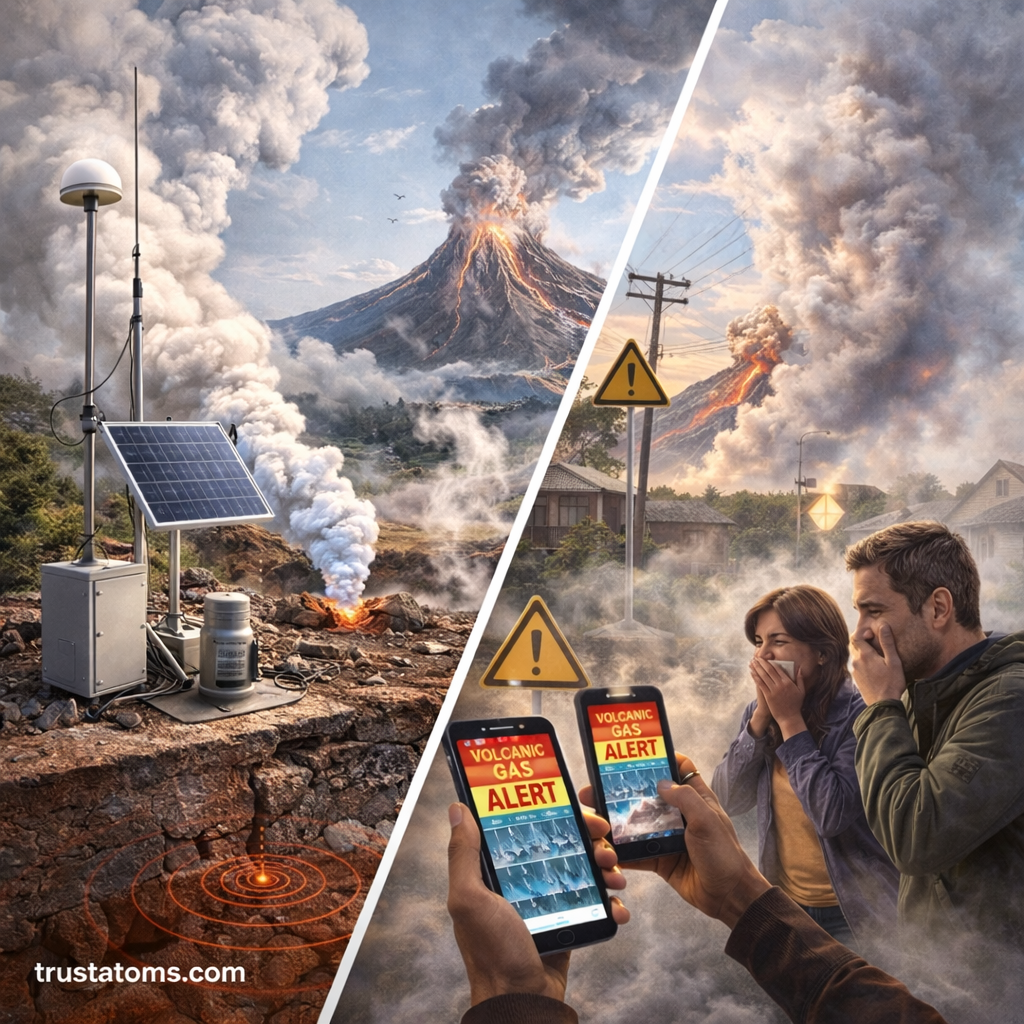
Scientists use various tools to track gas emissions and assess volcanic activity:
- Gas sensors to measure concentration levels
- Satellite imaging to detect gas plumes
- Air sampling for chemical analysis
- Remote sensing instruments like spectrometers
Changes in gas composition can signal rising magma and possible eruptions.
Early Warning and Safety Measures
Monitoring gas emissions helps provide early warnings of volcanic activity.
Warning Signs
- Increased gas output
- Changes in gas composition
- Stronger odors or visible plumes
Safety Precautions
- Avoid restricted areas near volcanoes
- Stay upwind of gas emissions when possible
- Use protective masks in affected areas
- Follow evacuation orders when issued
Awareness and preparation are key to reducing risk.
Real-World Examples of Gas Hazards
Volcanic gas emissions have caused serious incidents in the past:
- Sudden CO₂ releases have led to fatalities in low-lying areas
- Sulfur dioxide emissions have caused widespread air pollution
- Acid rain has damaged crops and water supplies
These events highlight the importance of monitoring and preparedness.
Key Takeaways
- Volcanic gases are released from magma as it rises toward the surface
- Common gases include water vapor, carbon dioxide, and sulfur dioxide
- Gas emissions can occur even without eruptions
- Hazards include health risks, environmental damage, and climate effects
- Monitoring systems help detect changes and provide early warnings
Final Thoughts
Volcanic gas emissions are a powerful reminder that volcanic activity extends far beyond visible eruptions. These invisible hazards can pose serious risks, especially to communities living near active or dormant volcanoes.
By understanding how volcanic gases behave and recognizing their dangers, scientists and communities can better prepare for and respond to volcanic hazards.