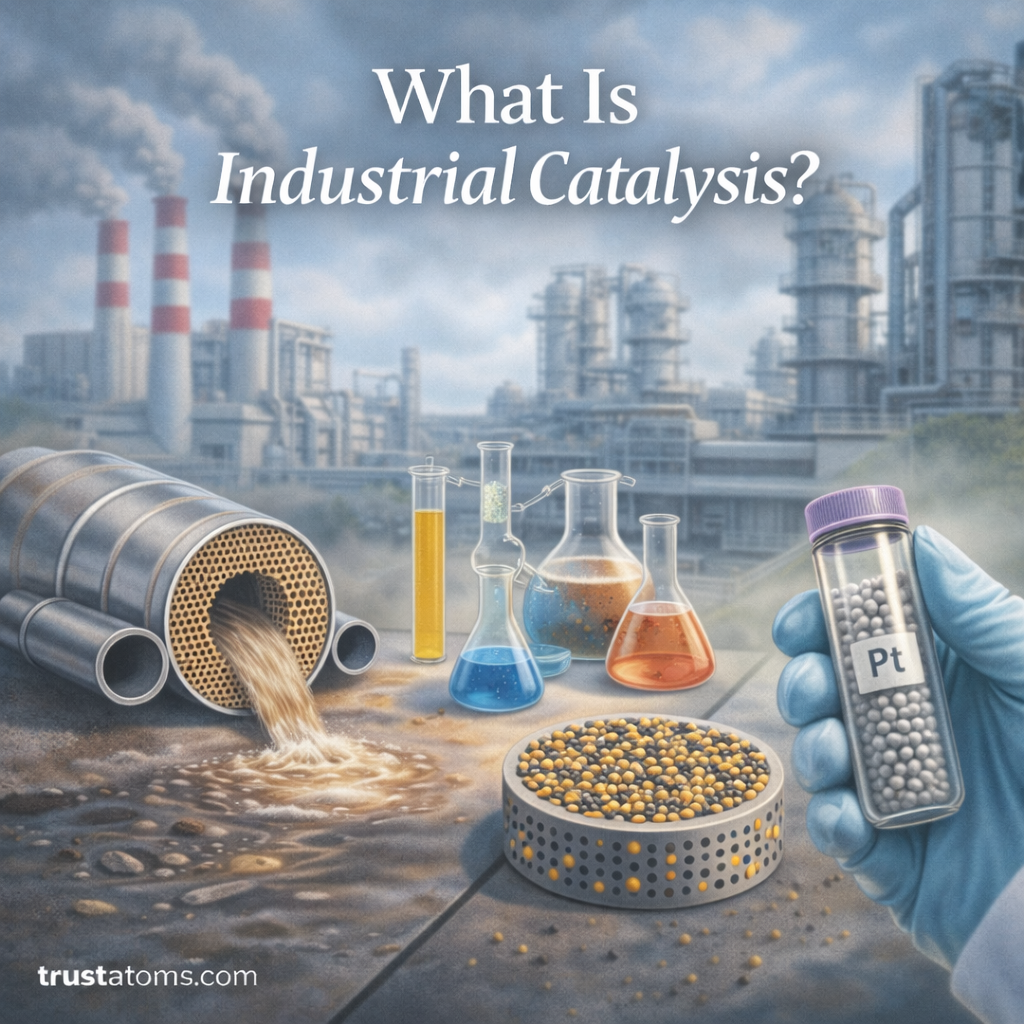
Industrial catalysis is the use of catalysts to speed up chemical reactions in large-scale manufacturing processes. These catalysts allow industries to produce chemicals, fuels, plastics, and pharmaceuticals more efficiently while using less energy and generating fewer unwanted byproducts.
A catalyst is a substance that increases the rate of a chemical reaction without being consumed in the process. In industrial settings, catalysts help convert raw materials into valuable products quickly and reliably.
Because modern manufacturing relies on chemical reactions, industrial catalysis plays a central role in many industries, including energy production, petrochemicals, fertilizer manufacturing, and environmental protection technologies.
Understanding Catalysis in Industry
Catalysis occurs when a substance provides an alternative pathway for a chemical reaction that requires less energy. This lower energy barrier allows reactions to occur faster and often at lower temperatures or pressures.
In industrial chemistry, this has several important benefits:
- Increased production efficiency
- Reduced energy consumption
- Lower manufacturing costs
- Improved product selectivity
- Reduced environmental impact
Without catalysts, many industrial chemical reactions would be too slow or too energy-intensive to be economically practical.
How Catalysts Work
Catalysts work by interacting with reactant molecules and helping them transform into products more easily.
The general catalytic process involves several steps:
- Reactant molecules attach to the catalyst surface.
- Chemical bonds in the reactants weaken or rearrange.
- New bonds form to create the product molecules.
- The products detach from the catalyst, leaving it ready to be used again.
Because the catalyst remains unchanged after the reaction, it can be used repeatedly in industrial processes.
Types of Catalysts Used in Industry
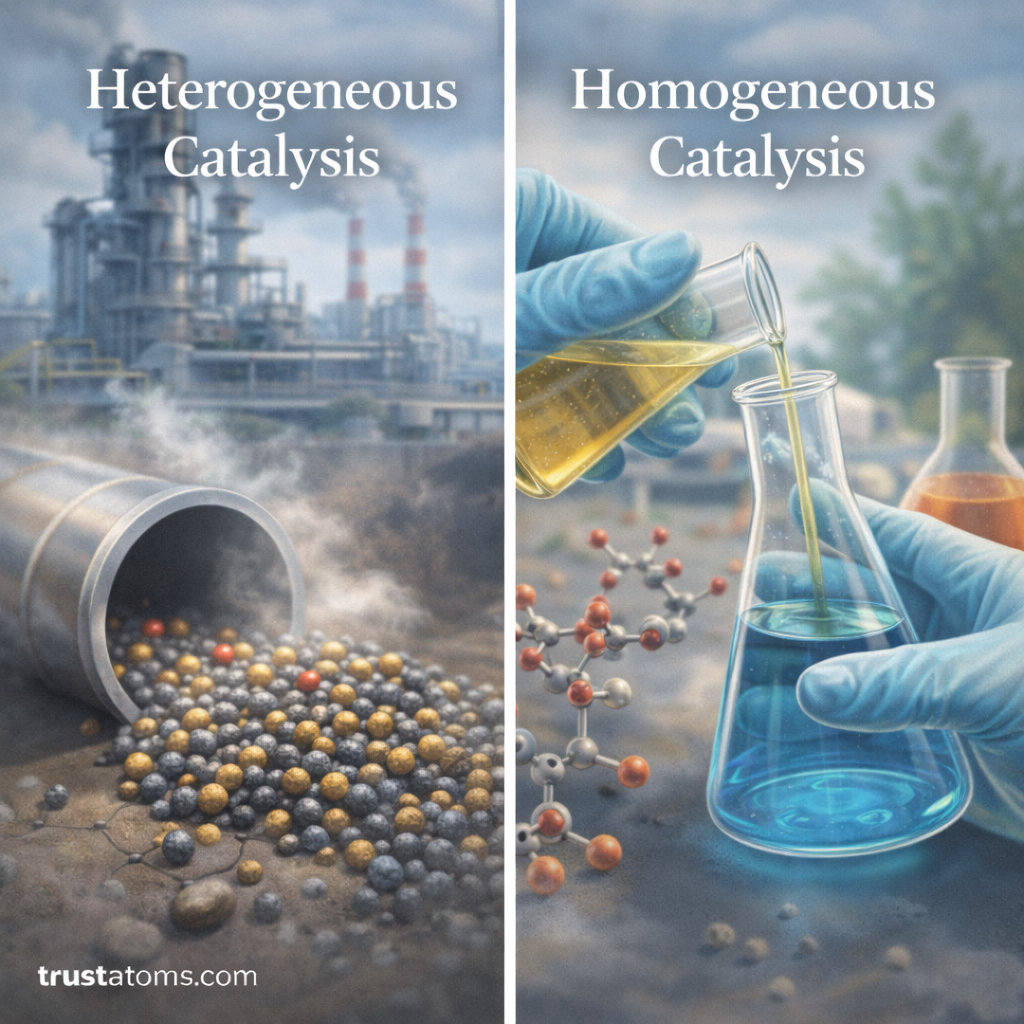
Industrial catalysis involves several different types of catalysts depending on the type of reaction and manufacturing process.
Heterogeneous Catalysts
Heterogeneous catalysts exist in a different physical phase than the reactants.
Most industrial catalytic processes use solid catalysts interacting with liquid or gas reactants.
Common examples include:
- Metal catalysts such as platinum, nickel, and palladium
- Metal oxides used in petroleum refining
- Solid acid catalysts used in chemical synthesis
These catalysts often operate on the surface of solid materials where reactions occur.
Homogeneous Catalysts
Homogeneous catalysts exist in the same phase as the reactants, usually dissolved in liquid solutions.
These catalysts allow precise control over chemical reactions and are often used in:
- Pharmaceutical synthesis
- Fine chemical production
- Polymer manufacturing
Although highly effective, homogeneous catalysts can sometimes be more difficult to separate from products after reactions.
Biocatalysts
Biocatalysts are catalysts derived from biological sources such as enzymes.
They are used in industries that require highly specific reactions, including:
- Food processing
- Pharmaceutical production
- Biofuel manufacturing
Biocatalysts can operate under mild conditions and often produce fewer unwanted byproducts.
Major Industrial Processes That Use Catalysis
Industrial catalysis supports many of the chemical processes that modern society depends on.
The Haber Process
The Haber process produces ammonia from nitrogen and hydrogen gases.
Ammonia is essential for manufacturing fertilizers that support global agriculture.
Key features of the process include:
- Iron-based catalysts
- High temperature and pressure conditions
- Large-scale global production
This catalytic reaction is responsible for producing hundreds of millions of tons of ammonia each year.
Petroleum Refining
Petroleum refining uses catalysts to convert crude oil into useful fuels and chemical feedstocks.
Important catalytic processes include:
- Catalytic cracking
- Hydrocracking
- Reforming
These reactions help produce gasoline, diesel, jet fuel, and many petrochemical materials.
Catalytic Converters
Automobile catalytic converters reduce harmful emissions from vehicle exhaust.
They use catalysts such as platinum, palladium, and rhodium to convert pollutants into less harmful substances.
These reactions transform:
- Carbon monoxide into carbon dioxide
- Nitrogen oxides into nitrogen gas
- Unburned hydrocarbons into carbon dioxide and water
Catalytic converters play an important role in reducing air pollution in urban environments.
Materials Used in Industrial Catalysts
Industrial catalysts are carefully designed to withstand harsh reaction conditions while remaining effective over long periods of use.
Common catalyst materials include:
- Platinum
- Nickel
- Palladium
- Iron
- Cobalt
- Aluminum oxide
- Zeolites
Many catalysts are supported on porous materials that increase surface area and improve reaction efficiency.
High surface area allows more reactant molecules to interact with the catalyst at the same time.
Catalyst Selectivity and Efficiency
One of the most important properties of industrial catalysts is selectivity.
Selectivity refers to how effectively a catalyst produces the desired product without forming unwanted byproducts.
High selectivity helps:
- Reduce waste
- Improve product purity
- Lower manufacturing costs
- Reduce environmental impact
Chemical engineers and chemists continually develop new catalysts that improve reaction efficiency and product selectivity.
Environmental Benefits of Industrial Catalysis
Industrial catalysis plays a key role in making chemical manufacturing more sustainable.
Catalysts help reduce environmental impact by:
- Lowering energy requirements
- Minimizing chemical waste
- Reducing greenhouse gas emissions
- Enabling cleaner fuel production
For example, catalysts are used in processes that remove sulfur from fuels, which reduces harmful air pollution.
Many modern environmental technologies rely on catalytic reactions to clean pollutants before they enter the environment.
Challenges in Industrial Catalysis
Despite its advantages, industrial catalysis presents several challenges.
Catalysts can become less effective over time due to:
- Poisoning by impurities
- Surface contamination
- Structural changes at high temperatures
- Chemical degradation
Researchers constantly work to develop catalysts that are more durable, cost-effective, and resistant to deactivation.
Advances in materials science and nanotechnology are helping improve catalyst performance.
The Future of Industrial Catalysis
Industrial catalysis continues to evolve as scientists search for more sustainable chemical processes.
Emerging research areas include:
- Nanocatalysts with extremely high surface areas
- Catalysts for renewable energy production
- Carbon dioxide conversion technologies
- Green chemistry catalysts
- Catalytic processes for hydrogen fuel production
These innovations may help industries reduce environmental impact while maintaining high production efficiency.
Final Thoughts
Industrial catalysis is a cornerstone of modern chemical manufacturing. By accelerating chemical reactions and improving efficiency, catalysts make it possible to produce essential materials used in agriculture, energy, transportation, and consumer products.
From fertilizer production to emission control systems, industrial catalysis enables many technologies that support modern life. As researchers continue developing new catalytic materials and processes, industrial catalysis will remain vital to both economic development and environmental sustainability.