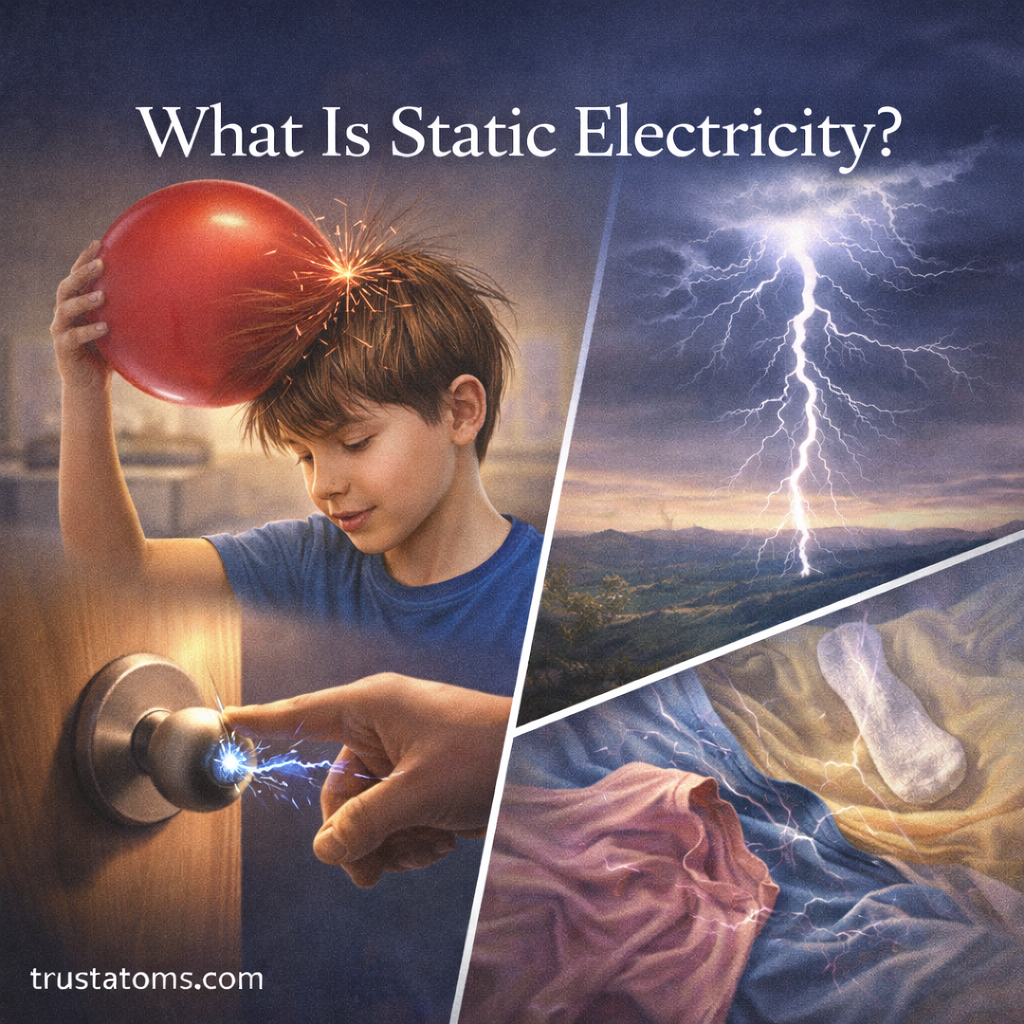
Static electricity is a common physical phenomenon that occurs when electric charges build up on the surface of an object. You may have experienced it when touching a metal doorknob after walking across a carpet or when clothes stick together after coming out of a dryer.
In physics, static electricity refers to the imbalance of electric charges on the surface of materials. These charges remain in one place rather than flowing continuously like the electricity in power lines.
Understanding static electricity helps explain everyday experiences as well as important natural events such as lightning.
Understanding Electric Charge
To understand static electricity, it is important to first understand electric charge.
Atoms—the basic building blocks of matter—contain three types of particles:
- Protons (positive charge)
- Electrons (negative charge)
- Neutrons (no charge)
Normally, objects contain equal numbers of protons and electrons, making them electrically neutral.
Static electricity occurs when this balance changes.
For example:
- If an object gains electrons, it becomes negatively charged.
- If an object loses electrons, it becomes positively charged.
This imbalance of charge creates static electricity.
What Causes Static Electricity?
Static electricity is usually created through friction, which causes electrons to transfer between materials.
When two different materials rub together:
- Electrons move from one surface to another.
- One object gains electrons and becomes negatively charged.
- The other object loses electrons and becomes positively charged.
Because these charges remain on the surface instead of flowing away, they build up as static electricity.
Common Ways Static Electricity Is Produced
Static electricity can be generated in several ways.
Friction
The most common cause is friction between materials.
Examples include:
- Rubbing a balloon on your hair
- Walking across a carpet in socks
- Clothes rubbing together in a dryer
In each case, electrons transfer between surfaces.
Contact
Static electricity can also occur when a charged object touches another object and transfers some of its charge.
This process is called conduction.
Induction
Induction happens when a charged object comes close to another object without touching it, causing electrons inside the second object to rearrange.
This creates a temporary charge imbalance.
How Static Electricity Builds Up
Certain materials allow electric charges to move easily, while others hold charges in place.
Conductors
Conductors allow electric charges to move freely.
Examples include:
- Metals
- Copper wires
- Aluminum
In conductors, static charges quickly flow away.
Insulators
Insulators prevent charges from moving easily.
Examples include:
- Rubber
- Plastic
- Glass
- Dry air
Because charges remain trapped on the surface, static electricity builds up more easily on insulating materials.
Static Electricity in Everyday Life
Static electricity is responsible for many familiar experiences.
Small Electric Shocks
You might feel a small shock when touching a metal object after walking on carpet.
This happens because:
- Your body accumulates excess electrons
- The charge suddenly jumps to the metal object
This rapid transfer of electrons produces a small spark.
Clothes Sticking Together
After clothes tumble in a dryer, they may stick together.
This occurs because fabrics gain opposite electric charges and attract each other.
Balloon and Hair Experiment
Rubbing a balloon on your hair causes your hair strands to stand up.
This happens because:
- The balloon becomes negatively charged
- Hair strands lose electrons and become positively charged
- Opposite charges attract
Static Electricity in Nature
Static electricity also appears in powerful natural events.
Lightning
Lightning is a large-scale example of static electricity.
Inside storm clouds:
- Ice particles collide and transfer electric charges
- Charges build up between clouds and the ground
- When the electric field becomes strong enough, a sudden discharge occurs
This discharge creates a lightning bolt.
Lightning can contain millions of volts of electricity.
Why Static Electricity Can Be Dangerous
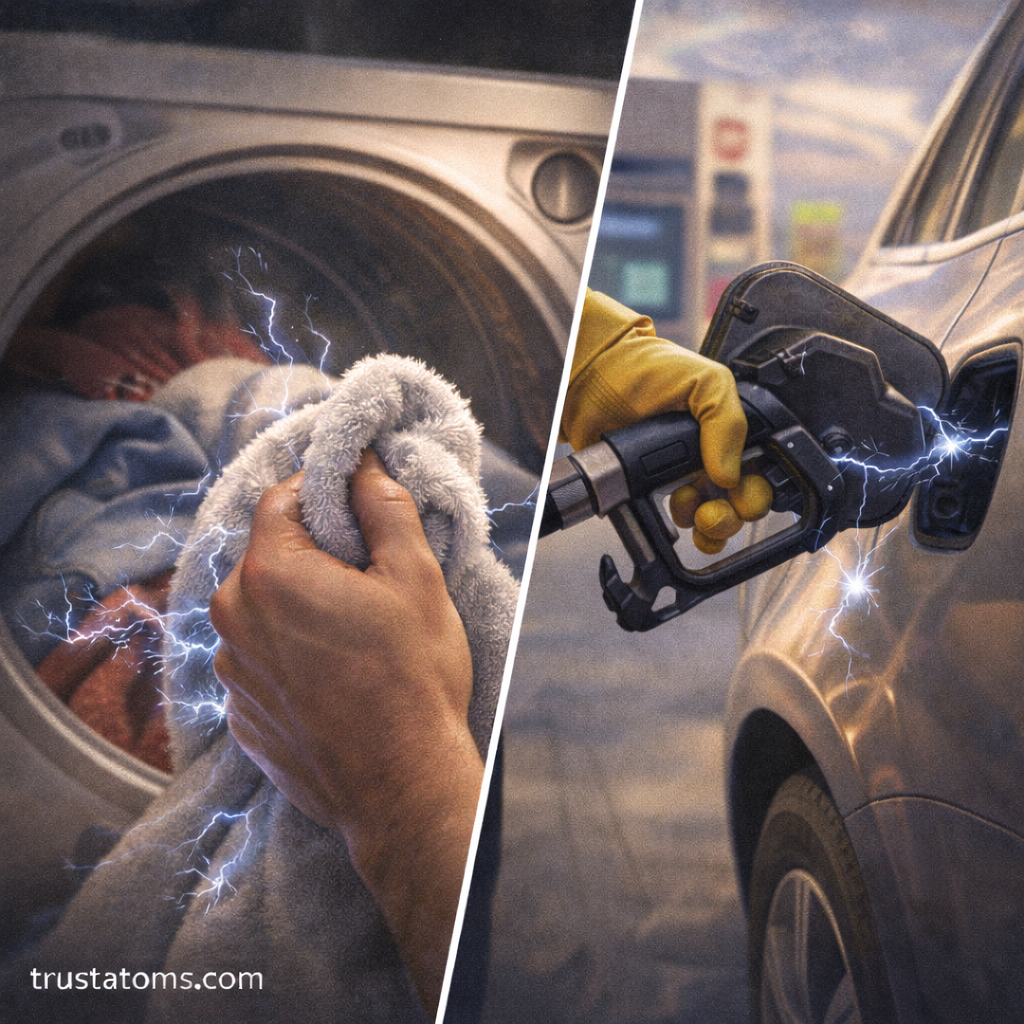
Although static electricity is usually harmless, it can become dangerous in certain environments.
For example:
- Fuel vapors can ignite from a static spark
- Static buildup in electronics can damage sensitive components
- Industrial dust particles can ignite if static sparks occur
Because of these risks, industries often use grounding systems to safely release static charges.
How Static Electricity Is Controlled
Several methods can help reduce or eliminate static electricity.
Grounding
Grounding allows excess electric charge to safely flow into the Earth.
Examples include:
- Ground wires in electrical systems
- Anti-static wrist straps used in electronics work
Increasing Humidity
Moist air helps prevent static charge buildup.
This is why static electricity occurs more often during dry winter months.
Anti-Static Materials
Many products are designed to reduce static buildup, such as:
- Anti-static sprays
- Dryer sheets
- Anti-static mats
These materials help neutralize electric charges.
Why Static Electricity Matters in Physics
Static electricity is an important concept in the study of electromagnetism, one of the fundamental branches of physics.
It helps scientists understand:
- Electric fields
- Charge interactions
- Electrical forces
- The behavior of electrons in materials
Research on static electricity also contributed to major scientific discoveries, including early studies of electricity by scientists such as Benjamin Franklin.
Final Thoughts
Static electricity occurs when electric charges build up on the surface of objects due to an imbalance of electrons. This phenomenon is commonly produced by friction between materials and can result in small sparks, attraction between objects, or even powerful natural events like lightning.
Although often harmless, static electricity plays a significant role in both everyday experiences and scientific understanding of electricity. Learning how static charges form and behave helps explain many physical interactions in the world around us.