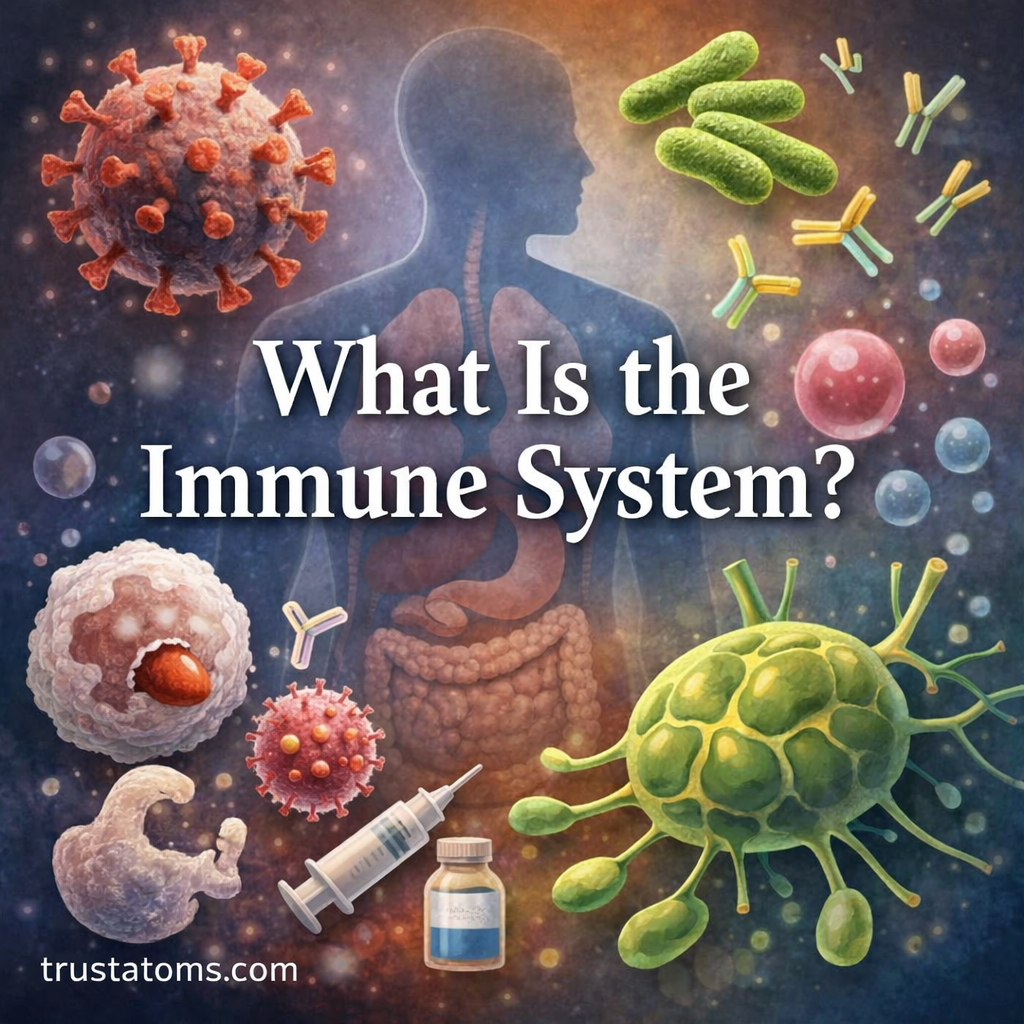
The immune system is the body’s built-in defense network designed to protect you from harmful invaders like bacteria, viruses, fungi, and toxins. It works continuously—often without you noticing—to identify threats, neutralize them, and remember them for faster responses in the future.
This complex system is essential for survival. Without it, even minor infections could become life-threatening.
What Does the Immune System Do?
At its core, the immune system performs three key functions:
- Detects threats such as pathogens or abnormal cells
- Responds to eliminate them using specialized cells and chemicals
- Remembers past invaders to respond faster next time
This combination of detection, response, and memory allows your body to adapt and improve its defenses over time.
Main Components of the Immune System
The immune system is not a single organ—it’s a coordinated network of cells, tissues, and organs working together.
White Blood Cells (Leukocytes)
White blood cells are the frontline defenders. They circulate through the bloodstream and tissues to find and destroy harmful invaders.
Key types include:
- Phagocytes – engulf and digest pathogens
- Lymphocytes (B cells and T cells) – target specific threats and create immune memory
Lymphatic System
This system acts like a drainage and transport network for immune cells.
It includes:
- Lymph nodes
- Lymph vessels
- Lymph fluid
Lymph nodes filter harmful substances and house immune cells ready to respond.
Bone Marrow
Bone marrow produces most of the body’s immune cells, including white blood cells.
Thymus
The thymus is where T cells mature and learn to distinguish between the body’s own cells and foreign invaders.
Spleen
The spleen filters blood, removes damaged cells, and helps fight infections by activating immune responses.
Types of Immunity
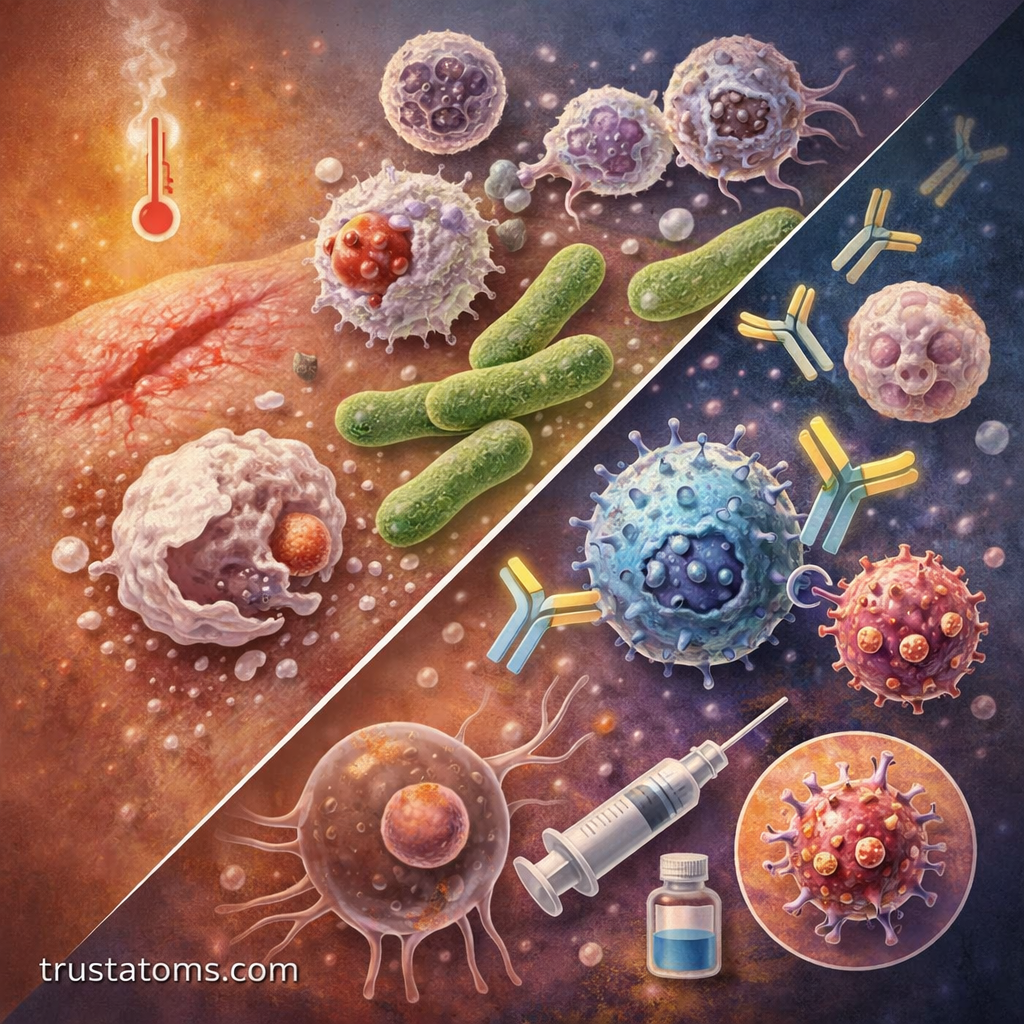
The immune system operates through two main types of immunity:
Innate Immunity (First Line of Defense)
This is your body’s immediate, non-specific defense system.
Examples include:
- Skin and mucous membranes acting as physical barriers
- Inflammation to isolate and destroy pathogens
- Fever to create an unfavorable environment for microbes
Innate immunity responds quickly but does not “remember” specific threats.
Adaptive Immunity (Specialized Defense)
This system develops over time and targets specific pathogens.
Key features:
- Highly specific responses to particular invaders
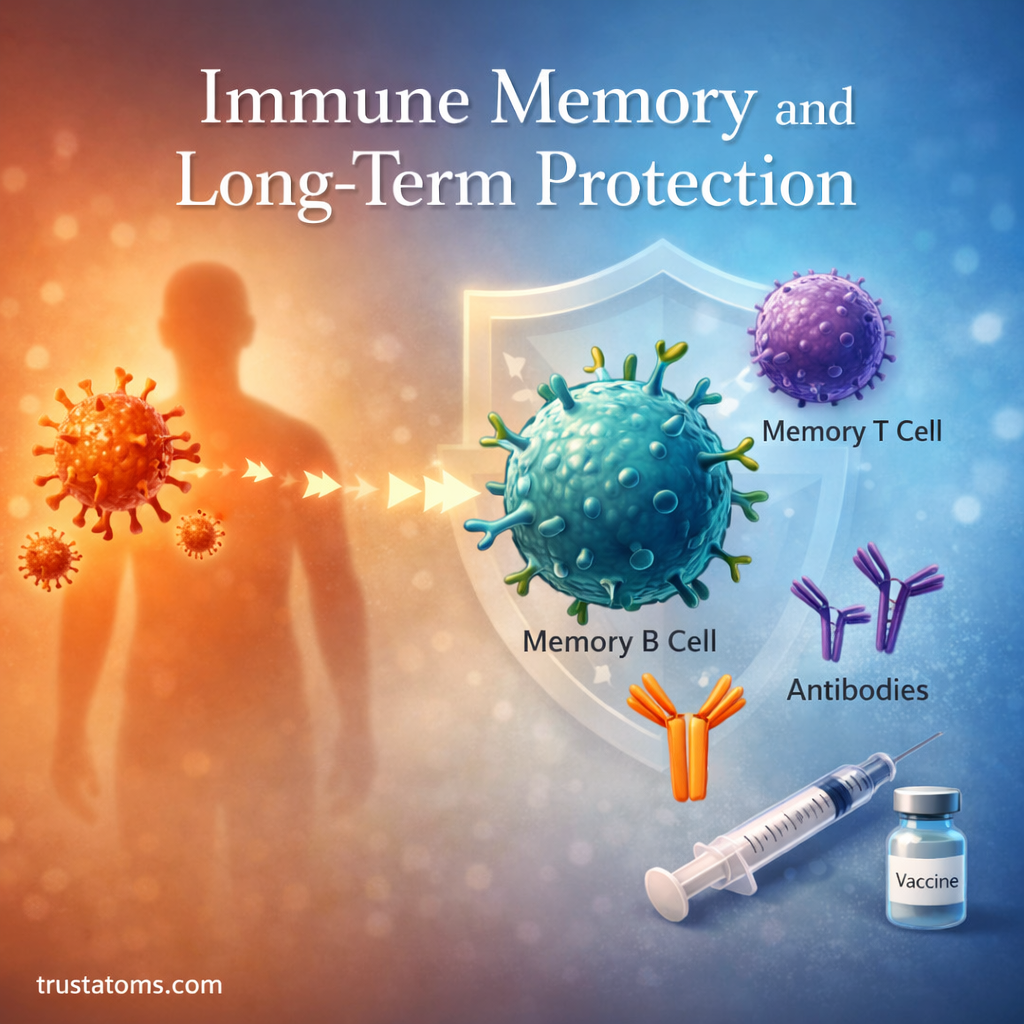
- Memory cells that recognize past infections
- Stronger responses upon re-exposure
Vaccinations work by training this part of the immune system.
How the Immune System Fights Infection
When a pathogen enters the body, a sequence of events begins:
- Recognition – Immune cells identify foreign substances (antigens)
- Activation – White blood cells multiply and mobilize
- Attack – Pathogens are destroyed or neutralized
- Memory formation – The immune system retains information for future protection
This process can happen rapidly, especially if the body has encountered the pathogen before.
What Are Antibodies?
Antibodies are proteins produced by B cells that bind to specific antigens on pathogens.
They help:
- Neutralize harmful substances
- Mark pathogens for destruction
- Prevent infections from spreading
Each antibody is highly specific, like a lock-and-key mechanism.
Why the Immune System Is Important
A properly functioning immune system is essential for:
- Preventing infections
- Fighting off illnesses efficiently
- Detecting abnormal or cancerous cells
- Maintaining overall health balance
When the immune system is weakened or overactive, problems can arise.
Common Immune System Disorders
Autoimmune Diseases
The immune system mistakenly attacks the body’s own tissues.
Examples include:
- Rheumatoid arthritis
- Lupus
- Type 1 diabetes
Immunodeficiency Disorders
The immune system is underactive or weakened.
Examples include:
- HIV/AIDS
- Certain genetic conditions
Allergies
The immune system overreacts to harmless substances like pollen or food.
Factors That Affect Immune Health
Several lifestyle and environmental factors influence how well your immune system functions:
- Nutrition – Vitamins like C, D, and zinc are crucial
- Sleep – Poor sleep weakens immune response
- Stress – Chronic stress suppresses immunity
- Exercise – Moderate activity boosts immune function
- Hygiene and exposure – Balanced exposure helps train the immune system
How to Support a Healthy Immune System
You can strengthen your immune system through simple daily habits:
- Eat a balanced, nutrient-rich diet
- Get 7–9 hours of quality sleep
- Stay physically active
- Manage stress effectively
- Stay up to date with vaccinations
- Practice good hygiene
Consistency matters more than any single action.
Final Thoughts
The immune system is a powerful and adaptive defense network that protects your body every day. From immediate responses to long-term immunity, it plays a critical role in keeping you healthy.
Understanding how it works can help you make better lifestyle choices and recognize the importance of maintaining immune health over time.