The human body has an incredible ability to repair itself, and nowhere is this more visible than in the healing of the skin. Whether it’s a small cut, scrape, or deeper injury, the body follows a highly organized process to restore damaged tissue.
Wound healing is not a single event—it occurs in a series of overlapping phases, each with a specific purpose. Understanding these phases helps explain how the skin repairs itself and why proper care is essential for optimal healing.
What Is Wound Healing?
Wound healing is the biological process by which the body repairs damaged skin and underlying tissues.
This process involves:
- Blood clotting
- Inflammation
- Tissue regeneration
- Remodeling of new tissue
The goal is to restore the skin’s protective barrier as quickly and effectively as possible.
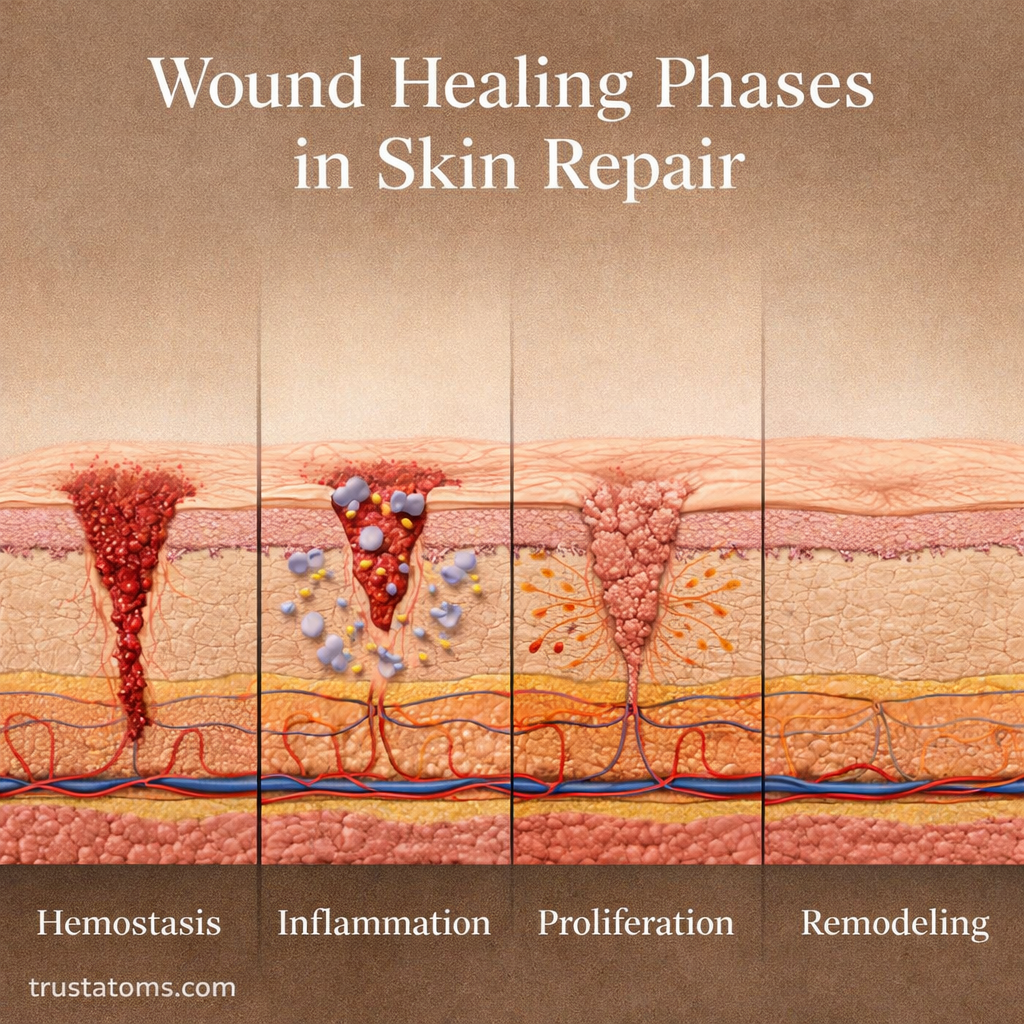
Overview of the Four Phases of Wound Healing
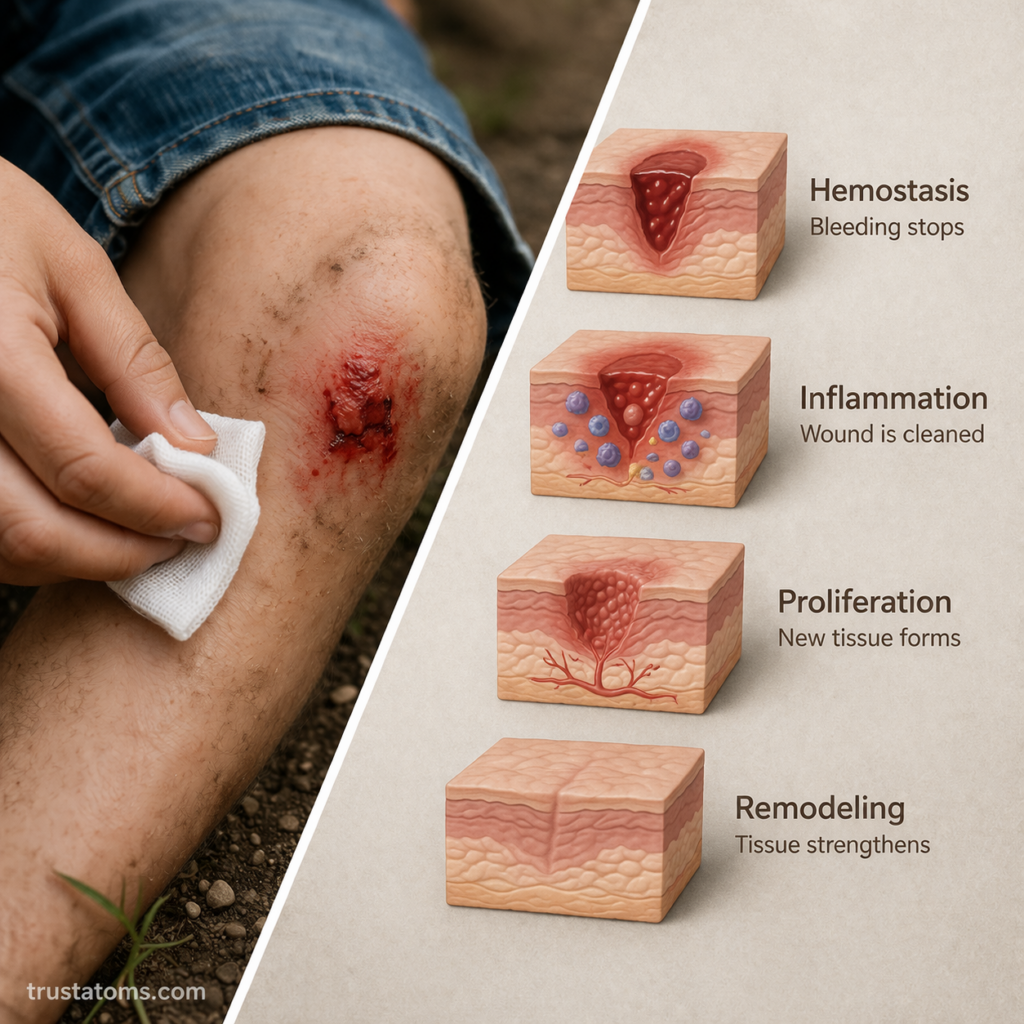
Wound healing typically occurs in four main phases:
- Hemostasis (stopping the bleeding)
- Inflammation (cleaning the wound)
- Proliferation (building new tissue)
- Remodeling (strengthening the repair)
These phases often overlap rather than occur in strict sequence.
Phase 1: Hemostasis
Hemostasis begins immediately after an injury occurs.
What Happens During Hemostasis
- Blood vessels constrict to reduce bleeding
- Platelets gather at the injury site
- A clot forms to seal the wound
Why It Matters
- Prevents excessive blood loss
- Creates a temporary barrier against infection
- Provides a foundation for the next healing stages
This phase typically lasts from a few minutes to several hours.
Phase 2: Inflammation
Once bleeding is controlled, the body activates the inflammatory response.
What Happens During Inflammation
- White blood cells move to the wound
- Bacteria and damaged tissue are removed
- The area may become red, warm, and swollen
Signs of Inflammation
- Redness
- Swelling
- Heat
- Mild pain
These are normal and indicate that the immune system is working.
Why It Matters
- Cleans the wound
- Prevents infection
- Prepares the area for new tissue growth
This phase usually lasts a few days.
Phase 3: Proliferation
The proliferation phase focuses on rebuilding the damaged tissue.
What Happens During Proliferation
- New skin cells (keratinocytes) form
- Collagen is produced to strengthen tissue
- New blood vessels develop (angiogenesis)
- The wound begins to contract
Granulation Tissue
A key feature of this phase is granulation tissue:
- Pink or red in color
- Rich in new blood vessels
- Fills the wound as it heals
Why It Matters
- Restores skin structure
- Replaces lost tissue
- Begins closing the wound
This phase can last from several days to a few weeks, depending on the severity of the injury.
Phase 4: Remodeling (Maturation)
The final phase strengthens and refines the repaired tissue.
What Happens During Remodeling
- Collagen is reorganized and strengthened
- Blood vessels reduce as the tissue stabilizes
- The scar becomes flatter and less visible
Why It Matters
- Increases the strength of the healed skin
- Improves flexibility and appearance
- Finalizes the repair process
This phase can last for months or even years.
Factors That Affect Wound Healing
Healing speed and effectiveness can vary based on several factors.
Internal Factors
- Age
- Nutrition (protein, vitamins, minerals)
- Overall health
- Blood circulation
External Factors
- Infection
- Moisture levels
- Wound care practices
- Repeated injury or irritation
Types of Wounds
Different types of wounds can influence how healing occurs.
Acute Wounds
- Heal in a predictable time frame
- Examples: cuts, surgical incisions
Chronic Wounds
- Heal slowly or fail to heal properly
- Examples: ulcers, long-term injuries
Tips for Supporting Healthy Wound Healing
Proper care can significantly improve healing outcomes.
Basic Care Guidelines
- Keep the wound clean
- Maintain a moist environment (not overly dry)
- Protect from further injury
- Avoid picking at scabs
Lifestyle Support
- Eat a nutrient-rich diet
- Stay hydrated
- Avoid smoking
- Manage underlying health conditions
Common Complications
Sometimes the healing process does not go as expected.
Possible Issues
- Infection
- Excessive scarring
- Delayed healing
- Chronic inflammation
Early attention to these issues can prevent more serious complications.
Final Thoughts
Wound healing is a complex and carefully coordinated process that allows the body to restore damaged skin. From immediate clot formation to long-term tissue remodeling, each phase plays a vital role in recovery.
Understanding these phases not only helps explain how the body heals but also highlights the importance of proper wound care and overall health in achieving the best possible outcome.