Earth’s climate varies dramatically from region to region, from hot tropical rainforests to frozen polar landscapes. These differences are organized into climate zones, which are shaped by how energy moves through the atmosphere.
Understanding climate zones and atmospheric behavior helps explain global weather patterns, ecosystems, and long-term climate trends.
What Are Climate Zones?
Climate zones are regions of the Earth that share similar temperature, precipitation, and seasonal patterns over long periods of time.
They are primarily determined by:
- Latitude (distance from the equator)
- Solar energy received
- Atmospheric circulation
- Ocean currents and geography
The Three Main Climate Zones
Earth is commonly divided into three major climate zones based on latitude.
1. Tropical Zone
Located near the equator, between the Tropic of Cancer and the Tropic of Capricorn.
Key characteristics:
- Warm temperatures year-round
- High solar energy input
- Frequent rainfall in many areas
Examples:
- Rainforests
- Tropical savannas
2. Temperate Zone
Found between the tropics and the polar regions.
Key characteristics:
- Moderate temperatures
- Distinct seasons
- Variable weather patterns
Examples:
- Forests
- Grasslands
- Coastal climates
3. Polar Zone
Located near the North and South Poles.
Key characteristics:
- Very cold temperatures
- Low solar energy
- Ice and snow-covered landscapes
Examples:
- Arctic tundra
- Antarctic ice sheets
How Atmospheric Behavior Shapes Climate Zones
Climate zones are closely linked to how air moves around the planet.
Global Atmospheric Circulation
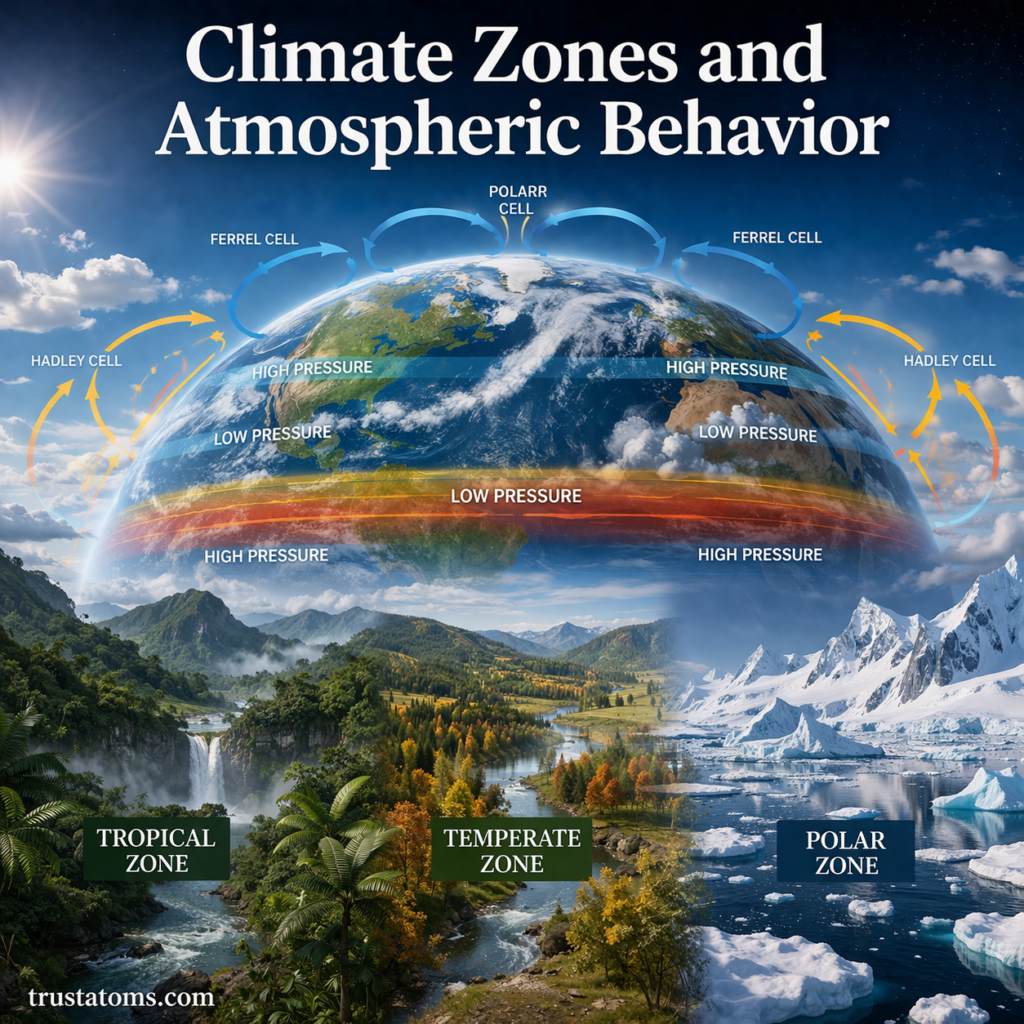
The atmosphere circulates in large loops called cells that distribute heat.
The Three-Cell Model
- Hadley Cell (Tropics)
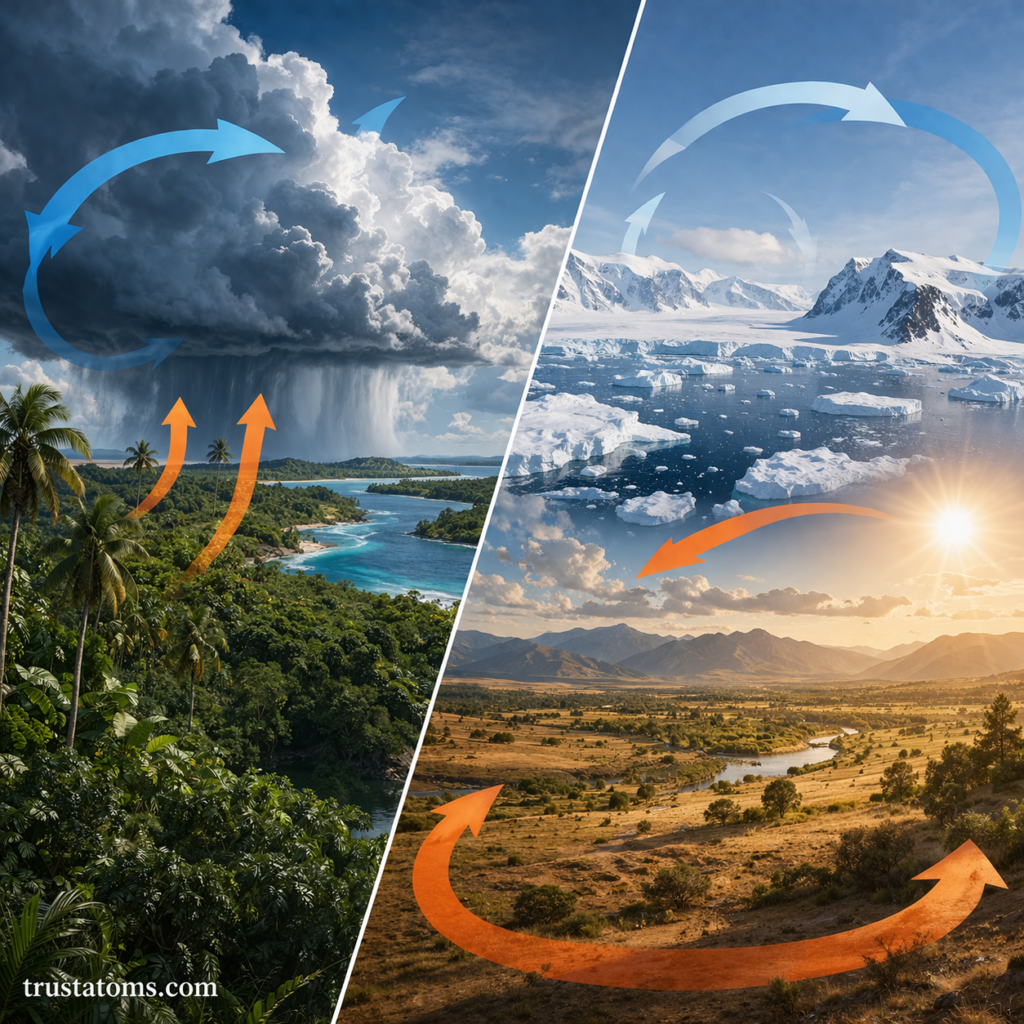
- Warm air rises near the equator
- Moves toward higher latitudes
- Sinks in subtropical regions
- Ferrel Cell (Mid-Latitudes)
- Transfers energy between tropical and polar regions
- Produces variable weather patterns
- Polar Cell (Polar Regions)
- Cold air sinks near the poles
- Moves toward lower latitudes
Pressure Belts and Wind Patterns
Atmospheric circulation creates pressure zones that influence climate.
Major Pressure Zones
- Low pressure at the equator: Rising warm air → heavy rainfall
- High pressure in subtropics: Sinking dry air → deserts
- Low pressure in mid-latitudes: Storm activity
- High pressure at poles: Cold, dry conditions
Global Wind Patterns
These pressure differences drive major wind systems:
- Trade winds (tropics)
- Westerlies (mid-latitudes)
- Polar easterlies (polar regions)
These winds help distribute heat and moisture across the globe.
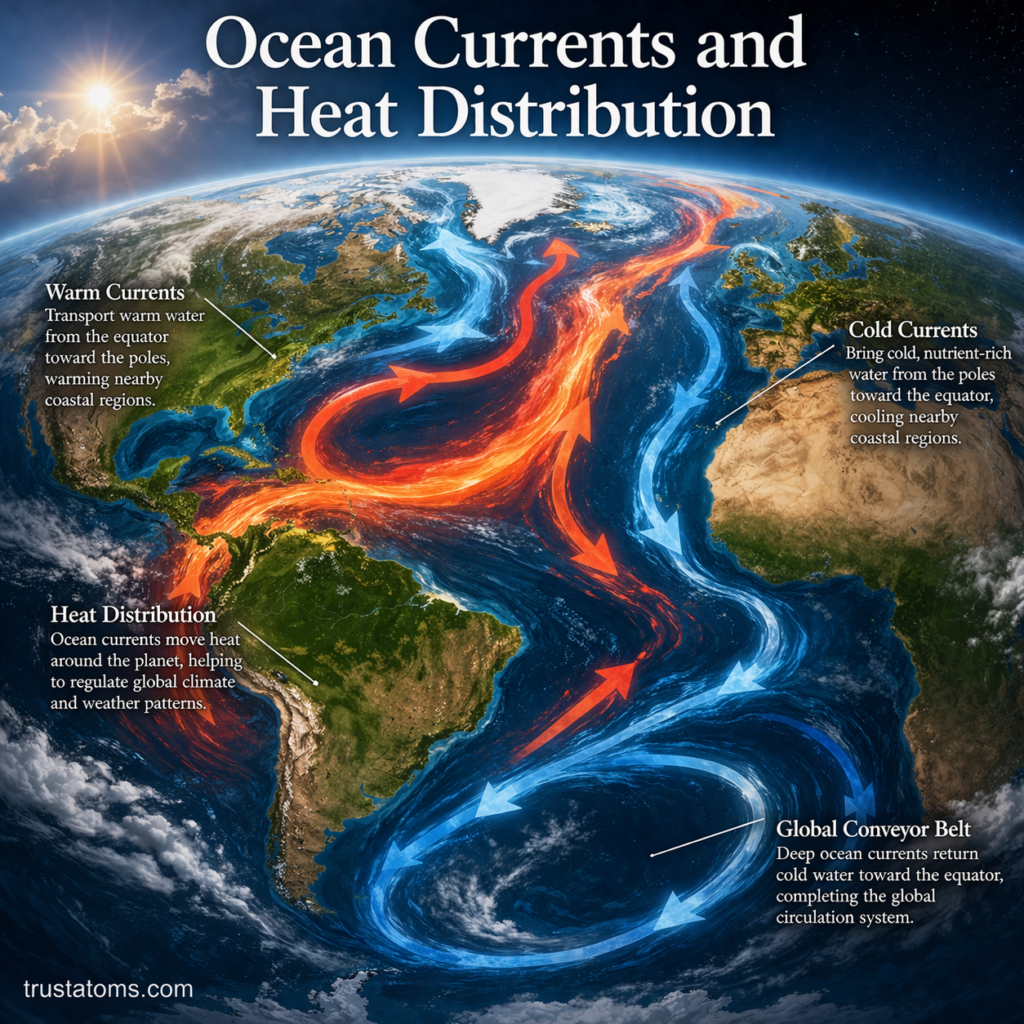
Role of Ocean Currents
Oceans play a major role in climate by moving heat around the planet.
How Ocean Currents Affect Climate
- Warm currents raise temperatures in nearby regions
- Cold currents cool coastal areas
- Influence precipitation patterns
For example, coastal regions can have milder climates due to nearby ocean currents.
Influence of Geography and Elevation
Local factors also shape climate within broader zones.
Key Influences
- Mountains: Block air movement and create rain shadows
- Elevation: Higher altitudes are cooler
- Distance from oceans: Inland areas experience more extreme temperatures
Climate Zones and Ecosystems
Climate directly influences the types of ecosystems found in each region.
Examples
- Tropical climates → dense rainforests
- Temperate climates → forests and grasslands
- Polar climates → tundra and ice ecosystems
Plants and animals adapt to the specific conditions of each zone.
Climate Change and Shifting Zones
Climate zones are not fixed—they can shift over time.
Observed Changes
- Expansion of warmer climate zones
- Changes in precipitation patterns
- Melting polar ice
Potential Impacts
- Altered ecosystems
- Changes in agriculture
- Increased extreme weather events
Why Climate Zones Matter
Understanding climate zones is essential for:
- Predicting long-term weather patterns
- Planning agriculture and water use
- Studying ecosystems and biodiversity
- Preparing for climate change impacts
Key Takeaways
- Climate zones are regions with similar long-term weather patterns
- They are influenced by latitude, solar energy, and atmospheric circulation
- The three main zones are tropical, temperate, and polar
- Atmospheric cells and wind patterns distribute heat globally
- Ocean currents and geography further shape regional climates
- Climate change is causing shifts in traditional climate zones
Final Thoughts
Climate zones and atmospheric behavior are deeply interconnected. The way air moves around the planet determines how heat and moisture are distributed, shaping the environments we live in.
By understanding these systems, we gain valuable insight into Earth’s climate—and how it may continue to change in the future.