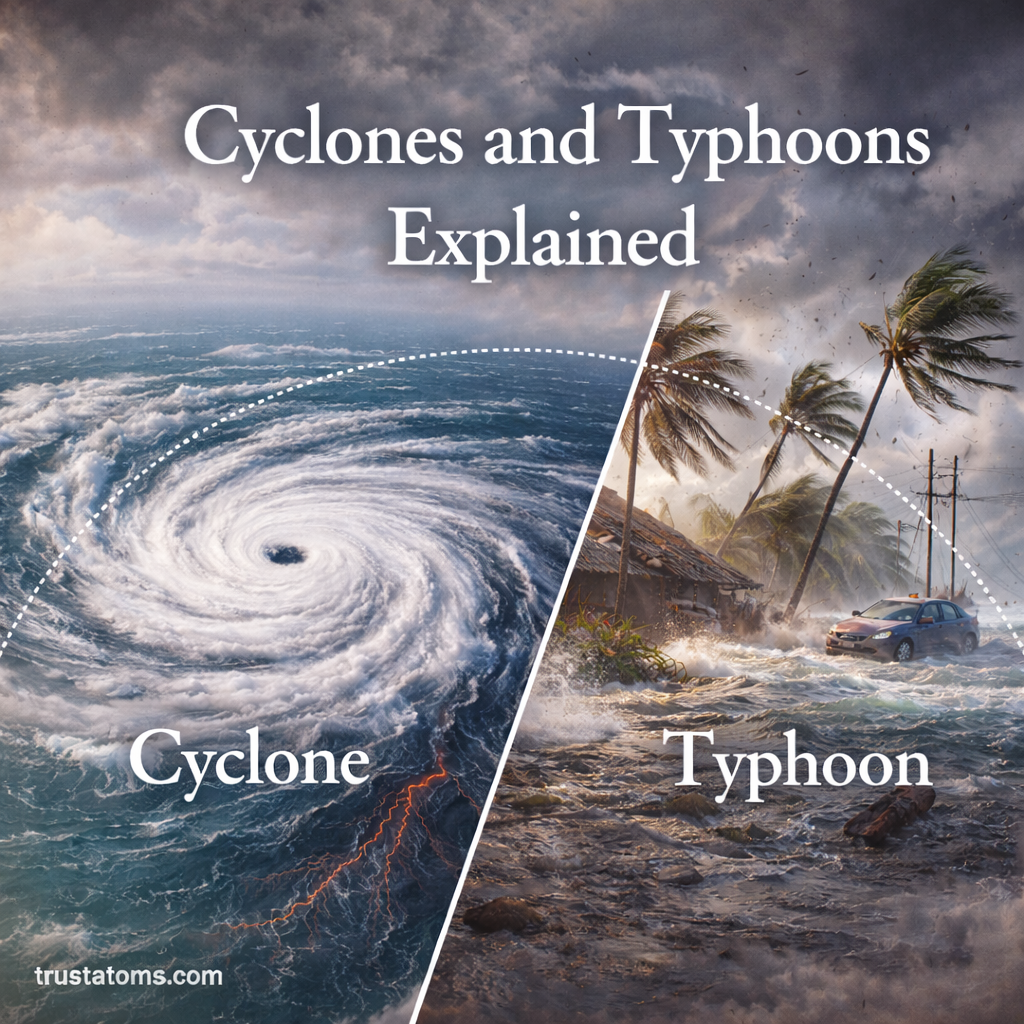
Cyclones and typhoons are among the most intense weather systems on Earth. Known for their powerful winds, heavy rainfall, and widespread destruction, these storms impact millions of people every year.
Although the names may differ, cyclones and typhoons are essentially the same type of storm. Understanding how they form, how they are structured, and how they differ by region is key to understanding global weather patterns and storm risks.
What Are Cyclones and Typhoons?
Cyclones and typhoons are both types of tropical cyclones—large, rotating storm systems that form over warm ocean waters.
Regional Naming Differences
- Cyclone – Indian Ocean and South Pacific
- Typhoon – Northwestern Pacific Ocean
- Hurricane – Atlantic Ocean and Northeastern Pacific
Despite the different names, all three share the same core characteristics:
- Low-pressure center
- Rotating winds
- Organized thunderstorms
- Heavy rainfall
How Tropical Cyclones Form
Cyclones and typhoons develop under specific environmental conditions, similar to hurricanes.
Required Conditions
- Warm ocean water (at least 26.5°C or 80°F)
- Moist air in the atmosphere
- Low vertical wind shear
- Pre-existing weather disturbance
- Coriolis effect (for rotation)
These conditions allow a storm to organize and strengthen over time.
Stages of Development
Tropical cyclones go through several stages as they intensify.
1. Tropical Disturbance
- Cluster of thunderstorms over warm water
- No defined circulation yet
2. Tropical Depression
- Winds up to 38 mph (61 km/h)
- Low-pressure center begins to form
3. Tropical Storm
- Winds between 39–73 mph (63–118 km/h)
- Gains a name
- More organized structure
4. Cyclone or Typhoon
- Winds exceed 74 mph (119 km/h)
- Fully developed rotating storm
The storm continues to grow as long as conditions remain favorable.
Structure of Cyclones and Typhoons
These storms have a well-defined structure that drives their intensity and behavior.
The Eye
- Calm center of the storm
- Clear skies and low wind
- Typically 20–40 miles wide
The Eyewall
- Surrounds the eye
- Strongest winds and heaviest rain
- Most dangerous part of the storm
Rainbands
- Spiral bands extending outward
- Can produce intense rainfall and gusty winds
- May cause flooding and tornadoes
Upper-Level Outflow
- Air rises and spreads outward at high altitudes
- Helps maintain low pressure at the center
- Supports storm strengthening
Differences Between Cyclones and Typhoons
While structurally identical, there are some differences based on geography.
Location
- Cyclones: Indian Ocean, South Pacific
- Typhoons: Northwestern Pacific
Frequency and Intensity
- Typhoons often occur more frequently
- Some of the strongest storms on record are typhoons
Naming Systems
- Different regions use different naming lists
- Managed by regional meteorological organizations
The Role of the Coriolis Effect
The Coriolis effect is essential for storm rotation.
How It Works
- Caused by Earth’s rotation
- Deflects moving air
- Creates spinning motion in storms
Hemisphere Differences
- Northern Hemisphere: storms rotate counterclockwise
- Southern Hemisphere: storms rotate clockwise
Without the Coriolis effect, tropical cyclones would not form properly.
Impacts of Cyclones and Typhoons

These storms can cause widespread destruction and long-term damage.
Major Hazards
- Strong winds – damage buildings and infrastructure
- Storm surge – coastal flooding from rising sea levels
- Heavy rainfall – leads to inland flooding
- Landslides – especially in mountainous areas
Storm surge and flooding are often the most dangerous aspects.
What Weakens These Storms?
Cyclones and typhoons weaken when they lose access to their energy source.
Key Factors
- Moving over land
- Entering cooler ocean waters
- Increased wind shear
- Interaction with other weather systems
Once weakened, they may transition into other types of storms.
How Scientists Track Cyclones and Typhoons
Modern technology allows meteorologists to monitor storms in real time.
Tools Used
- Weather satellites
- Radar systems
- Aircraft reconnaissance
- Computer forecasting models
These tools help predict storm paths and intensity, improving early warning systems.
Why Understanding These Storms Matters
Learning about cyclones and typhoons helps reduce risk and improve preparedness.
Key Benefits
- Better evacuation planning
- Improved building design
- Enhanced disaster response
- Increased public awareness
Prepared communities are better equipped to handle these powerful storms.
Final Thoughts
Cyclones and typhoons are powerful natural systems driven by heat, moisture, and atmospheric dynamics. While they are known by different names depending on location, their structure and formation processes are remarkably similar.
Understanding these storms is essential for predicting their behavior, minimizing damage, and protecting lives in vulnerable regions around the world.