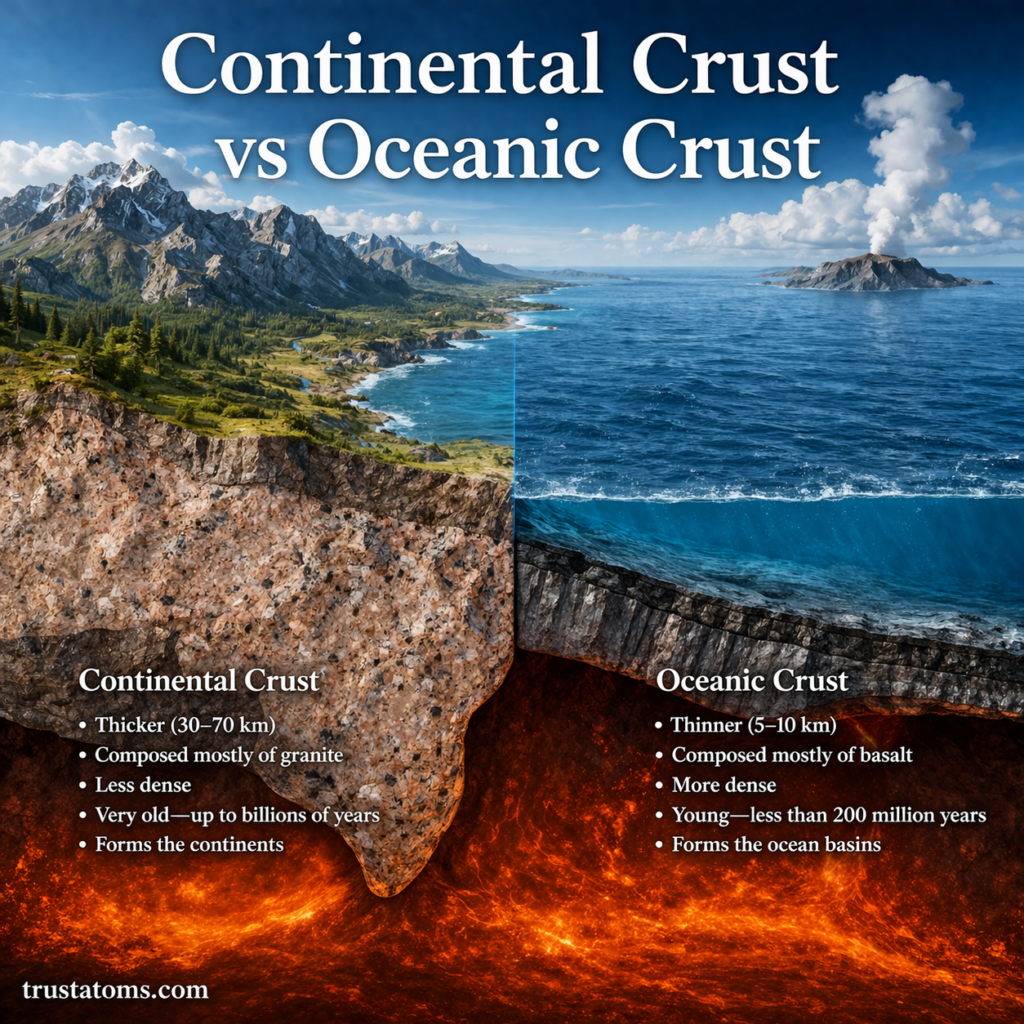
Earth’s outermost layer, the crust, is not uniform. It is divided into two main types: continental crust and oceanic crust. While both are part of the lithosphere, they differ in composition, thickness, density, and age.
Understanding these differences helps explain how continents form, why oceans exist where they do, and how tectonic activity shapes the planet.
What Is Earth’s Crust?
The crust is the thin outer layer of Earth, sitting above the mantle. It makes up less than 1% of Earth’s total volume but is essential for life.
There are two primary types:
- Continental crust (forms landmasses)
- Oceanic crust (forms ocean basins)
Each type has distinct properties that influence geological processes.
What Is Continental Crust?
Continental crust forms the continents and the shallow seabeds near coastlines (continental shelves). It is thicker, less dense, and generally much older than oceanic crust.
Key Characteristics of Continental Crust
- Thickness: ~30 to 70 km
- Composition: Mostly granite (rich in silica and aluminum)
- Density: Lower than oceanic crust
- Age: Can be billions of years old
- Location: Continents and continental shelves
Because it is less dense, continental crust “floats” higher on the mantle, which is why it forms elevated landmasses.
What Is Oceanic Crust?
Oceanic crust forms beneath the oceans and is thinner, denser, and younger than continental crust.
It is constantly being created and destroyed through tectonic processes.
Key Characteristics of Oceanic Crust
- Thickness: ~5 to 10 km
- Composition: Mostly basalt (rich in iron and magnesium)
- Density: Higher than continental crust
- Age: Usually less than 200 million years old
- Location: Ocean basins
Oceanic crust is continually recycled at subduction zones, preventing it from becoming very old.
Major Differences Between Continental and Oceanic Crust
1. Thickness
- Continental crust is much thicker
- Oceanic crust is relatively thin
2. Density
- Continental crust is less dense and more buoyant
- Oceanic crust is denser and sits lower
3. Composition
- Continental: Granite-rich (felsic rocks)
- Oceanic: Basalt-rich (mafic rocks)
4. Age
- Continental crust can be billions of years old
- Oceanic crust is relatively young due to recycling
5. Tectonic Behavior
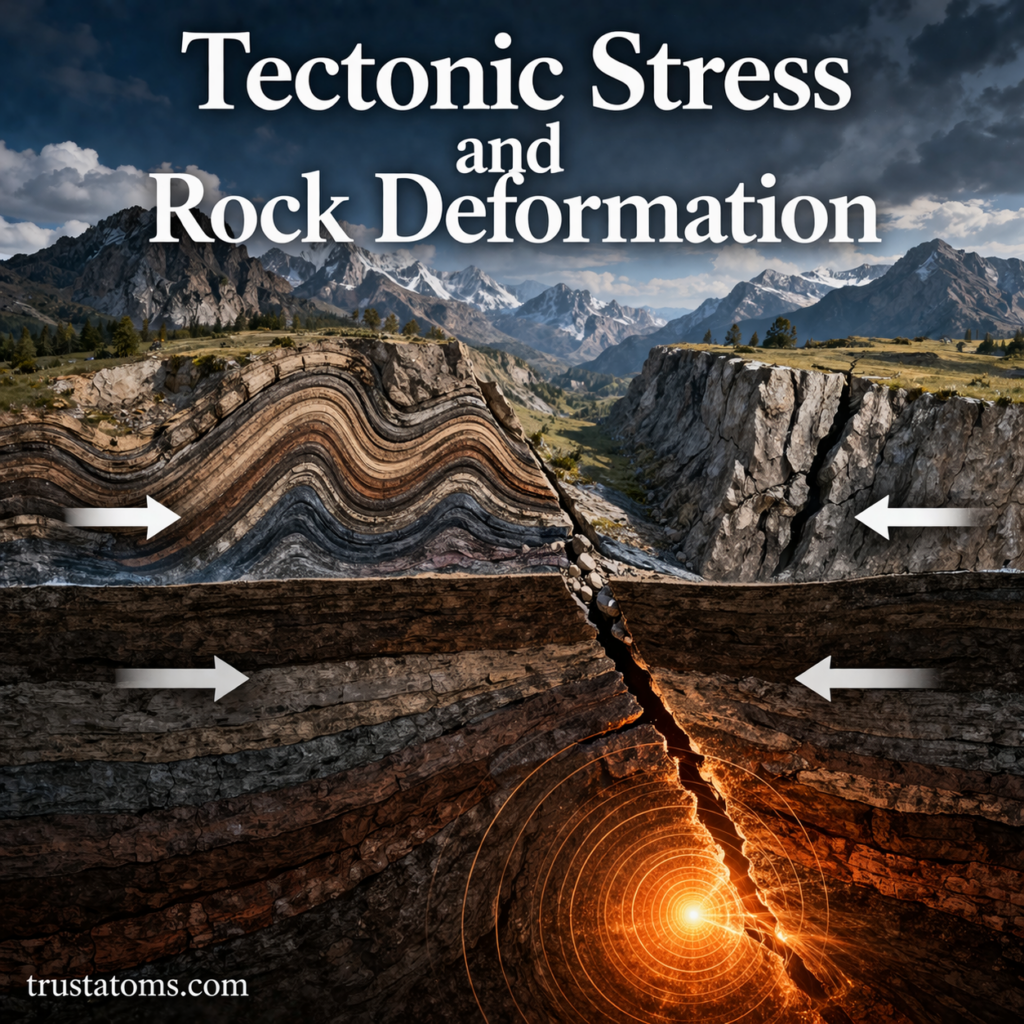
- Oceanic crust is often subducted beneath continental crust
- Continental crust resists subduction due to lower density
How They Interact: Plate Boundaries
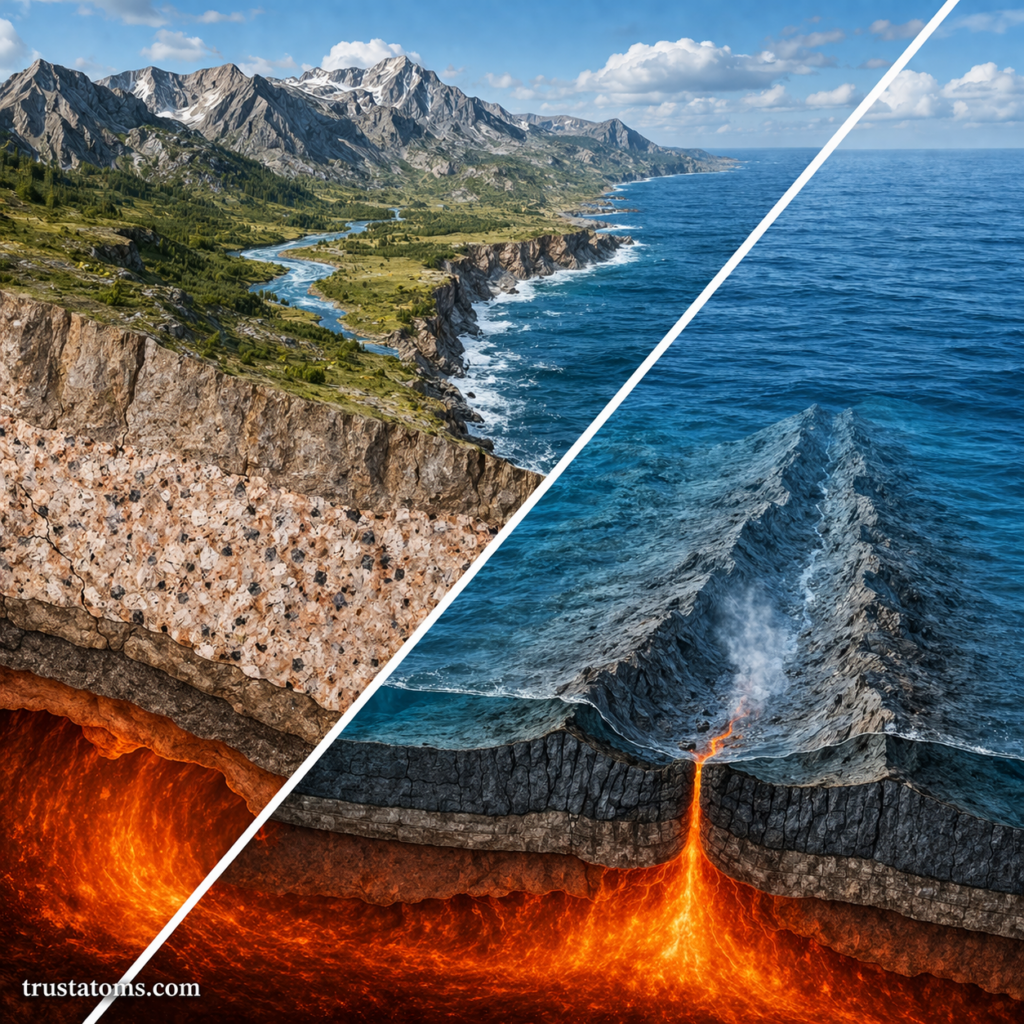
The interaction between continental and oceanic crust is central to plate tectonics.
Subduction Zones
When oceanic and continental plates collide:
- The denser oceanic crust sinks beneath the continental crust
- This process is called subduction
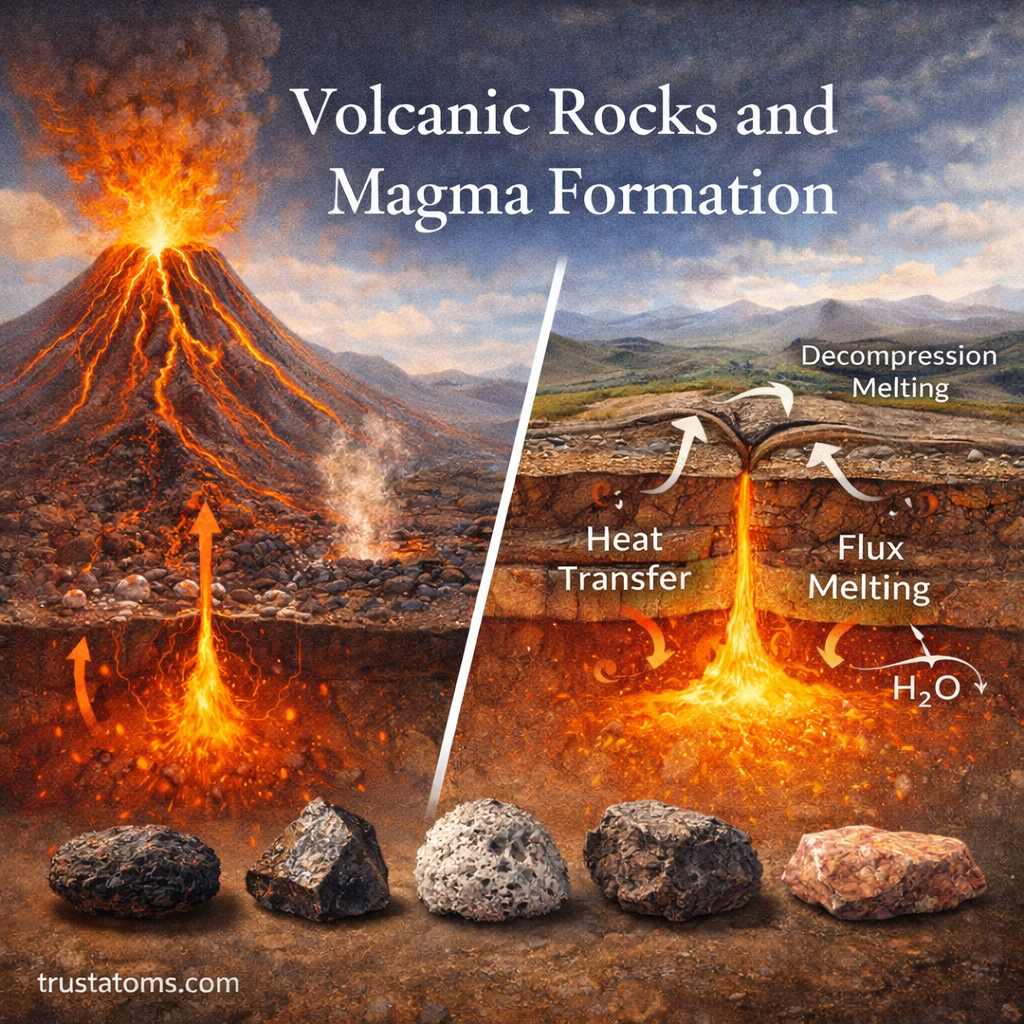
- It can create volcanic arcs and mountain ranges
Divergent Boundaries
Oceanic crust forms at mid-ocean ridges, where plates move apart and magma rises to create new crust.
Transform Boundaries
At these boundaries, plates slide past each other, often causing earthquakes without creating or destroying crust.
Why Oceanic Crust Is Younger
Oceanic crust is constantly being renewed through seafloor spreading and destroyed at subduction zones.
This cycle explains why:
- No oceanic crust is older than about 200 million years
- Continental crust preserves much older geological history
Why Continental Crust Lasts Longer
Continental crust is more resistant to recycling because it is less dense and harder to subduct.
Over time, it can grow through:
- Volcanic activity
- Sediment accumulation
- Continental collisions
This allows continents to persist and evolve over billions of years.
Real-World Examples
Oceanic Crust Example
- The Pacific Ocean basin is largely made of oceanic crust
- New crust forms along mid-ocean ridges
Continental Crust Example
- North America and Africa are composed primarily of continental crust
- Some regions contain rocks over 3 billion years old
Common Misconceptions
“All Crust Is the Same”
The crust varies significantly in thickness, composition, and age.
“Ocean Floors Are Permanent”
Oceanic crust is temporary on geological timescales due to constant recycling.
“Continents Don’t Change”
Continents move, collide, and reshape over time due to tectonic forces.
Key Takeaways
- Earth’s crust is divided into continental and oceanic types
- Continental crust is thicker, less dense, and older
- Oceanic crust is thinner, denser, and constantly recycled
- Their interaction drives plate tectonics
- These differences shape Earth’s surface and geological history
Final Thoughts
Continental and oceanic crust may share the same planet, but they behave very differently. These differences influence everything from mountain formation to ocean basin development.
By understanding how each type of crust works, we gain a clearer picture of Earth’s dynamic nature and the processes that continue to shape its surface.