Cortisol is often called the body’s “stress hormone,” but its role goes far beyond stress response. It is a vital hormone that helps regulate metabolism, energy production, and overall balance in the body.
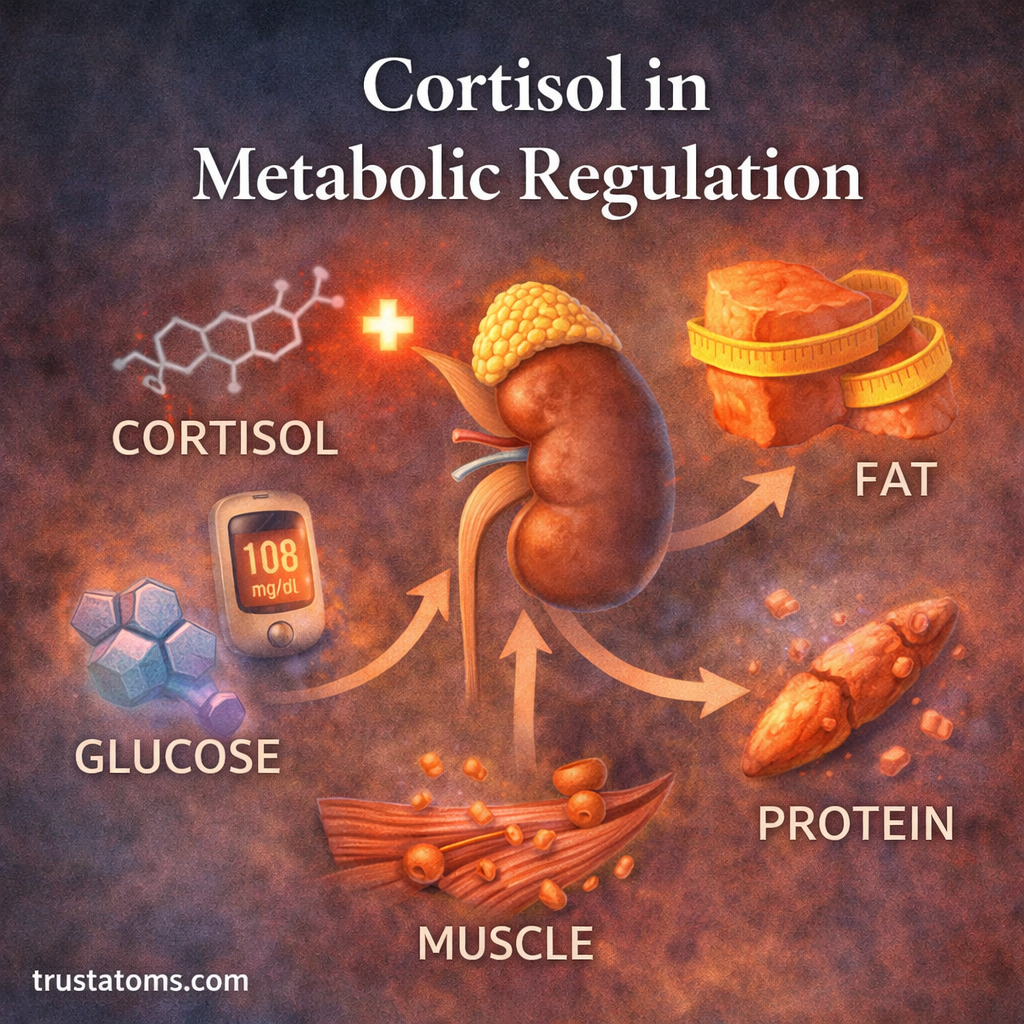
Produced by the adrenal glands, cortisol ensures that your body has the fuel it needs to function—especially during times of increased demand. From controlling blood sugar levels to influencing how your body uses fats and proteins, cortisol plays a central role in metabolic regulation.
What Is Cortisol?
Cortisol is a steroid hormone produced in the adrenal cortex. It is released in response to signals from the brain, particularly through the hypothalamic-pituitary-adrenal (HPA) axis.
Key Characteristics
- Released in a daily rhythm (highest in the morning, lowest at night)
- Increases during stress
- Affects multiple systems throughout the body
Cortisol helps maintain internal balance by adjusting how the body uses and stores energy.
The Role of Cortisol in Metabolism
Metabolism refers to all the chemical processes that convert food into energy. Cortisol plays a major role in regulating these processes.
Primary Metabolic Functions
- Maintains blood glucose levels
- Regulates fat metabolism
- Influences protein breakdown
- Supports energy availability during stress
Cortisol and Blood Sugar Regulation
One of cortisol’s most important roles is maintaining stable blood sugar levels.
How It Works
Cortisol increases blood glucose by:
- Stimulating gluconeogenesis (production of glucose in the liver)
- Reducing glucose uptake in some tissues
- Ensuring the brain has a steady energy supply
This is especially important during fasting, exercise, or stress when energy demands are higher.
Cortisol and Fat Metabolism
Cortisol influences how the body stores and uses fat.
Effects on Fat
- Promotes fat breakdown (lipolysis) for energy
- Can also contribute to fat storage in certain areas (e.g., abdomen) when levels are chronically high
- Helps mobilize energy during stress
This dual role means cortisol can both support energy use and contribute to weight gain depending on the situation.
Cortisol and Protein Metabolism
Cortisol also affects proteins, which are essential for muscle and tissue health.
Key Actions
- Stimulates protein breakdown in muscles
- Releases amino acids into the bloodstream
- Supports glucose production in the liver
While helpful in short-term stress, prolonged protein breakdown can lead to muscle loss.
Cortisol and the Stress-Energy Connection
Cortisol ensures that the body has enough energy to respond to challenges.
During Stress
- The brain detects a stressor
- The HPA axis activates cortisol release
- Energy stores (glucose, fat, protein) are mobilized
- The body becomes more alert and prepared
This system is essential for survival but must be carefully regulated.
Daily Rhythm of Cortisol
Cortisol follows a natural circadian rhythm.
Typical Pattern
- Highest levels: early morning (helps you wake up)
- Gradual decline throughout the day
- Lowest levels: late evening and during sleep
Disruptions to this rhythm can affect metabolism, sleep, and overall health.
Effects of Chronic High Cortisol
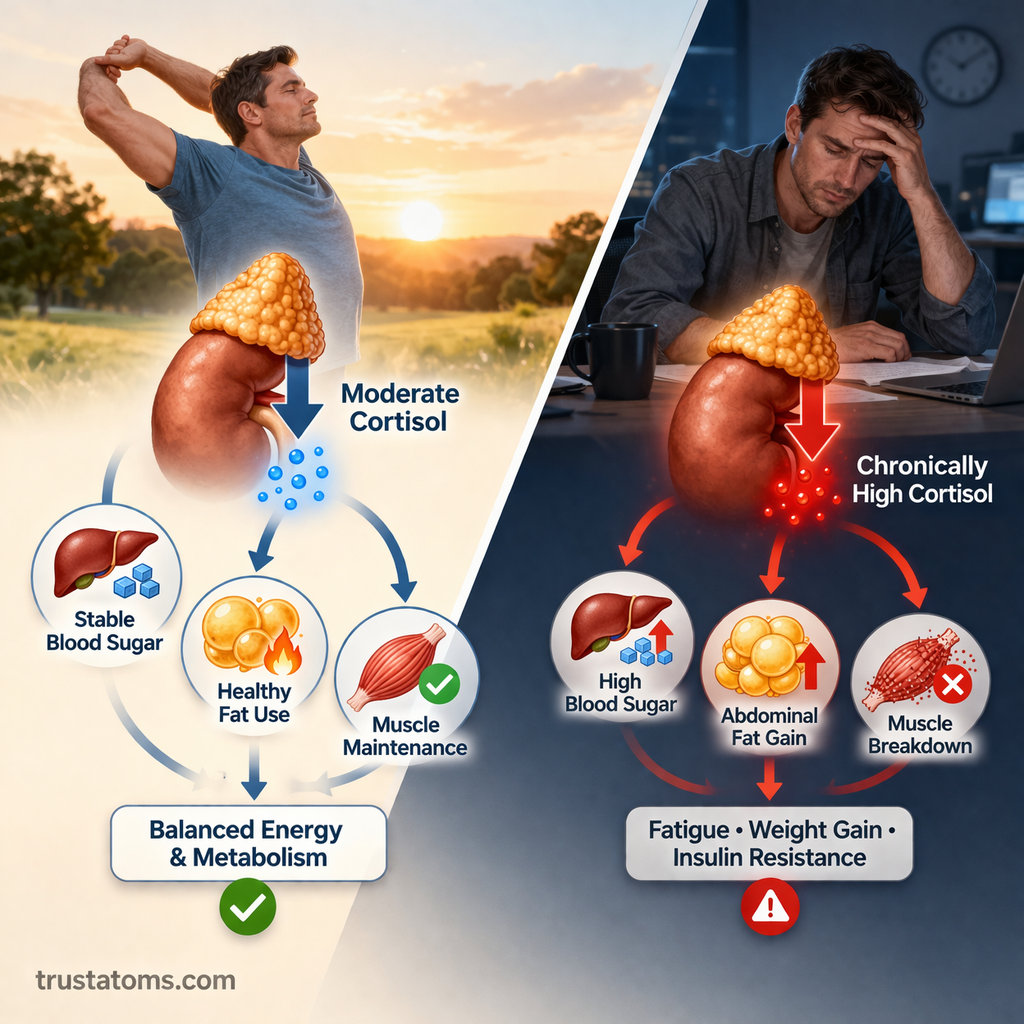
When cortisol levels remain elevated for long periods, it can disrupt metabolic balance.
Common Effects
- Increased blood sugar levels
- Weight gain (especially abdominal fat)
- Muscle breakdown
- Insulin resistance
- Fatigue and low energy
- Sleep disturbances
Chronic stress is one of the most common causes of prolonged high cortisol.
Low Cortisol Levels and Metabolism
Too little cortisol can also cause problems.
Potential Effects
- Low blood sugar (hypoglycemia)
- Fatigue and weakness
- Poor stress tolerance
- Weight loss
Conditions like adrenal insufficiency can impair cortisol production.
Supporting Healthy Cortisol Balance
Maintaining balanced cortisol levels is key to healthy metabolism.
Practical Tips
- Get consistent, high-quality sleep
- Manage stress through relaxation techniques
- Maintain a balanced diet with adequate nutrients
- Exercise regularly (without excessive strain)
- Avoid chronic overwork and burnout
These habits support both hormone regulation and metabolic health.
Key Takeaways
- Cortisol is essential for regulating metabolism and energy use.
- It controls blood sugar, fat metabolism, and protein breakdown.
- The hormone helps the body respond to stress by mobilizing energy.
- Balanced cortisol levels are crucial for long-term health.
- Both high and low cortisol levels can disrupt metabolic function.
Final Thoughts
Cortisol is much more than a stress hormone—it is a central regulator of metabolism and energy balance. By understanding how cortisol influences blood sugar, fat, and protein, you gain insight into how the body adapts to both daily demands and stressful situations.
Maintaining healthy cortisol levels through lifestyle habits is key to supporting long-term metabolic health and overall well-being.