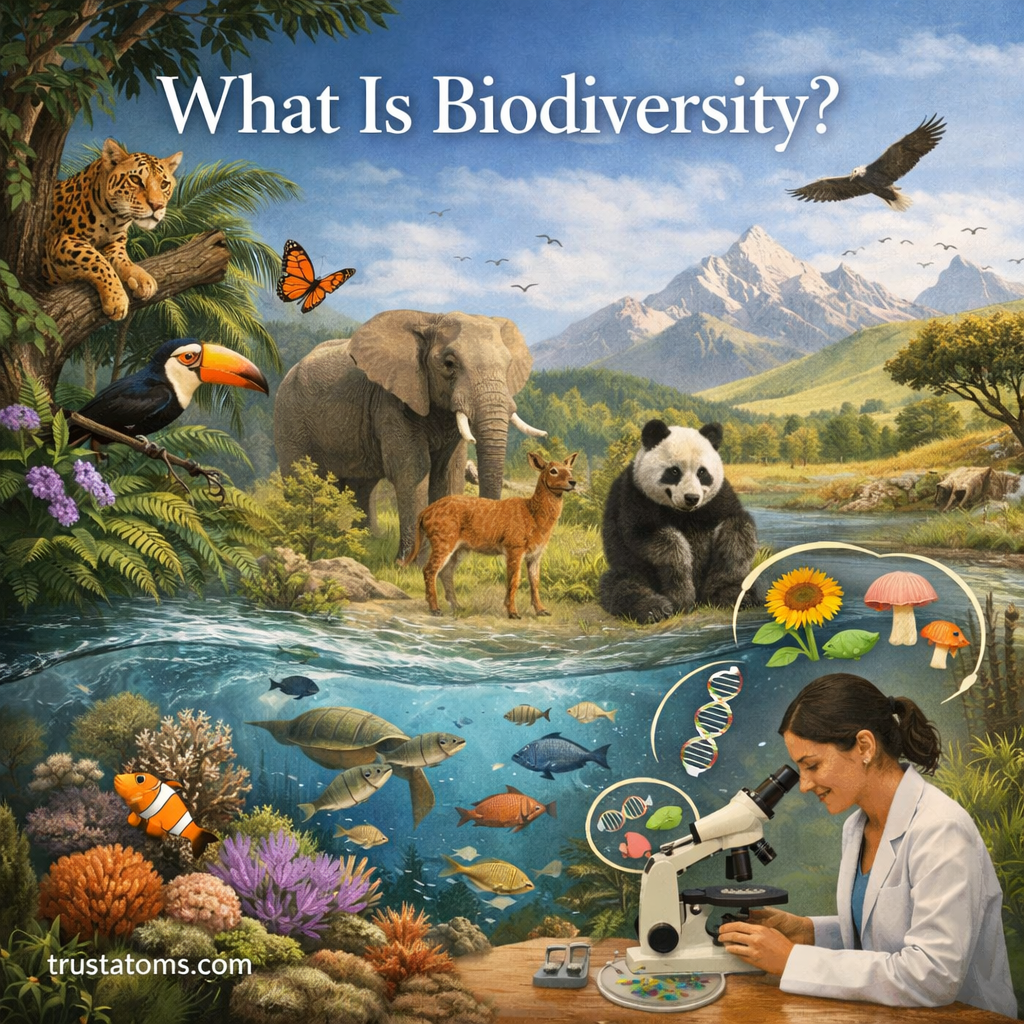
Biodiversity is the variety of life within a particular area or across Earth, including differences among genes, species, and ecosystems. It describes not only how many kinds of organisms exist but also the biological variation that helps ecological communities function and respond to change.
A forest containing many tree species, insects, birds, fungi, and microorganisms illustrates biodiversity in action. Studying this variety is an important part of the science of biology because organisms depend on one another and interact with their physical environments.
Biodiversity influences food production, soil fertility, water quality, and many other natural processes. Understanding how scientists measure it, where it occurs, and what threatens it helps explain why protecting biological diversity requires more than simply counting species.
The Basic Definition of Biodiversity
The word biodiversity is short for biological diversity. It refers to variation within species, between species, and among ecosystems. Scientists study these different levels because each reveals something about how living systems are organized.
Biodiversity is also connected to ecosystem functioning. Research into ecological stability in ecosystems examines how communities respond to disturbances and maintain biological processes. The relationship is complex: greater diversity can improve some aspects of stability, but it does not guarantee that an ecosystem will resist every disturbance.
Environmental conditions influence which organisms can survive in a location. Understanding climate impacts on ecosystem stability helps explain how changes in temperature and rainfall can alter biodiversity.
Protecting biological diversity involves maintaining habitats, populations, and ecological processes. Different conservation strategies for biodiversity address threats at these levels, while ecosystem restoration in environmental science focuses on helping damaged environments recover.
The Three Main Levels of Biodiversity
Scientists commonly describe biodiversity at three interconnected levels: genetic diversity, species diversity, and ecosystem diversity.
Genetic Diversity
Genetic diversity refers to differences in genetic information among individuals and populations of the same species. These differences contribute to variation in characteristics such as disease resistance, growth, and tolerance to environmental conditions.
For example, individuals within a wild plant population may differ in their ability to tolerate drought. If environmental conditions become drier, some inherited traits may improve survival and reproduction.
Genetic diversity provides material for adaptation through natural selection, although it does not guarantee that a population will survive environmental change. Small, isolated populations may lose genetic variation through genetic drift and inbreeding.
Species Diversity
Species diversity describes variation among species within a community or region. It includes both species richness, the number of species present, and species evenness, how evenly individuals are distributed among those species.
A meadow containing ten plant species has greater species richness than one containing five. However, two meadows with the same number of species may differ in diversity if one is dominated by a single species while the other has more balanced populations.
Ecosystem Diversity
Ecosystem diversity refers to variation among ecosystems, habitats, ecological communities, and their associated processes across a landscape or region.
A region containing forests, rivers, grasslands, and wetlands has greater ecosystem variety than a region dominated by one habitat type. Each environment supports different organisms and ecological relationships.
| Level | What It Measures | Example |
|---|---|---|
| Genetic diversity | Genetic variation within a species | Different drought-tolerance traits among plants of the same species |
| Species diversity | Species richness and relative abundance | Different tree, bird, insect, and fungal species in a forest |
| Ecosystem diversity | Variety of ecosystems and ecological communities | Forests, wetlands, rivers, and grasslands within one region |
How Scientists Measure Biodiversity
Measuring biodiversity requires more than listing organisms. Ecologists use field surveys, population counts, genetic sampling, and statistical methods to compare biological communities.
Species richness is one of the simplest measurements. Researchers count the number of species found within a defined area. However, richness alone does not describe whether species are equally common.
Worked Example: Two Meadows With Different Diversity
Imagine scientists survey two equally sized meadows and count 100 individual plants in each. Both meadows contain four plant species.
In Meadow A, the researchers find 25 individuals of each species. In Meadow B, they find 85 individuals of one species and just 5 individuals of each remaining species.
| Plant Species | Meadow A | Meadow B |
|---|---|---|
| Species 1 | 25 | 85 |
| Species 2 | 25 | 5 |
| Species 3 | 25 | 5 |
| Species 4 | 25 | 5 |
| Total individuals | 100 | 100 |
| Species richness | 4 | 4 |
Both meadows have identical species richness, but Meadow A has greater evenness. Using the Shannon diversity index, a commonly used ecological measurement, Meadow A scores approximately 1.39 while Meadow B scores approximately 0.59.
The calculation demonstrates why species counts alone can be misleading. A community dominated by one species may have lower measured diversity than a community containing the same species in more balanced proportions.
Scientists also consider sampling effort, habitat differences, and the geographic scale of their measurements. Comparing two sites fairly requires consistent methods.
How Biodiversity Supports Ecosystem Functions
Organisms contribute to ecological processes through feeding relationships, decomposition, pollination, nutrient cycling, and other interactions. The variety of organisms present can influence how these processes operate.
Food Webs and Ecological Resilience
Different species often perform overlapping ecological functions. If one pollinator population declines, another species may sometimes continue pollinating certain plants.
However, species are not always interchangeable. Some plants depend on particular pollinators, and the loss of a specialized organism can disrupt relationships that other species cannot replace.
Food Production and Agriculture
Agricultural systems depend on biological diversity in several ways. Pollinating insects support many crops, soil organisms contribute to nutrient cycling, and genetic variation provides resources for crop breeding.
Wild relatives of cultivated plants may possess useful traits, including resistance to particular diseases or tolerance to environmental stress. Maintaining this variation helps preserve options for future agricultural improvement.
Medicine and Scientific Research
Living organisms produce many chemically active substances. Researchers have developed medicines from compounds originally identified in plants, fungi, bacteria, and other organisms.
Penicillin, originally discovered from a fungus, is a familiar example. Studying biological diversity also helps scientists investigate new biochemical pathways and potential medical applications.
Carbon Storage and Water Regulation
Forests, wetlands, grasslands, and marine ecosystems influence carbon storage, water movement, and soil formation. Organisms contribute to these processes through photosynthesis, decomposition, and interactions with their environments.
The effects of biodiversity depend on ecosystem conditions and species composition. A larger number of species does not automatically mean greater carbon storage or improved performance in every ecological process.
Where Biodiversity Is Highest on Earth
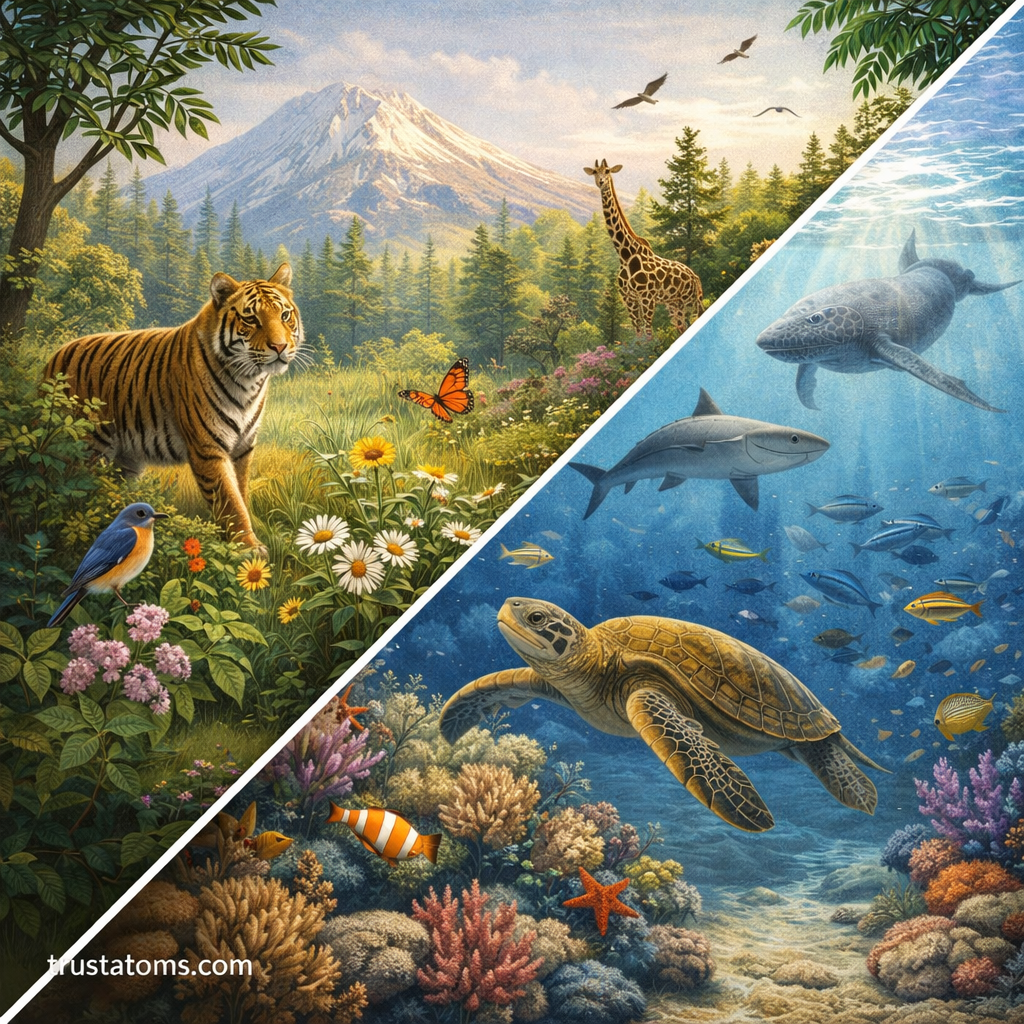
Biodiversity is unevenly distributed across Earth. Tropical regions generally contain greater species richness than higher-latitude regions for many groups of organisms, although patterns vary by habitat and taxonomic group.
Tropical rainforests support diverse communities of plants, animals, fungi, and microorganisms. Coral reefs also contain exceptionally varied marine communities, despite occupying relatively limited areas of the ocean.
Scientists and conservation organizations identify biodiversity hotspots to prioritize certain regions. Under the widely used Conservation International definition, a terrestrial biodiversity hotspot must contain at least 1,500 endemic vascular plant species and have lost at least 70% of its original natural vegetation.
Examples include Madagascar and the Indian Ocean Islands, the Mediterranean Basin, and the Tropical Andes. The Amazon rainforest and Coral Triangle are major centers of biodiversity, but they should not automatically be treated as identical to the formally defined terrestrial hotspot regions.
The Major Threats to Biodiversity
Scientists identify several major direct drivers of biodiversity loss, including changes in land and sea use, direct exploitation of organisms, climate change, pollution, and invasive alien species.
Habitat Loss and Fragmentation
Habitat loss is the largest threat to biodiversity.
More precisely, changes in land and sea use are identified among the leading direct drivers of biodiversity loss globally, particularly in terrestrial and freshwater ecosystems. Agriculture, urban development, deforestation, and infrastructure construction can remove or fragment natural habitats.
Fragmentation separates populations and may restrict movement, reproduction, and gene flow. Even when some habitat remains, isolated populations can become more vulnerable to local extinction.
Climate Change
Changes in temperature, rainfall, ocean conditions, and extreme weather affect where species can survive. Some organisms shift their geographic ranges, while others face environmental changes faster than their populations can respond.
Marine heatwaves can cause coral bleaching, and changing seasonal conditions can disrupt relationships between flowering plants and pollinators.
Overexploitation and Pollution
Overfishing, unsustainable hunting, and excessive harvesting can reduce populations faster than they recover. Pollution introduces additional pressures through chemicals, plastics, nutrient runoff, and other contaminants.
For example, excessive nutrient runoff can promote algal blooms. When algae die and decompose, oxygen levels may decline, making aquatic habitats unsuitable for some organisms.
Invasive Alien Species
Some species introduced outside their native ranges establish populations that harm local biodiversity. They may compete with native organisms, spread disease, alter habitats, or prey on species lacking effective defenses.
Not every introduced species becomes invasive. The term applies to organisms whose introduction and spread cause ecological, economic, or other harm.
How Biodiversity Can Be Protected
Effective conservation addresses the causes of biodiversity loss while maintaining ecological processes and the conditions needed for species to persist.
- Protected areas: National parks, wildlife reserves, and marine protected areas can conserve habitats when effectively managed.
- Habitat restoration: Rebuilding wetlands, restoring native vegetation, and improving ecological connectivity can support recovery.
- Sustainable resource management: Fishing limits, responsible forestry, and improved agricultural practices can reduce pressure on ecosystems.
- Invasive species management: Prevention, monitoring, and targeted control can reduce damage to native communities.
- Species conservation: Population monitoring, habitat protection, and carefully planned breeding or reintroduction programs can help threatened species.
- Genetic conservation: Seed banks, habitat connectivity, and protection of wild populations help preserve genetic variation.
Conservation also depends on local communities, Indigenous knowledge, scientific monitoring, and effective governance. Strategies work best when they reflect the ecological conditions and human needs of a particular region.
Common Misconceptions About Biodiversity
Misconception 1: Biodiversity Only Means the Number of Species
Species richness is one measurement, but biodiversity also includes genetic variation, differences in species abundance, and ecosystem diversity. Two habitats with equal species counts can differ substantially in their biological diversity.
Misconception 2: More Species Always Means a Healthier Ecosystem
High species richness can support ecosystem functions, but ecological health also depends on native species, habitat conditions, food-web relationships, and environmental pressures. Adding invasive species may increase a species count while damaging the ecosystem.
Misconception 3: Biodiversity Only Matters in Tropical Rainforests
Biodiversity exists in deserts, grasslands, oceans, wetlands, agricultural landscapes, and urban environments. Even ecosystems with relatively few species may support unique organisms and important ecological processes.
Misconception 4: Protecting Endangered Animals Is Enough
Protecting individual species is valuable, but long-term conservation also requires healthy habitats, genetic variation, and functioning ecological relationships. Protecting an animal without preserving its food sources or breeding habitat may not secure its future.
Frequently Asked Questions
What is biodiversity in simple terms?
Biodiversity means the variety of living things and biological systems in an area. It includes different species, genetic differences within species, and the variety of ecosystems where organisms live.
What are the three types of biodiversity?
The three main levels are genetic diversity, species diversity, and ecosystem diversity. Together, they describe variation within species, among species, and across ecological environments.
Why is biodiversity important to humans?
Biodiversity supports food production, soil processes, pollination, water regulation, and scientific discovery. Human societies depend on these ecological functions, although their benefits vary among environments and communities.
What causes biodiversity loss?
Major direct causes include habitat conversion, overexploitation, climate change, pollution, and invasive alien species. These pressures often interact, increasing the difficulty of conserving vulnerable populations and ecosystems.
How can people help protect biodiversity?
People can support habitat conservation, plant appropriate native species, reduce pollution, avoid spreading invasive organisms, and choose responsibly produced resources. Community conservation projects and science-based environmental policies can extend these efforts beyond individual properties.
Biodiversity describes the genetic variation, species, and ecosystems that make up Earth’s living systems. Protecting it requires understanding how organisms interact, how ecological communities respond to change, and which human activities threaten their survival. Conservation efforts that preserve habitats and ecological processes help maintain biological diversity for future generations.
Sources: OpenStax, Biology 2e; Intergovernmental Science-Policy Platform on Biodiversity and Ecosystem Services, Global Assessment Report on Biodiversity and Ecosystem Services; Convention on Biological Diversity, Global Biodiversity Outlook 5; Michael L. Cain, William D. Bowman, and Sally D. Hacker, Ecology, Third Edition.