Hemodynamics is the study of how blood flows through the circulatory system. In large vessels—such as arteries and veins—this flow is critical for delivering oxygen, nutrients, and hormones throughout the body while removing waste products.
Understanding how blood moves through these major vessels helps explain how the cardiovascular system maintains pressure, supports organ function, and adapts to different physical demands.
What Are Large Blood Vessels?
Large blood vessels are the main highways of the circulatory system. They transport blood between the heart and the rest of the body.
Types of Large Vessels
- Arteries – Carry blood away from the heart
- Veins – Carry blood back to the heart
- Great vessels – Major vessels directly connected to the heart, such as:
- Aorta
- Pulmonary arteries
- Pulmonary veins
- Vena cava
These vessels handle high volumes of blood and play a key role in maintaining circulation.
What Is Hemodynamics?
Hemodynamics refers to the forces and motion of blood flow within the circulatory system.
Key Components of Hemodynamics
- Blood flow – The movement of blood through vessels
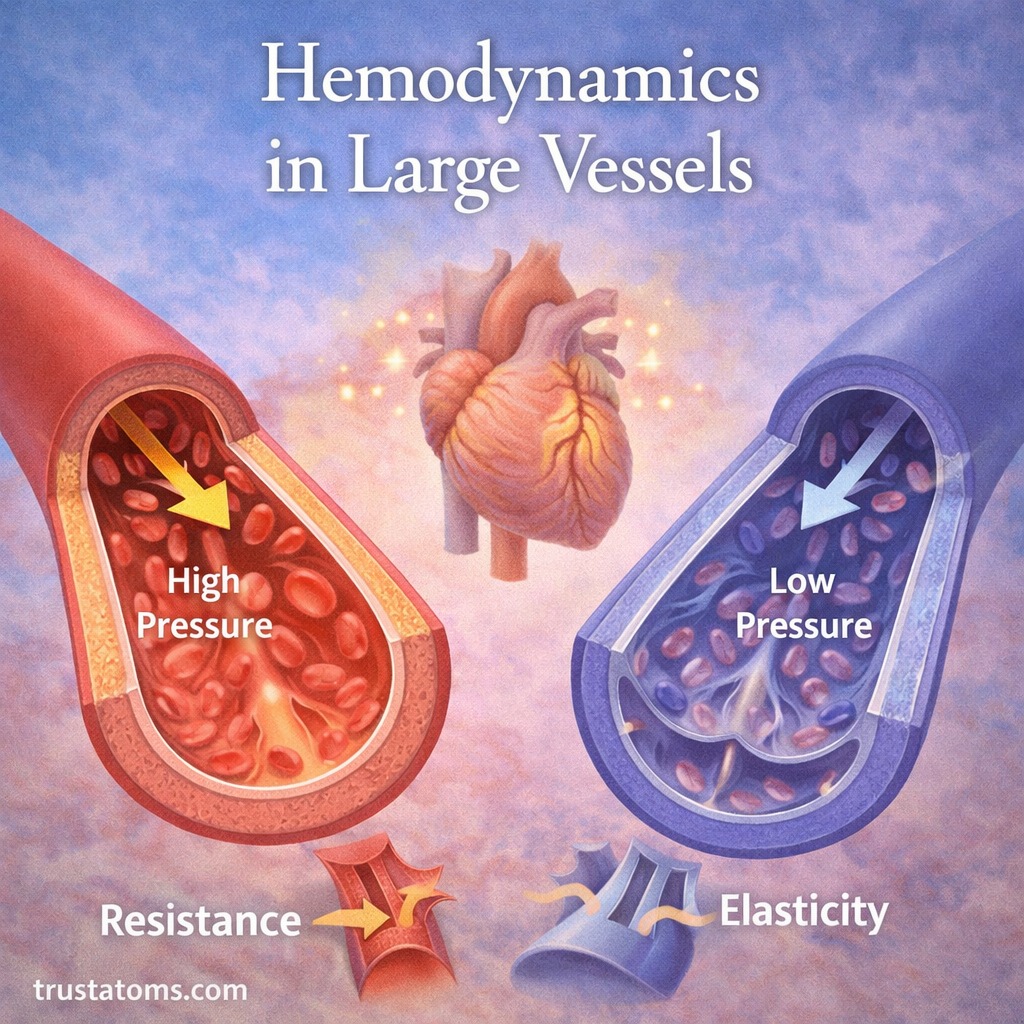
- Blood pressure – The force exerted by blood on vessel walls
- Resistance – The opposition to blood flow within vessels
- Vessel elasticity – The ability of vessels to stretch and recoil
Together, these factors determine how efficiently blood circulates.
How Blood Flows Through Large Vessels
Blood flow in large vessels is driven by the pumping action of the heart.
Step-by-Step Blood Flow
- The heart contracts and pushes blood into arteries
- Blood travels through progressively smaller vessels
- Oxygen and nutrients are delivered to tissues
- Blood returns to the heart through veins
Large vessels act as primary conduits, ensuring smooth and continuous circulation.
Arterial Hemodynamics
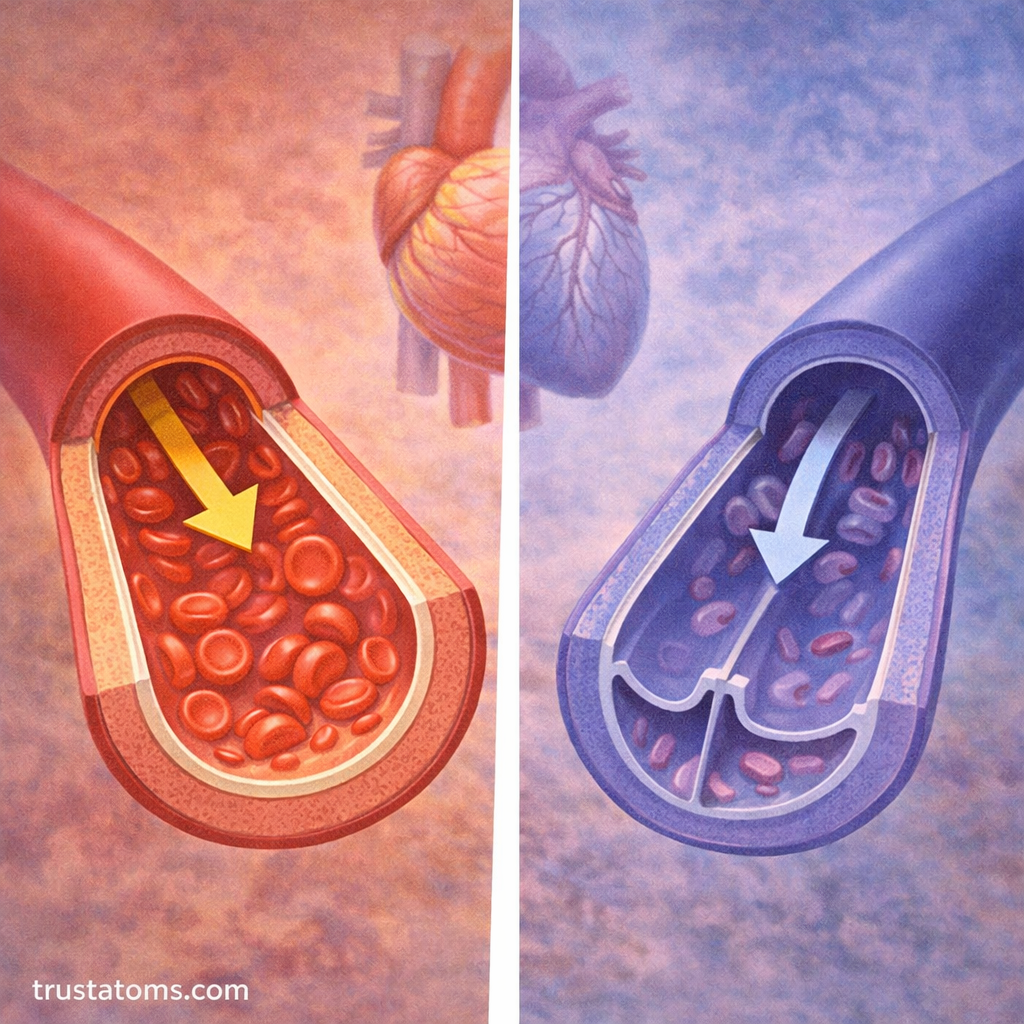
Arteries carry oxygen-rich blood under high pressure from the heart to the body.
Key Features of Arterial Flow
- High pressure due to heart contractions
- Thick, elastic walls that expand and recoil
- Pulsatile flow (rhythmic with each heartbeat)
Importance of Elasticity
Arterial walls stretch when blood is pumped into them and recoil between beats. This helps:
- Maintain steady blood flow
- Prevent extreme pressure fluctuations
- Support continuous circulation even between heartbeats
Venous Hemodynamics
Veins return blood to the heart under much lower pressure.
Key Features of Venous Flow
- Low pressure compared to arteries
- Thinner vessel walls
- Presence of valves to prevent backflow
How Blood Moves in Veins
Because venous pressure is low, the body relies on additional mechanisms:
- Skeletal muscle contractions push blood forward
- Valves ensure one-way flow
- Breathing movements help draw blood toward the heart
These systems work together to maintain circulation back to the heart.
Blood Pressure and Resistance
Blood pressure and resistance are central to hemodynamics.
Blood Pressure
- Generated by the heart’s pumping action
- Highest in arteries, lower in veins
- Essential for moving blood through the body
Vascular Resistance
Resistance depends on several factors:
- Vessel diameter (narrower vessels increase resistance)
- Blood viscosity (thicker blood flows more slowly)
- Vessel length
Changes in resistance can significantly affect blood flow and pressure.
The Role of Vessel Diameter
One of the most important factors in hemodynamics is vessel diameter.
Why Diameter Matters
- Small changes in diameter can greatly affect flow
- Vasoconstriction (narrowing) increases resistance
- Vasodilation (widening) decreases resistance
The body constantly adjusts vessel diameter to regulate blood flow based on needs, such as during exercise or rest.
Laminar vs. Turbulent Flow
Blood flow in large vessels can be categorized into two types.
Laminar Flow
- Smooth and orderly movement of blood
- Occurs in healthy vessels
- Most efficient for circulation
Turbulent Flow
- Irregular and chaotic movement
- Can occur near vessel branches or blockages
- Associated with certain cardiovascular conditions
Maintaining laminar flow is important for efficient circulation.
How the Body Regulates Hemodynamics
The body uses several systems to maintain stable blood flow and pressure.
Regulatory Mechanisms
- Nervous system – Adjusts heart rate and vessel diameter
- Hormones – Influence blood volume and vessel tone
- Local tissue signals – Increase blood flow where needed
These systems allow the body to respond quickly to changes such as:
- Physical activity
- Stress
- Changes in posture
Why Hemodynamics in Large Vessels Matters
Proper blood flow through large vessels is essential for overall health.
Key Benefits
- Ensures organs receive oxygen and nutrients
- Maintains stable blood pressure
- Supports efficient waste removal
- Helps the body adapt to changing conditions
Disruptions in hemodynamics can lead to serious conditions such as hypertension, atherosclerosis, or heart disease.
Common Issues Affecting Large Vessel Hemodynamics
Several conditions can interfere with normal blood flow.
- Hypertension – High blood pressure damaging vessel walls
- Atherosclerosis – Plaque buildup narrowing arteries
- Aneurysm – Weakening and bulging of vessel walls
- Thrombosis – Blood clots blocking flow
Understanding hemodynamics helps in recognizing and preventing these issues.
Final Thoughts
Hemodynamics in large vessels is a fundamental aspect of how the body circulates blood efficiently. Through a balance of pressure, resistance, and vessel elasticity, the circulatory system ensures that every part of the body receives what it needs.
By understanding these principles, you gain deeper insight into cardiovascular function and the importance of maintaining healthy blood flow.