Intervertebral discs are essential structures in the human spine that allow flexibility, stability, and shock absorption. These small but powerful components sit between each vertebra and play a crucial role in protecting the spine from daily stress and impact.
Understanding how intervertebral discs function helps explain posture, movement, and common causes of back pain.
What Are Intervertebral Discs?
Intervertebral discs are cartilage-based cushions located between the vertebrae of the spine. There are typically 23 discs in the human spine, extending from the neck (cervical region) to the lower back (lumbar region).
Basic Structure
Each disc has two main parts:
- Annulus fibrosus – a tough, outer ring made of layered fibrous tissue
- Nucleus pulposus – a soft, gel-like center that absorbs pressure
Key Functions
- Act as shock absorbers
- Allow slight movement between vertebrae
- Maintain spacing for spinal nerves
- Help distribute mechanical loads evenly
How Intervertebral Discs Absorb Shock
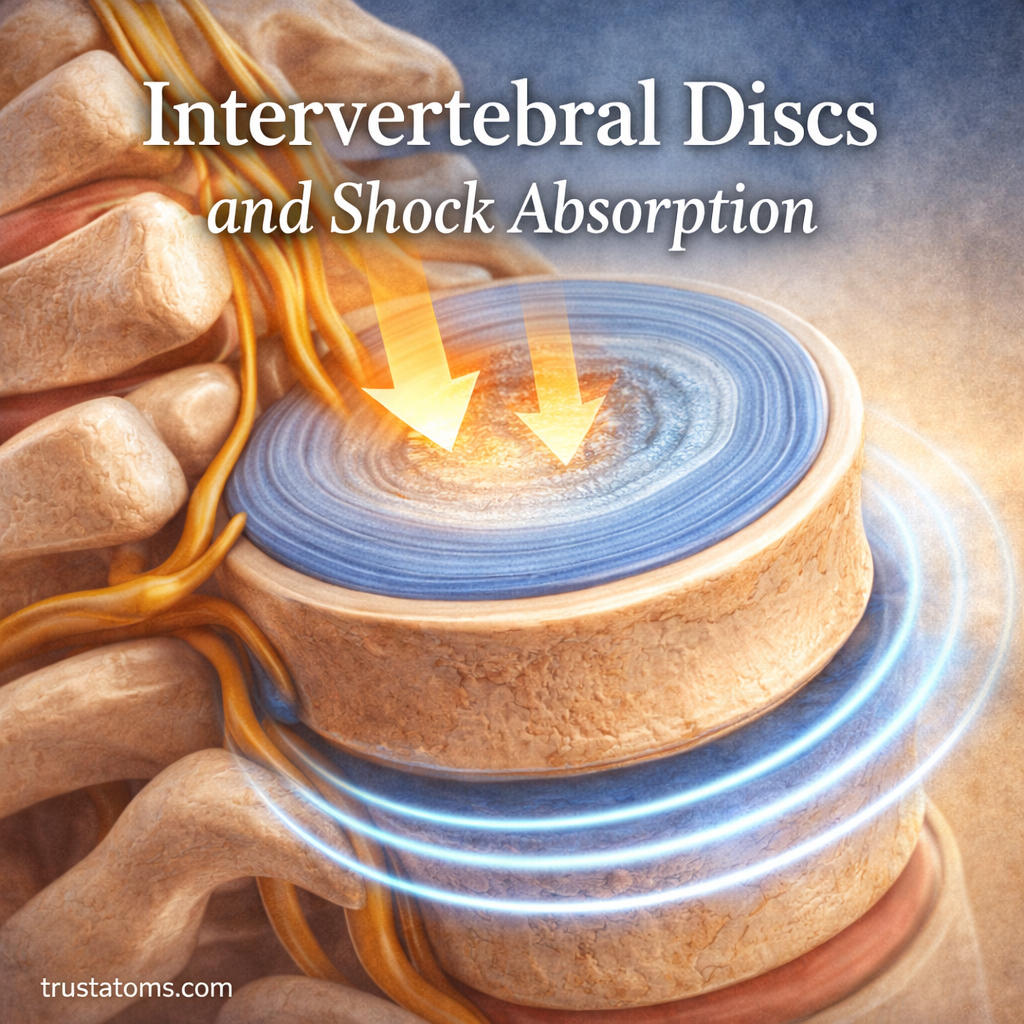
The primary role of intervertebral discs is to absorb and distribute forces acting on the spine.
The Shock Absorption Process
- Compression occurs when force is applied (e.g., walking, jumping)
- The nucleus pulposus spreads outward, distributing pressure
- The annulus fibrosus contains the force, preventing excessive expansion
- Once the force is removed, the disc returns to its original shape
This process allows the spine to handle repeated impacts without damage.
Everyday Examples
- Walking or running
- Jumping or landing
- Sitting and standing
- Lifting objects
Load Distribution and Pressure Management
Intervertebral discs help prevent stress from concentrating in one area of the spine.
Why Load Distribution Matters
- Reduces wear on vertebrae
- Prevents injury to spinal joints
- Maintains overall spinal alignment
- Supports long-term spinal health
Pressure Changes in Daily Activities
- Standing: moderate, evenly distributed pressure
- Sitting: increased pressure on lumbar discs
- Lifting improperly: high localized pressure on lower back
- Lying down: reduced pressure, allowing discs to recover
Disc Hydration and Spine Health
Intervertebral discs rely heavily on water content to function properly.
Importance of Hydration
- Healthy discs are about 70–90% water
- Water allows the disc to remain flexible and resilient
- Hydration helps maintain disc height and cushioning ability
Daily Cycle
- Discs lose water during the day due to compression
- Discs reabsorb water at night during rest
This is why people are slightly taller in the morning than in the evening.
Age-Related Changes in Discs
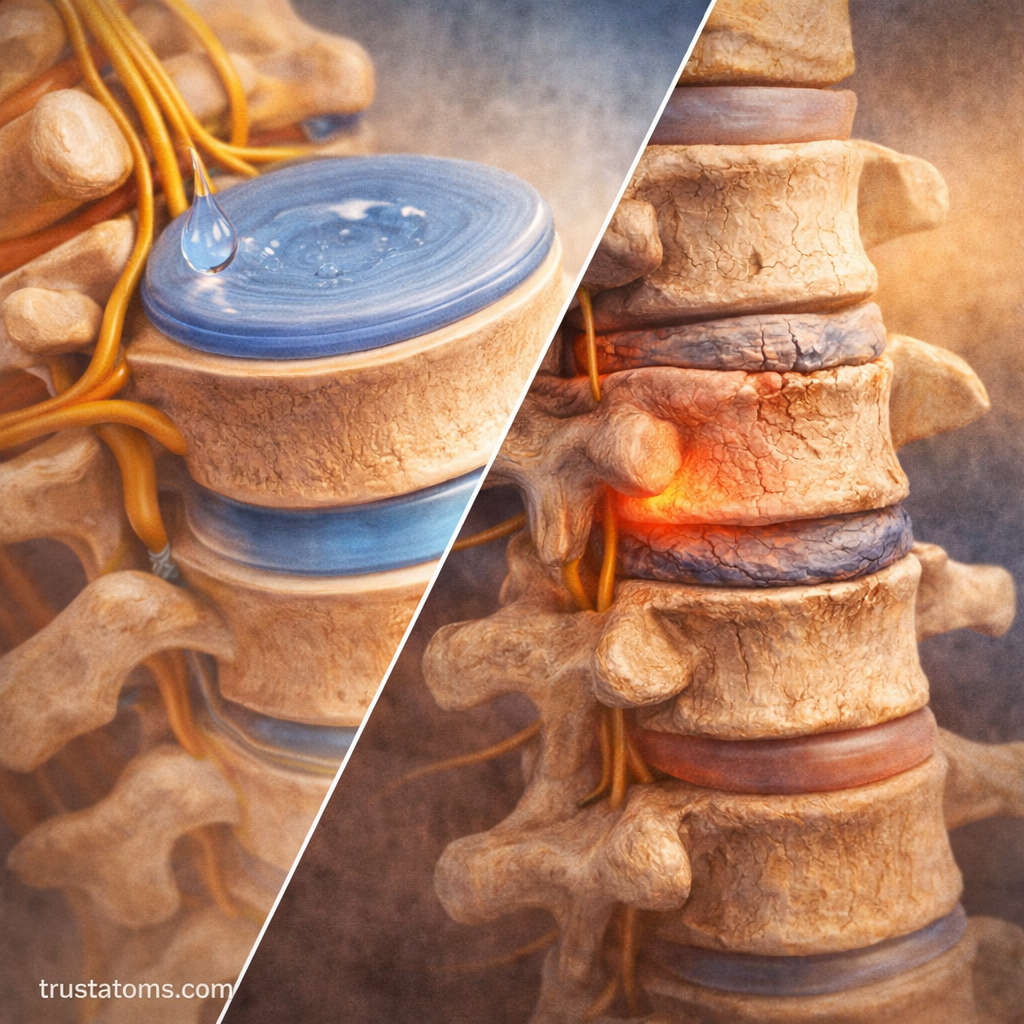
As we age, intervertebral discs undergo natural changes that affect their function.
Common Changes
- Decreased water content
- Reduced flexibility
- Thinner disc height
- Increased stiffness
Effects on Shock Absorption
- Less effective cushioning
- Greater stress on vertebrae and joints
- Increased risk of discomfort or injury
Common Disc-Related Conditions
Intervertebral discs can be affected by injury, degeneration, or poor mechanics.
Common Conditions
- Herniated disc – inner material pushes through the outer layer
- Bulging disc – disc protrudes outward without rupture
- Degenerative disc disease – gradual breakdown of disc structure
Symptoms May Include
- Back or neck pain
- Numbness or tingling
- Reduced mobility
- Muscle weakness (in severe cases)
How Movement Affects Disc Health
Movement plays a key role in maintaining healthy discs.
Benefits of Regular Movement
- Promotes fluid exchange within discs
- Maintains flexibility and strength
- Reduces stiffness and pressure buildup
Risks of Prolonged Inactivity
- Reduced disc hydration
- Increased stiffness
- Poor load distribution
- Higher risk of injury when movement resumes
Tips for Protecting Intervertebral Discs
Maintaining disc health is essential for long-term spinal function.
Practical Tips
- Maintain proper posture when sitting and standing
- Use correct lifting techniques (bend knees, keep back neutral)
- Stay active with regular low-impact exercise
- Avoid prolonged sitting without breaks
- Sleep on a supportive mattress
- Stay hydrated
Why Intervertebral Discs Are Essential
Without intervertebral discs, the spine would lack flexibility and the ability to absorb impact.
Key Takeaways
- Discs act as shock absorbers between vertebrae
- The nucleus pulposus distributes pressure
- The annulus fibrosus provides structural support
- Proper hydration is critical for disc function
- Movement and posture directly impact disc health
Final Thoughts
Intervertebral discs are vital to the spine’s ability to handle daily stress and movement. Their unique structure allows them to absorb shock, distribute load, and maintain flexibility.
By understanding how these discs function and how to care for them, you can support better posture, reduce the risk of injury, and maintain a healthier spine over time.