The human nervous system relies on rapid communication between billions of neurons. Whether you are reacting to a hot surface, remembering a fact, or coordinating movement, nerve signals must travel quickly and efficiently throughout the body.
One of the most important biological mechanisms that improves this communication speed is myelination. Myelination allows electrical signals in the nervous system to travel faster and more reliably, helping the brain and body function smoothly.
Understanding myelination explains how the nervous system increases signal transmission speed and why it is essential for development, learning, and healthy neurological function.
What Is Myelination?
Myelination is the process in which nerve fibers become wrapped in a protective, fatty layer called myelin.
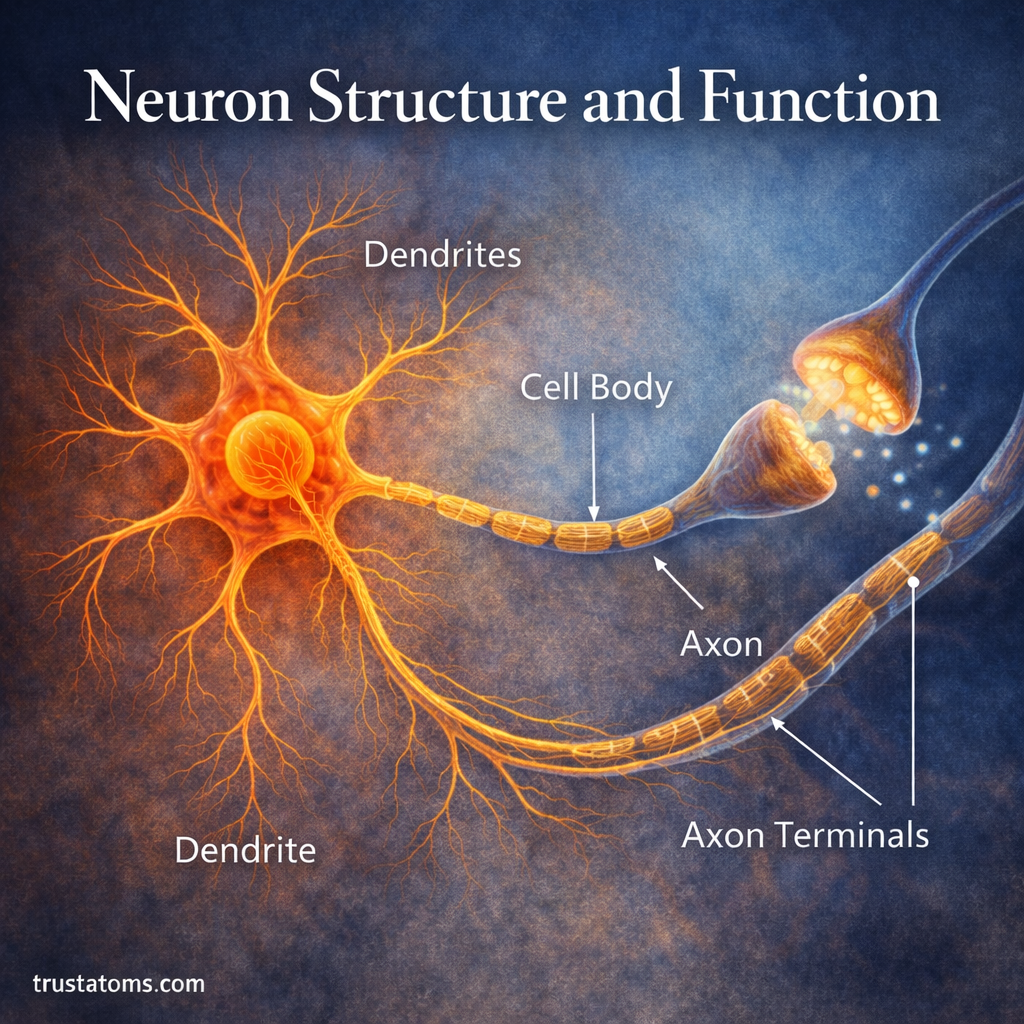
Myelin forms a sheath around the axon, which is the long extension of a neuron that carries electrical signals away from the cell body.
This insulating layer helps nerve signals travel more efficiently along neural pathways.
Key characteristics of myelin include:
- A fatty, lipid-rich substance
- An insulating layer around axons
- Increased speed of electrical signal transmission
- Protection for nerve fibers
Without myelin, signals traveling through the nervous system would move much more slowly.
The Structure of Myelin
Myelin is produced by specialized support cells in the nervous system.
These cells differ depending on the location of the neurons.
In the Central Nervous System
In the brain and spinal cord, myelin is produced by cells called oligodendrocytes.
Each oligodendrocyte can wrap multiple axons with myelin, helping insulate several neurons at once.
In the Peripheral Nervous System
In the nerves outside the brain and spinal cord, myelin is produced by Schwann cells.
Unlike oligodendrocytes, each Schwann cell typically wraps around a single axon segment.
Both types of cells perform the same essential role—improving signal conduction.
How Myelin Speeds Up Neural Signals
Myelin dramatically increases the speed at which electrical signals travel along nerve fibers.
This happens because myelin acts as an electrical insulator, preventing signals from leaking out of the axon.
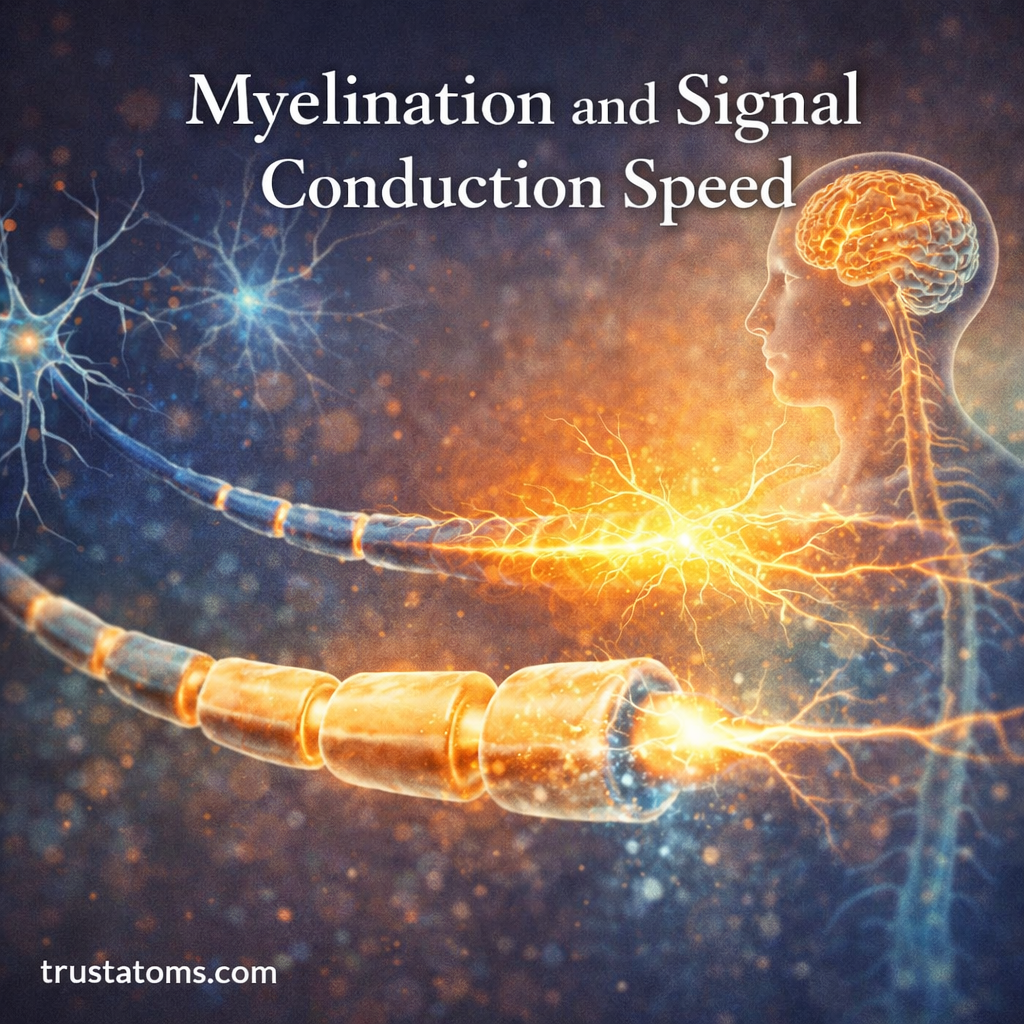
Instead of moving continuously along the entire axon, signals jump between small gaps in the myelin sheath called nodes of Ranvier.
This process is known as saltatory conduction.
Saltatory conduction allows nerve impulses to:
- Travel faster along axons
- Use less energy during transmission
- Maintain stronger signal strength
Because signals only need to be regenerated at the nodes rather than along the entire axon, communication becomes significantly more efficient.
Nodes of Ranvier and Signal Transmission
The nodes of Ranvier are small gaps between segments of myelin along an axon.
These nodes play a critical role in rapid nerve signal conduction.
At each node:
- Ion channels regenerate the electrical signal
- The impulse is boosted before continuing down the axon
- The signal effectively “jumps” to the next node
This jumping pattern greatly increases conduction speed compared to unmyelinated fibers.
In some neurons, signals can travel over 100 meters per second due to myelination.
Myelination During Brain Development
Myelination is a gradual process that occurs throughout childhood and adolescence.
At birth, many neural pathways are still developing and not fully myelinated.
As the brain matures:
- More axons become myelinated
- Neural communication becomes faster
- Cognitive and motor abilities improve
This developmental process helps explain why children gradually gain improved coordination, reasoning ability, and reaction time as they grow.
Certain areas of the brain continue myelinating well into early adulthood.
Myelination and Learning
Myelination does not only occur during early development. It can also be influenced by experience and repeated activity.
When neural circuits are used frequently, the brain may increase myelination in those pathways.
This improvement can:
- Strengthen communication between neurons
- Improve motor coordination
- Enhance cognitive performance
- Increase the speed of learned skills
For example:
- Athletes develop faster neural pathways related to movement control
- Musicians strengthen circuits involved in timing and coordination
- Language learners reinforce neural connections for speech and comprehension
Myelination therefore supports the brain’s ability to refine frequently used skills.
Differences Between Myelinated and Unmyelinated Fibers
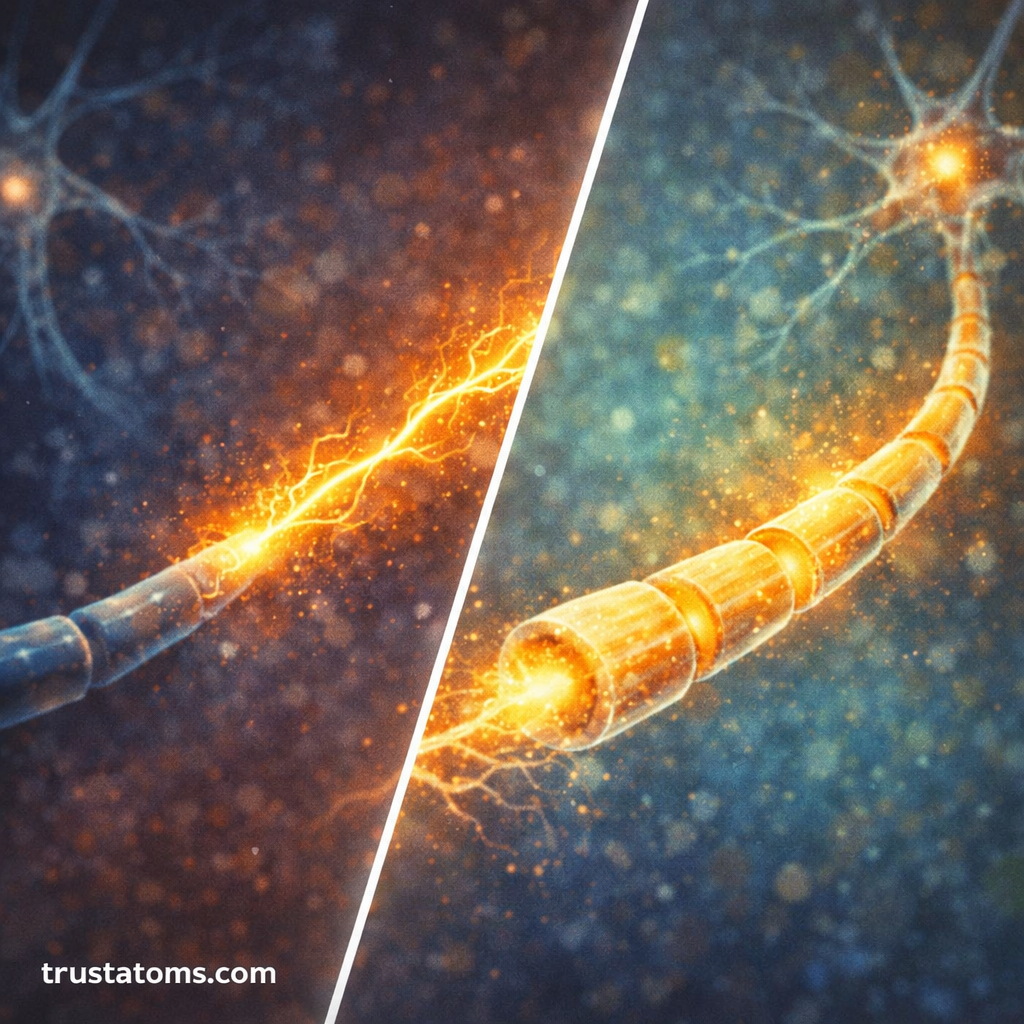
Not all nerve fibers in the body are myelinated.
Some neurons transmit signals more slowly because they lack this insulating layer.
Myelinated Fibers
Characteristics include:
- Faster signal transmission
- Efficient electrical insulation
- Saltatory conduction between nodes
- Often associated with motor and sensory pathways
Unmyelinated Fibers
Characteristics include:
- Slower signal transmission
- Continuous conduction along the axon
- Less insulation
These fibers are often involved in slower processes such as certain types of pain transmission.
Disorders Related to Myelin Damage
Because myelin is essential for efficient nerve communication, damage to the myelin sheath can disrupt nervous system function.
Several neurological conditions involve myelin degeneration.
Examples include:
- Multiple sclerosis (MS)
- Guillain-Barré syndrome
- Leukodystrophies
When myelin becomes damaged:
- Signals may slow down
- Communication between neurons becomes unreliable
- Symptoms such as weakness, numbness, or coordination problems can occur
These conditions highlight the critical role of myelin in maintaining healthy neural function.
Why Myelination Matters
Myelination is one of the most important biological mechanisms supporting fast communication within the nervous system.
It allows the brain and body to:
- Respond quickly to environmental changes
- Coordinate movement with precision
- Process sensory information rapidly
- Support learning and skill development
Without myelin, the nervous system would operate far more slowly and less efficiently.
Final Thoughts
Myelination plays a crucial role in the speed and efficiency of neural communication. By insulating nerve fibers and enabling saltatory conduction, myelin allows electrical signals to travel rapidly across the nervous system.
This process supports everything from reflex reactions and motor coordination to learning and cognitive performance. As the brain develops and adapts through experience, myelination helps refine neural pathways and strengthen communication networks.
Understanding myelination provides valuable insight into how the nervous system functions and why healthy neural insulation is essential for both development and long-term brain health.